• العربية
  • فارسی
Brand
  • Iran Insight
  • Politics
  • Economy
  • Analysis
  • Special Report
  • Opinion
  • Podcast
  • Iran Insight
  • Politics
  • Economy
  • Analysis
  • Special Report
  • Opinion
  • Podcast
  • Theme
  • Language
    • العربية
    • فارسی
  • Iran Insight
  • Politics
  • Economy
  • Analysis
  • Special Report
  • Opinion
  • Podcast
All rights reserved for Volant Media UK Limited
volant media logo

Israeli Official Says Netanyahu Knew About Iran-Saudi Talks

Iran International Newsroom
Mar 11, 2023, 10:41 GMT+0Updated: 17:51 GMT+1
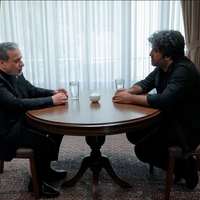
Secretary of Iran's Supreme National Security Council Ali Shamkhani talks with Minister of State and national security adviser of Saudi Arabia Musaad bin Mohammed Al Aiban in Beijing, March 10, 2023

Israel was not taken by surprise when Iran and Saudi Arabia agreed to revive ties, a senior Israeli official told Iran International, amid criticism by the opposition.

The official who requested anonymity was accompanying Prime Minister Benjamin Netanyahu during his trip to Italy on Saturday. He insisted that the Israeli government knew about the talks between Tehran and Riyadh “for a long time” and was following the process.

The official said that Saudi Arabia’s decision to re-establish diplomatic ties with Iran, severed since 2016, will not have an impact on the chances of Israeli-Saudi relations.

The Netanyahu government and President Joe Biden’s administration have been trying to expand the 2020 Abraham Accords to include Saudi Arabia, which has been holding out, making demands both on Israel and the United States.

However, since the news of the Iranian-Saudi deal broke on Friday, many commentators have seen the development as a win for China that brokered the agreement.

The Wall Street Journal in an editorial blamed Biden and the Democrats for annoying the Saudis and pushing them into China’s arms. The Journal said, “the symbolic import is hard to miss as Democrats in Washington do everything they can to harass and annoy the Saudis,” adding that getting a cold shoulder from Washington Riyadh decided to “hedge” its bets.

The Israeli official also said that in case of a decision to attack Iran’s nuclear facilities, Israel “is neither dependent on anyone, nor waiting for anyone’s permission.” However, he added that Israel will be happy with US political and military support and backing from European countries.

Former Israeli Prime Minister Naftali Bennett has described the resumption of ties between Tehran and Riyadh as harmful to chances of bringing Saudi Arabia into the Abraham Accords, saying that it is a serious defeat for Netanyahu.

Netanyahu faces serious opposition at home for his domestic policies and his critics charge that because of his entanglements at home, he missed the Saudi-Iranian rapprochement.

The senior official agreed that Israel’s internal crisis impacts its confrontation with the Islamic Republic and for this reason the political row should be ended as soon as possible.

Some Israeli media argued that the resumption of diplomatic relation will not dampen Saudi Arabia’s opposition to the Shiite regime in Iran and Riyadh remain open to joining the Abraham accords.

The Wall Street Journal and the New York Times reported this week that Saudi Arabia is demanding concessions from the Biden administration to join the peace accords with Israel. It wants US assistance in developing a nuclear power industry and less restrictions on arms sales to the kingdom. Many see the Chinese-brokered deal with Iran as further pressure by Riyadh on both the United States and Israel.

Some Israeli media have also reported that Saudis want Israel’s help in securing their demands from Washington.

Saudis have long said that formal diplomatic relations with Israel depend on a peaceful resolution to the Israel-Palestine conflict, though the two have been conducting business and security cooperation behind closed doors for some time. Saudi also opened its air space to Israel, in the wake of the Accords, signed in 2020.
Most Viewed

Iran diplomacy wobbles as factions compete to avoid looking soft on US
1
INSIGHT

Iran diplomacy wobbles as factions compete to avoid looking soft on US

2
VOICES FROM IRAN

Bread shortages, soaring prices strain households in Iran, residents say

3
ANALYSIS

The politics of pink: how Iran uses cuteness to rebrand violence

4

Scam messages seek crypto for ships’ safe passage through Hormuz, firm warns

5
EXCLUSIVE

Family told missing teen was alive, then received his body 60 days later

Banner
Banner

Spotlight

  • Diplomacy tolls at Hormuz as conflict returns to its doorstep
    OPINION

    Diplomacy tolls at Hormuz as conflict returns to its doorstep

  • Opposition to US talks grows in Tehran as ceasefire deadline nears
    INSIGHT

    Opposition to US talks grows in Tehran as ceasefire deadline nears

  • Tehran moderates see ‘no deal–no war’ limbo as worst outcome
    INSIGHT

    Tehran moderates see ‘no deal–no war’ limbo as worst outcome

  • The future has been switched off here
    TEHRAN INSIDER

    The future has been switched off here

  • Lights out, then gunfire: Witnesses recount Mashhad protest crackdown
    VOICES FROM IRAN

    Lights out, then gunfire: Witnesses recount Mashhad protest crackdown

  • Is Iran entering its Gorbachev moment?
    INSIGHT

    Is Iran entering its Gorbachev moment?

•
•
•

More Stories

Khamenei Book Unveiled In Venezuela To Spread Influence

Mar 11, 2023, 09:21 GMT+0

In order to expand the Islamic Republic’s influence in Latin America, a Spanish translation of a book by Iranian Supreme Leader has been unveiled in Venezuela.

The book titled "Cell No. 14” is memoirs Iran's authoritarian ruler Ali Khamenei that was unveiled on the sidelines of the Iran-Venezuela culture and friendship exhibition in Caracas on Friday.

The book covers the first half of Khamenei's life when he was a religious opponent of the secular monarchy, from his early years until the 1979 revolution. It also contains illustrations portraying different periods of his life.

In a message on the occasion, Khamenei told Venezuelans that “It is good that you and all justice-seeking nations get to know each other more and cooperate more.”

Iran has been running overt and covert operations to build influence and networks in Latin America, together with its proxies, such as the Lebanese Hezbollah.

Tehran has made plenty of economic promises to the region’s countries, but few have materialized because the period since has been marked by crippling international and US sanctions on Tehran.

Secret Iranian and Hezbollah networks are involved in illicit activities, allegedly including the drug trade for generating funds.

Iran also converts locals to Shiite Islam and sends some to its seminaries in the religious city of Qom to be trained and indoctrinated.

The presence of the Islamic Republic in Latin America has been a growing concern for the US in recent years with several Congressional reports presented in different Senate and House committees detailing Iran’s influence in the region.

Iran’s United Opposition Figures Release Mahsa Charter

Mar 10, 2023, 20:59 GMT+0
•
Iran International Newsroom

Prominent Iranian dissident figures, who have recently made an alliance against the Islamic Republic, has issued a Charter of Solidarity and Alliance for Freedom. 

The group, which calls itself the Alliance for Democracy and Freedom in Iran, announced its existence in a February event at Georgetown University's Institute for Women, Peace and Security (GIWPS) -- titled ‘The Future of Iran’s Democracy Movement.' 

Exiled Prince Reza Pahlavi, Nobel peace prize laureate Shirin Ebadi and Canada-based activist Hamed Esmaeilion, as well as US-based author, journalist and women’s rights activist Masih Alinejad, actress and activist Nazanin Boniadi and Secretary General of Komala Iranian Kurdish party Abdullah Mohtadi had said that they would release the charter that would lay the foundations for political representation of the aspirations of protesters in Iran and gain support for isolating the Islamic Republic.

The document is also called the Mahsa Charter in reference to “the murder of Mahsa (Jina) Amini and the beginning of the Woman, Life, Freedom revolution,” which has seen the people of Iran continuing to fight for freedom “to break the chains of injustice, discrimination and tyranny.”

Emphasizing that the way to building a free and democratic Iran is to overcome the Islamic Republic regime, they said, “Reaching this ultimate goal necessitates the three elements of unison, organization and relentless continuity in activism.”

prominent-opposition-figures-Iran-Masih-Alinejad-Reza-Phlavi (March 2023)
100%

They said the charter relies initially on activities outside of the country, underlining that the isolation of the Islamic government internationally is a first and necessary step for a democratic change. 

The charter calls for international pressure on the Islamic Republic to halt all death sentences and to immediately release all political prisoners without condition; expulsion of the regime’s ambassadors and all its dependents by democratic governments and acknowledging the alliance of opposition figures as well as their charter; and facilitating any means necessary to aid the people of Iran. 

“Subsequent actions will take place with the participation of activists inside Iran to focus on fair transitional justice, the formation of a council for the transition of power, and the means by which power is transferred to a secular, democratic government,” reads the charter, adding that “The Alliance will introduce actionable initiatives using democratic methods to be implemented at the earliest opportunity in order to bring to fruition the civil action struggles of the people of Iran.”

The members of the alliance have repeatedly said that anyone who accepts the core values of the group is welcome to join them, but until now there had not been a clear explanation for their main values. They enumerated 17 common values for a democratic Iran, noting that the form of the future government will be a secular-democratic system determined through a referendum. “All political and official members of the state shall be elected through a free and democratic election process whereby citizens of all beliefs, ethnicities, gender and sexual orientation be afforded dignity and equal rights before the law.”

The need to maintain the territorial integrity of Iran while accepting diversity in language, ethnicity, religion and culture; and to decentralize power by deferring financial, bureaucratic and policy making affairs to elected provincial, city, and regional administrations is also among the values. 

The charter also talks about the formation of an independent organization to supervise elections and the acceptance of domestic and international monitoring of elections, which would result in “a new national constitution through an inclusive and transparent process.” “The new constitution shall adhere to the Universal Declaration of Human Rights in its entirety.” 

The charter also mentions the abolition of the death penalty and any corporal punishment and enacting the Convention on the Elimination of All Forms of Discrimination against Women as well as the establishment of an independent judicial system in accordance with international standards. It calls for Justice for all victims of the Islamic Republic through fact finding commissions under the auspices of fair and independent courts including the right to independent legal representation.

One of main points of the charter is the abolition of the Islamic Revolutionary Guards Corp – or the IRGC -- and all of its subsidiaries. “The possibility to integrate IRGC elements into other armed forces such as the army may only be possible in the absence of involvement in crimes and based on necessary qualifications,” it said, adding that “The military shall only be responsible to defend the territorial integrity of the country.”

It also called for “cooperation and peaceful relations with all countries in the world, and to cease all interference in the affairs of other countries, and to join the International Criminal Court.” Joining the International Convention on Nuclear Safety and the Financial Action Task Force (FATF) were key values in the charter. 

“To overcome the Islamic Republic’s tyranny, all Iranians who are committed to freedom must unite. The courage of the people of Iran and their persistent fight for freedom shall be the bright beacon of hope for our future. Let us stand united in the creation of a free tomorrow," the charter concluded. 

Israel Won’t Be Allowed To Use Azerbaijan To Attack Iran - New Ambassador

Mar 10, 2023, 20:52 GMT+0

Azerbaijan's ambassador-designate to Israel Mukhtar Mammadov says his country would not let Israel’s military to use Azerbaijan as a base for a possible attack against Iran.

Denying previous reports about preparing an airfield to assist Israel during an attack on the Islamic Republic, Mammadov said in his first interview after arriving in Tel Aviv last week that Baku would not assist Israel in case it decides to attack Iranian nuclear facilities. 

Mammadov also rejected reports that Azerbaijan would allow the Mossad to set up a branch in Azerbaijan to monitor what is happening in Iran.

“Azerbaijan, from the start, has declared that it will not interfere in the internal matters of other countries and will not allow its territory to be used against other countries,” the ambassador said. “This is because we expect other countries not to interfere in our internal matters.”

Iranian officials have been occasionally accusing Azerbaijan of allowing Israel to set up intelligence and military bases on its territory as an operational base against Iran.

The ambassador, who was set to present his credentials to President Isaac Herzog on Thursday, said “Every country is responsible for the protection and defense of their territorial integrity and the sovereignty of their citizens. Azerbaijan is no exception.”

His meeting was pushed off to a later undetermined date, as speculation has heightened over the possibility of an Israeli military attack against Iran, since the Islamic Republic appears close to producing weapons-grade uranium, according to The Jerusalem Post. 

Azerbaijan and Israel have been increasingly public in their growing ties. While Israel has had an embassy in Azerbaijan since the 1990s, Azerbaijan formally appointed its first ambassador to the Jewish state in January.

Regional Countries Welcome Iran-Saudi Resumption Of Ties

Mar 10, 2023, 15:57 GMT+0

Regional countries and parties have welcomed an agreement in Beijing on Friday between Iran and Saudi Arabia to restore diplomatic relations.

A diplomatic advisor to the United Arab Emirates president said he welcomed the agreement.

"We welcome the agreement between Saudi Arabia and Iran to resume diplomatic relations, and we hail the Chinese role in this regard," Anwar Gargash tweeted.

"The UAE believes in the importance of positive communication and dialogue among the countries of the region towards consolidating the concepts of good neighborliness and starting from a common ground to build a more stable future for all."

Lebanon, a country in deep economic crisis and dominated by Iran-backed Hezbollah also welcomed the Saudi-Iranian agreement. Hezbollah leader Hassan Nasrallah in turn called it a “good development.”

Oman, which has good relations with both countries also welcomed the announcement, the foreign ministry said in a statement on Friday.

The chief negotiator of Yemen's Iran-backed Houthi movement said in a tweet on Friday that the region needs the resumption of "normal ties" between its countries, following the announcement the Riyadh-Tehran announcement.

"The region needs the resumption of normal ties between its countries for the Islamic nation to reclaim its lost security as a result of foreign interference," Mohammed Abdulsalam said.

Saudi Arabia kept Washington informed of its talks, but the United States was not directly involved, White House spokesman John Kirby said on Friday.

"The Saudis did keep us informed about these talks that they were having, just as we keep them informed on our engagements, but we weren't directly involved," Kirby told reporters.

Russia Sending US Weapons To Iran To Be Reverse-Engineered - CNN

Mar 10, 2023, 15:17 GMT+0

A new report has revealed that Russia is sending US and NATO weapons and equipment captured on the battlefield in Ukraine to Iran to be reverse-engineered.

In a report Friday, CNN cited four sources familiar with the matter as saying that Tehran has been trying to reverse-engineer the systems and probably produce similar ones.

According to the sources, US, NATO and other Western officials have seen several instances of Russian forces seizing smaller, shoulder-fired weapons equipment including Javelin anti-tank and Stinger anti-aircraft systems that Ukrainian forces have left behind on the battlefield.

In many cases, Russia has then flown the equipment to Iran to dismantle and analyze, likely so the Islamic Republic military can attempt to make their own version of the weapons, sources said, adding that Russia believes that continuing to provide captured Western weapons to Iran will incentivize Tehran to maintain its support for Russia’s war.

CNN report says US officials do not believe that the issue is widespread or systematic, and that it is not clear if Iran has successfully reverse-engineered any US weapons taken in Ukraine. The report added that since the beginning of the war the Ukrainian military has kept reporting to the Pentagon any losses of US-provided equipment to Russian forces.

Iran seems to be adept at developing weapons systems based on US equipment seized in the past. The Toophan anti-tank guided missile was reverse engineered from the American BGM-71 TOW missile, and the country also intercepted a US-made drone in 2011, a Lockheed Martin RQ-170 “Sentinel”, and reverse-engineered it to create a new drone.

The US is doing everything possible to counter the “burgeoning” military ties between Iran and Russia, the State Department said in February.