Islamic Republic Intensifying Attacks On Kurdish Targets In Iran And Iraq

The Islamic Republic’s military crackdown on Kurdish regions can be construed as a new episode of escalating the unrest beyond Iran’s borders.
The Islamic Republic’s military crackdown on Kurdish regions can be construed as a new episode of escalating the unrest beyond Iran’s borders.
In the past few days, the Islamic Republic has intensified its repression on Kurdish-majority cities and towns in western provinces of the country following reports that parts of some small towns have fallen into the people’s hands. The majority of Iran's 10 million Kurds live in the western parts of the country. It has also launched repeated attacks against Iranian Kurds sheltering in Iraqi Kurdistan.
The regime’s security forces – particularly those trained to quell riots – used to be focused in the capital Tehran and larger cities, creating the opportunity for the residents of to outnumber the agents of repression.
Last week, security forces, who seemed to have started losing their foothold in the cities of Izeh in Khuzestan province and Malekshahr in Esfahan province, went on shooting sprees on motorbikes at the protesters, killing at least two young boys in Malekshahr and several others in Izeh, including a 10-year-old kid. The child -- Kian Pirfalak -- immediately became a new icon of the protests. The attacks were so brutal that the Islamic Republic opted not to take responsibility and claimed terrorist has suddenly showed up and fired at both the protesters and security forces. However, the infanticide backfired and fueled more protests in other small cities.
Then came the predicament in Mahabad, a small Kurdish-majority city in West Azarbaijan province, where residents barricaded streets and moved in tactical formations to take control of the city. The Islamic Republic deployed military vehicles and cracked down on the protesters. The clashes originally erupted in the city on Friday when security forces opened fire at people who had gathered for the funeral services of some protesters killed earlier in the week. Esmail Moloudi was a young protester who was shot dead during ceremonies for the 40th day after the death in custody of Mahsa Amini. Five more protesters were killed in his funeral late in October and ever since the city has been a scene of regular clashes.
Jalal Mahmoudzadeh, the representative of Mahabad in the parliament, said on Monday that at least 11 people were killed during the past few days, noting that several of those killed were not even among the protesters.
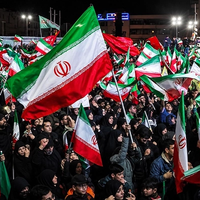
Following the escalation in Mahabad, other cities across the country and in particular Kurdish cities held protests in solidarity with Mahabad. In addition to Kermanshah, Paveh, Kamyaran and Saqqez – the hometown of Mahsa Amini -- people in the capital Tehran, the religious city of Mashhad, Ardabil, and Orouniyeh (Urmia) as well as Kerman and Esfahan in central Iran poured onto streets to express their support for the protesters in Kurdish cities.
The Islamic Republic also renewed its attacks on Kurdish targets in the Iraqi Kurdistan region on the pretext that separatist Kurdish groups are fanning the flames of conflict in Iranian Kurdish cities by supporting the protesters.
On Monday, Iran’s Revolutionary Guards, or IRGC, said it targeted Kurdish military bases in Erbil and Sulaimaniyah, alleging factions there are fomenting unrest in Iran.
Late on Sunday, the IRGC once again launched missile attacks against the positions of the dissident Iranian Kurdish group, the Democratic Party of Iranian Kurdistan in Erbil. At least three missiles hit the party's positions including a civilian hospital, causing casualties. The IRGC also targeted the Komala Party's positions in Iraqi Kurdistan's Sulaymaniyah with drones, the party's secretary general confirmed to Iran International.
Calling on the Islamic Republic to stop this campaign, the Kurdish regional government said, “The repeated Iranian violations affecting the sovereignty of Iraq and the Kurdistan region of Iraq are unjustified and constitute a flagrant violation of international norms and good neighborly relations.” The Iraqi parliament is set to discuss the growing threats to the Iraqi territory on Tuesday.
Meanwhile, Turkey has also stepped up attacks on Kurdish targets in Iraq and Syria, a week after a bombing in Istanbul which it blames on Kurdistan Workers’ Party, or PKK, as well as Syrian Kurdish groups affiliated with it, an allegation denied by those groups. The new airstrikes -- dubbed Operation Claw-Sword – hit Kurdish bases which Ankara claims were being used to launch attacks on Turkey. On Saturday, the Kurdish-led authority in northeast Syria called on residents to unite against any possible attack by Turkey, warning that such an offensive would lead to a long war.
The United Nations Assistance Mission for Iraq said in a statement Monday that Iran's renewed attacks and the violation of Iraq's national sovereignty must be stopped immediately, noting that such violent actions increase the tension in the region and would lead to a tragedy.
Last week, Iranian Interior Minister Ahmad Vahidi, himself an IRGC commander, held a conversation with his Turkish counterpart, voicing support for “a stable and strong Turkey.” He said that Iran and Turkey have common enemies, calling for more serious cooperation in dealing with “those who make the two countries unsafe.”