• العربية
  • فارسی
BrandBrand
  • Iran Insight
  • Politics
  • Economy
  • Analysis
  • Special Report
  • Opinion
  • Podcast
  • Live TV
  • Iran Insight
  • Politics
  • Economy
  • Analysis
  • Special Report
  • Opinion
  • Podcast
  • Live TV
  • Theme
  • Language
    • العربية
    • فارسی
  • Iran Insight
  • Politics
  • Economy
  • Analysis
  • Special Report
  • Opinion
  • Podcast
  • Live TV
All rights reserved for Volant Media UK Limited
volant media logo

Iran Says Europe Needs A Nuclear Deal 'Not To Freeze' This Winter

Mardo Soghom
Mardo Soghom

Iran International

Aug 23, 2022, 20:15 GMT+1Updated: 17:34 GMT+1
European Union foreign policy chief Josep Borrel with Iran's foreign minister in Tehran to push for progress in nuclear talks, June 25, 2022

Fars news agency in Tehran has again brought up the issue of an energy crunch, arguing that Europe needs a nuclear deal with Iran not to "freeze this winter."
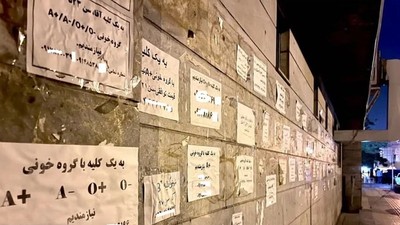

Fars, linked to the Revolutionary Guard, is not the only government-controlled media outlet periodically bringing up this issue, as Iran negotiates with the United States through the Europeans to restore the 2015 nuclear deal (JCPOA).

Once the deal is restored the United States will lift oil export sanctions imposed by former President Donald Trump when he withdrew from the JCPOA in 2018. It will also remove international banking restrictions also imposed as part of Trump’s ‘maximum pressure’ on Tehran.

But what Iranian media presents as ‘Europe’s freezing winter” has almost nothing to do with Tehran’s crude oil exports, except generally helping to bring down oil prices. Europe’s need to replace Russian gas is a specific issue on its own that Iran cannot help with at all.

There are two major reasons why a nuclear agreement now cannot impact Iran’s ability to export natural gas for the foreseeable future.

First is Iran’s huge domestic need that exceeds its current production capacity, and second is the absence of the infrastructure to export the gas as LNG.

Iran produces around 750 million cubic meters of gas per day, which is a considerable amount, but it has suffered from domestic shortages for the past three years as demand has risen and gas production has plateaued or decreased.

100%
A gas production platform in South Pars field in the Persian Gulf in 2018

The huge domestic demand primarily comes from extraordinary low prices – a de facto fuel subsidy offered to the population more as a loft-over of the revolutionary days than any good reason. Some estimates say that Iran has sustained a loss of close to $300 billion in the past decade simply by selling gas cheap to domestic consumers. In the same manner, gasoline and electricity are extremely cheap in Iran. A gallon of gasoline is sold at the pump for around 22 US cents.

Natural gas production could have increased with exports in mind, since Iran has the second largest reserves in the world, but for close to 20 years successive government were unable to invest in boosting extraction. The reason for this was both international sanctions (2010-2015) and current US sanctions imposed since 2018. There are also US sanctions prohibiting American participation in Iran’s energy sector going back to 1996.

All these sanctions were imposed because of Iran’s nuclear program and they banned investments and critical technology that only Western energy giants could have provided for expanding production.

Even Chinese energy companies left Iran’s South Pars gas field in the Persian Gulf that can easily produce more than 10 percent of global needs.

Having fallen behind in gas production, Iran also never built LNG terminals to serve global markets, like its tiny neighbor Qatar has done. Building such terminals can take 3-5 years, even if a nuclear agreement is signed today and US sanctions are lifted. Considering the need to build larger gas platforms to boost production, the time needed for Iran to ship LNG to Europe is at least 7-8 years.

There are also political hurdles Tehran must overcome. Its most important strategic ally is Russia, which would not like Iran taking a big share of its European market. The Iranian government is talking about a “gas swap” with Moscow, which means Russia wants Iran to sell its natural gas.

If current European strategy of replacing Russian gas stays in place in the absence of a resolution to the Ukraine crisis, any gas deal with Iran would mean buying energy from Moscow.

Most Viewed

Workers in Iran sell organs to pay debts and cover living costs
1

Workers in Iran sell organs to pay debts and cover living costs

2
VOICES FROM IRAN

Missile city unveiling sparks anger over poverty, lack of shelters

3
INSIGHT

Trump wants to keep Iran blockade. Can the Persian Gulf sustain the standoff?

4
VOICES FROM IRAN

Students shiver in classrooms as Iran government warns of gas cuts

5
ANALYSIS

US targets Iran's land trade routes, but Tehran may hold firm

Banner
Banner
Banner
Banner
Banner
Banner
Banner

Spotlight

  • Iran state TV panelists urge tougher action against US blockade

    Iran state TV panelists urge tougher action against US blockade

  • France's cyberattack allegations against Iran should wake up Europe
    OPINION

    France's cyberattack allegations against Iran should wake up Europe

  • Trump wants to keep Iran blockade. Can the Persian Gulf sustain the standoff?
    INSIGHT

    Trump wants to keep Iran blockade. Can the Persian Gulf sustain the standoff?

  • Iran state TV debate signals cautious openness to nuclear talks

    Iran state TV debate signals cautious openness to nuclear talks

  • The price Iranians paid for 47 years of revolutionary promises
    ANALYSIS

    The price Iranians paid for 47 years of revolutionary promises

  • Trump’s Iran diplomacy faces a test: Can both sides claim victory?
    ANALYSIS

    Trump’s Iran diplomacy faces a test: Can both sides claim victory?

  • Food, medicine, hope: what Iran's economic crisis is costing its people
    VOICES FROM IRAN

    Food, medicine, hope: what Iran's economic crisis is costing its people