Democratic Senators Say No Surprise Iran Pursued Nukes In The Past

Two Senate Democrats say it isn’t news that the Iran was trying to make nuclear weapons in the past, reiterating that the 2015 deal was the best way to stop it.

Two Senate Democrats say it isn’t news that the Iran was trying to make nuclear weapons in the past, reiterating that the 2015 deal was the best way to stop it.
On the sidelines of Secretary of State Antony Blinken’s testimony at the Senate Foreign Relations Committee on Tuesday, Virginia’s Tim Kaine and Maryland’s Ben Cardin told Iran International that former president Donalds Trump’s move to abandon the Joint Comprehensive Plan of Action (JCPOA) made Iran move closer to nuclear breakout capacity.
In reaction to remarks by a former senior Iranian lawmaker who disclosed that Iran’s aim from the beginning was to produce nuclear weapons, they concurred that regular “intrusive inspections” and finding “an enforceable deal” is the way to keep Iran from getting a nuclear weapon.
Kaine said that the 2015 nuclear agreement, “provided a significant window of time before they could break out”, calling for returning to intrusive inspections to enable the world to know if Iran is going to violate its pledges under the JCPOA and “to make sure that they are honoring their commitments”.
“The Trump decision to terminate the JCPOA has now put Iran right back at the threshold of the breakout capacity, which anyone would have predicted”, he said.

Cardin said, “We never thought they were giving up their desire to be a nuclear-weapon state. But it was put in check, it was put on hold. We have lost that now”.
About Iran’s demand for removing the Revolutionary Guard (IRGC) from the US list of foreign terrorist organizations (FTO), Cardin said it is a proper concern to question whether there will be some relaxation on that.
On the sidelines of the session, Texas Republican senator Ted Cruz also told Iran International’s Arash Alaei that it is a positive step that Blinken acknowledged terrorist activities by the IRGC, but expressed disappointment that he “wasn't willing to answer straight out” if it is true that Iranians have refused to renounce any intention of killing former US officials.
“Three times I asked Secretary Blinken that question, three times he refused to answer the question. I think the reason is obvious, because the answer... is yes”, he said.
Cruz said it is “utterly indefensible” to delist the IRGC and give the Islamic Republic billions of dollars even when it is “actively trying to murder former US officials”. “The IRGC is a vicious terrorist organization”, he stated.
During the committee session earlier in the day, several Senators told Secretary Blinken to walk away from the Vienna negotiations to restore the nuclear deal with Iran.
Iran is hellbent on having nuclear weapons, Senator Mitt Romney told a Senate Foreign Relations Committee hearing with Secretary of State Antony Blinken Tuesday.
The Republican Senator added, “they'll negotiate and delay as long as they can, the negotiations with us, but that they ultimately intend to have a nuclear capacity.” He went on to say that the way the United States deals with Iran is important because some other nations would also be pursuing nuclear weapons and counting on a temporary restraint by Tehran “is not the right course.”
The Biden administration has held more than one year of talks with Iran to revive the 2015 nuclear agreement, JCPOA, but the diplomatic process is at a standstill since March. Iran is demanding the removal of its Revolutionary Guard from the US list of terrorist organizations, something the administration has so far not accepted.
Romney, who unlike other Republicans has been generally silent about the issue, also urged Blinken that if an agreement is reached it should pass Congressional review.
“And I would encourage the administration to once again bring this matter to Congress for an up or down vote,” he reiterated a demand by most Republicans and some Democrats.
“Iran asks for more and more and more. The answer is no,” Romney said at the hearing called for discussing the 2023 budget.
Democratic Senator Robert Menendez (NJ), chairman of the committee also expressed doubts whether reviving the JCPOA is the best option for the United States. “It will do nothing about the destabilization of the region,” he said and added that the deals sunset clauses are fast approaching, and that is a challenge.
Senator James Risch (R-Idaho) who opposes a return to the JCPOA said “No agreement is better than a bad agreement,” emphasizing that a deal over the nuclear issue does not stop Iran from its destabilizing regional activities. He told Secretary Blinken, “I urge you to move on.”
Blinken defended the JCPOA saying that "agreement was working by all objective accounts." He said that under the nuclear accord the breakout time to Iran producing material for a nuclear weapon was a year. That time frame, he said, has now sped up to a "matter of weeks."
Senator Ted Crus (R-Texas) focused on Iran’s threat to harm former senior Trump administration officials to avenge the killing of IRGC General Qasem Soleimani, asking Blinken if it is true that Iranians have refused to renounce any intention of killing former US officials. Blinken replied that there are threats against present and former officials, and the administration is determined to protect them, but he avoided a direct answer if Iran has refused to renounce its intentions.
The White House press secretary Jen Psaki said later in her press briefing said that the administration is worried Iran could develop a nuclear weapon in weeks.
"Yes, it definitely worries us," Psaki said, adding the time needed for Iran to produce a nuclear weapon is down from about a year.

As Israeli National Security Advisor Eyal Hulata visited Washington to discuss Iran, Tehran media remained conspicuously silent on the nuclear issue on Tuesday.
Economic crisis and rising prices have dominated news and discussion in Iranian media, while the government often tries to persuade the public that the talks to revive the 2015 nuclear agreement, JCPOA, are not completely dead.
Negative news on the talks would be very harmful to the government’s effort to defend the battered local currency, which is tethering on the edge of another precipitous fall. Annual inflation, already above 40 percent, could completely get out of hand if the rial crosses the 300,000 threshold against the US dollar. It currently trades close to 280,000.
Another possible political damage for the Islamic Republic in the diplomatic stalemate is being blamed by the hard-pressed population desperate for relief from US sanctions.
Iran’s foreign ministry spokesman on Monday called for some sort of renewal of the nuclear talks, telling the public that Europeans, Russia and China have no objection to an agreement and only Washington is delaying the process.
As Tehran prefers positive news on the talks, international and Israeli media have a completely different interpretation of the current diplomatic stalemate. Israel Hayom newspaper and Kan public broadcaster said on Tuesday that the Biden administration is approaching the point of admitting the failure of the one-year-old talks in Vienna.
Whether these reports are based on information received from Hulata’s meetings in Washington or is the opinion of other Israeli officials, it seems the United States and Israel are more seriously discussing “a plan B”. Axios reported on Mondaythat the Biden team is already preparing for the contingency that the nuclear talks will fail, and Israel is pushing for a discussion of a Plan B, which would mean putting more pressure on Tehran.
Although former President Donald Trump imposed maximum pressure sanctions on Iran, the consensus among observers is that the Biden administration has relaxed their enforcement. Even Iranian officials who like to boast about their ability to circumvent restrictions and increase oil exports, sometimes admit that lax enforcement has helped their cause.
A Plan B by Israel and the United Sates could mean revamping the economic pressures, but it could also mean brandishing a military threat in case Tehran decides to play nuclear brinksmanship. Then, there is the issue of confronting Iran’s ability to use its proxy forces in the region to put counter-pressure on the US and its allies.
Iran insists that all Trump sanctions, including those imposed for terrorist related activities should be removed before it agrees to a nuclear agreement. The foremost among these sanctions is the designation of the Revolutionary Guard, IRGC as a terrorist organization by the United States. At what point Tehran would realize that a US and Israeli Plan B is coming and would retreat from its maximalist demands, is not clear, but it has invested a lot of political capital into saying it would never agree to anything less. A retreat would not only be domestically embarrassing but also would inflict some credibility damage among allies and proxies in the region.
An Israeli official told Israel Hayom, “The possibility that the parties sign an agreement in the foreseeable future is dwindling at an exponential rate,” and the Biden administration is increasingly willing to admit it.
US National Security Advisor Jake Sullivan told Hulata on Monday that “the United States is attuned to Israel’s concerns about threats to its security, including first and foremost from Iran and Iranian-backed proxies.”

The Biden administration has recently started discussing with Israel a “Plan B” scenario in case the 2015 nuclear with Iran deal known as JCPOA is not revived.
According to Axios, Israel is pressing the Biden administration to cooperate on a “Plan B” in case long-running negotiations with Iran fail.
US and Israeli officials said that Israel’s national security adviser Eyal Hulata is scheduled to arrive in Washington later this week for meetings of the strategic working group on Iran with his American counterpart, Jake Sullivan.
Headed by the national security advisers on both sides, the working group — code-named “Opal” ("Leshem" in Hebrew) — was established in the early days of the Obama administration to strategize over how to apply pressure on Iran.
In phone a call on Sunday, President Joe Biden and Israeli Prime Minister Naftali Bennett discussed the threat posed by Iran and its proxies, and the possibility of removing Iran’s Revolutionary Guard, aka IRGC, from the list of Foreign Terrorist Organizations (FTO) that Tehran has demanded.
Bennett said in a statement after the call, “I am sure that President Biden… will not allow the IRGC to be removed from the list… Israel has clarified its position on the issue: The IRGC is the largest terrorist organization in the world."
Pundits now consider a deal to restoration of the JCPOA much less likely than in mid-March when it appeared to be only a few days away, as Tehran and Washington both insist on their positions.

Former senior lawmaker Ali Motahari says his Sunday remarks about Iran's intention to build nukes when it started its nuclear program were misinterpreted.
"It was said [in the interview] that there were several people in the beginning who believed that there was no problem with building [a nuclear] weapon to inspire awe in the enemy… but that using it was not permissible. This let the hypocrites to report the Islamic Republic's nuclear activities as [an attempt] to build bombs," a statement published Monday on Motahari's official website claimed.
Iranian officials always refer to the exiled Mujahedin-e Khalq Organization (MEK) as 'hypocrites'.
The Islamic Republic has never pursued the policy or aimed at building a nuclear bomb as per Supreme Leader's view its production is religiously forbidden (haram), the statement further said.
In response to a question in an interview published Sunday about his assertion in the past that using a nuclear bomb was religiously banned (haram) -- but building one, as a deterrent, was not – Motahari said that Iran’s nuclear program had aimed to develop nuclear weapons as a deterrent in its initial stages, but that the program was not properly kept secret, which led to its disclosure by the MEK.
All of Motahari's controversial remarks on the nuclear issue have now been removed from the text of the interview with Iran Student Correspondents Association (ISCA News). The text now only shows the sentence "The Supreme Leader believes that building nuclear weapons is completely impermissible."

The original text, however, left very little room for claiming "misrepresentation" of Motahari's remarks. Motahari had said that an Iranian bomb could have ensured "great deterrence" if it had been kept secret and tested as it was done by Pakistan. "Other countries take consideration of nuclear power so I believe that we should have followed through with what we had started," the original text had also quoted him as saying.
As proof of his claim, Motahari had argued that a country only aiming to have peaceful nuclear technology would begin with launching nuclear reactors, not an enrichment program. "Carrying out enrichment directly gives rise to suspicions that we aim at building a bomb," the original interview text said while stressing that Khamenei now believes that building a bomb is "totally haram".
Western governments and their allies allege that Iran's nuclear program aims at building nuclear weapons, but the Islamic Republic has always insisted that the program is solely for peaceful purposes including power generation.
Motahari's remarks caused quite a stir in the media, and he has been accused of making false claims. A website with links to Iran's Supreme National Security Council, Nour News, refuted Motahari's remarks within hours from the publication of the interview.
"The Islamic Republic of Iran's peaceful nuclear program has never had a military dimension and statements by unauthorized individuals in this regard are a result of their unfamiliarity with the matter or their particular political views," Nour News quoted an "informed source" as saying while the MEK on Sunday cited Motahari's remarks as proof of its revelation in August 2002 that Iran was running secret facilities for enrichment in Natanz and for production of heavy water in Arak.
This is not the first time Iranian officials mention earlier plans for building nuclear weapons. In his memoires, Iran's former president, Akbar Hashemi-Rafsanjani has said that Iran was considering building a nuclear bomb during the war with Iraq (1980-1988) but never followed it through. In a secret letter to then Supreme Leader, Ayatollah Ruhollah Khomeini in 1988 which later became public, Mohsen Rezaei, former commander of the Revolutionary Guards (IRGC), had said that Iran had to have "laser and nuclear weapons" to be able to deter Iraqi aggression.

Iran’s Foreign Ministry Spokesman said Monday that Tehran and the European Union had agreed that stalled nuclear talks should resume "as soon as possible.”
"So far no decision has been made as to where and what level the meeting should be held but it's on agenda," Saeed Khatibzadeh told reporters at his weekly press briefing.
Referring to Foreign Minister Hossein Amir-Abdollahian's Friday phone talk with EU foreign policy Chief, Josep Borrell, Khatibzadeh said the two sides had agreed that a pause since mid-March in Vienna talks to restore Iran’s 2015 nuclear agreement with world powers was not “helpful.”
"We would have been in Vienna, obviously, if the US had made a clear response,” Khatibzadeh said, reiterating Iran’s view that Washington was blocking agreement in the talks, that have struggled to agree which US sanctions violate the 2015 agreement, and exactly how the Iranian nuclear program should be returned to the limits of the agreement, the JCPOA (Joint Comprehensive Plan of Action).
Borrell had expressed frustration over the pause in the talks and called for fresh contacts between Enrique Mora, the senior EU official chairing the Vienna process, and Iran’s lead negotiator Ali Bagheri-Kani.
Khatibzadeh said that Bagheri-Kani and Mora were regularly in touch, and that Iran had agreed most issues with other parties to the JCPOA – China, France, Germany, Russia, and the United Kingdom. Mora, he said, was left with issues outstanding between Tehran and Washington. Having left the JCPOA in 2018, the US takes part in the Vienna process indirectly.
The Iranian foreign ministry spokesman said the US and Israel had in public reduced these outstanding matters to disagreement as to whether the US current listing of Iran’s Revolutionary Guards as a ‘foreign terrorist organization’ was compatible with the JCPOA. Former US president Donald Trump designated the Guards in 2019 after introducing ‘maximum pressure’ sanctions.
"Issues between us can neither be reduced [to the delisting] nor be simplified," Khatibzadeh said. He reiterated that all sanctions imposed by Trump needed to go for Iran to gain the economic benefits laid out in the JCPOA.
Prisoners, and elections
The spokesman also dealt with a potential prisoner swap with the US, responding to US Secretary of State Antony Blinken's Saturday tweet aboutAmericans jailed in Iran that any exchange was an exclusively humanitarian matter. There has been repeated speculation in recent month and weeks over the release Iranian assets frozen abroad, some linking it to a prisoner release and some to the Vienna talks.
Referring to suggestions that President Joe Biden is delaying agreement on JCPOA restoration until after November’s US Congressional elections, Khatibzadeh said, US domestic politics should not determine the outcome of Vienna talks.
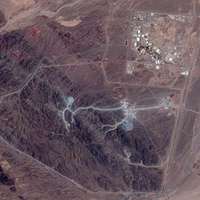
In response to a question over Iran's recent announcement of a new factory at Natanz to make nuclear parts, Khatibzadeh the International Atomic Energy Agency (IAEA) had full knowledge of the move, which resulted from sabotage at the Karaj site widely attributed to Israel.
" Iran is a member of the Non-Proliferation treaty (NPT),” he said. “We have followed NPT word by word. We transferred our centrifuges according to NPT…We are entitled under the Non-Proliferation Treaty to carry out any actions required to meet our needs.”