UAE Says Missiles, Drones Used In Houthi Attack, Some Intercepted
Smoke rising from oil tanker trucks in Abu Dhabi hit by Houthi weapons. January 17, 2022
Cruise and ballistic missiles were used alongside drones in Monday's attack on the United Arab Emirates, and several weapons were intercepted, the UAE ambassador to the United States said.
It was the first time the UAE, which rarely discusses its security in public, had said missiles were used in the attack which killed three civilians in Abu Dhabi, and the first time it has claimed to have intercepted some of the weapons.
Yemen's Iran-backed Houthi group siad it carried out the attack with five ballistic missiles and several drones.
"Several attacks - a combination of cruise missiles, ballistic missiles and drones - targeted civilian sites in the UAE. Several were intercepted," UAE Ambassador Yousef Al Otaiba told an online panel hosted by the Jewish Institute for National Security of America (JINSA).
Many analysts and UN experts belive Iran is supplying the Houthis with the sophisticated weapons. Yemen is not known for having the technological capabilities needed to develop and manufacture missiles and drones.
In response to the attacks, US President Joe Biden said on Wednesday his administration was considering re-designating the Houthis a terrorist organization. The Biden administration lifted that designation last February; the UAE has called for it to be restored.
The UAE had "long left the Yemen war," Otaiba said. "Attacking a country that is not in combat makes a very clear case" to reinstate the Houthi terrorist designation.
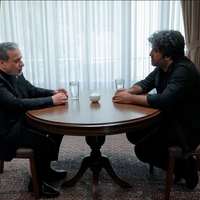
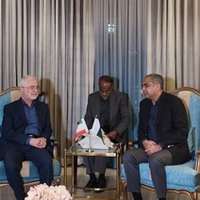
Iran's chief nuclear negotiator Ali Bagheri-Kani meeting a South Korean diplomat in Vienna on January 6, 2022
Iran and South Korea are discussing ways to use funds blocked in Seoul due to the US sanctions to settle Tehran’s overdue membership fees to the United Nations.
According to South Korean government sources on Thursday, Tehran and Seoul seek to capitalize on the assets to handle the issue of the UN dues, which have deprived Iran of its voting rights.
"Our government is in consultations with the Iranian government in that regard and is in related consultations with the US and the UN as well," sources told Yonhap News Agency on condition of anonymity.
After the Islamic Republic lost the right to vote at the UN, Foreign Ministry Spokesman Saeed Khatibzadeh said Tehran is trying to find a secure channelto pay its membership fee and end its suspension.
According to the UN charter, a member loses the right to vote when its debts equal or exceed the amount of dues it should have paid over the previous two years.
Last year, Iran managed to pay $16 million of its $65 million arrears to recover its vote after Tehran was granted an exemption from the sanctions and was allowed to access money blocked by the US Treasury. This time the minimum amount Iran must pay is over $18 million.
Two South Korea banks hold $7-9 billion of Iranian money, owed for oil imports.
The British House of Lords discussing the proscription of IRGC on January 19, 2022
A debate in the British House of Lords Wednesday highlighted pressure for the United Kingdom proscribing Iran’s Revolutionary Guards (IRGC) as a terrorist group.
In response to a question from Lord Polak, chairman of the Conservative Friends of Israel, government whip and spokesman Lord Sharpe said the matter was “under review.”
Lord Polak argued that the UK should “fully proscribe” the Guards, citing an article in the London Times. He argued the UK had “failed to hold the IRGC to account” for its activities, including the shooting down of a Ukrainian airliner over Tehran in January 2020 and an attack on the tanker MV Mercer Street in July 2021, in which a British citizen died, and which London and Washington attributed to Iran.
Several other member of the Lords joined the discussion demanding action against IRGC or asking questions about the progress in nuclear talks with Iran.
Lord Sharpe told the Lords, the UK’s upper parliamentary chamber, that the UK had already imposed 200 sanctions against Iran, including on the IRGC. Those calling for proscription argue it would tighten measures against the Guards, with designation under UK law makingeven the expression of support for such a group a criminal offense.
Lord Sharpe criticized the IRGC’s role in supporting Iran’s allies and proxies around the region, including the Houthis, Hezbollah in Lebanon, and Iraqi Shiite militia groups. “The UK strongly condemns the Houthi-based claimed attacks on the UAE,” Lord Sharpe said. “We are in contact with our Emirati partners and have offered UK solidarity and support.”
Best way forward
In 2019 US president Donald Trump proscribed the IRGC as a ‘foreign terrorist organization,’ prompting Iranian President Hassan Rouhani to describe the US as the “leader of world terrorism” and the Iranian government to list the US as a ‘state sponsor of terrorism.’
Trump’s designation came a year after he withdrew the US from the 2015 Iranian nuclear deal, the JCPOA (Joint Comprehensive Plan of Action), which world powers are currently working with Iran to revive in negotiations in Vienna.
Tehran has demanded that all sanctions incompatible with the JCPOA, including those restricting its ability to trade internationally, must be withdrawn before President Joe Biden can bring the US back into the nuclear agreement with Iran restoring the JCPOA’s nuclear limits.
In response to a question from Labour peer Lord West, Lord Sharpe told the House of Lords that the British government was convinced that restoring the JCPOA was “the best way forward” for curbing Iran’s atomic program and that United Nations Security Council Resolution 2231 of 2015, which endorsed the JCPOA, precluded Iran from activities, including launches, related to ballistic missiles “designed to be capable of delivering a nuclear weapon.”
Lord West said that “one month ago the Iranians exercised a practice dummy rum attacking the Dimona nuclear facility in Israel using 16 ballistic missiles and lots of drones,” and that “a number of agencies are now assessing that Iran will have a nuclear weapon capability within months.”
Vladimir Putin meeting Ebrahim Raisi at the Kremlin on Wednesday, January 19, 2022
The visiting Iranian President Wednesday presented the draft of a 20-year cooperation agreement to his Russian counterpart in Moscow, to update a 2001 version.
“Documents of strategic cooperation can outline the horizons of the [two countries’] relations over 20 years,” President Ebrahim Raisi said after his meeting with Vladimir Putin and presenting the draft.
Iranian officials had for months said preparations for the agreement had been finalized and it would be signed soon when the two presidents met, but last week they said more preparations were required.
Raisi, who arrived in the Russian capital for a state visit at Putin’s invitation, also underlined that his government faces no limitation for expansion and development of ties with the Russian Federation.
"Interaction between Iran and Russia in the region will undoubtedly ensure security and prevent unilateralism. Russia and we are members of many economic and political organizations in the region, such as the Shanghai Cooperation Organization, and Russia plays an important role in these organizations," the Iranian president said Wednesday morning before departing for Moscow.
Raisi praying in the Kremlin
Unilateralism is a term used by the Islamic Republic and others to mean the power and influence of the United States.
"Russia plays a key role in the Eurasian Economic Union, and our cooperation on this track may be effective to promote trade and economic projects," Raisi said. The volume of trade between the countries currently stands at around $3 billion. Tehran says it intends to increase the it to $25 billion.
Putin called Iran an active participant as an observer in the Shanghai Cooperation Organization (SCO) and said Tehran's relations with the Eurasian Economic Union are developing based on an interim agreement. "We are doing active work to establish a free trade zone between Iran and our assembly."
Raisi also praised the cooperation of the two countries in Syria while the Russian president said Moscow and Tehran played a key role in “helping the Syrian government overcome the threats posed by international terrorism.” Tehran and Moscow have both backed the government of President Bashar Assad from the early days of the Syrian Civil War.
According to the official Russian news agency Tass, Putin said at the meeting that he wanted to hear Raisi's position on the ongoing Iran nuclear talks to restore the 2015 deal, the Joint Comprehensive Plan of Action (JCPOA). "It is very important for me to know your position on the JCPOA," he told Raisi.
Raisi said Tehran hopes its efforts will lead to the lifting of US sanctions although "the threat of sanctions can't impede Iran."
Russia is a signatory to the JCPOA and in recent weeks has played a proactive role in the Vienna talks as a mediator between Iran and the United States which is only indirectly involved in the talks.
The Iranian president is expected to speak at Russia’s State Duma and at the Moscow Cathedral Mosque on Thursday.
Before Raisi's visit, Foreign Minister Hossein Amir-Abdollahian said that Tehran followed a “new road map” to deepen ties with Moscow. Amir-Abdollahian also said the Iran and Russia are determined to update their 20-year cooperation treaty of 2001.
"Iran's involvement with Russia on important regional and international issues has eroded US unilateralism. Long-term economic cooperation can be the basis for the formation of new successful experiences," Secretary of Iran's Supreme National Security Council (SNSC) Ali Shamkhani tweeted ahead of Raisi's departure for Moscow.
The shareholder meeting of Day Bank in Iran that turned into chaos on Wednesday.
A session of shareholders and managers of Iran’s Day Bank turned into chaos as one of the participants threw objects at the panel that was holding an election for a new board of directors.
The clashes in the Wednesday session were the second time in less than a month that angry shareholders show outburst and attack officials following months of uncertainty and losses in the Iranian stock market, hyped by the government which lured thousands of investors.
In late December, violent clashes were reported when one of the shareholders wanted to disrupt a general assembly session of the stock exchange market in the city of Kerman.
Shareholders have held a number of protestsand also announced plans to hold more demonstrations outside the Securities and Exchange Organization in Tehran to denounce the decline in stock prices and devaluation of their capital.
Earlier on Saturday, TEDPIX, the main index of Tehran Stock Exchange, lost 11,630 points to reach 1.322 million as 4.728 billion securities worth 27.68 trillion rials (about $93 million) were traded.
The drop continued in the following days while many people and analysts attribute the decline to uncertainties about the fate of current nuclear talks between Iran and world powers in Vienna.
Firefighters protested for higher pay in Tehran on Wednesday.
Hundreds of firefighters have held a demonstration in Tehran to protest their low salaries and poor living conditions amid high inflation and rising prices.
Firefighters gathered in front of Tehran city hall on Wednesday in protest to the indifference of authorities to their problems.
They also urged the resignation of Tehran’s Fire Department chief and vowed to continue similar rallies until their demands are met.
Authorities, who have shown little interest in raising salaries, arrested Mohammad Taghi Fallahi, the head of Iran’s teachers’ union to serve his six-month sentence for organizing the protests.
Workers and employees from various economic sectors are holding regular protest rallies or strikes to demand better work conditions and salaries.
Last week, hundreds of staff members from Iran’s hardliner judiciary department took to the streets in several cities, in what was an unprecedented development.
Food prices have risen by more than 60 percent in recent months, on top of high inflation in the previous three years. Government figures show that prices for 83 percent of basic food staples have reached a critical level. People living on salaries have cut back on nutritious food, such as meat, fruits and dairy products.