• العربية
  • فارسی
BrandBrand
  • Iran Insight
  • Politics
  • Economy
  • Analysis
  • Special Report
  • Opinion
  • Podcast
  • Live TV
  • Iran Insight
  • Politics
  • Economy
  • Analysis
  • Special Report
  • Opinion
  • Podcast
  • Live TV
  • Theme
  • Language
    • العربية
    • فارسی
  • Iran Insight
  • Politics
  • Economy
  • Analysis
  • Special Report
  • Opinion
  • Podcast
  • Live TV
All rights reserved for Volant Media UK Limited
volant media logo

Who is Mohammad Javad Bavand, the ex-IRGC official sanctioned by US?

Nov 21, 2026, 00:10 GMT+0

Mohammad Javad Bavand, a former IRGC intelligence official sanctioned by the United States on Friday, has played a key role in Iran's sanctioned oil trade, working through a network of intermediaries to sell crude and recover revenues held abroad.

The US Treasury sanctioned Bavand alongside three other Iranians — Majid Taj, Mojtaba Arabnejad and Mohammadhossein Servati — over their roles in networks supporting Iran's oil trade and sanctions evasion.

The Treasury said Bavand worked with intermediaries, including Taj, the brother of Iranian Football Federation president Mehdi Taj, to recover proceeds from Iranian oil sales held abroad, despite members of the network owing billions of dollars from previous transactions.

Iran International investigations have documented Bavand's rise from the Revolutionary Guards Intelligence Organization to senior positions overseeing oil sales, including the allocation of millions of barrels of crude to intermediaries with billions of dollars in outstanding debts.

From intelligence officer to oil trader

Bavand previously served as deputy head of the economic directorate of the Revolutionary Guards Intelligence Organization under Mostafa Ahadi.

Following the US withdrawal from the nuclear agreement in 2018, he represented Guards intelligence on a Supreme National Security Council committee responsible for overseeing sanctioned oil sales.

He later became a special assistant to the oil minister under former President Ebrahim Raisi. After leaving the position under President Masoud Pezeshkian, Bavand returned to the Oil Ministry in June 2026 to oversee oil trading.

Millions of barrels entrusted to indebted traders

In September, Iran International published confidential documents raising questions about the allocation of sanctioned crude to four intermediaries who had failed to return billions of dollars from earlier sales.

The documents showed that the traders were offered unusually steep discounts despite their outstanding debts.

A subsequent investigation found that Bavand and oil-trading official Ali Akbar Pour-Ebrahim had assigned 86 million barrels of Iranian crude to four intermediaries, including Hossein Shamkhani and Mohammad Hadi Momenin.

The findings formed part of Iran International's reporting on a struggle between networks linked to the Revolutionary Guards Intelligence Organization and the Intelligence Ministry for control of Iran's sanctioned oil trade.

A November 9 investigation revealed further details of Iran's efforts to use oil terminals and storage facilities in China to circumvent US sanctions.

It cited an earlier document showing that Bavand had instructed Momenin, an oil intermediary who owed $2 billion in outstanding proceeds, to use a vessel linked to Hossein Shamkhani to deliver oil for storage at a Chinese port.

Treasury names Bavand's associates

The Treasury said Bavand had worked with the Revolutionary Guards and Sepehr Energy Jahan Nama Pars, a previously sanctioned company tasked with selling oil for Iran's Armed Forces General Staff.

Its designation of Majid Taj also brought renewed attention to a relationship documented in Iran International's earlier investigations into the oil-trading network.

Bavand and Taj were sanctioned under Executive Order 13902, which targets designated sectors of Iran's economy. Arabnejad, who was linked to Mahan Air, and Servati, who was linked to Sepehr Energy Jahan Nama Pars, were sanctioned under counterterrorism-related authorities.

The measures block any assets the four hold under US jurisdiction and generally prohibit Americans from conducting transactions with them.

Most Viewed

Tanker loads Iranian crude in Persian Gulf as Tehran weighs resuming exports
1

Tanker loads Iranian crude in Persian Gulf as Tehran weighs resuming exports

2

Houthi missile attack damages Riyadh’s tallest building

3

Iran readies tankers to run US blockade, threatens Persian Gulf oil if fired on

4
ANALYSIS

War damage leaves Iran with few options to avert winter gas crunch

5

Iran hardliners push tanker convoy to defy US blockade

Banner

Spotlight

  • Iran-linked hackers posed as US expert to target Australian broadcaster
    PODCAST

    Iran-linked hackers posed as US expert to target Australian broadcaster

  • Who gets to be a journalist? Iran seeks greater control over press
    INSIGHT

    Who gets to be a journalist? Iran seeks greater control over press

  • Iran hardliners push tanker convoy to defy US blockade

    Iran hardliners push tanker convoy to defy US blockade

  • War damage leaves Iran with few options to avert winter gas crunch
    ANALYSIS

    War damage leaves Iran with few options to avert winter gas crunch

  • A tough winter for Iran's cement industry, a tougher one for steel
    ANALYSIS

    A tough winter for Iran's cement industry, a tougher one for steel

  • How Iranians are turning grief into defiance
    OPINION

    How Iranians are turning grief into defiance

Banner
Banner
Banner
Banner
Banner
Banner
•
•
•

More Stories

War damage leaves Iran with few options to avert winter gas crunch

Nov 20, 2026, 20:14 GMT+0
•
Dalga Khatinoglu
100%
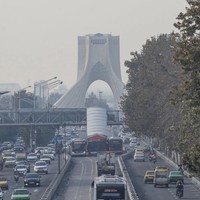
Traffic moves along a smog-covered highway near Tehran's Azadi Tower, as air pollution blankets the Iranian capital, November 18, 2026

Iran faces a worsening winter energy crisis after wartime damage to its gas infrastructure cut production capacity, with officials warning of shortages in 11 provinces and limited options to make up the shortfall.

The country's daily gas deficit, estimated at around 300 million cubic metres last winter, is expected to reach 430 million cubic metres this winter.

Mohammad Sadegh Azimifar, head of the National Iranian Oil Products Distribution Company (NIOPDC), has announced that 60 million litres of kerosene have been stockpiled in some provinces facing severe gas shortages.

He said LPG reserves for household consumption would also be increased.

Azimifar also reported that 3.2 billion litres of diesel and mazut (fuel oil) have been stockpiled to compensate for gas shortages at power plants.

Production below prewar levels

Iranian officials say gas processing facilities in Asaluyeh were targeted during the recent war, reducing the country's daily gas production capacity by 230 million cubic metres.

Some facilities have returned to operation in recent weeks, bringing the daily production shortfall down to 130 million cubic metres.

The latest figures released by Iranian gas officials indicate that the country is currently producing around 690 million cubic metres of gas per day (mcm/d), compared with 793 mcm/d during the same period last year.

During the peak winter consumption period, Iran normally raises daily gas production to more than 830 mcm/d.

It remains unclear whether all production facilities are operating at their full technical capacity. Nevertheless, the available figures suggest that Iran's gas production capacity has declined by at least 100 mcm/d.

These figures refer to raw gas extracted from fields, rather than processed gas delivered to the national network. Non-methane components are removed during processing, while some gas is consumed by production and transmission facilities.

Last winter, for example, Iran extracted around 837 mcm/d of raw gas but delivered approximately 750 mcm/d of processed gas to the national network.

Of that amount, just under 700 mcm/d reached domestic consumers, with around 40 mcm/d exported and the remainder lost through the country's ageing transmission and distribution network.

Winter demand forces cuts to industry

According to Statistical Center data, Iran's daily household gas consumption in winter is more than 2.5 times its average level during other seasons. A similar seasonal pattern applies to the commercial, public and agricultural sectors.

To meet this demand, the government sharply curtails gas supplies to industries, petrochemical plants and power stations.

Last winter, combined gas consumption by households and the agricultural, commercial and public sectors reached 388 mcm/d, compared with an average of 154 mcm/d during other seasons.

By contrast, daily gas deliveries to power plants, petrochemical facilities, industries and the transport sector fell to 311 million cubic metres, down from an average of 493 mcm/d during other seasons.

With little scope to restrict household consumption during winter, the government has to absorb the seasonal surge by reducing supplies to other sectors.

Limited alternatives to natural gas

Iran already made extensive use of alternative fuels in power plants and industrial facilities last winter, leaving limited room to compensate for further gas shortages.

Only 15% of the country's thermal power generation capacity can operate on liquid fuels, namely mazut and diesel, according to the report's figures.

These power plants already switch to alternative fuels during peak winter demand, leaving little additional scope to increase their use.

Meanwhile, half of the industrial sector's winter gas consumption comes from small-scale industries, many operating within urban areas and unable to switch to alternative fuels.

According to Kpler data, Iran exported an average of approximately 256,000 barrels per day of mazut and 378,000 barrels per day of propane and butane (LPG) by sea last year.

These exports have been halted by the US naval blockade. The combined energy content of the fuels is equivalent to around 85 million cubic metres of natural gas per day.

In theory, retaining these fuels for domestic use could help offset part of the winter gas deficit. But doing so would require industries and power plants to substitute mazut and LPG for natural gas wherever possible, alongside a suspension of natural gas exports.

Both scenarios face significant obstacles.

Many industries lack the technical capacity to switch fuels, while Iran urgently needs gas export revenues, particularly given the severe disruption to its oil revenues.

With alternative fuels already widely used last winter, power plants and industrial facilities are unlikely to have much additional capacity to absorb them this year.

Greater reliance on liquid fuels would also come against the backdrop of Iran's winter air pollution crisis. Last winter, government offices and schools were closed for approximately four weeks because of air pollution and energy shortages.

Eleven provinces face gas supply stress

Iranian officials say 11 provinces will face gas supply stress this winter, with the situation expected to be particularly severe in the northern provinces of Mazandaran, Gilan and North Khorasan.

An examination of Ministry of Energy data shows that these three provinces consumed an average of around 50 mcm/d of gas in 2023, including 21 mcm/d used by households and the commercial, public and agricultural sectors.

Azimifar's announcement that 60 million litres of kerosene have been stockpiled in some provinces facing severe shortages underscores the government's preparations for possible supply disruptions.

The stockpile has an energy content equivalent to approximately 59 million cubic metres of natural gas, although the extent to which it can replace gas consumption depends on the availability of suitable equipment and the sectors receiving the fuel.

Eight other provinces are also expected to face supply stress.

Together, the 11 provinces consumed around 240 million cubic metres of gas per day in 2023, accounting for 37% of the country's total consumption that year.

Tanker loads Iranian crude in Persian Gulf as Tehran weighs resuming exports

Nov 19, 2026, 18:21 GMT+0
100%

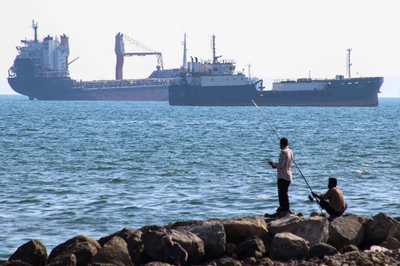
Iran is considering resuming oil exports in defiance of the US naval blockade, a Revolutionary Guards-affiliated outlet reported Thursday, hours after a ship-tracking service said Iran appeared to be preparing to ship crude again for the first time in four months.

In a post labeled “unofficial,” the IRGC-affiliated Sabereen News said dozens of Iranian tankers were preparing to set sail for China.

TankerTrackers co-founder Samir Madani told Reuters that one tanker was taking on Iranian crude from another vessel in the Persian Gulf on Thursday. If it cleared the blockade, he said, it would be the first successful seaborne export of Iranian crude since mid-July.

Madani declined to name the tanker but said it was not under US Treasury sanctions and had entered the region without drawing scrutiny. The Reuters report gave no destination for the cargo or indication that other tankers were preparing to sail.

In a commentary on Thursday, the Revolutionary Guards-affiliated Fars news agency urged Tehran to send a tanker convoy to China, arguing that the prospect of Iranian retaliation against oil terminals in the UAE, Saudi Arabia and Qatar could deter Washington from firing on the tankers.

Sabereen News said Tehran had warned governments across the region that it would go to war if the United States attacked Iranian tankers sailing to China.

Energy analyst Abdollah Babakhani wrote on social media that Iran could retaliate against ports and oil terminals in the region if the United States attacked or seized Iranian tankers attempting to cross the blockade.

He said the region appeared to be on the verge of a period of intense but possibly short-lived tension.

How the blockade cut oil flows to China

The United States reimposed its naval blockade on July 14. Iran continued to load tankers for several weeks, but Kpler data reviewed by Iran International showed that no new Iranian cargo had crossed the blockade and sailed toward China, Iran’s main oil buyer.

Iran loaded about 2 million barrels of crude and condensate a day in March, Reuters reported, citing estimates from Kpler and Vortexa. That fell to roughly 740,000 barrels a day in July and between 220,000 and 255,000 in August. Kpler recorded no crude or condensate loadings in September, the first full month without any since the 1979 Islamic Revolution.

Chinese refiners continued to receive Iranian oil from tankers that were already outside the blockade when it took effect. Those vessels held nearly 90 million barrels in mid-July. By October 10, only 8 million remained, according to Kpler. The stockpile was exhausted by mid-October, the Wall Street Journal later reported, citing the firm’s analysts.

The loss of its main export market also forced Iran to cut production to about 1.8 million barrels a day, roughly half its prewar output and close to what it consumes at home, Homayoun Falakshahi, Kpler’s head of crude oil analysis, told Iran International in October.

Oil payments could dry up in December

Chinese refiners typically take one to two months to pay for deliveries, allowing Tehran to keep earning foreign currency after shipments stop, Falakshahi told Iran International’s Eye for Iran podcast. He estimated that payments for the last cargoes could reach Iran by mid-December. If the blockade held, he said, Tehran stood to lose between $3 billion and $6 billion a month in oil income.

US Treasury Secretary Scott Bessent told Iran International on October 26 that Iran was running short of foreign currency under Operation Economic Outcast, Washington’s campaign to cut Tehran off from its remaining sources of revenue.

“There have been no loadings at Kharg Island. Production is starting to falter,” Bessent said. He predicted Iran’s economy would shrink by more than 25% in the year ending March 2027.

Washington has since set up Task Force Iron Gate to restrict trade through Iran’s land borders and the Caspian Sea. Tehran has made lifting the naval blockade one of its demands for talks with Washington.

On November 16, US Central Command said its forces had redirected 150 merchant vessels and disabled five since June.

A tough winter for Iran's cement industry, a tougher one for steel

Nov 19, 2026, 04:13 GMT+0
•
Umud Shokri
100%
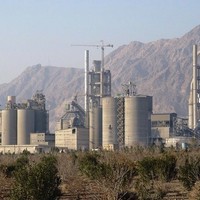
File photo: Tehran Cement factory has faced restrictions because of environmental concerns over air pollution in nearby populated areas of Iran's capital

The question facing Iran’s steel and cement industries this winter is not simply whether their gas supplies are cut, but how much they can continue producing afterward.


Iran faces a peak gas deficit of about 430 million cubic meters daily, compared with 300 million before US-Israeli strikes damaged its energy infrastructure.

Households take priority, but how much of the shortfall will fall on either industry remains uncertain.

Cement needs heat, which can come from alternative fuels. Much of Iranian steelmaking, however, needs gas to transform iron ore itself.

A cement factory that loses natural gas may still have a working kiln tomorrow. A steel plant that loses the gas feeding its iron-reduction unit may not.

Cement: The challenge of getting fuel

Iran's grey-cement producers were receiving only five to eight million cubic meters of gas daily against normal industry demand of 28 million before losing the remainder in late October, according to Tasnim. Most had already turned to mazut, a heavy fuel oil.

Iran nevertheless produced 6.44 million tonnes of clinker in October. That provides a baseline before the cutoff, not evidence that production continued at the same rate afterward.

Using the International Energy Agency's energy benchmark, maintaining October's clinker output without gas would require approximately 19 million liters of mazut daily, equivalent to about 760 deliveries by 25,000-liter tankers.

These are estimates, not forecasts. Kilns differ in efficiency, and the fuel must actually arrive. Losing 200 tanker deliveries would mean losing enough heat to produce roughly 54,000 tonnes of clinker daily, assuming no backup fuel.

Cost is another obstacle. Tasnim reported mazut transport charges of 2,000–2,500 tomans per liter. At 19 million liters, trucking alone would cost 38–47.5 billion tomans daily, excluding fuel purchases. Power plants also compete for the same tankers and mazut.

Iran International reported that 22 cement factories stopped their kilns in December 2024. Tehran Cement could not burn mazut because of pollution restrictions near populated areas. A 2026 report described Lamerd Cement operating at around 60 percent of capacity over the preceding two years because its distance from fuel suppliers made reliable mazut deliveries uneconomic.

Having an alternative fuel, in other words, does not guarantee that a factory can use it.

Cement can outlast its kilns, briefly

Even when a kiln stops, a grinding mill can turn stored clinker into finished cement, provided electricity remains available. This can conceal the scale of disruption.

In July, clinker production fell nearly 39 percent year-on-year, while cement production rose 5 percent.

October cement output averaged approximately 214,000 tonnes daily. Assuming clinker accounts for 80 percent of finished cement, sustaining that rate with every kiln stopped would consume about 171,000 tonnes of stored clinker each day.

At that pace, one million tonnes of accessible clinker would last fewer than six days. Maintaining production for a month would require more than five million tonnes. National inventories are not publicly verified.

October's exports included 668,000 tonnes of cement and 285,000 tonnes of clinker, adding to competition for available supplies. Slower production can stretch stocks but reduces sales, while electricity shortages can stop grinding mills even sooner.

Steel: Gas is an ingredient

Iran's electric-furnace steel industry is particularly exposed because much of it relies on direct-reduced iron, also known as sponge iron.

In these plants, natural gas is converted into hydrogen and carbon monoxide to remove oxygen from iron ore.

Iran produced about 14 million tonnes of sponge iron during January–June 2026. Using a published benchmark of 265 cubic meters of gas per tonne of sponge iron, maintaining that production rate would require approximately 20.5 million cubic meters of gas daily.

A daily gas reduction of five million cubic meters could put roughly 19,000 tonnes of sponge-iron production at risk; a ten-million-cubic-meter cut could put 38,000 tonnes at risk.

These are estimates of potential exposure, not predictions of actual production losses.

Plants also cannot necessarily operate at half capacity when their gas supply is halved. Iron-reduction units require specific gas flows, temperatures and chemical conditions. Below certain levels, an entire unit may have to shut down.

Where the alternatives run out

Steelmakers can keep their furnaces running for a time by using stored sponge iron, purchasing other iron materials or increasing their use of scrap metal. Iran's smaller blast-furnace operations also rely on a different production process.

Replacing just ten days of Iran's recent sponge-iron output would require around 770,000 tonnes of suitable material. Finding that much would be difficult when supplies are tight, prices are high and electricity shortages are already disrupting operations.

Some steel production could therefore continue after gas supplies are cut, but maintaining normal output would become difficult as available materials run low.

Cement producers have more flexibility, but their experience shows that fuel substitution depends on delivery, cost and permission to burn alternative fuels. Neither industry's losses can be reliably forecast without knowing how much fuel and material individual factories have in reserve.

Both industries may continue producing after gas supplies are cut, but their output will depend on the availability and cost of alternative fuels and raw materials.

What matters this winter is not simply whether factories remain open, but how much they can produce, at what cost and for how long.

Shipping firm sold vessel below value to Shamkhani sons, Iranian outlet says

Nov 16, 2026, 09:37 GMT+0
100%
File photo of Mohammad Hossein Shamkhani, son of Iran's slain security chief Ali Shamkhani

Iran's state-linked shipping company sold a damaged container vessel for less than $6 million to a firm owned by the sons of a senior Iranian official, raising questions over asset sales and shareholder interests, an Iranian news outlet reported Monday.

The Shahraz vessel was sold to Admiral, a company owned by the sons of Ali Shamkhani, a former secretary of Iran's Supreme National Security Council who was killed in Israeli attacks, and returned to commercial service after repairs costing several million dollars, Rouydad24 reported on November 16.

  • US sanctions Shamkhani 'shipping empire' for moving Iranian oil

    US sanctions Shamkhani 'shipping empire' for moving Iranian oil

"Each of these cases raises serious questions about decision-making, pricing, the selection of buyers or recipients, the financial recording of transactions and the responsibility of managers," Rouydad24 wrote.

The website called for the publication of transaction documents and financial assessments to establish whether the sales served the interests of shareholders in the publicly listed Islamic Republic of Iran Shipping Lines (IRISL).

Damaged vessel sold below $6 million

The Shahraz container ship ran aground near the Singapore Strait on May 11, 2020, sustaining extensive hull damage.

The vessel was subsequently sold to Admiral for less than $6 million after incurring salvage and maintenance costs, Rouydad24 reported.

  • Iran acquires oil facilities in China to bypass US sanctions, leaked document shows

    Iran acquires oil facilities in China to bypass US sanctions, leaked document shows

The outlet said the ship's recoverable scrap value may have exceeded its sale price, while shareholders received insufficient information about salvage expenses and insurance compensation.

Admiral subsequently spent several million dollars repairing Shahraz before returning it to commercial operations.

Rouydad24 questioned why IRISL had not undertaken the repairs itself and whether the vessel's commercial viability had been assessed before its sale.

It also sought details on whether the transaction involved a public auction or direct negotiations, how the buyer was selected and whether conflicts of interest existed.

Shamkhani shipping network faces US sanctions

Hossein Shamkhani, a son of Ali Shamkhani, has operated internationally under the aliases Hugo Hayek and Hector.

The US Treasury Department announced on July 14 that it was intensifying efforts to disrupt his network over shipping activities that circumvent US sanctions.

  • US sanctions oil network tied to Iranian tycoon Shamkhani

    US sanctions oil network tied to Iranian tycoon Shamkhani

The network remains a major participant in Iranian oil exports and has expanded into container shipping and global commodities trading, according to the Treasury Department.

The measures followed earlier US sanctions against Shamkhani and much of his financial and shipping network in July 2025 and April 2026.

Bloomberg reported in August 2024 that the Dubai-based Milavous Group, where Shamkhani is a senior executive, had generated billions of dollars trading commodities from Iran, Russia and other countries.

  • Son of Khamenei adviser sues Bloomberg over oil trade allegations - Iran media

    Son of Khamenei adviser sues Bloomberg over oil trade allegations - Iran media

A confidential document obtained by Iran International on November 9 showed that Shamkhani had long dominated Iranian oil sales in the United Arab Emirates and used a vessel purchased with an Iranian government loan to transport Russian oil.

Iran International has also detailed an oil trading network linked to Revolutionary Guards intelligence, including a confidential letter from Shamkhani to Supreme Leader Ali Khamenei.

Fuel sales raise shareholder questions

IRISL continued supplying fuel to Admiral from its international operations allocation for a period after selling Shahraz, Rouydad24 reported.

The website said supplying fuel to a potential commercial competitor was not necessarily a violation, but questioned the pricing, revenue, authorizations and economic rationale.

"In a publicly listed company, the company's resources and commercial capacities must be used in accordance with its economic interests," Rouydad24 wrote.

  • Inside the alleged IRGC Intelligence takeover of Iran’s sanctioned oil trade

    Inside the alleged IRGC Intelligence takeover of Iran’s sanctioned oil trade

The report called for disclosure of the sale proceeds received, Admiral's ultimate beneficial owners and any potential conflicts of interest involving those who approved the transaction.

The questions follow Iran International investigations into oil trading networks involving relatives of senior Islamic Republic officials, including the son of former Revolutionary Guards commander Mohsen Rezaei and relatives of two ministers.

  • Mohsen Rezaei’s son among nine identified in $11-billion Iran oil network

    Mohsen Rezaei’s son among nine identified in $11-billion Iran oil network

Reports of organized corruption involving politically connected figures have drawn public anger as Iranians face mounting economic pressure and difficulties affording basic necessities.

The Shahraz transaction has renewed questions over the management of state-linked commercial assets and whether their sale benefits shareholders or politically connected buyers.

Iran facing one of fastest economic collapses ever, Bessent says

Nov 15, 2026, 17:34 GMT+0
100%
A man walks past a currency exchange office displaying foreign exchange rates in Tehran, Iran.

US Treasury Secretary Scott Bessent said on Sunday that Iran was experiencing one of the fastest economic collapses in history, as Washington expanded its pressure campaign beyond a naval blockade to target the country's land-based supply routes.

Speaking to Fox News, Bessent predicted that Iran's rial would lose 25% of its value between March 2026 and March 2027, comparing the pace of the decline with the economic turmoil that followed the Soviet Union's collapse.

"To put that in perspective, the Russian economy went down 22% over three years when the Soviet Union collapsed," Bessent said. "So this is one of the fastest collapses in history."

Bessent argued that the deteriorating conditions were putting increasing pressure on Iran's political and military establishment, even as senior officials remained insulated from the consequences.

"A lot of the leadership, they're like rats in a sewer pipe," he said. "They are in underground bunkers, and they don't see how bad it is up top."

He also said US restrictions had severely limited Iranian officials' ability to travel abroad.

"And we have them completely isolated. We have an airline quarantined," Bessent said.

"They can't fly to London to see their family, Paris to see their girlfriends, Geneva to visit their money."

Bessent suggested that the economic pressure was beginning to cause concern within the Islamic Republic's leadership.

"We could see from the public statements, the public statements from the politicians began in the summer. Now we're seeing the IRGC get worried," he said, referring to Iran's Revolutionary Guards.

  • Bessent says Iran economy will contract by more than 25%

    Bessent says Iran economy will contract by more than 25%

  • US Treasury chief moves to military base after Iranian threats

    US Treasury chief moves to military base after Iranian threats

  • Bessent's tax boycott and fuel advice sparks debate among Iranians

    Bessent's tax boycott and fuel advice sparks debate among Iranians

US expands blockade to target Iran's land routes

Bessent's remarks came just over a week after the US military announced Task Force Iron Gate, an initiative designed to expand Washington's economic pressure campaign beyond its existing naval blockade.

Announced by US Central Command on November 7, the task force aims to disrupt the movement of advanced weapons, dual-use technologies, sanctioned materials and illicit revenue across Iran's land borders and the Caspian Sea.

The 20-member team, based in Tampa, Florida, will coordinate with US government agencies to restrict Tehran's access to military supplies and financial resources.

"The establishment of Task Force Iron Gate reinforces the success of our ironclad blockade against Iran at sea," CENTCOM commander Admiral Brad Cooper said.

The US military said its naval blockade had prevented Iran from exporting more than $25 billion worth of crude oil, an estimate that could not be independently verified.

President Donald Trump declared the new task force operational on November 8, saying it would further restrict Iran's access to international trade.

"Task Force Iron Gate is in full force and effect in the Islamic Republic of Iran," Trump wrote on Truth Social. "Coupled with history's greatest Naval Blockade, very little gets into, or out of, Iran!"

Pence says ending military campaign was a mistake

Former Vice President Mike Pence said on Sunday that the United States had halted its military campaign against Iran too soon and disputed Vice President JD Vance's assessment of why Republicans suffered losses in the midterm elections.

"Vice President Vance is wrong," Pence said on NBC's Meet the Press.

Pence argued that American forces had achieved substantial military successes during Operation Epic Fury, including destroying much of Iran's navy, establishing air superiority and attacking thousands of military targets.

He criticized the administration's decision to suspend operations after five weeks, describing the move as an embrace of the "politics of appeasement."

"There's an old saying that you don't make peace with your enemy, you make peace with your defeated enemy," he said.

  • Vance blames Iran war for election losses as Trump weighs next move against Tehran

    Vance blames Iran war for election losses as Trump weighs next move against Tehran

  • Opportunity or trap? Vance's Iran war remarks divide Tehran

    Opportunity or trap? Vance's Iran war remarks divide Tehran

  • Trump shifts Vance away from Iran talks, says deal unnecessary

    Trump shifts Vance away from Iran talks, says deal unnecessary

Pence pointed to continued Iranian military activity in the Persian Gulf as evidence that Tehran remained willing to confront Washington.

Vance has attributed Republican electoral losses to the Iran war and its economic consequences, including higher fuel prices. President Donald Trump, meanwhile, said on Thursday that Washington no longer needed a deal with Tehran and directed Vance to shift his attention from Iran diplomacy to domestic corruption investigations.

Bahrain reports fresh attacks as Iran vows retaliation

The dispute over Washington's strategy came as Bahrain reported intercepting further Iranian aerial attacks on Sunday, highlighting the continuing risk of military escalation despite the suspension of large-scale US strikes.

Bahrain's military said its air defenses destroyed several aerial threats before they reached their targets, following the interception of two drones Friday.

The country's Foreign Ministry condemned the attacks as violations of its sovereignty and urged the UN Security Council to take action against Tehran.

"These attacks constitute a blatant aggression against Bahrain's sovereignty and territorial integrity," the ministry said.

Iranian Foreign Ministry spokesperson Esmaeil Baghaei, asked about the strikes, said Tehran would continue responding to attacks against it.

"We have previously said that we will not leave any attack unanswered, and we will continue this approach from now on," Baghaei said on Sunday.