• العربية
  • فارسی
BrandBrand
  • Iran Insight
  • Politics
  • Economy
  • Analysis
  • Special Report
  • Opinion
  • Podcast
  • Live TV
  • Iran Insight
  • Politics
  • Economy
  • Analysis
  • Special Report
  • Opinion
  • Podcast
  • Live TV
  • Theme
  • Language
    • العربية
    • فارسی
  • Iran Insight
  • Politics
  • Economy
  • Analysis
  • Special Report
  • Opinion
  • Podcast
  • Live TV
All rights reserved for Volant Media UK Limited
volant media logo

Trade Official Says Bartering Oil Amid Sanctions Is A Loss For Iran

Maryam Sinaiee
Maryam Sinaiee

Iran International

Jan 3, 2022, 08:36 GMT+0Updated: 17:20 GMT+1
An oil installation in Iran's Khuzestan province.

A business representative in Tehran has criticized the government's sanctions-busting oil barter deals with buyers like China saying Iran gets little in return.
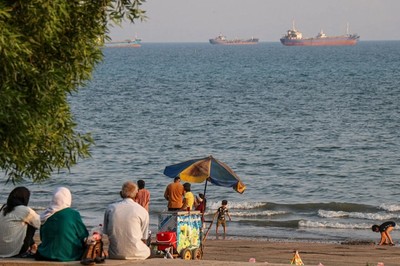

"We had not signed clear agreements with China for bartering. We gave them oil and told them to pay in kind. In such circumstances, they give us all their inferior quality products including the pesticides that have caused so much damage to our agricultural exports," Masoud Daneshmand told the Iranian Labour News Agency (ILNA) Sunday.

US banking sanctions and international restrictions on Iran have practically cut the country off from the global financial system, making it impossible to receive cash for oil exports.

Daneshmand also criticized an agreement to receive tea from Sri Lanka for its nearly a decade-old oil debt. In late December, Sri Lanka's minister of plantation, Ramesh Pathirana, signed an agreement with the head of Iran's Trade Promotion Organization in Colombo to settle the country's $251 million debt in monthly instalments of $5 million.

Sri Lanka will release the equivalent of the $5 million in rupees which will then be paid to the country's state-run Tea Board to distribute to individual exporters of tea to Iran.

Daneshmand said Sri Lanka has no other product to barter with Iran. "They will be giving Iran second and third grade quality tea instead of top quality and we will have to accept it. This kind of barter is nothing but loss to Iran."

In a tweet December 27, prominent reformist politician Mostafa Tajzadeh called the barter agreement "victorious"for Sri Lanka and referring to Iranian officials' insistence that US sanctions are an opportunity and blessing for Iran and will make the Islamic Republic stronger, used the hashtag "sanctions are not blessing".

Iran produces around 85,000 tons of tea in the Caspian Sea region in the north and is among the world's ten top tea producing countries. Domestic production meets around 30 percent of the national consumption. Sri Lanka is the second top tea exporter to Iran after India.

Some social media users have pointed out that bartering oil for tea could increase tea imports from Sri Lanka and damage domestic tea farmers' livelihood.

There have also been reports about plans to receive payments for oil exported to India and Pakistan in kind. Both countries export rice to Iran. Ahmad Donyamali, an official of Iran's Housing Council recently said Iran was also negotiating with Chinese and Turkish companies for building affordable government housing in a possible oil barter deal oil.

Speaking to ILNA December 24, the chairman of Iran-Switzerland Chamber of Commerce, Sharif Nezam-Mafi, criticized the government's plans to increase barter transactions with other countries and pointed out that Iran needed technology which developed countries are not likely to accept to transfer to Iran through barter.

Nezam Mafi added that many Swiss companies remained in Iran after the US withdrawal from the 2015 nuclear deal, Joint Comprehensive Plan of Action (JCPOA) but most of the companies that are still active cannot transfer their profits out of Iran, pay their shareholders, or even make payments to import raw materials or spare parts due to the sanctions. "I will not be surprised if the number of these companies drops if there is no [positive] conclusion in the JCPOA talks."

Hamidreza Salehi, a member of Tehran Chamber of Commerce on 7 December told ILNA that bartering could cause serious harm despite alleviating some of the problems the country is facing in international trade. He argued that bartering would eliminate the other side's competitors and let them dictate their own terms such as demanding discounts. "We will have to make concessions for business to take place."

Most Viewed

Iran readies tankers to run US blockade, threatens Persian Gulf oil if fired on
1

Iran readies tankers to run US blockade, threatens Persian Gulf oil if fired on

2

Iran hardliners push tanker convoy to defy US blockade

3
ANALYSIS

War damage leaves Iran with few options to avert winter gas crunch

4

Iraq begins taking back town held for a decade by Iran’s strongest militia ally

5

Who is Mohammad Javad Bavand, the ex-IRGC official sanctioned by US?

Banner

Spotlight

  • ‘The city smelled of blood’: Witness recalls Iran protest crackdown

    ‘The city smelled of blood’: Witness recalls Iran protest crackdown

  • Iran-linked hackers posed as US expert to target Australian broadcaster
    PODCAST

    Iran-linked hackers posed as US expert to target Australian broadcaster

  • Who gets to be a journalist? Iran seeks greater control over press
    INSIGHT

    Who gets to be a journalist? Iran seeks greater control over press

  • Iran hardliners push tanker convoy to defy US blockade

    Iran hardliners push tanker convoy to defy US blockade

  • War damage leaves Iran with few options to avert winter gas crunch
    ANALYSIS

    War damage leaves Iran with few options to avert winter gas crunch

Banner
Banner
Banner
Banner
Banner
Banner