Us Navy Seizes $4 Million Worth Of Heroin From Iranian Sailors

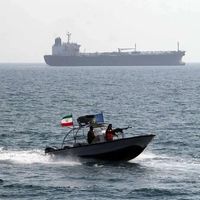
The US Navy seized a stateless fishing vessel on Monday, believed to have originated in Iran, carrying $4 million worth of heroin in the Arabian Sea.

The US Navy seized a stateless fishing vessel on Monday, believed to have originated in Iran, carrying $4 million worth of heroin in the Arabian Sea.
The spokesman for the US Fifth Fleet, Timothy Hawkins, said on Thursday that the vessel probably came from Iran because all nine crew members identified themselves as Iranian nationals.According to Commander Hawkins, about 385 kilograms of heroin were confiscated in the bust by the USS Tempest and USS Typhoon patrol ships.The drugs were destroyed at sea by US forces and the crew members were released, a statement said.
Last week the US Navy seized a vessel in the Arabian Sea with thousands of weapons and a large cargo of ammunition on board. This vessel was also believed to have originated in Iran.
About two week earlier the US Navy had rescued five Iranian sailors following in an explosion on their vessel, transiting the Gulf of Oman, and seized its cargo of more than two tons of hashish, methamphetamine and heroin, worth over $14.7 million.
"In 2021, the international Combined Task Force 150 has seized illegal drugs worth more than $193 million (at regional wholesale prices) during counter-narcotics operations at sea… This is a higher total value than the amount of drugs the task force interdicted in the previous four years combined”, Thursday's statement added.


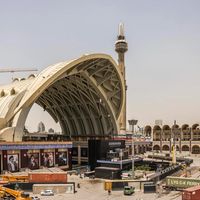
The rising number of metro train accidents in Iran is due to a serious need of overhaul for most of the existing wagons, a new report has revealed.
The report published in an Iranian daily on Thursday says over 70 percent of the wagons active in Tehran-Karaj metro line are too old for operation, adding that about 45 percent of them should be stopped for major repairs.
According to the report, Tehran’s municipality hasn’t allocated enough budget for timely maintenance. Although money was available, the authorities opted for the expansion of lines instead of overhauling the existing fleet, the report said.
The Tehran metro network, with seven active lines stretching over 250 kilometers of railways and more than a thousand wagons,carrying over two million passengers a day.
Iran’s government faces a cash-crunch due to United States oil sanctions since 2018, and procurement problems because of international banking restrictions.
On Wednesday, a freight train traveling from Tehran to Mazandaran province derailed, causing material damage to over a dozen wagons. This was the second such accident in about a week.
More than 20 people were injured last week when two metro trains collided on the Line 5 of the Tehran metro on the Karaj-Golshahr railway.

In his latest spat with current premier Naftali Bennett, former Israeli Prime Minister Benjamin Netanyahu has attacked his rival’s approach to Iran and the Vienna nuclear talks.
“Iran is racing forward while Bennett remains silent and buckles before it, “Netanyahu wrote in a Hebrew tweet Thursday.“The Bennett government is dangerous for Israel.”
Bennett said on Tuesday that Israel would not automatically oppose any agreement reached between Iran and world powers in Vienna. “We are not automatic naysayers. We’re taking a practical approach… Unlike others, we’re not looking to fight for the sake of fighting; rather, we’re trying to bring a result.”
The commitment by the United States administration of President Joe Biden to work to revive the 2015 Iran nuclear deal wrong-footed Israel, which opposed the agreement and is widely held responsible for cyber and military attacks on Iran’s nuclear sites. Bennett, who replaced Netanyahu in June, has reportedly felt a cold shoulder from Biden.
In December Bennett urged world powers to take a far harder line against Tehran in Vienna, telling the Israeli cabinet that Iran “cannot enrich uranium and negotiate at the same time” and “must begin to pay a price for its violations.”

Iran announced Thursday a rocket launch carrying three research devices amid nuclear talks with world powers, although it was unclear if any reached orbit.
Ahmed Hosseini, a defense ministry spokesman, said the ‘Simorgh’ satellite-carrier rocket had set the three devices at 470 kilometers (290 miles) altitude. "The intended research objectives of this launch were achieved," he said, in comments broadcast on state television. "This was done as a preliminary launch ... God willing, we will have an operational launch soon."
Iran, which has one of the widest missile programs in the Middle East, has suffered several failed satellite launches in recent years due to technical issues.
The launch came with negotiations continuing in Vienna to revive Iran’s 2015 nuclear agreement with world powers, the JCPOA (Joint Comprehensive Plan of Action). Some foreign observers and governments have argued that Iran's space program is a cover for testing of ballistic missiles.
Israel and the United States have said it contravenes United Nations Security Council resolution 2231, which in endorsing the JCPOA banned Iran from “any activity related to ballistic missiles designed to be capable of delivering nuclear weapons.” Washington left the JCPOA in 2018, imposing ‘maximum pressure sanctions’ on Iran.
Similar previous launches were criticized by the US. There has been speculation that Thursday’s launch might be a message, for audiences foreign and domestic, that Iran is negotiating from strength in Vienna and will not accept demands that it unliterally scale back its missile program. Iranian strategists believe missile defense is needed to counterbalance the threat of advanced mainly US-supplied strike aircraft held by Israel and the Arab Gulf states.
Simorgh − named after a mythical bird, similar to the phoenix, that was the emblem of the Sassanian dynasty (224-642AD) and remains a national symbol − is a larger orbital launcher than previous models but all are expendable small-capacity orbital space launch vehicles.
Simorgh is also called Safir-2, following the Safir launcher that in February 2009 placed the Omid satellite into an orbit with a 245.2km apogee. In April 2020 Qassed lifted Iran's first military satellite, dubbed Noor, into orbit, with its initial stage propelled by a Ghadr medium-range ballistic missile.
In mid-December, Issa Zarepour, Iran’s communication minister promised “good news” over launching a satellite in March, after reports of preparations at a launch site following a series of setbacks with failed launches.
Zarepour said Iran’s space program had been put on the backburner during President Hassan Rouhani’s eight-year administration (2013-21), but was now to have its budget enhanced. The draft budget of President Ebrahim Raisi for fiscal year 2022-23, which is still to be approved by parliament, would increase the allocation for Iran’s space program by a factor of 12.
The Centre for Strategic and International Studies argued in a 2018 report that “neither the Arab states nor Iran provide anything resembling credible reporting on their military expenditures and arms transfers.”

The Omicron variant of the coronavirus has spread in a dozen Iranian provinces, bringing confirmed cases to 43, the health ministry announced on Thursday.
The head of Iran’s taskforce to combat coronavirus, Hamid Souri, has said that the PCR tests Iran uses may not be enough to detect the new variant.
World Health Organization Director-General Tedros Adhanom Ghebreyesus has warned that Omicron could lead to a “tsunami” of Covid-19 cases, because it is more transmissible and is circulating around the globe at the same time as the Delta variant.
Iran was the second country after China where the coronavirus spread in in early 2020 and Covid-19 became an epidemic, but the government was slow to admit the crisis and act to contain it, leading to the worst Covid crisis in the Middle East.
Iran has announced that it has closed all its land and sea borders to non-Iranians for 15 days, but air travel is still ongoing except from eight African and four European countries, namely England, France, Norway and Denmark.
A senior official of Iran’s national Coronavirus headquarters says the new variant will be the dominant type of Covid-19 in Iran in the coming weeks.
Iran, which confirmed the first Omicron case on Sunday, December 19, is one of the worst hit countries in the region by more than 131,000 officially announced deaths since February 2020.

Saudi Arabia's King Salman has expressed concern about Iran's lack of cooperation with the international community on its nuclear and ballistic missile programs.
King Salman bin Abdulaziz said in an address to the kingdom's advisory Shura Council on Wednesday that he hoped Iran would change its "negative" behavior in the region and choose dialogue and cooperation.
"We follow with concern the Iranian government’s policy which is destabilizing regional security and stability, including building and backing sectarian armed militias and propagating its military power in other countries," the 85-old ruler said in a speech published by state news agency SPA.
"(We follow with concern) its lack of cooperation with the international community regarding its nuclear program and its development of ballistic missiles," he added.
Saudi Arabia, a major Western ally in the Gulf, has been locked in a bitter rivalry with Iran across the Middle East where both sides have backed opposing factions in several conflicts including in Yemen, Syria and Lebanon.
The two countries broke diplomatic ties in early 2016 when mobs in Iran attacked and ransacked the Saudi embassy.
In a step to ease tensions, Saudi and Iranian officials met in a series of direct talks earlier this year but they have yet to yield a breakthrough.