• العربية
  • فارسی
BrandBrand
  • Iran Insight
  • Politics
  • Economy
  • Analysis
  • Special Report
  • Opinion
  • Podcast
  • Live TV
  • Iran Insight
  • Politics
  • Economy
  • Analysis
  • Special Report
  • Opinion
  • Podcast
  • Live TV
  • Theme
  • Language
    • العربية
    • فارسی
  • Iran Insight
  • Politics
  • Economy
  • Analysis
  • Special Report
  • Opinion
  • Podcast
  • Live TV
All rights reserved for Volant Media UK Limited
volant media logo

Shiite Shrine, Christmas, Santa, All In One Place

Maryam Sinaiee
Maryam Sinaiee

Iran International

Dec 23, 2021, 13:48 GMT+0Updated: 17:25 GMT+1
A Santa on a Tehran street greeted by people.

Tehran's Tajrish Bazaar with its shrine, Christmas trees, and shopping for the Winter Solstice festival is a vignette of plurality of traditions at this time of year.
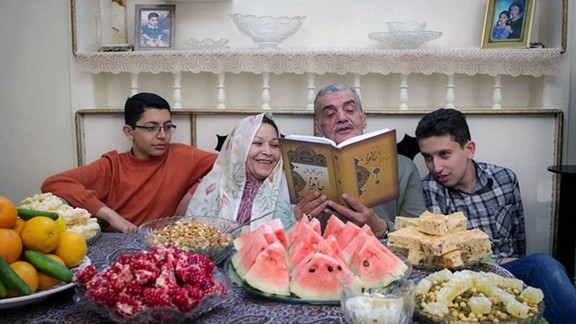
The old bazaar in the affluent northern Tehran is very popular with people from every walk of life. The busy Shiite shrine of Emamzadeh Saleh in one of the narrow passages of the bazaar is nestled among shops with massive displays of pomegranates, watermelons and nuts - staples for the celebration of the pre-Islamic Winter Solstice festival – and not far from it, Christmas trees and decorations catch the eye.

But it's not only the bazaar that looks Christmassy. "You wonder if this is really Tehran or a street in Europe when you walk in the streets of Tehran these days and look at shops. Shops are filled with Christmas trees and Santa Clauses. Street vendors are also selling Christmas trees and decorations everywhere in the city," Didar News wrote.

100%
Reading poetry on Yalda celebration, the longest night of the year.

This winter, Tehranis alone paid over 60 billion rials (over $200,000) for Christmas trees. According to Didar News, 90 percent of the trees were purchased by non-Christians -- that is, Iranian Muslims -- who in the past twenty years have also been celebrating western festivals such as Halloween and Valentine's Day. Fresh pines this year sold for around five million rials while small artificial trees cost around a million.

There are around 120,000 Armenian and Assyro-Chaldean Christians in Iran. Unlike converts to Christianity, they enjoy some degree of freedom of worship and have their own representatives in the parliament.

Iranian Armenians celebrate Christmas on January 6 and cook herbed rice and pan-fried fish , the same dish as other Iranians make for the Nowrouz festival, and make traditional Armenian sweets such as perog and gata loaves.

100%
Shopping in Tehran for the winter Yalda festival.

Earlier this week Iranians sent each other millions of text messages to congratulate the Winter Solstice festival (known as Yalda or Chelleh Night) just as they do on the ancient Iranian New Year, the birthday of the Prophet Muhammad, and increasingly more in recent years, Christmas and western New Year.

The celebration of Yalda on the night of Winter Solstice and the Iranian New Year (Nowrouz) on the day of Spring Equinox both date back to ancient, pre-Islamic times. The non-Islamic Nowrouz is still the main calendar event for most Iranians. The strength of the Nowrouz tradition is such that even the Supreme Leader Ali Khamenei makes a televised speech on the day.

100%
A store selling Christmas decorations in Tajrish, Tehran.

Iran's religious establishment and hardliners often refer to such festivals, especially the Winter Solstice festival as "pagan" calendar events. They call on people not to celebrate such festivals and sometimes even call for banning them. But ancient traditions appear to have gained more popularity since the 1979 Islamic Revolution despite non-stop religious propaganda.

Many other Iranians think that celebrating pre-Islamic festivals is not against their Islamic beliefs and adopting other traditions such as Christmas is fine, as long as it is not at the cost of Iranian traditions such as Nowrouz.

"Different groups of people may feel they don't belong to their homeland if selling Christmas trees and Yalda food at Tajrish Bazaar is banned or if the Shrine of Emamzadeh Saleh is shut down to pilgrims. Feeling a stranger in one's homeland will breed anger and hate," a commentary in the moderate conservative Asr-e Iran website said Wednesday. "One can proudly say that in the Iranian society the Islamic, Western, and ancient Iranian cultures have somehow reached co-existence even though the government does not approve of it."

Most Viewed

Iranian girl's suspected honor killing raises questions over school's role
1

Iranian girl's suspected honor killing raises questions over school's role

2

Daily reports secret bread rationing in two Iranian provinces

3
EXCLUSIVE

How Thai clerics in Iran were recruited to attack Israeli embassy in Bangkok

4

US strikes Qeshm Island after Iran drone attack on American base in Bahrain

5

Iran's wartime rallies turn against officials, fuel political feuds

Banner
Banner
Banner
Banner
Banner
Banner
Banner

Spotlight

  • A tough winter for Iran's cement industry, a tougher one for steel
    ANALYSIS

    A tough winter for Iran's cement industry, a tougher one for steel

  • Tehran seizes on NYT dam report to widen retaliation threats

    Tehran seizes on NYT dam report to widen retaliation threats

  • How Iranians are turning grief into defiance
    OPINION

    How Iranians are turning grief into defiance

  • A cow's sit-in: why a comedy sketch struck a nerve in Iran

    A cow's sit-in: why a comedy sketch struck a nerve in Iran

  • Iran could launch dirty-bomb attack, but risks make it unlikely, experts say
    ANALYSIS

    Iran could launch dirty-bomb attack, but risks make it unlikely, experts say

  • Iran's wartime rallies turn against officials, fuel political feuds

    Iran's wartime rallies turn against officials, fuel political feuds

  • How Thai clerics in Iran were recruited to attack Israeli embassy in Bangkok
    EXCLUSIVE

    How Thai clerics in Iran were recruited to attack Israeli embassy in Bangkok

  • Iraq’s move on militia stronghold may do little to curb Iran’s influence
    ANALYSIS

    Iraq’s move on militia stronghold may do little to curb Iran’s influence














