Islamic Republic supporters take weapons home after training, citizens say
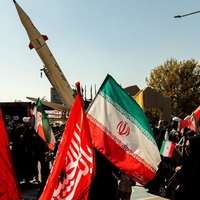
Basij forces march carrying Iranian flags during a parade in Iran.
Some participants in military training programs for supporters of the Islamic Republic, including Basij militia members and seminary students, have been allowed to take weapons home, citizens told Iran International, as authorities expand firearms training to schools across Iran.
Weapons supplied by the Revolutionary Guards to Basij members for training were taken to their homes or other locations after the courses ended, one person said.
Some accounts showed that the training sessions concluded without a clear mechanism for collecting the firearms, leaving weapons in the possession of participants.
Another citizen said a neighbor who was a religious seminary student had brought several firearms home after completing training and stored them in a designated location.
Military training expands to schools
The accounts come as the Islamic Republic has intensified military training and firearms instruction across Iran in recent months, extending such programs beyond formal security forces to wider groups of system supporters.
Authorities have established dedicated firearms training centers, while weapons instruction has also been introduced in schools, where students are required to learn how to handle firearms.
Armed military personnel performed a drill in front of assembled pupils at a boys' school in Urmia, northwestern Iran, video footage and images sent to Iran International showed.
In a separate event at an elementary school in Urmia, female special forces personnel conducted a weapons drill, demonstrating firearms to students and asking them to shoot at an image of US President Donald Trump used as a target, according to a video posted on the school's Instagram page.
One student returned home frightened after the exercise, while some children initially believed they were going to be arrested, a source close to the student's family told Iran International.
The expansion of these programs has brought military training to a broader segment of the population, including Basij paramilitary members, seminary students and schoolchildren.
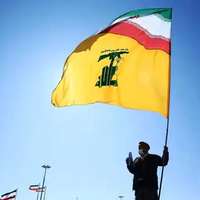
Hezbollah supporters attend a ceremony held by Hezbollah to commemorate the first anniversary of their late leader Hassan Nasrallah's killing by Israel, on the outskirts of Beirut, Lebanon, September 27, 2025. REUTERS/Mohamed Azakir
Hezbollah’s external operations unit has been recruiting foreign nationals in Iran and using safe houses in Qom and Tehran to train and shelter recruits, according to information obtained by Iran International.
Information provided to Iran International by an international intelligence agency shows that Hezbollah began contacting foreign students at Al-Mustafa International University five years ago. Those recruited have received training in weapons handling, sabotage, cyberattacks and espionage.
The recruitment operation is conducted in coordination with the Revolutionary Guards’ Quds Force and targets students at Al-Mustafa. The state-run institution was established 18 years ago on the orders of former Supreme Leader Ali Khamenei and has branches in more than 60 countries.
Iran International’s sources identified Mohammad Hassan, an Indonesian national and Al-Mustafa graduate, as the person overseeing Hezbollah’s operation in Iran. Under the supervision of Quds Force commanders, Hassan works for Talal Hamiyah, head of Hezbollah’s Unit 910, the group’s external operations unit.
Under Hassan’s direction, Hezbollah’s recruits maintain numerous safe houses, known as “operations houses,” across Iran. Iran International obtained the locations of four such properties in Qom and Tehran.
Hassan uses an apartment in Kashaneh 2 Tower in Qom’s Velayat district, near Hakim and Payambar-e Azam boulevards, as a safe house for recruitment and training. In Tehran, the network uses properties on Seventh Kish Street in the Naft neighborhood, Third West Sarvestan Street in Rah Ahan and Sarv Alley off Alborz Street in Pounak.
The Quds Force and Hezbollah use the properties as cover to shelter newly recruited members, who also receive training there.
The US Treasury designated Hamiyah a Specially Designated Global Terrorist in 2012 for supporting Hezbollah’s terrorist activities in the Middle East and around the world. The State Department’s Rewards for Justice program offers up to $7 million for information on him.
The unit’s first commander was Imad Mughniyeh, a senior Hezbollah figure who was killed in 2008. Hezbollah’s external operations unit initially included four prominent figures: Mughniyeh, Mustafa Badreddine, Talal Hamiyah and Ahmad Vahidi, then commander of the Quds Force and now commander-in-chief of the IRGC.
After Badreddine was killed, Hamiyah took command of the unit. Mohammad Hassan is now recruiting for him in Qom.
Iran International’s sources identified cleric Habib Mustafa Zaatar as another participant in the recruitment operation. Born in Lebanon’s Jabal Amel region, he lives in Qom. The sources said Zaatar is a US citizen and travels to the United States several times a year. Zaatar teaches Sharh al-Lum‘ah and its section on hudud punishments at Qom’s religious seminary.
Serving as an adviser at the Noor Islamic Center and Hikmat International Academy in Qom, he teaches Shia religious subjects in English. Tuition for his course at Hikmat Academy is 835,000 tomans per month.
Habib Mustafa Zaatar also has close ties to the Najaf religious seminary. He is a lecturer and researcher at the Al-Abbas shrine in Iraq and has translated several well-known Shia religious books. His command of English gives him a key role in recruiting foreign nationals studying at Al-Mustafa and Qom seminaries.
Iran International also identified four people recruited by Hezbollah who have been training for years as members of a sleeper cell in Iran.
One is Mohammad Zaki Fathoni. He heads the regional leadership council of Indonesia’s Ahlul Bayt Foundation and is a member of the Al-Mustafa alumni association. He represented Indonesia at the Fourth International Congress on Nahj al-Balagha and Alawi Governance, held at Iran’s presidential complex in Tehran in fall 2025, with President Masoud Pezeshkian in attendance.
Another recruit is Ahmad Dzilal Mukhlis. He is also a member of the Al-Mustafa alumni association.
Ali al-Attas attends a government-organized Quds Day march in Qom.
Another Indonesian national in Qom, Seyyed Mohammad Mahdi Ali al-Attas, has also been recruited by Hezbollah. He heads the association of Indonesian students studying in Iran and is a member of Indonesia’s Ahlul Bayt Council. Al-Attas hosts a podcast in which he strongly supports the Islamic Republic and speaks against Israel and Zionism.
A photograph reviewed by Iran International shows al-Attas attending a government-organized Quds Day march in Qom.
The fourth Hezbollah recruit in Iran is Mohammad Saleh. He is an Al-Mustafa student and a member of a religious seminary students’ association. On January 29, 2026, Saleh met Reza Ramazani, secretary-general of the Ahlul Bayt World Assembly, as a member of the Indonesian, Thai and Malaysian religious students’ associations.
According to a photograph published by media outlets inside Iran, Saleh attended a pro-government march in September 2022, days before the protests that followed Mahsa Amini’s death, and called for compulsory hijab for Iranian women. He is active in Qom’s religious circles.
Mohammad Saleh attends a pro-government rally calling for mandatory hijab in September 2022, days before the protests that followed Mahsa Amini’s death.
All these activities take place under the cover of Al-Mustafa, which received 1.8 trillion tomans in state funding for the Iranian year that began in March 2026.
Al-Mustafa describes its mission as educating Muslim students in other countries. The United States sanctioned the institution over alleged links to the Quds Force’s military and intelligence activities.
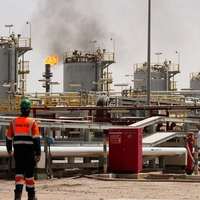
The Zubair Oil Field in Basra, Iraq, April 6, 2026.
China’s independent refiners are turning to Iraqi crude to replace dwindling Iranian supplies as a US blockade chokes Tehran’s exports, raising questions about whether Iran is using an old workaround to reach its buyers: disguising its own oil as Iraqi.
Max Meizlish, senior research analyst at the Foundation for Defense of Democracies and a former US Treasury official, said the increase in Chinese purchases of Iraqi crude could be entirely legitimate, but cautioned against assuming that reported origin always establishes where the oil was produced.
“Iraqi crude has been used as a vehicle for Iran to mask the source of its crude,” Meizlish told Iran International.
“It’s entirely possible that this is a legitimate ordinary increase by China of Iraqi crude,” he added, while saying data on the source of Chinese imports should be viewed “with a little bit of skepticism or with a critical eye.”
Chinese refiners that once absorbed more than one million barrels per day of Iranian crude are now buying Iraq’s Basrah Heavy and Basrah Medium as they search for replacement supplies.
Iran’s tanker loadings fall to zero
China’s independent refiners have long provided Tehran with a critical market for oil sold under US sanctions, drawn in part by steep discounts on Iranian barrels.
Iran loaded no new crude or condensate onto tankers in September, down from an average of around 250,000 barrels per day in August, according to Homayoun Falakshahi, head of crude oil analysis at Kpler.
“I think that’s the first since the revolution, actually, 1979 revolution,” he said, describing the impact of the blockade as “very much brutal.”
Previously exported Iranian oil has continued arriving in China. Of nearly 90 million barrels that initially made it out, only around 10 million remain to be discharged there, Falakshahi said.
As those remaining cargoes are delivered and paid for, Tehran faces the loss of one of its main sources of dollars unless it can resume exports.
The financial squeeze comes next
The full financial impact of the blockade has yet to reach Tehran.
Chinese buyers typically have one to two months to pay for Iranian crude, Falakshahi said, meaning payments for oil already exported could continue until around mid-December.
“After that, it’s zero revenue from oil sales,” he said, assuming the blockade remains in place.
Oil sales are Iran’s main source of foreign exchange, and despite sanctions, Falakshahi said the country is still paid mainly in dollars for its crude.
He put Iran’s oil revenues in recent years at around $2 billion to $3 billion a month and said the prospect of losing those inflows was already weighing on its currency.
“The revenues have not yet dropped to zero,” Falakshahi said. “It’s just the expectation that they will drop to zero in December that is causing that.”
Once the remaining payments end, the pressure will “probably ... only accelerate,” he added.
The limits of the overland route
Moving Iranian crude overland through Iraq could offer Tehran a route around the blockade, but those shipments would replace only a fraction of its lost tanker exports, according to Falakshahi.
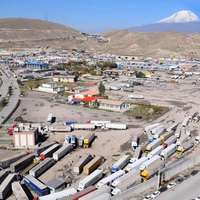
He said transporting 50,000 to 100,000 barrels per day through Iraq could require around 5,000 trucks. At 100,000 barrels per day, Iran would be replacing only around 5% to 7% of what it previously sold by tanker.
“It would be just a portion of that,” he said.
Falakshahi said Tehran has rapidly reduced oil production toward the level needed to meet domestic demand, while 20 to 25 empty tankers remain inside the blockade zone despite being available to load crude.
During an earlier blockade, Iran continued loading tankers in apparent anticipation that restrictions would eventually ease, he said. This time, the vessels are remaining empty.
Kpler also understands that tankers beginning to move inside the blockade zone have received radio warnings from the US Navy against continuing, Falakshahi said.
“This is something that did not happen during the first blockade,” he said.
US Secretary of State Marco Rubio speaks during a dedication ceremony at the chancery of the US Embassy, in Athens, Greece October 7, 2026.
US Secretary of State Marco Rubio said on Wednesday that Iran had failed to take advantage of repeated opportunities to reach an agreement with Washington over its nuclear program, while also saying Tehran had “lost complete control” of the Strait of Hormuz.
Speaking during a visit to Athens, Rubio said oil flows through the strait had returned to nearly their prewar level.
“The Strait of Hormuz is open. There’s almost as much oil flowing out now as there was before this conflict began,” Rubio said. “So they’ve lost complete control of the Strait.”
He also described Iran’s economy as being in “total and complete freefall” under US sanctions.
Rubio said Washington’s position on Iran’s nuclear program remained unchanged.
“Iran cannot have a nuclear weapon, simple, period, end of story,” he said. “Anything they agree to that would be acceptable to the United States has to be something that ensures that Iran will never have a nuclear weapon.”
Tehran responds to Vance on enrichment
Later on Wednesday, a senior Iranian official told Reuters that Tehran would never give up what it regards as its right to enrich uranium, responding to nuclear demands set out by US Vice President JD Vance.
“There have been no negotiations between Iran and the US about Tehran’s nuclear program,” the official said, describing Vance’s comments as American “ideas and requests.”
The official said US recognition of Iran’s right to enrichment was a “red line” and that Tehran would “never give up its right to enrich,” although the level and other details of enrichment could be discussed later.
The official also said Washington must first meet Tehran’s conditions before the nuclear issue could be discussed and said US proposals on enrichment were inconsistent with Iran’s demands.
IRGC adviser says Hormuz remains closed
Also on Wednesday, Mohammad Reza Naghdi, a senior adviser to the commander-in-chief of Iran’s Revolutionary Guards, disputed Washington’s account of the Strait of Hormuz.
“The Strait of Hormuz is closed, and the armed forces have full control over it,” Naghdi said. “This situation will continue until Iran’s legitimate demands are met.”
He said Iranian forces would block what he described as unauthorized routes through the waterway.
Naghdi also said limits on the range of Iranian weapons were based on policy rather than technical constraints.
“Whenever the supreme leader gives authorization, we will increase the range of our weapons according to the needs of the battlefield,” he said.
Trump says decision coming ‘pretty soon’
The exchanges followed remarks by President Donald Trump on Tuesday night that the United States still had to decide how to “finish up” with Iran.
“We have to finish up, and it's only a question of which way we want to do it: the nice way or the not-so-nice way,” Trump said at an Anduril Industries event in Maryland. “You will find out pretty soon.”
Trump said the United States was doing “extremely well” against Iran and said Tehran’s military had been severely weakened.
“They have no military in sight. The whole place is shut,” he said.
“They were the bully of the Middle East. They're not so much the bully anymore.”
Vance calls for enrichment cuts
Vance had told Reuters in an interview that Iran would need to meaningfully reduce its uranium enrichment capacity to meet US demands and end the war.
“If you don't want a nuclear weapon, then why do you need 60% enriched fuel?” Vance said. “If you want to show commitment to not building a nuclear weapon, don't build highly enriched fuel.”
“I think if they want to show a commitment to not building a nuclear weapon, they would do something meaningful on their enrichment capacity,” he added.
Vance said Washington remained open to an agreement but wanted concrete action from Tehran.
“We're not going to trade words for actions,” he said.
He also said the US had been communicating with President Masoud Pezeshkian and Foreign Minister Abbas Araghchi but remained uncertain about how decisions were being made within Iran’s political system.
“Write your will.”
Those were the words Iranian protester Erfan Nabian says he heard in solitary confinement before he was handed a sheet of paper and asked what he wanted for his final meal before his execution.
Nabian, whose legal name is Erfan Hajbonian Dehaghani, is a 26-year-old protester from Isfahan who was sentenced to death after being detained following Iran’s nationwide protests in January.
Speaking to Iran International from an undisclosed location, Nabian described torture, a coerced confession, a mock execution and imprisonment alongside protesters who were later executed.
Minutes after being told to write his will, blindfolded, he was led into another room and ordered to stand on a stool.
Then a noose was placed around his neck.
“All the memories of my life were coming before my eyes,” Nabian recalled. “I thought I would never see my family again.”
Even with the rope around his neck, Nabian said interrogators continued questioning him about the protests, his phone password and allegations linked to the Alikhani Square case, a mass prosecution stemming from deadly clashes during the January 8 protests in Isfahan, which he denied.
The noose remained around his neck for between five and 10 minutes, he said.
A confession under duress
Nabian said he was then placed in front of a camera and ordered to say he had not been beaten or physically harmed.
If he looked away or failed to give the answers his interrogators wanted, he said, they stopped the recording, beat him and started again.
After the filming, Nabian said a man told him: “You’re going to be executed. The sentence has been issued.”
Nabian asked to call his family. Permission was refused.
Minutes later, shackled to a bench, he asked again.
“Please, can you tell them to let me speak to my family? I want to hear my family’s voices for the last time.”
Only then, he said, was he told he would not be executed at that moment and would instead be transferred to prison.
From Alikhani Square to detention
Nabian said he had also joined Iran’s 2019 and 2022 protests.
On January 8, 2026, he joined demonstrations in Isfahan. At Alikhani Square, he said security forces were firing live ammunition at protesters. Four or five pellets struck his right leg.
Fearing arrest if he sought treatment at a hospital, Nabian made his way home. With no knowledge of how to remove the pellets, he cleaned and bandaged the wound himself as his leg began bleeding heavily.
Erfan Nabian removes pellets from his body after being shot during protests in Isfahan on January 8, 2026.
He said he later went back outside to look for a young girl who had become separated from her mother and found the child dead.
Despite what he had seen, Nabian returned to the streets the following day.
“We couldn’t turn a blind eye,” he said, referring to the violence he had seen on January 8 as protesters were shot at.
The events at Alikhani Square later became the basis for one of the most consequential capital cases to emerge from the January protests. Fifty-nine people were initially arrested and 12 were sentenced to death, according to a lawyer who spoke to Iran International.
UN experts led by Mai Sato, the UN Special Rapporteur on human rights in Iran, said the defendants were tried in a single closed hearing that violated fair-trial standards and raised concerns over the use of televised confessions.
Amnesty International separately described the proceedings as a “grossly unfair mass trial” and documented torture, forced confessions and denial of access to lawyers among defendants.
‘The Alef-Ta slaughterhouse’
Nabian said he was arrested on March 6 and taken to Ghaemieh police station.
There, he said, officers demanded the password to his phone and gave him an unidentified substance intravenously.
He was then transferred to a detention facility he identified as Alef-Ta in Isfahan.
Nabian described it as a roughly 10-story building used for solitary confinement and torture.
“I call it the Alef-Ta slaughterhouse,” he said.
He described being stripped, soaked with water and beaten with hoses and batons. At one point, he said, his arms were secured above him while he was beaten for around an hour.
Star of David tattoos and accusations of spying for Israel
Nabian said his tattoos became a particular focus for his interrogators.
They included Hebrew writing, a Star of David on the right side of his neck and ancient Iranian symbols, including the Derafsh Kaviani, on his arm.
He said interrogators repeatedly struck areas bearing the tattoos, including the Hebrew writing on his back.
Erfan Nabian is pictured with a Star of David tattoo on his neck in a photo posted on social media in November 2022.
“One of them kept saying, ‘I’ll beat you so much you’ll start speaking Hebrew,’” Nabian recalled.
He said interrogators accused him of being an Israeli spy, receiving money from Israel and undergoing training.
Nabian denied the allegations.
Dastgerd and the sentence
On March 20, Nabian was transferred to Dastgerd prison in Isfahan.
He said intake staff initially refused to admit him because of his injuries, including a broken finger and damaged knees.
His death sentence was later commuted to 11 years in prison, according to a court verdict reviewed by Iran International.
Nabian said the sentence included one year for propaganda and 10 years over alleged psilocybin possession. He denied the drug allegation and said authorities gave differing accounts of the amount.
Iranian authorities have previously faced allegations of bringing fabricated drug charges against political detainees.
Norway-based rights group Iran Human Rights has described the case of Iranian-Dutch protester Zahra Bahrami, arrested after the 2009 demonstrations and executed in 2011, as a fabricated drug case in which she was tortured into confessing.
The US-based Center for Human Rights in Iran, then known as the International Campaign for Human Rights in Iran, said at the time that Iranian security agencies had in several cases planted drugs and added drug-related charges to the cases of political prisoners.
The cellmates later executed in connection with the Alikhani case
Inside Dastgerd, Nabian lived alongside other defendants tied to the Alikhani case.
Among them were Sasan Azadvar and Erfan Esfandiari, both later executed.
Nabian also spent around two days with Abolfazl Sepahi, another Alikhani defendant.
He said Sepahi told him he had been shot from behind with live ammunition in the pelvis during the January 8 protests and described torture he endured in detention, including having a butane torch held near his eye.
Sepahi was later publicly executed alongside Amirhossein Safari in Ali-Khani Square.
He also remembered Shervin Bagherian, another Ali-Khani defendant whom he befriended in Dastgerd, as intelligent and good-natured. Bagherian often came to his room, where he played chess and spent time with fellow prisoners.
It was only after his release that Nabian saw Bagherian’s forced confession, broadcast on state television. “My heart broke,” he said. “I kept thinking about what this kid must have gone through.”
Amnesty International said Bagherian had been forcibly disappeared for 21 days, subjected to torture and denied access to a lawyer before his forced confession was broadcast on state television on January 25.
For Nabian, the names appearing in reports of executions were not strangers. They were men he had lived beside, spoken with and come to know in prison — before watching, from outside, as one after another was taken to the gallows.
Air strike and crackdown inside Dastgerd
Nabian was still inside Dastgerd when an air strike on March 31 hit military facilities immediately behind the prison.
Iran International later reported that a military base and ammunition depot behind Dastgerd were hit by three missiles and parts of the prison were damaged. A judicial document said some prisoners were killed and others died in the ensuing fire.
Nabian said the blasts cut electricity, water and telephone access and were strong enough to throw prisoners from upper bunks.
“Everyone was shouting, ‘Come save us. Open the doors so we can get out.’”
He said some staff left while inmates remained behind locked ward doors. Some doors were later damaged or opened as prisoners tried to reach safety.
Nabian said security forces and IRGC personnel subsequently entered the prison and opened fire.
His ward remained locked. He said other prisoners later told him they had seen bodies and black body bags in corridors.
The following day, Nabian said, he could hear prisoners being beaten and tortured. He also described a “tunnel of terror,” in which prisoners accused of involvement in the unrest were forced between lines of guards who struck them with gun stocks, batons and hoses.
A judicial document later obtained by Iran International listed 75 prisoners as defendants over the unrest and fire. At least 26 were ordered to stand trial, while 18 faced charges that could carry the death penalty.
Nabian was released on bail on April 7. He said he left Iran because he feared rearrest, further torture, a lengthy prison term or another death sentence.
“I really love my country,” he said. “I always believed Iran would be free.”
Mostafa Sepahvand, 39, Shapoor Noori, 55, and Farhad Javadi-Manesh, 44, in a court sketch from Westminster magistrates’ court / Credit: SWNS
Three Iranian men spied on Iran International journalists to assist Iranian intelligence services and prepare for serious violence against at least one target, prosecutors told a London court Tuesday.
Iran International journalists Mojtaba Pourmohsen and Kambiz Hosseini were among the targets of the alleged surveillance operation, prosecutors told Woolwich Crown Court.
“Together, the defendants were engaged in what is very obviously a form of spying,” prosecutor William Emlyn Jones KC told jurors.
Mostafa Sepahvand, 41, Farhad Javadi Manesh, 46, and Shapoor Qalehali Khani Noori, 57, are accused of conducting months of surveillance and reconnaissance, including photographing and filming locations connected to their targets.
All three are charged with assisting a foreign intelligence service under Britain’s National Security Act 2023. Prosecutors say the foreign intelligence service was Iranian.
Sepahvand is also accused of conducting surveillance, reconnaissance and open-source research intending to carry out serious violence against a person in Britain. Javadi Manesh and Noori are accused of conducting surveillance and reconnaissance intending that serious violence would be carried out by someone else.
“It is the prosecution case that their ultimate objective was that one or more of their targets would be subjected to serious violence,” Jones told the jury.
The prosecution says Sepahvand was intended to carry out the violence himself, with Javadi Manesh and Noori gathering information to assist the planning of an attack.
The three men were arrested in May 2025 and are the first Iranian nationals charged under the National Security Act, which came into force in 2023.
Phones reveal surveillance operation
Prosecutors presented on Tuesday an outline of the evidence regarding the surveillance of Pourmohsen and Hosseini.
“These three defendants were carrying out surveillance and reconnaissance to locate and target at least two journalists associated with news agency Iran International,” Jones said.
The surveillance was intended to establish where targets lived and worked, their routines, the people they spent time with and the layouts of buildings connected to them, according to the prosecution.
Material recovered from Sepahvand’s phone included searches seeking Pourmohsen’s address. One search asked ChatGPT for “Mojtaba Pour Mohsen’s address,” according to evidence presented in court.
ChatGPT did not provide a home address but returned information about his career and social media contacts and suggested contacting him through Iran International, jurors were told.
Investigators also recovered from Sepahvand’s phone what prosecutors described as a briefing document or “targeting package” containing Pourmohsen’s photograph and information about locations associated with him.
The material included the address of Volant Media, Iran International’s parent company, and information about the Clayton Hotel on Chiswick High Road.
Pourmohsen had stayed at the hotel around Christmas 2024 after developing security concerns about his home address, Jones told jurors.
Prosecutors also presented photographs and videos of Malthouse Court, where Pourmohsen had lived between 2019 and 2023.
The defendants appeared not to know that Pourmohsen had already moved away, according to the prosecution.
Location data and videos
Cell-site data placed Sepahvand and Javadi Manesh in the Malthouse Court area on December 10, 2024, prosecutors said.
Data from a SIM card installed in Sepahvand’s Mercedes A200 also placed the vehicle in the area, according to evidence presented to the jury.
Javadi Manesh later sent Sepahvand photographs and videos of Malthouse Court that prosecutors say were recorded during the visit.
One video played to jurors began with a view of the river before moving toward the block of flats and zooming in.
Location data also placed Sepahvand and Noori in the Malthouse Court area on December 16, prosecutors said.
The prosecution had begun addressing the surveillance of Hosseini by the latest court update.
Sepahvand says he acted under pressure
The defendants contest crucial elements of the prosecution case in different ways.
Sepahvand accepts carrying out surveillance and reconnaissance and that he was doing so for the benefit of Iran, according to the prosecution’s account of his defence.
His position is that he did not want to carry out the activity and acted because he feared the consequences of refusing. Sepahvand also maintains that he deliberately did a poor job so the Iranian intelligence service would not receive the assistance it wanted, Jones told jurors.
The prosecution disputes that account.
“We suggest you will find nothing in any of these messages that is, or looks or even feels like, a threat to Sepahvand,” Jones said.
Javadi Manesh and Noori accept visiting relevant locations and taking photographs and videos but maintain that they did not know they were doing so to assist Iranian intelligence services, according to the prosecution’s description of their cases.
Jurors will have to consider whether they knew what the activity was intended to achieve or whether the circumstances meant they reasonably ought to have known, Jones said.
Messages presented to jury
The prosecution also took jurors through communications recovered from Sepahvand’s phone involving two Iranian telephone numbers.
One belonged to a man identified as Mostafa Ghorbani. Another was saved in Sepahvand’s phone as “Amin Mostafa’s friend.”
Both contacts appeared repeatedly in Sepahvand’s phone activity, prosecutors said.
In a December 8 exchange with Ghorbani presented in court, Sepahvand discussed information he had been sent about a person and location.
“It’s a tourist area, look. They got these [from] Iran, someone said he/she/it is here. They also sent me these few pictures from the Internet. I said ‘okay, I’ll go’, if he/she/it wasn’t there it’s their own problem,” Sepahvand wrote in a translated message read to the jury.
The following day, Sepahvand discussed plans to visit a location with the contact saved as Amin, according to the prosecution.
“I’ll definitely go tomorrow,” Sepahvand wrote.
Prosecutors say “tomorrow” referred to December 10, when location data subsequently placed Sepahvand and Manesh near Malthouse Court.
Amin responded with messages including “God willing you’ll see him/her/it” and “it’ll be sorted,” according to translations presented in court.
The prosecution argues the exchanges undermine Sepahvand’s position that he carried out the work because he had been threatened.
Jones also told jurors that some communications referred to Sepahvand being paid for his work.
Prosecutors say Sepahvand also wanted help resolving a criminal conviction in Iran. The jury was told that the conviction itself was not evidence against him and should not be held against him, but prosecutors consider his efforts to resolve it relevant to his motivation.
Another target
The surveillance outlined by prosecutors extended beyond Iran International.
Material exchanged between Sepahvand and Javadi Manesh included information about Jonathan Turner, a founder of UK Lawyers for Israel, the court heard.
Two aerial images sent by Sepahvand to Javadi Manesh in August 2024 showed addresses connected to UK Lawyers for Israel and Turner’s barristers’ chambers, prosecutors said.
The prosecution says the material relates to another person who had attracted the attention of Iranian intelligence services for reasons different from the journalists.
The majority of the evidence on which prosecutors will rely comes from material obtained from the defendants’ mobile phones following their arrests, Jones told jurors.
The indictment accuses Sepahvand, Javadi Manesh and Noori of engaging between August 14, 2024 and February 16, 2025 in conduct likely to assist a foreign intelligence service carrying out UK-related activities, knowing or reasonably being expected to know that their conduct was likely to provide material assistance.
The case is being heard by Mrs Justice Cheema-Grubb and is expected to last six to eight weeks, with the prosecution expected to spend about two weeks presenting its case.
The prosecution’s opening has begun laying out the digital trail at the center of its case, including searches for a journalist’s address, photographs and videos of locations connected to him, location records and messages discussing visits to those locations.
The jury will ultimately decide what the three men knew about the purpose of the surveillance and whether prosecutors prove it was intended to assist Iranian intelligence services and prepare for serious violence against journalists in Britain.