Max Meizlish, senior research analyst at the Foundation for Defense of Democracies and a former US Treasury official, said the increase in Chinese purchases of Iraqi crude could be entirely legitimate, but cautioned against assuming that reported origin always establishes where the oil was produced.
“Iraqi crude has been used as a vehicle for Iran to mask the source of its crude,” Meizlish told Iran International.
“It’s entirely possible that this is a legitimate ordinary increase by China of Iraqi crude,” he added, while saying data on the source of Chinese imports should be viewed “with a little bit of skepticism or with a critical eye.”
Chinese refiners that once absorbed more than one million barrels per day of Iranian crude are now buying Iraq’s Basrah Heavy and Basrah Medium as they search for replacement supplies.
Iran’s tanker loadings fall to zero
China’s independent refiners have long provided Tehran with a critical market for oil sold under US sanctions, drawn in part by steep discounts on Iranian barrels.
Iran loaded no new crude or condensate onto tankers in September, down from an average of around 250,000 barrels per day in August, according to Homayoun Falakshahi, head of crude oil analysis at Kpler.
“I think that’s the first since the revolution, actually, 1979 revolution,” he said, describing the impact of the blockade as “very much brutal.”
Previously exported Iranian oil has continued arriving in China. Of nearly 90 million barrels that initially made it out, only around 10 million remain to be discharged there, Falakshahi said.
As those remaining cargoes are delivered and paid for, Tehran faces the loss of one of its main sources of dollars unless it can resume exports.
The financial squeeze comes next
The full financial impact of the blockade has yet to reach Tehran.
Chinese buyers typically have one to two months to pay for Iranian crude, Falakshahi said, meaning payments for oil already exported could continue until around mid-December.
“After that, it’s zero revenue from oil sales,” he said, assuming the blockade remains in place.
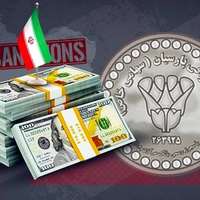
Oil sales are Iran’s main source of foreign exchange, and despite sanctions, Falakshahi said the country is still paid mainly in dollars for its crude.
He put Iran’s oil revenues in recent years at around $2 billion to $3 billion a month and said the prospect of losing those inflows was already weighing on its currency.
“The revenues have not yet dropped to zero,” Falakshahi said. “It’s just the expectation that they will drop to zero in December that is causing that.”
Once the remaining payments end, the pressure will “probably ... only accelerate,” he added.
The limits of the overland route
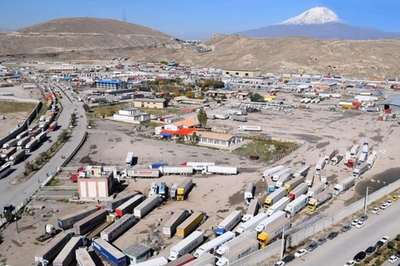
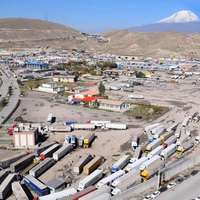
Moving Iranian crude overland through Iraq could offer Tehran a route around the blockade, but those shipments would replace only a fraction of its lost tanker exports, according to Falakshahi.
He said transporting 50,000 to 100,000 barrels per day through Iraq could require around 5,000 trucks. At 100,000 barrels per day, Iran would be replacing only around 5% to 7% of what it previously sold by tanker.
“It would be just a portion of that,” he said.
Falakshahi said Tehran has rapidly reduced oil production toward the level needed to meet domestic demand, while 20 to 25 empty tankers remain inside the blockade zone despite being available to load crude.
During an earlier blockade, Iran continued loading tankers in apparent anticipation that restrictions would eventually ease, he said. This time, the vessels are remaining empty.
Kpler also understands that tankers beginning to move inside the blockade zone have received radio warnings from the US Navy against continuing, Falakshahi said.
“This is something that did not happen during the first blockade,” he said.