• العربية
  • فارسی
Brand
  • Iran Insight
  • Politics
  • Economy
  • Analysis
  • Special Report
  • Opinion
  • Podcast
  • Iran Insight
  • Politics
  • Economy
  • Analysis
  • Special Report
  • Opinion
  • Podcast
  • Theme
  • Language
    • العربية
    • فارسی
  • Iran Insight
  • Politics
  • Economy
  • Analysis
  • Special Report
  • Opinion
  • Podcast
All rights reserved for Volant Media UK Limited
volant media logo

Hunger at the checkout: Food thefts stir debate over Iran's economic decline

Hooman Abedi
Hooman Abedi

Iran International

Aug 6, 2026, 10:33 GMT+1
A shopper looks over dairy products in an Iranian supermarket. Retail workers say thefts of basic food items have become more common as economic pressures intensify.

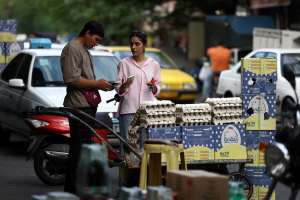
Petty thefts of basic food items are becoming a symbol of Iran's economic hardship, according to a newspaper investigation published on Wednesday that linked supermarket shoplifting to inflation and shrinking purchasing power.

Unlike the corruption scandals that have long dominated headlines in Iran, the report by Jahan-e Sanat focuses on thefts measured not in billions of rials but in loaves of bread, packages of cheese and cuts of meat.

It argues that cases involving everyday groceries are increasingly reflecting economic distress rather than simple criminality.

"There are no billions of tomans, no gold, no luxury villas," the newspaper wrote. "Sometimes it is only a can of cheese, a loaf of bread or a few simple food items."

Days before Jahan-e Sanat published its report, CCTV footage from outside a minimarket at night in the northern city of Babolsar spread widely across Persian-language social media.

The footage appears to show a woman wearing a black chador approaching a display of boxed goods outside the shop. After pausing beside the display and glancing around, she appears to pick up one of the boxes before walking away.

Exactly what prompted the woman's actions remains unknown. But for many Iranians, the clip became less about one apparent shoplifting than about the growing struggle to afford everyday necessities.

"May God never let anyone feel ashamed in front of their family," one user wrote.

"This is what happens when prices keep rising. We live in a country rich in oil and gold, yet the government cannot provide for 87 million people," another commented.

"People simply cannot afford to buy things anymore because prices have become so expensive," another wrote.

Others pleaded with whoever shared the footage not to expose the woman's identity.

"Who would steal a few groceries unless driven by poverty and hunger? God help them," one commenter wrote.

100%
AI-generated image shows a security camera monitoring supermarket shelves in Iran, where reports of petty thefts involving everyday groceries have sparked debate over poverty and the country's worsening cost-of-living crisis.

"Maybe she had no money to buy food for her children. The shopkeeper should have protected her dignity instead of exposing her," another said.

Some comments contrasted the apparent theft with what they described as large-scale corruption, arguing authorities should focus on powerful figures accused of enriching themselves rather than people taking everyday necessities.

The sympathy expressed online echoed account gathered by Jahan-e Sanat from a supermarket employee who described an apparent increase in customers taking inexpensive food items.

Behind the supermarket shelves

Amirhossein, an employee at a large supermarket chain, told the newspaper he had witnessed several such incidents during the past 10 months.

He recalled seeing a woman place two tubs of cheese into her handbag during a busy period before leaving without paying. In another case, he said, security camera footage later showed a man leaving with butter, cakes and pastries concealed beneath his coat.

Staff also stopped a customer who had eaten packaged cakes inside the store and hidden the empty wrappers before trying to leave, according to the employee.

Perhaps most surprising, Amirhossein said, was a regular customer who was caught taking a package of meat.

"I think poverty is the main reason," he told Jahan-e Sanat. "You cannot judge everyone the same way, but when someone steals a simple item, they are probably under enormous pressure. Sometimes, if what was taken has little financial value, we don't pursue it because we think the person's circumstances may have brought them to this point."

'A crisis of livelihoods'

Sociologist Mostafa Abroshan said reports of thefts involving bread, dairy products and other essentials should be viewed in the context of Iran's prolonged economic difficulties.

"Thefts of basic goods, especially food and other necessities, reflect disruptions in economic structures and the declining ability of households to meet their basic needs," he told the newspaper.

"This does not justify theft, but it shows that people's behavior must be understood within its social context."

Abroshan said inflation, declining purchasing power and job insecurity had left many households struggling to afford essential goods.

"A society in which stealing bread, milk or rice becomes more common is facing a crisis of livelihoods and social justice more than a security crisis," he said.

100%
A shopper carries groceries in Iran. Rising prices and declining purchasing power have pushed basic food items to the center of the country's widening cost-of-living crisis.

Prolonged economic hardship, he warned, could also erode social trust, leaving retailers more suspicious of customers, increasing security costs and weakening confidence in public institutions.

While enforcing the law remains necessary, Abroshan said that reducing poverty, controlling inflation, creating jobs and strengthening social support would do more to curb petty theft than harsher punishment alone.

Without addressing the economic pressures facing low-income households, he said, the theft of everyday groceries risks becoming an increasingly visible measure of Iran's widening cost-of-living crisis.

Most Viewed

Iran presses wider Hormuz demands as US says deal may be close
1

Iran presses wider Hormuz demands as US says deal may be close

2

Anti-Islam posts follow Iran's dawn executions, sparking hardline backlash

3
ANALYSIS

War or government failure? Record inflation fuels political battle in Iran

4

Tehran says any Hormuz accord won't restore pre-war order

5
INSIGHT

Iran's parliament fades further from power after the war

Banner
Banner
Banner

Spotlight

  • Executions in Isfahan renew calls to end German city partnership

    Executions in Isfahan renew calls to end German city partnership

  • Hunger at the checkout: Food thefts stir debate over Iran's economic decline

    Hunger at the checkout: Food thefts stir debate over Iran's economic decline

  • Iran's energy crisis is political, not seasonal
    ANALYSIS

    Iran's energy crisis is political, not seasonal

  • Iran's parliament fades further from power after the war
    INSIGHT

    Iran's parliament fades further from power after the war

  • Iran used water hacks to intimidate not cripple, experts say

    Iran used water hacks to intimidate not cripple, experts say

  • Iran managing the inflation statistic, not the inflation

    Iran managing the inflation statistic, not the inflation

  • Economic crisis drives Iranians to sell hair, rent laptops

    Economic crisis drives Iranians to sell hair, rent laptops

  • Iran faces region’s harshest mix of wartime contraction and inflation

    Iran faces region’s harshest mix of wartime contraction and inflation

•
•
•

More Stories

UN experts say Iran steps up repression of ethnic minorities

Aug 6, 2026, 09:55 GMT+1
100%

Iran has intensified its repression of ethnic minorities, particularly Kurdish and Baluch communities, through arbitrary arrests, enforced disappearances and executions, a group of UN human rights experts said on Thursday.

The experts said at least 24 members of the Baluch minority and 22 members of the Kurdish minority had been executed in 2026, with many more at imminent risk of execution.

“Iran’s ethnic minorities must be able to live in safety and dignity, free from discrimination,” the experts said in a statement.

Kurds are concentrated mainly in western and northwestern Iran, while many of Iran's Baluch population live in the southeastern province of Sistan-Baluchistan. Both predominantly Sunni communities have long faced political, economic and security pressure from the Shiite-led authorities, according to rights groups.

“Reports point to a significant increase in arbitrary arrests, and what appears to be politically motivated sentences,” the experts said, adding that members of ethnic minorities were often detained under broadly defined national security charges.

The experts said a 2025 law expanding the definition of espionage, along with offenses including moharebeh, or “enmity against God,” efsad-fil-arz, or “spreading corruption on earth,” and baghi, or armed rebellion against the Islamic Republic, had been used particularly against Kurds.

They described the laws as “a tool to repress dissent.”

  • Iran executes 20-year-old protester as fears grow for other detainees

    Iran executes 20-year-old protester as fears grow for other detainees

  • Iran executed at least 56 people since March, UN rights chief says

    Iran executed at least 56 people since March, UN rights chief says

Executions rise

Thursday’s warning comes a day after UN human rights chief Volker Türk said Iran had executed at least 56 people on national security-related charges since March 19, including 27 in cases linked to protests earlier this year.

Türk said executions and death sentences had risen since March and that more than 100 other people faced similar charges and the death penalty.

The figures follow a series of executions in recent weeks involving young people detained over the January protests.

  • Anti-Islam posts follow Iran's dawn executions, sparking hardline backlash

    Anti-Islam posts follow Iran's dawn executions, sparking hardline backlash

Iranian authorities executed 20-year-old Arvin Kheirkhah at Shahroud prison on Saturday after he was sentenced to death over his involvement in the protests, according to information obtained by Iran International.

Days earlier, authorities hanged Amirhossein Safari and Abolfazl Sepahi in Isfahan’s Alikhani Square. They were among 12 young men sentenced to death in a case stemming from protests there in January.

A group of UN human rights experts led by Mai Sato, the UN Special Rapporteur on the situation of human rights in Iran, had urged Tehran to halt executions in the Isfahan case, citing concerns about closed proceedings, alleged ill-treatment and the use of confessions broadcast on state television.

Türk urged Iranian authorities to halt all executions and move towards abolishing the death penalty.

Pezeshkian rejects tens of thousands killed in Iran protests

Aug 6, 2026, 09:52 GMT+1
100%

Iranian President Masoud Pezeshkian rejected reports that tens of thousands of people were killed in the January protest crackdown, accusing those publishing higher death tolls of misleading the public.

In an interview published on Thursday, Pezeshkian acknowledged that thousands had been killed but rejected estimates putting the toll at 30,000 to 60,000.

“Some media outlets and journalists said that 40,000 or 60,000 people were killed in Iran,” Pezeshkian said.

He said authorities responded by publishing names and national identification numbers of those they said had been killed and inviting people to provide names that were missing.

“But those sitting outside the country, presenting themselves as concerned, informed and sometimes as intellectuals and academics, turned a figure of around 3,000 into 30,000 or 40,000 and misled public opinion,” he said.

Pezeshkian described those behind the higher estimates as “cowards” and “traitors to the country.”

Trump figure rejected

Pezeshkian also rejected US President Donald Trump's account of the crackdown.

Trump said at a NATO summit in Ankara in July that Iranian authorities had killed 54,000 protesters and argued that the scale of the killings had prevented demonstrators from overthrowing the Islamic Republic.

“They can’t take over because they’re dead. They killed them,” Trump said at the time.

Pezeshkian said Trump had acknowledged that protesters had received outside support, accusing Washington of seeking to exploit unrest inside Iran.

“Trump himself explicitly said that they had armed these people and supported them, so it was clear what their objective was,” Pezeshkian said.

Trump's comments cited above, however, described the protesters as unarmed and Iranian security forces as having machine guns.

Pezeshkian acknowledged that some of those involved in the protests had legitimate grievances and that innocent people had been caught up in the violence.

“We had problems, and we still have them,” he said. “Some people were legitimately raising their problems, but another group wanted to use this environment to pursue their sinister objectives.”

He also acknowledged failures in the authorities' handling of the unrest.

“Because we were not sufficiently prepared to manage the situation, many people were harmed,” Pezeshkian said. “Many young people lost their lives and others lost parts of their bodies.”

“We should not have allowed things to reach this point,” he added.

Iran International reported in January that more than 36,500 people were killed by security forces during the January 8-9 crackdown, based on classified documents, field reports and accounts from medical workers, witnesses and victims' families reviewed by its Editorial Board.

The figure included information from internal Iranian government and security documents.

Remarks draw backlash

Pezeshkian's comments prompted criticism from government opponents and some Iranians who challenged both his death toll and his description of people reporting higher figures as traitors.

Mehdi Mahmoudian, a human rights activist and former political prisoner, called on Pezeshkian to explain responsibility for the deaths that the president himself acknowledged.

“Please explain who killed those several thousand people whose deaths you yourself do not deny, and what should the perpetrators of this crime be called?” Mahmoudian wrote on X.

A previously published account by dissident cleric Mojtaba Lotfi was also recirculated following Pezeshkian's remarks. Lotfi said local checks in his hometown of Najafabad had identified at least 30 names missing from the government's list of those killed, arguing that the official count was incomplete.

Iran International also received messages from citizens disputing Pezeshkian's account and criticizing his comments, with some saying that disagreements over the final number did not justify the killing of protesters.

Iran's energy crisis is political, not seasonal

Aug 6, 2026, 08:27 GMT+1
•
Sogand Sara Fakheri
100%
A woman eats by flashlight during a power outage at a restaurant in Ahvaz, southwestern Iran

In Iran, the authorities call it a scheduled outage. The electricity will be disconnected for two hours. The water may return later in the evening. Families are instructed to adjust their lives to temporary emergencies. But there is no pause button for daily life.

A baby does not stop needing clean water because the pumps have shut down. A patient cannot postpone the use of refrigerated medicine or medical equipment. An elderly person living on the 14th floor cannot simply take the stairs when the elevator stops working. Parents cannot suspend cooking, washing or caring for their children until the state restores the water.

During the brutal Iranian summer, when temperatures in parts of the country exceed 40 degrees Celsius and climb above 50 in the south, air conditioning is not merely a comfort. For children, older people and those with medical conditions, it can become a matter of survival.

The authorities can announce a two-hour power cut. A child's fever, a patient's oxygen machine and a family's need for clean water do not follow that schedule.

Iran's water and electricity emergencies are not separate crises. Water distribution depends on electricity to operate pumping stations and move water through municipal networks, especially into apartment buildings and elevated neighbourhoods. When electricity fails, pumps stop working and water pressure falls. One failing system pulls another down with it.

‘No one to turn to’

Reports from across Iran describe daily electricity cuts lasting for hours alongside recurring water shortages. In Boumehen, east of Tehran, residents reportedly received running water on only two days during one week, and even then for only a few hours.

"We have a sick person at home. We no longer know who to turn to," one resident said.

In Pardis, another city east of Tehran, a resident of a 14-storey building said a four-hour power cut left the elevators out of service. "How are we supposed to climb all these stairs?" he asked.

In Ilam, power cuts reportedly lasted as long as four hours while temperatures reached around 46 degrees Celsius. In Khuzestan, one of Iran's principal oil- and electricity-producing provinces, residents complained that outages had resumed as temperatures crossed 50 degrees.

This is one of modern Iran's deepest contradictions. A country with some of the world's largest oil and natural gas reserves cannot guarantee electricity to its own population. Provinces that generate much of Iran's energy cannot rely on power in their own homes.

Factories lose production hours, small businesses lose income, food and medicine spoil, and families organise their days around outage schedules that are not always accurate.

During the summer they lose electricity; during the winter they face gas shortages. The crisis changes with the season, but it never disappears.

‘Energy imbalance’

Officials describe this as an "energy imbalance," a phrase that makes the problem sound technical rather than political. But Iran's energy crisis was not created overnight.

For years, electricity generation failed to keep pace with demand. Transmission networks deteriorated, renewable energy remained marginal and water systems continued to lose enormous quantities through leakage and decay.

In June 2026, Iran's Parliamentary Research Center reportedly projected a peak summer electricity deficit of roughly 13,600 megawatts.

The government's answer was to ask every Iranian to reduce electricity consumption by ten percent. Once again, citizens were instructed to compensate for failures they did not create.

A family can switch off a lamp. It cannot modernize a power station. A parent can shorten a child's shower. She cannot repair a leaking municipal water network. A shopkeeper can turn off an air conditioner, but he cannot recover decades of lost investment or build the electricity capacity the country requires.

Iran does face genuine environmental pressures. Drought, extreme heat and irregular rainfall have reduced water availability across the country. Climate change is making an already dry region hotter and more vulnerable.

But climate alone cannot explain why so much available water is wasted, why groundwater has been extracted beyond natural recovery or why inefficient agricultural practices remained dominant for decades.

Low efficiency

Even experts quoted by Iran's official news agency acknowledge as much.

Hashem Oraee, head of the Iran Energy Associations Union, estimated that nearly 90 percent of Iran's annual water consumption goes to agriculture, where efficiency remains extremely low.

He also said roughly one-third of the water entering urban distribution networks is lost before reaching consumers.

Iran is not simply running out of water. It is losing the water it still has. The current war did not create this crisis. It struck a system that was already fragile, underfunded and unable to meet national demand.

Iranian electricity officials have said more than 2,000 points across the national grid were damaged during the conflict, reducing available generating capacity by around 4,200 megawatts.

Those figures have not been independently verified, but they indicate the scale of the damage the authorities themselves claim to be facing.

Extended hours

In Bandar Abbas, residents described explosions followed by prolonged electricity cuts. One woman who depends on the internet for her income said she had already been struggling with government-imposed internet shutdowns before longer power cuts placed her work at further risk.

"We always had power cuts, but the hours have now extended," she said.

That distinction matters. The war made the outages longer and more dangerous, but it did not introduce Iranians to blackouts. Years of neglect had already done that.

Inside the home, the consequences are immediate. Refrigerators stop cooling food and medicine. Medical devices fail unless families can afford backup power. Elevators become unusable. Water no longer reaches upper floors when electric pumps stop working. Parents struggle to prepare food, wash clothes, sterilize baby bottles or care for elderly relatives and young children.

The word "outage" suggests a temporary interruption after which normal life resumes. But when electricity disappears every day, when water and power fail together, and when no one knows whether the published schedule can be trusted, the interruption becomes normal life.

Water and electricity are not luxuries. They are the foundations on which healthcare, sanitation, education, industry and family life depend.

Iran did not run out of intelligence, resources or human ability. Its people were deprived of functioning systems because those in power failed to build and maintain them.

Now the lights are going out, the taps are running dry, and ordinary Iranians are once again being asked to bear the cost.

Smokeless tobacco is hooking Iran's schoolchildren. Why is it sold to them?

Aug 5, 2026, 14:15 GMT+1
•
Hooman Abedi
100%
Students walk on a school campus in Iran. Officials say easy access to nas, a smokeless tobacco product sold legally in many shops, is contributing to rising nicotine use among schoolchildren.

Schoolchildren in Iran are getting hooked on nas, a cheap smokeless tobacco sold openly within steps of their classrooms, an official warned on Tuesday, as social media users asked why a product this addictive is hawked to children in plain sight.

The use of nas has become increasingly common among students, particularly in middle school, said Mostafa Mohammadpour, head of the state Welfare Organization office in the northeastern city of Kashmar. In some cases, he added, children in the upper years of primary school have begun using it.

"What has now become common among students and paves the way for drug dependence starts with the use of nas," Mohammadpour said. "Unfortunately, children have very easy access to it because selling it is not considered a crime and it is not recognized as a narcotic."

Nas, known across the region as naswar, is a moist green tobacco mixture held under the lip or tongue. It is a centuries-old habit in eastern Iran, Afghanistan and Central Asia, and because it produces no smoke, a child can use it in a classroom without anyone noticing.

'Why don't they stop it?'

The warning drew a wave of responses from users reacting to Iran International's coverage, many asking why the product remains on open sale despite years of warnings about its risks.

"Why don't they stop it from being distributed?" one commenter asked.

100%
Packets of nas, a smokeless tobacco product, are prepared for sale at a market.

Another argued the answer lies in giving children somewhere else to go. "Municipalities should build at least three sports complexes for students in every district and make them free. School facilities should also be improved so students stay occupied and don't turn to it," the commenter wrote.

Others aimed their frustration at official indifference. "Do they even care what happens to young people?" one wrote.

Some tied the issue to wider political grievances. One X user alleged that the authorities allow addiction to spread among the young to blunt political activism, and wrote that nas "causes addiction quickly," "causes cancer in the mouth" and "damages teeth," adding a claim, which could not be independently verified, that products sold in Iran contain arsenic.

  • Counterfeit drugs kill 7,000 people annually in Iran

    Counterfeit drugs kill 7,000 people annually in Iran

Within every child's reach

Because nas is not classified as an illegal narcotic, it sits on the shelves of small shops, and students obtain it with little difficulty, according to Mohammadpour.

The habit is most entrenched in the northeastern province of Razavi Khorasan, he said, but is no longer confined to one region, with nas now readily available across much of the country.

Tehran is no exception. Iranian media have reported vendors openly selling nas in and around the capital's Molavi market, the green tobacco displayed in packages large and small under a variety of brands.

The market draws buyers with lower prices and a wider selection, though the product is also sold through herbal shops across the city.

For children, the attraction is obvious: it is cheap, easy to hide and everywhere.

100%
Nas, a smokeless tobacco product, is shown in a plastic bag. Iranian officials say its widespread availability has made it increasingly accessible to children and teenagers.

More than a tobacco habit

Doctors warn the risks run well beyond nicotine.

Research has linked nas to cancers of the mouth, esophagus and pancreas, as well as cardiovascular disease. Health experts also reject the belief that smokeless tobacco is a safe alternative to cigarettes, warning that no tobacco product is without risk.

The spread among students carries a further danger: early exposure to nicotine can leave children more vulnerable to addiction of every kind later in life, the concern at the heart of Mohammadpour's "gateway" warning.

100%
A small packet of nas, a smokeless tobacco product, is exchanged between two people.

A country's changing addictions

The warning lands against a wider shift in substance use in Iran.

More than 4.4 million people in Iran use narcotics regularly or occasionally, according to a report last year in the daily Shargh, which estimated that, counting their families, some 15 million people live with the consequences of drug use.

  • Cannabis emerges as leading drug among Iranian women

    Cannabis emerges as leading drug among Iranian women

Officials and health experts have also pointed to rising use of synthetic drugs, a falling age of first use, and growing numbers of women and young people among users, signs that addiction in Iran is getting younger.

The children with green packs in their pockets, on this reading, are not an anomaly but the leading edge.

Iran state bank freezes national oil company accounts over debt

Aug 5, 2026, 12:59 GMT+1
•
Niloufar Goudarzi
100%
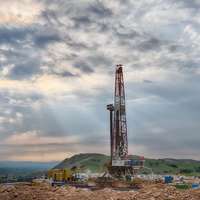
A view from Souroush oil filed in the Persian Gulf

An Iranian state-owned bank has frozen accounts belonging to the National Iranian Oil Company over outstanding debt obligations, the IRGC-affiliated Fars news agency reported on Wednesday.

The action by Bank of Industry and Mine (BIM) comes despite domestic statutory provisions extending NIOC’s debt repayment deadlines through the end of the current Iranian fiscal year in March 2027, Fars reported, without giving the size of the debt or saying when the accounts were frozen.

The bank is a government-owned lender that mainly finances industrial and mining projects.

The apparent mismatch between the repayment timetable and the freezing of the accounts was not explained by Fars.

NIOC, overseen by Iran's Ministry of Petroleum, sits at the center of the country's energy industry, managing much of its oil exploration, production and exports and providing a major source of revenue.

Later on Wednesday, an NIOC financial official told the Tasnim news agency that the company had been in a dispute with Iran's tax authorities over electronic reporting requirements.

Morteza Rouhi, a tax official in NIOC's financial management division, said state-budgeted companies such as NIOC hold some information they are not permitted to disclose, including details related to oil exports, while tax rules require companies to register sales and transactions electronically.

“The oil and economy ministers held a meeting, after which the president’s legal office intervened and ordered a halt to enforcement. We now have no concerns about the National Iranian Oil Company’s accounts being frozen,” Rouhi said.

  • Scandal rocks Iran's secret oil money network as billions go 'missing'

    Scandal rocks Iran's secret oil money network as billions go 'missing'

Sanctions and domestic pressure

Fars said the accounts were frozen over debt but also pointed in the same report to financial restrictions previously imposed on NIOC by the US Treasury. The bank itself was sanctioned in 2018.

The reference is notable because Washington's restrictions on NIOC have themselves been tied to the company's relationship with the Revolutionary Guards.

The US Treasury determined in 2012 that NIOC was an agent or affiliate of the Islamic Revolutionary Guard Corps and in 2020 designated the company under counterterrorism authorities over what it said was NIOC's support for the IRGC's Quds Force.

NIOC is nevertheless formally overseen by Iran's Ministry of Petroleum and sits at the heart of the state economy, managing much of the country's oil production and exports.

The account freeze therefore puts a domestic financial restriction on a government-controlled company whose international financial finances have been affected by its links to the IRGC, as described by the US Treasury.

  • Beyond espionage: Araghchi says spies seek to shape Iran's decisions

    Beyond espionage: Araghchi says spies seek to shape Iran's decisions

Fault lines in Tehran

The action also comes as the war and negotiations with Washington have made divisions among Iran's centers of power increasingly public.

Those divisions do not fall neatly between the government and the IRGC. President Masoud Pezeshkian and officials involved in diplomacy, including Foreign Minister Abbas Araghchi and Parliament Speaker Mohammad Bagher Ghalibaf, have faced pressure from hardline lawmakers, media and political groups opposed to concessions to Washington.

  • Who speaks for Iran: What the public rift means, and what it hides

    Who speaks for Iran: What the public rift means, and what it hides

Ghalibaf, himself a former senior IRGC commander, has faced criticism from ultra-hardliners over his role in negotiations. Lawmakers have also stepped up pressure on Araghchi to disclose details of the US talks, with one senior lawmaker saying this week that parliamentarians were gathering material for a possible impeachment effort against the foreign minister.

The divisions have also surfaced among pro-government supporters mobilized on the streets during the war, a constituency sometimes referred to as the "meydan," or field.

  • Ghalibaf reveals Tehran feared street unrest after Iran International broke Khamenei news

    Ghalibaf reveals Tehran feared street unrest after Iran International broke Khamenei news

Ghalibaf has emphasized the authorities' role in that mobilization, saying officials called supporters onto the streets after news of former Supreme Leader Ali Khamenei's death because they feared the situation could otherwise take a “different turn”.

Some of those gatherings later became platforms for opposition to negotiations and criticism of Ghalibaf, Araghchi and other officials involved in talks with Washington, turning a show of establishment support into another source of pressure over diplomacy.

Araghchi has suggested that foreign intelligence operations could exploit such internal vulnerabilities.

  • Iran sidelines ultra-hardliners from pro-government nightly rallies

    Iran sidelines ultra-hardliners from pro-government nightly rallies

In a recent interview, he said they could seek not only to gather information but also to influence Iran's decision-making and shape its psychological environment and public perceptions.

The NIOC account freeze has not been linked to those political disputes. But it comes as the strains of war, US sanctions and renewed diplomacy increasingly expose tensions among the government, security establishment and other centers of power within the Islamic Republic.