• العربية
  • فارسی
Brand
  • Iran Insight
  • Politics
  • Economy
  • Analysis
  • Special Report
  • Opinion
  • Podcast
  • Live TV
  • Iran Insight
  • Politics
  • Economy
  • Analysis
  • Special Report
  • Opinion
  • Podcast
  • Live TV
  • Theme
  • Language
    • العربية
    • فارسی
  • Iran Insight
  • Politics
  • Economy
  • Analysis
  • Special Report
  • Opinion
  • Podcast
  • Live TV
All rights reserved for Volant Media UK Limited
volant media logo

US senator urges Pentagon to release probe of deadly Iran strike - CBS

Aug 5, 2026, 17:20 GMT+1

Democratic Senator Tammy Baldwin urged the Pentagon to publicly release its investigation into an Iranian attack that killed six US troops in Kuwait, CBS News reported Wednesday, citing a letter obtained by the network.

Baldwin requested the full report, underlying documents and any additional classified review after the Pentagon declined for weeks to disclose the findings of the Army’s more than 350-page investigation.

Six US service members were killed and dozens injured in the March 1 strike on a US command post in Kuwait.

Most Viewed

US rules out Iran truce extension as Tehran official sets new deadline
1

US rules out Iran truce extension as Tehran official sets new deadline

2

Canada deports former Iranian official linked to 2019 protest crackdown

3
OPINION

For Iranian journalists, exile can last a lifetime

4

Iran weighs attacks on military targets in Europe – FT

5
INSIGHT

Forced to serve in the IRGC, now fighting to stay in Canada

Banner
Banner
Banner

Spotlight

  • Luxury Tehran property asking prices surpass Munich and Sydney

    Luxury Tehran property asking prices surpass Munich and Sydney

  • For Iranian journalists, exile can last a lifetime
    OPINION

    For Iranian journalists, exile can last a lifetime

  • Seven months on, January protests still shape Iranians’ lives
    VOICES FROM IRAN

    Seven months on, January protests still shape Iranians’ lives

  • Forced to serve in the IRGC, now fighting to stay in Canada
    INSIGHT

    Forced to serve in the IRGC, now fighting to stay in Canada

  • Iran’s ‘infiltration’ bill sparks backlash over sweeping reach

    Iran’s ‘infiltration’ bill sparks backlash over sweeping reach

  • To survive maximum pressure, Iran kept pumping and broke its oil company
    ANALYSIS

    To survive maximum pressure, Iran kept pumping and broke its oil company

•
•
•

More Stories

Iran's parliament fades further from power after the war

Aug 5, 2026, 16:51 GMT+1
•
Behrouz Turani
100%

Iran's parliament has become all but irrelevant since the war, as power has shifted further toward the Revolutionary Guards and decision-making has moved ever deeper behind closed doors amid the unresolved leadership transition.

The shift has left lawmakers arguing over soaring inflation, corruption and economic policy while increasingly questioning what authority the Majles still retains.

Two interviews published Tuesday by moderate Khabar Online and pro-reform Rouydad24 offered sharply different diagnoses of Iran's economic crisis, but together painted a picture of a legislature struggling to remain relevant.

The interviews came after months of complaints from MPs that parliament has been sidelined, with Speaker Mohammad Bagher Ghalibaf limiting its work to sporadic online sessions while assuming an increasingly prominent role in high-level diplomacy.

"If you ask lawmakers at the parliament door how much a kilo of chicken, meat or bread costs, I swear to God most of them cannot tell you," outspoken former MP Gholamali Jafarzadeh Imenabadi told Khabar Online.

"This is because a massive gap has formed between our officials and the people."

Citing Parliamentary Research Center data, Imanabadi said less than seven percent of the Majles' resolutions over the past two years had addressed economic issues despite soaring inflation and the rising cost of basic goods.

‘Don’t weep, resign!’

Responding to a current MP who publicly wept over women's non-compliance with compulsory hijab laws, Jafarzadeh said officials should instead feel shame—or resign—over inflation, unemployment and empty stomachs.

"For the empty stomachs of the people, officials should ask for death, not just weep. For the state of inflation, they should resign," he said.

He also criticized what he described as parliament's misplaced priorities, questioning why Ghalibaf had become one of Iran's chief negotiators while lawmakers neglected their core duty of overseeing the government and tackling corruption and inflation.

Former conservative MP Hamidreza Taraghi offered a sharply different assessment in an interview with Rouydad24, blaming President Masoud Pezeshkian's administration rather than parliament for the country's economic turmoil.

"Regarding inflation and rising prices, the government follows methods that lack the necessary efficiency to control inflation," he said, arguing that weak oversight by the administration and the Central Bank lay behind many of the country's economic problems.

Taraghi also rejected suggestions that hardline MPs represented parliament as a whole: "The positions of 10 to 15 MPs should not be generalized to the entire parliament.”

He further defended the Majles against accusations of economic inaction, arguing that under Iran's constitution parliament could not introduce spending measures without identifying funding sources, leaving many economic decisions in the government's hands.

Elected bodies sidelined

The competing accounts reflect a broader debate over who bears responsibility for Iran's economic crisis. Moderates portray parliament as increasingly detached from both public concerns and the country's most pressing challenges, while hardliners argue its powers are constrained and responsibility rests primarily with the executive.

Yet the interviews also point to a deeper shift in Iran's political system.

Under former Supreme Leader Ali Khamenei, institutions including parliament, the Expediency Discernment Council, the Assembly of Experts and even the presidency steadily lost influence as authority became concentrated in the leader's office.

Since the five-month war with Israel and the United States, critics say that trend has accelerated, with the Revolutionary Guards and the power center surrounding Mojtaba Khamenei increasingly eclipsing the Islamic Republic's formal institutions.

Whether lawmakers blame the government, Ghalibaf or one another, the interviews suggest they are debating problems in a parliament many believe no longer has a role in decision-making..

Smokeless tobacco is hooking Iran's schoolchildren. Why is it sold to them?

Aug 5, 2026, 14:15 GMT+1
•
Hooman Abedi
100%
Students walk on a school campus in Iran. Officials say easy access to nas, a smokeless tobacco product sold legally in many shops, is contributing to rising nicotine use among schoolchildren.

Schoolchildren in Iran are getting hooked on nas, a cheap smokeless tobacco sold openly within steps of their classrooms, an official warned on Tuesday, as social media users asked why a product this addictive is hawked to children in plain sight.

The use of nas has become increasingly common among students, particularly in middle school, said Mostafa Mohammadpour, head of the state Welfare Organization office in the northeastern city of Kashmar. In some cases, he added, children in the upper years of primary school have begun using it.

"What has now become common among students and paves the way for drug dependence starts with the use of nas," Mohammadpour said. "Unfortunately, children have very easy access to it because selling it is not considered a crime and it is not recognized as a narcotic."

Nas, known across the region as naswar, is a moist green tobacco mixture held under the lip or tongue. It is a centuries-old habit in eastern Iran, Afghanistan and Central Asia, and because it produces no smoke, a child can use it in a classroom without anyone noticing.

'Why don't they stop it?'

The warning drew a wave of responses from users reacting to Iran International's coverage, many asking why the product remains on open sale despite years of warnings about its risks.

"Why don't they stop it from being distributed?" one commenter asked.

100%
Packets of nas, a smokeless tobacco product, are prepared for sale at a market.

Another argued the answer lies in giving children somewhere else to go. "Municipalities should build at least three sports complexes for students in every district and make them free. School facilities should also be improved so students stay occupied and don't turn to it," the commenter wrote.

Others aimed their frustration at official indifference. "Do they even care what happens to young people?" one wrote.

Some tied the issue to wider political grievances. One X user alleged that the authorities allow addiction to spread among the young to blunt political activism, and wrote that nas "causes addiction quickly," "causes cancer in the mouth" and "damages teeth," adding a claim, which could not be independently verified, that products sold in Iran contain arsenic.

  • Counterfeit drugs kill 7,000 people annually in Iran

    Counterfeit drugs kill 7,000 people annually in Iran

Within every child's reach

Because nas is not classified as an illegal narcotic, it sits on the shelves of small shops, and students obtain it with little difficulty, according to Mohammadpour.

The habit is most entrenched in the northeastern province of Razavi Khorasan, he said, but is no longer confined to one region, with nas now readily available across much of the country.

Tehran is no exception. Iranian media have reported vendors openly selling nas in and around the capital's Molavi market, the green tobacco displayed in packages large and small under a variety of brands.

The market draws buyers with lower prices and a wider selection, though the product is also sold through herbal shops across the city.

For children, the attraction is obvious: it is cheap, easy to hide and everywhere.

100%
Nas, a smokeless tobacco product, is shown in a plastic bag. Iranian officials say its widespread availability has made it increasingly accessible to children and teenagers.

More than a tobacco habit

Doctors warn the risks run well beyond nicotine.

Research has linked nas to cancers of the mouth, esophagus and pancreas, as well as cardiovascular disease. Health experts also reject the belief that smokeless tobacco is a safe alternative to cigarettes, warning that no tobacco product is without risk.

The spread among students carries a further danger: early exposure to nicotine can leave children more vulnerable to addiction of every kind later in life, the concern at the heart of Mohammadpour's "gateway" warning.

100%
A small packet of nas, a smokeless tobacco product, is exchanged between two people.

A country's changing addictions

The warning lands against a wider shift in substance use in Iran.

More than 4.4 million people in Iran use narcotics regularly or occasionally, according to a report last year in the daily Shargh, which estimated that, counting their families, some 15 million people live with the consequences of drug use.

  • Cannabis emerges as leading drug among Iranian women

    Cannabis emerges as leading drug among Iranian women

Officials and health experts have also pointed to rising use of synthetic drugs, a falling age of first use, and growing numbers of women and young people among users, signs that addiction in Iran is getting younger.

The children with green packs in their pockets, on this reading, are not an anomaly but the leading edge.

Iran state bank freezes national oil company accounts over debt

Aug 5, 2026, 12:59 GMT+1
•
Niloufar Goudarzi
100%
A view from Souroush oil filed in the Persian Gulf

An Iranian state-owned bank has frozen accounts belonging to the National Iranian Oil Company over outstanding debt obligations, the IRGC-affiliated Fars news agency reported on Wednesday.

The action by Bank of Industry and Mine (BIM) comes despite domestic statutory provisions extending NIOC’s debt repayment deadlines through the end of the current Iranian fiscal year in March 2027, Fars reported, without giving the size of the debt or saying when the accounts were frozen.

The bank is a government-owned lender that mainly finances industrial and mining projects.

The apparent mismatch between the repayment timetable and the freezing of the accounts was not explained by Fars.

NIOC, overseen by Iran's Ministry of Petroleum, sits at the center of the country's energy industry, managing much of its oil exploration, production and exports and providing a major source of revenue.

Later on Wednesday, an NIOC financial official told the Tasnim news agency that the company had been in a dispute with Iran's tax authorities over electronic reporting requirements.

Morteza Rouhi, a tax official in NIOC's financial management division, said state-budgeted companies such as NIOC hold some information they are not permitted to disclose, including details related to oil exports, while tax rules require companies to register sales and transactions electronically.

“The oil and economy ministers held a meeting, after which the president’s legal office intervened and ordered a halt to enforcement. We now have no concerns about the National Iranian Oil Company’s accounts being frozen,” Rouhi said.

  • Scandal rocks Iran's secret oil money network as billions go 'missing'

    Scandal rocks Iran's secret oil money network as billions go 'missing'

Sanctions and domestic pressure

Fars said the accounts were frozen over debt but also pointed in the same report to financial restrictions previously imposed on NIOC by the US Treasury. The bank itself was sanctioned in 2018.

The reference is notable because Washington's restrictions on NIOC have themselves been tied to the company's relationship with the Revolutionary Guards.

The US Treasury determined in 2012 that NIOC was an agent or affiliate of the Islamic Revolutionary Guard Corps and in 2020 designated the company under counterterrorism authorities over what it said was NIOC's support for the IRGC's Quds Force.

NIOC is nevertheless formally overseen by Iran's Ministry of Petroleum and sits at the heart of the state economy, managing much of the country's oil production and exports.

The account freeze therefore puts a domestic financial restriction on a government-controlled company whose international financial finances have been affected by its links to the IRGC, as described by the US Treasury.

  • Beyond espionage: Araghchi says spies seek to shape Iran's decisions

    Beyond espionage: Araghchi says spies seek to shape Iran's decisions

Fault lines in Tehran

The action also comes as the war and negotiations with Washington have made divisions among Iran's centers of power increasingly public.

Those divisions do not fall neatly between the government and the IRGC. President Masoud Pezeshkian and officials involved in diplomacy, including Foreign Minister Abbas Araghchi and Parliament Speaker Mohammad Bagher Ghalibaf, have faced pressure from hardline lawmakers, media and political groups opposed to concessions to Washington.

  • Who speaks for Iran: What the public rift means, and what it hides

    Who speaks for Iran: What the public rift means, and what it hides

Ghalibaf, himself a former senior IRGC commander, has faced criticism from ultra-hardliners over his role in negotiations. Lawmakers have also stepped up pressure on Araghchi to disclose details of the US talks, with one senior lawmaker saying this week that parliamentarians were gathering material for a possible impeachment effort against the foreign minister.

The divisions have also surfaced among pro-government supporters mobilized on the streets during the war, a constituency sometimes referred to as the "meydan," or field.

  • Ghalibaf reveals Tehran feared street unrest after Iran International broke Khamenei news

    Ghalibaf reveals Tehran feared street unrest after Iran International broke Khamenei news

Ghalibaf has emphasized the authorities' role in that mobilization, saying officials called supporters onto the streets after news of former Supreme Leader Ali Khamenei's death because they feared the situation could otherwise take a “different turn”.

Some of those gatherings later became platforms for opposition to negotiations and criticism of Ghalibaf, Araghchi and other officials involved in talks with Washington, turning a show of establishment support into another source of pressure over diplomacy.

Araghchi has suggested that foreign intelligence operations could exploit such internal vulnerabilities.

  • Iran sidelines ultra-hardliners from pro-government nightly rallies

    Iran sidelines ultra-hardliners from pro-government nightly rallies

In a recent interview, he said they could seek not only to gather information but also to influence Iran's decision-making and shape its psychological environment and public perceptions.

The NIOC account freeze has not been linked to those political disputes. But it comes as the strains of war, US sanctions and renewed diplomacy increasingly expose tensions among the government, security establishment and other centers of power within the Islamic Republic.

Iran executed at least 56 people since March, UN rights chief says

Aug 5, 2026, 12:42 GMT+1
100%
Iranian exiles hold a vigil against executions in Iran, Germany 2020.

Iran has executed at least 56 people on national security-related charges since March 19, including 27 in cases linked to protests earlier this year, UN human rights chief Volker Türk said on Wednesday.

Türk said executions and death sentences had risen since March, with more than 100 other people facing similar charges and the death penalty.

He urged Iranian authorities to halt all executions and move towards abolishing the death penalty.

The figures come after a series of executions in recent weeks of young people detained over the January protests, some of which drew gatherings by relatives and members of the public seeking to stop the sentences from being carried out.

  • More Iranian teenagers at risk of execution, rights groups warn

    More Iranian teenagers at risk of execution, rights groups warn

Protesters executed

Iranian authorities executed 20-year-old Arvin Kheirkhah at Shahroud prison on Saturday after he was sentenced to death over his involvement in the January protests, according to information obtained by Iran International.

Kheirkhah had been convicted by a Revolutionary Court on charges including moharebeh, or "waging war against God."

His family gathered outside Shahroud prison on Friday night in an effort to stop the execution, according to Iran International. In a final conversation with his family, Kheirkhah urged them not to let him be forgotten.

His execution came days after authorities hanged Amirhossein Safari and Abolfazl Sepahi in Isfahan's Alikhani Square.

The two were among 12 young men sentenced to death in a case stemming from the January protests in the square. Iranian authorities accused the defendants of involvement in the deaths of four security personnel as well as arson and vandalism.

  • Iran executes two protesters amid heavy security in Isfahan

    Iran executes two protesters amid heavy security in Isfahan

People gathered around the square overnight before the executions amid a heavy deployment of security forces.

Two other defendants in the same case, Golmohammad Mohammadi and Erfan Esfandiari, were executed on July 19, bringing the number put to death in the case to four.

Others remain under death sentences

A group of UN human rights experts, led by Mai Sato, the UN Special Rapporteur on the situation of human rights in Iran, urged Tehran in late July to halt the executions of defendants in the Isfahan case.

"Sentencing 12 people to death in one hearing, in a closed courtroom and without clarity as to each defendant's individual responsibility violates established fair trial standards," the UN experts said in a statement.

  • Iran executes 20-year-old protester as fears grow for other detainees

    Iran executes 20-year-old protester as fears grow for other detainees

They said the defendants, aged from their late teens to early twenties, had reportedly faced arbitrary detention, enforced disappearance and, in some cases, ill-treatment.

The UN experts also raised concerns that convictions relied heavily on confessions broadcast on Iranian state television, while Revolutionary Court hearings were held behind closed doors and the judgments were not made public.

Iran used water hacks to intimidate not cripple, experts say

Aug 5, 2026, 10:35 GMT+1
•
Negar Mojtahedi
100%
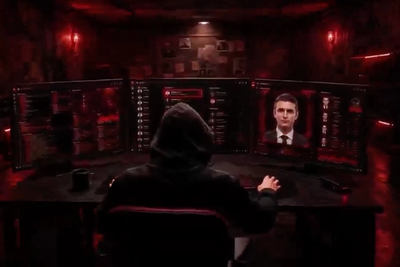
AI-generated illustration depicting a cyberattack targeting a US water treatment facility.

Cyberattacks targeting water and wastewater facilities in at least seven US states appear to have been intended less to cripple infrastructure than to demonstrate Iranian reach, intimidate the public and shape perceptions, cybersecurity experts told Iran International.

"The psychological impact is what these attacks are intended to do,"said Annie Fixler, director of the Center on Cyber and Technology Innovation at the Foundation for Defense of Democracies (FDD).

"Iranian hackers in particular conduct what's called perception hacking," she said.

"They conduct a small-scale operation, they get into a network, they take a couple pictures of what they got, and then they claim to have caused a massive disruption because they're trying to cause a psychological impact even when they can't cause an actual true cyber impact."

Federal authorities last week warned that "malicious cyber actors" had targeted water and wastewater systems across at least seven states, with Minnesota reporting the largest number of incidents after around 30 water systems were disrupted. Officials urged utilities to disconnect vulnerable internet-connected equipment and switch to manual operations where necessary.

The FBI has opened an investigation but has not publicly attributed responsibility. However, multiple US media outlets, citing government officials familiar with the investigation, reported that Iran is the leading suspect.

President Donald Trump dismissed suggestions that Tehran was responsible, instead blaming Minnesota Governor Tim Walz, while Walz argued the attacks illustrated "what modern warfare looks like."

Why Iran?

Although no official attribution has been made, cybersecurity specialists say several characteristics of the campaign closely resemble previous Iranian operations.

"The particular systems they attacked are programmable logic controllers," Fixler said, referring to industrial control devices widely used in water facilities.

"The US government warned repeatedly earlier this year that Iranian actors were targeting those particular systems."

Earlier this year, the Cybersecurity and Infrastructure Security Agency (CISA) warned that Iranian-affiliated hackers were actively targeting internet-connected operational technology, including programmable logic controllers used in water infrastructure.

The agency later updated its advisory with additional guidance on securing vulnerable equipment.

Unlike financially motivated ransomware attacks, the latest incidents included no ransom demands.

"The first thing I look for is whether there's a ransom request," Fixler said. "We haven't seen that."

That absence points away from criminal hackers and toward a geopolitical operation, she said.

Amin Sabeti, a cybersecurity researcher specializing in Iranian cyber operations, said the campaign also reflects the typical strengths and limits of Iran's cyber capabilities.

"I don't think it was sophisticated, but it was a clever one," Sabeti said.

Rather than deploying cutting-edge exploits, he said the attackers appeared to exploit weak cybersecurity practices such as unchanged default passwords and poorly secured internet-connected equipment.

Compared with Russia and China, "they are a small boy in the town," Sabeti said, arguing Iranian operators excel at social engineering and exploiting simple vulnerabilities more than conducting highly sophisticated cyber campaigns.

A familiar playbook

The suspected campaign would fit a pattern established over recent years.

In late 2023, the IRGC-linked hacking group CyberAv3ngers targeted water facilities in Pennsylvania by compromising Israeli-made Unitronics programmable logic controllers, forcing operators to switch to manual controls.

Iran has also targeted Israeli water infrastructure. In 2020, Iranian hackers attempted to manipulate chlorine levels in Israeli water systems, according to Israeli and Western officials, prompting a reported Israeli cyber retaliation against Iran's Shahid Rajaee Port.

The same industrial control equipment targeted in previous Iranian operations has again become the focus of concern in the United States.

Fighting a war without missiles

Experts say the attacks fit neatly into Iran's broader doctrine of asymmetric warfare.

"They show that, for a big powerful country like America, they can still be reached. Iran can still touch them," security expert Roger Macmillan told Iran International.

"There is a huge psychological warfare piece... They can't attack us physically using missiles, but they can touch us digitally."

Macmillan said the campaign serves several purposes simultaneously: demonstrating that American critical infrastructure is vulnerable, gathering intelligence about similar systems across the country and reminding Washington that Tehran retains options beyond conventional military force.

"There's also an intelligence gathering piece," he said. "They will probe similar types of companies to see where the same weaknesses are and how they will exploit them."