US personnel faced phone-tracking campaign during Iran war – FT
US military personnel and contractors in the Middle East were targeted in a coordinated phone-tracking campaign before and during the Iran war, the Financial Times reported on Tuesday, citing telecom data, cybersecurity experts and officials familiar with the matter.
“Iran absolutely has capabilities to get real-time, immediate, and continuous location information,” Gary Miller, a senior research fellow at cybersecurity watchdog Citizen Lab, told the FT.
“It would surprise me very much if Iran were not using SS7, or mobile network access in the region, to track US users.”
Telecom networks under pressure
Middle Eastern telecom networks, according to the report, blocked repeated requests known as SS7 pings, which can reveal the approximate location of phones roaming outside their home networks.
Two cybersecurity experts who reviewed the data told the FT the activity appeared to be part of a coordinated effort to locate specific devices.
The tracking attempts came in the build-up to the US-Israeli attack on Iran in late February and continued during the early days of the conflict, when Iran launched missile and drone attacks on US forces and military installations across the region.
A person familiar with the matter told the FT that Persian Gulf officials suspected Iran or allied groups had exploited roaming agreements with regional mobile operators to track US personnel.
Separately, a US official speaking anonymously said actors linked to Iran were also believed to have used commercial advertising databases to locate phones in Iraqi Kurdistan.
US lawmakers renew security concerns
US Central Command told Congress in April that it had received multiple threat reports about adversaries exploiting commercial location data to monitor or target US personnel deployed in the region.
However, Centcom said it had taken force-protection measures to safeguard its forces, while a US official told the FT there was no evidence that data tracking had played a significant role in attacks.
At least some blocked tracking attempts could be linked to an Iranian mobile operator based on a shared technical fingerprint.
“This appears to be very specific user targeting,” Miller told the FT. “They are targeting specific devices.”
The Iranian embassy in London did not immediately respond to the newspaper's request for comment.
The report also said Iran was suspected of using commercially available advertising technology to identify hotels housing US government employees and contractors.
Advertising identifiers assigned to smartphones can enable devices to be tracked without directly compromising the phones themselves.
US lawmakers cited by the FT said the findings underscored longstanding concerns about the military's exposure through commercial location data.
Ron Wyden, a Democratic senator, said he had warned successive administrations for years about the national security risks, while Republican Representative Pat Harrigan said legislation was needed to prevent technology companies from selling location data linked to government employees.
German security authorities are investigating indications of possible surveillance activities and preparations for attacks linked to the Iran war, German-language newspaper Handelsblatt reported on Tuesday, citing the Interior Ministry.
A ministry spokesperson said federal security agencies were closely monitoring developments related to the Middle East and were examining various leads concerning suspected reconnaissance activities or preparations for possible attacks.
The spokesperson said the agencies were working closely with Germany's regional authorities and international partners to continuously assess the threat environment.
The review comes after the publication of an Iranian "retaliation list" that included German Chancellor Friedrich Merz among a number of foreign leaders identified as targets for revenge.
The ministry said it had taken note of the publication and its threats, adding that security measures provided by the Federal Criminal Police Office (BKA) were being continuously reviewed and adjusted where necessary.
According to the ministry, the latest escalation between the United States and Iran has not, at this stage, led to a deterioration of Germany's already elevated security assessment.
The ministry also pointed to what it described as Iran's reliance on asymmetric tactics, including intelligence gathering, intimidation of regime opponents abroad and the mobilization of supporters.
It cited Lebanon's Hezbollah, the Palestinian militant group Hamas and Yemen's Houthis as groups aligned with Tehran's so-called "Axis of Resistance."
On Saturday, Tehran municipality-affiliated newspaper Hamshahri published an image of 13 world leaders, including Merz, claiming they were on the Islamic Republic’s revenge list.
It showed them in prison uniforms in crosshairs, alongside the caption: “Revenge is certain.”
The image also showed European leaders Giorgia Meloni, Friedrich Merz, Emmanuel Macron and Keir Starmer.
Italian Foreign Minister Antonio Tajani told Iran International on Monday that the threat against the Italian prime minister was unacceptable, adding that, “Italy is not fighting against Iran, so we do not understand this attack against Italy.”
The image also depicted US and Israeli officials, including US President Donald Trump and Israeli Prime Minister Benjamin Netanyahu.
File photo shows a healthcare worker assisting a woman using a wheelchair up a ramp at a medical facility in Iran.
Many Iranians with disabilities have lost their living allowances after the State Welfare Organization halted payments from June citing a budget shortfall, the labor-focused news agency ILNA reported on Monday, adding that caregiver and hygiene subsidies have also been delayed.
The cuts, the outlet said, reflected the Islamic Republic's failure to support people covered by the welfare system, particularly those with disabilities, during a deepening economic crisis.
“For me, the question is why they cut my living allowance when even they say my disability is severe and I have developed pressure sores,” 44-year-old Hossein, whose payments stopped last month, told ILNA.
Hossein said the State Welfare Organization also provides no meaningful assistance with medication costs and refused to reimburse expenses from a surgery because it was performed during the past year.
The worsening economic situation, he added, had also reduced the ability of charities to support people with disabilities.
Rising costs deepen hardship
Many people with disabilities, ILNA said, are unable to work and depend largely on modest welfare stipends and subsidies for their livelihoods.
The report argued that deteriorating conditions stem from ineffective state policies and a lack of equal social, economic and political opportunities, warning that services become even more limited outside the capital.
The economic downturn, coupled with sharply higher healthcare and medicine costs, has placed additional strain on people with disabilities, many of whom require continuous medical treatment, rehabilitation services and specialized equipment.
In May, Khabar Online news outlet reported that rising prices for hygiene and medical supplies had affected around 45,000 people living with spinal cord injuries. Prices for essential items including sterile dressings, catheters, catheter bags, syringes and medicines for pressure sores had increased two- to three-fold.
Subsidies cover only days of expenses
Raheleh, a 45-year-old woman with a spinal cord injury, told that the monthly hygiene subsidy of 15 million rials ($8.2) was far below what was needed.
Silhouettes of people with disabilities gather inside a public building in Iran.
“I have to use disposable catheters every day, and this amount only covers one week or 10 days. It cannot cover the whole month ... I have never had the opportunity to work, so in these conditions of inflation I have no salary,” she said.
She described the monthly caregiver allowance of 42 million rials ($23) as “close to nothing” given her medical expenses, adding that doctor visits, diagnostic tests and transportation costs leave her unable to meet basic needs by the middle of each month.
Fatemeh Abbasi, deputy head of rehabilitation at the State Welfare Organization, said in May that the agency had requested an 80% to 90% increase in caregiver allowances, but implementation depends on government approval.
US President Donald Trump attends an event in the Oval Office at the White House in Washington, DC, on July 13, 2026.
US President Donald Trump said on Monday that the United States would take control of the Strait of Hormuz, continue military operations against Iran and seek compensation from regional countries for securing the strategic waterway.
"We're taking over the strait. They've got nothing," Trump said in a phone interview with Fox News.
Trump said the United States would assume responsibility for protecting shipping through the strait and expected other Middle Eastern countries to pay for the mission.
"And we're going to keep the strait, and we'll probably run it. We'll become the guardian of the strait. Maybe we'll call it the 'guardian angel of the strait.' And we should be reimbursed for that. When we do that, we're going to be reimbursed because the other nations are very wealthy, they're on our side."
He later elaborated on the proposal in a Truth Social post, saying Washington would restore a blockade targeting Iranian shipping while allowing all other commercial traffic to pass.
"The Hormuz strait is open, and will remain open, with or without Iran. We are reinstating the Iranian blockade, so named because it is only stopping Iran's ships or customers from entering or leaving. All other countries will have fair and open use of the strait," he said.
"The U.S.A. will be, from this point forward, known as 'the guardian of the Hormuz strait,'" Trump added.
He also said the United States would charge countries using the waterway a fee equal to 20% of the value of cargo shipped to cover "any and all costs necessary to do the job of providing safety and security to this very volatile section of the World." It was not immediately clear whether US allies had agreed to such an arrangement.
Trump said his administration had believed it had reached a lasting understanding with Tehran before deciding Iran had violated it.
"What nobody knows, we had a deal. It was a done deal, and then they broke it. They always break it. We've had 10 deals with these people, and so we're just going to hit them very hard."
The remarks came after the United States carried out another round of strikes against Iran following Iranian attacks on US facilities across the Persian Gulf and Tehran's renewed declaration that the Strait of Hormuz was closed.
The exchange has effectively collapsed the interim memorandum of understanding reached in June, which had aimed to reopen the waterway and provide a framework for further negotiations.
Iran says it charges less
Iranian Foreign Minister Abbas Araghchi rejected Trump's statement that Washington would become the strait's guardian.
"POTUS is absolutely right. Whoever provides secure and safe passage of commercial vessels through the Strait of Hormuz should be compensated for this service," he said. "Iran has always been the guardian of the Strait and will remain so forever. 20% is of course too much. We will be fair."
New attacks on nuclear sites
Trump also said on Monday that Iran's Pickaxe Mountain nuclear site could soon become a US target.
Speaking to conservative radio host Hugh Hewitt, Trump said the United States was closely monitoring the deeply buried facility.
"A nice big fat shot right in the front door," Trump said, adding the United States would "probably give Pickaxe a shot relatively soon."
Trump also indicated further military action was imminent.
"It was a test. We didn't know," he said of the memorandum of understanding with Iran. "Memorandums of understanding, when you're dealing with sleazebags, don't mean much. It was sort of a test, and they weren't there. They didn't honor the test."
The renewed campaign has also reignited opposition in Congress.
Democratic Senator Adam Schiff said he would introduce a new War Powers Resolution this week to force another Senate vote on ending US military involvement in Iran, while Senate Democratic leader Chuck Schumer said Trump's "so-called understanding" with Iran had collapsed.
"Enough is enough. End the war," Schumer wrote on X.
Critics from both parties also argued the administration was stretching its legal authority. "The president can't just wish away months of war he said would last only four to six weeks," a senior Democratic aide in the House of Representatives told Reuters.
Meanwhile, the US military operation has continued alongside Trump's remarks. US Central Command said American forces have struck more than 300 Iranian military targets over the past week and announced additional attacks on Monday.
"These strikes will continue imposing a heavy cost on Iranian forces and degrade their ability to attack innocent civilians and commercial shipping in the Strait of Hormuz," CENTCOM said.
Mahmoud Ahmadinejad, seen here in 2024, is said to have learned English and tried to improve his image after falling out with the Iranian regime. Photograph: Majid Asgaripour/Reuters
The alleged recruitment of Mahmoud Ahmadinejad by Mossad reads like a spy thriller and has been denied by his office. But it has renewed interest in Iran's most controversial president—and the ruthless infighting that turned a Leader’s darling into a political outcast.
On Monday, The New York Times and Haaretz alleged that Mossad cultivated Ahmadinejad as an intelligence asset and even considered him for a role leading Iran if the Islamic Republic collapsed.
The office of the former president swiftly dismissed the reports as Hollywood material that was hardly worth denying.
For those who followed Ahmadinejad's trajectory after leaving office, however, the allegation itself is less surprising than the path that may have led to it.
"He certainly was very ambitious and wanted power. And it was clear that there was no way he could get to power so long as Khamenei and the regime were in charge," historian and author Arash Azizi, who remained in contact with Ahmadinejad for years after he left office, told Iran International.
Whether Ahmadinejad was ever a credible candidate to lead Iran is a separate question. So, too, is why an alleged intelligence relationship of such sensitivity is now being described publicly in remarkable detail.
"If Ahmadinejad was their person indeed... you burn this stuff 20 years later. What's the insistence on doing it right now?" Azizi said.
From president to political outsider
Ahmadinejad served as Iran's president from 2005 to 2013, rising to power with the backing of Ali Khamenei and becoming one of the Islamic Republic's most recognizable figures. His presidency was marked by Holocaust denial, calls for Israel's destruction and the violent crackdown that followed the disputed 2009 presidential election.
But his relationship with the political establishment that brought him to power steadily deteriorated.
Meir Javedanfar, an Iran lecturer at Reichman University who co-authored a biography of Ahmadinejad, said Ahmadinejad increasingly believed he deserved more authority than Iran's political system allowed him.
"He believed that he had the intellectual capability and charisma and public support to have much more authority and much more power than the regime was giving him," Javedanfar told Iran International.
That frustration became visible in 2011, when Ahmadinejad boycotted official duties for 11 days after Khamenei overruled his attempt to dismiss intelligence minister Heydar Moslehi — one of the most public challenges to the supreme leader by a sitting president.
The rupture accelerated after he left office. Close allies, including Esfandiar Rahim Mashaei, were arrested, while Ahmadinejad himself was repeatedly barred from returning to the presidential race.
"After he left office, this frustration was supplemented by anger towards the regime," Javedanfar said.
"And this is why I think he would have been open to recruitment by foreign intelligence agencies... because of the tremendous anger he had towards the regime."
The New York Times reported a similar trajectory. According to the report, Ahmadinejad eventually concluded he could not return to power while the existing political system remained in place.
An associate told the newspaper Ahmadinejad envisioned returning to power with foreign backing and, if successful, would recognize Israel and normalize relations under the Abraham Accords.
Mahmoud Ahmadinejad, seen here in 2005, was frequently condemned by Human Rights Watch for his treatment of Iranian protesters. Photograph: Ho New/Reuters
A transformation seen up close
Azizi began speaking regularly with Ahmadinejad and members of his circle after the former president left office. By then, he said, Ahmadinejad's faction had begun drifting away from the conservative establishment. His circle appeared less Islamist and more nationalist while reaching out to journalists and political figures outside the Islamic Republic's traditional orbit.
"What I saw in Ahmadinejad all these years was someone who was very ambitious, who wanted power, who understood Iranian public sentiments very well, almost masterfully," Azizi said.
He also appeared increasingly aware that his record on Israel would complicate any political comeback. Azizi recalled arranging an interview between Ahmadinejad and an Israeli journalist and said the former president repeatedly expressed an interest in discussing Jewish history and Israel.
"He seemed to be open to normalization with Israel," Azizi said.
Azizi said Ahmadinejad became noticeably more secluded around 2024 — roughly the same period The New York Times reported that his contacts with Israeli intelligence intensified.
The alleged recruitment
It remains unclear exactly when Israeli intelligence first approached Ahmadinejad.
The New York Times reported that Iranian officials traced at least some of Ahmadinejad's contacts with Israeli intelligence to a 2023 trip to Guatemala. The following year, he traveled to Budapest to attend a climate conference at Ludovika University of Public Service.
According to the newspaper, the conference served as cover for meetings with Israeli intelligence operatives. Former US officials cited by the newspaper said then-Mossad director David Barnea personally traveled to Budapest to meet Ahmadinejad and that Mossad later informed the CIA it was in contact with him.
The newspaper also reported that Israel paid for some of Ahmadinejad's travel and accommodation and that operatives met him abroad on several occasions.
Haaretz, meanwhile, reported that Ahmadinejad formed part of a broader Israeli plan to destabilize the Islamic Republic. The plan reportedly combined influence operations inside Iran, support for Kurdish forces in Iraq and efforts to activate pressure on the government from multiple directions.
Ahmadinejad was envisioned as one possible political figure who could emerge if the system collapsed.
But the newspaper said the proposal faced considerable skepticism within Israel's own security establishment. Senior Military Intelligence officials reportedly judged the plan unlikely to succeed, while National Security Adviser Tzachi Hanegbi is said to have dismissed parts of it as resembling "science fiction."
Cabinet ministers also questioned why Israel would seek to replace the Islamic Republic with one of its best-known former hardliners. According to Haaretz, Mossad argued that Ahmadinejad's years of conflict with the leadership had transformed him into an opposition figure.
Recruitable does not mean viable
Jason Brodsky, policy director at United Against Nuclear Iran, said it was plausible that Ahmadinejad attracted the attention of foreign intelligence services after becoming estranged from Iran's leadership.
"Do I think Ahmadinejad was a person of interest to certain foreign intelligence organizations because of his status as someone who has been burned by the Iranian leadership? Yes," Brodsky told Iran International.
"Do I believe that Mossad and other intelligence agencies were interested in talking with him? Yeah, I do."
But Brodsky drew a distinction between cultivating Ahmadinejad as a potential intelligence source and building a broader regime-change strategy around him.
"Does that mean that he was the grand Israeli regime change strategy for the Islamic Republic? Not necessarily," he said.
Brodsky argued that Ahmadinejad lacked one critical ingredient for any successful transition: support inside Iran's security establishment capable of triggering defections.
"Defections would be part of any regime change strategy," he said.
The plan falls apart
According to The New York Times, the operation reached its most dramatic point on Feb. 28, when an Israeli strike hit Ahmadinejad's compound, targeting a building used by his bodyguards and his armored vehicle.
The newspaper reported that a black Peugeot arrived shortly afterwards and that Mossad operatives extracted Ahmadinejad from the scene, transporting him to a safe house inside Iran.
US and Iranian officials cited by the newspaper said Ahmadinejad later became disillusioned with the plan to return him to power and eventually left the safe house under circumstances that remain unclear.
The broader regime-change strategy likewise failed to unfold as envisioned. According to Haaretz, plans to combine internal unrest with armed pressure from outside Iran never materialized.
Ahmadinejad resurfaced last week at Khamenei's funeral after weeks out of public view. The New York Times, citing four senior Iranian officials, reported that he is now under house arrest after Iranian authorities uncovered much of his alleged interaction with Israel. His current status has not been independently confirmed.
Why reveal it now?
The reports raise one final question: why reveal such an alleged intelligence relationship now?
"There's always a motive in this," Azizi said. "Why are they so eager to burn Ahmadinejad?"
Brodsky suggested the answer may lie partly inside Israel, pointing to rivalries between Mossad and Military Intelligence, divisions within Mossad itself and the increasingly charged political atmosphere ahead of October's elections.
Whether the allegations are ultimately borne out or not, Ahmadinejad's political trajectory is no longer in dispute. Over more than a decade he moved from one of the Islamic Republic's most loyal servants to one of its most isolated former presidents.
The question now is whether Israeli intelligence merely sought to exploit that rupture—or whether those behind the reported operation fundamentally overestimated what Ahmadinejad could ultimately deliver.
President Donald Trump on Monday reinstated a naval blockade against Iran after notifying Congress that US military action against the Islamic Republic had resumed, amid fresh blasts in southern Iran and continued ship attacks near Hormuz.
Trump said Monday that the United States would once again block ships belonging to the Islamic Republic or serving its customers from entering or leaving Iranian ports, while keeping the Strait of Hormuz open to traffic bound for other countries.
US Central Command said the blockade would take effect at 4 p.m. ET on Tuesday and apply to vessels traveling to or from Iranian ports and coastal areas. American forces would continue supporting ships in regional waters that were not violating the restrictions, CENTCOM added.
The US Navy-led Joint Maritime Information Center said the measure would cover Iran’s entire coastline, including ports and oil terminals. Neutral vessels traveling through Hormuz to non-Iranian destinations would be allowed to pass, while humanitarian shipments would be permitted after inspection.
The announcement came days after Trump informed congressional leaders that “military action commenced on July 7 against the government of the Islamic Republic.”
In his July 10 letter which was released on Monday, Trump said US forces launched “defensive strikes” after Iranian forces attacked several neutral-flagged commercial vessels in the Strait of Hormuz. The targets included missile launch sites, air defenses, maritime military assets, military-support infrastructure and command-and-control capabilities.
Trump said no American ground forces were involved and described the attacks as limited and measured. He nevertheless said US forces remained positioned to carry out further action, indicating that the July 7 operation marked the resumption of a military campaign rather than an isolated retaliatory strike.
The notification could further intensify a dispute between the White House and Congress over Trump’s authority to continue the war without legislative approval. Both chambers have voted to direct him to end the fighting or seek congressional authorization, while the administration says the president is acting within his constitutional powers as commander in chief.
US strikes have continued since the renewed campaign began. CENTCOM said American forces used one-way attack surface drones in combat for the first time on Sunday, striking a submarine and ship-maintenance facility at the Bandar Abbas Naval Base.
Three Corsair unmanned vessels hit the facility and degraded the Islamic Republic’s ability to attack commercial shipping, according to the US military.
Explosions in southern Iran
Fresh explosions were reported Monay across southern and southeastern Iran, within a coastal zone highlighted by CENTCOM.
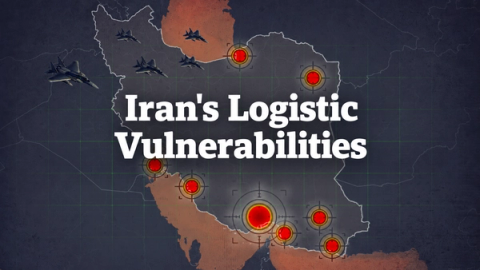
A map released by US Central Command highlights a broad stretch of Iran’s southern coastline along the Persian Gulf and Gulf of Oman, hinting at the general range of ongoing US strikes.
The state-run Islamic Republic News Agency said the sound of four missile impacts was heard near Konarak, with the blasts also audible in Chabahar and Dashtiari.
The IRGC-affiliated Tasnim News Agency reported six loud explosions in Chabahar and Konarak and said areas around Chabahar had been targeted by the US military in recent nights. It also reported explosions and the activation of air defenses in Bandar Abbas.
Iran’s state broadcaster later denied that explosions had occurred in Bandar Abbas, Larak and several other southern locations, contradicting earlier reports by IRNA and Tasnim. No immediate casualty figures were announced.
The confrontation also continued at sea, with Tasnim reporting that several vessels accused of violating Iranian restrictions had been targeted in the Strait of Hormuz.
Iran’s armed forces warned they would respond forcefully to US interference with shipping and said regional governments providing logistical support to Washington could be regarded as participants in the war.
Trump, meanwhile, declared the United States the “Guardian of the Hormuz Strait” and proposed charging the equivalent of 20% of cargo shipped through the waterway, a plan rejected by the UN’s shipping agency as lacking a legal basis.
Trump also said the United States would hit Iran hard on Monday night and Tuesday, in an interview with conservative radio host Hugh Hewitt.
Asked about the memorandum of understanding, Trump said it had been a test for Iran and that Tehran had failed to honor it.