• العربية
  • فارسی
Brand
  • Iran Insight
  • Politics
  • Economy
  • Analysis
  • Special Report
  • Opinion
  • Podcast
  • Iran Insight
  • Politics
  • Economy
  • Analysis
  • Special Report
  • Opinion
  • Podcast
  • Theme
  • Language
    • العربية
    • فارسی
  • Iran Insight
  • Politics
  • Economy
  • Analysis
  • Special Report
  • Opinion
  • Podcast
All rights reserved for Volant Media UK Limited
volant media logo

IAEA chief says Iran's enriched uranium likely still at nuclear sites

Jul 3, 2026, 05:31 GMT+1

UN nuclear watchdog chief Rafael Grossi said he believed Iran's stockpiles of enriched uranium were still at its nuclear facilities, but inspectors needed to return to verify their status after Israeli and US strikes.

"The overall impression is that the material is still there," Grossi told Russia's RIA Novosti news agency.

"To be certain, we need to return to the sites, conduct an inspection, and ensure that everything is where it should be," he said.

Grossi said the International Atomic Energy Agency had not detected "any significant movements" of the material before it lost access to the sites, although the facilities had been heavily damaged and access to some areas was blocked. He said the agency's assessment was based on inspections carried out before the conflict and satellite imagery.

Most Viewed

Why so few Iranians have jobs despite low unemployment
1
ANALYSIS

Why so few Iranians have jobs despite low unemployment

2
INSIGHT

Iran risks its most valuable Arab partner over Hormuz

3

Trump says Iran power plants, bridges could be hit next week

4

Iran parliament drops two hardline critics of US talks from security panel posts

5
ANALYSIS

One flight, two chokepoints: why Iran wants an air bridge to Yemen

Banner
Banner
Banner

Spotlight

  • Wave of Iran plots drove UK action against IRGC, terror law tsar says
    EXCLUSIVE

    Wave of Iran plots drove UK action against IRGC, terror law tsar says

  • As Tehran debates, Iran's south lives the war
    INSIGHT

    As Tehran debates, Iran's south lives the war

  • Two Iranians at the World Cup final – and neither represents the Islamic Republic

    Two Iranians at the World Cup final – and neither represents the Islamic Republic

  • One flight, two chokepoints: why Iran wants an air bridge to Yemen
    ANALYSIS

    One flight, two chokepoints: why Iran wants an air bridge to Yemen

  • Iran parliament drops two hardline critics of US talks from security panel posts

    Iran parliament drops two hardline critics of US talks from security panel posts

  • Iran risks its most valuable Arab partner over Hormuz
    INSIGHT

    Iran risks its most valuable Arab partner over Hormuz

•
•
•

More Stories

Foreign delegations attend Khamenei farewell ceremony in Tehran

Jul 3, 2026, 05:21 GMT+1

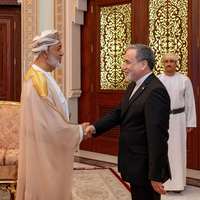
Images published by Iranian state media on Friday showed foreign delegations attending a farewell ceremony for former Supreme Leader Ali Khamenei at Tehran's Imam Khomeini Grand Mosalla.

The images also showed the coffins of Khamenei and members of his family on display during the ceremony.

The attendees mostly included delegations from countries such as India, Pakistan and China. The foreign delegations were led by ministers, lawmakers and other senior officials rather than heads of state or government.

Khamenei was killed on Feb. 28 during Israeli and US airstrikes on Iran. Funeral ceremonies are due to continue before his burial in the northeastern city of Mashhad on July 9.

100%
100%
100%
100%

Iran speaker says avenging Khamenei means ending US, Israeli 'oppression'

Jul 3, 2026, 05:14 GMT+1

Iranian Parliament Speaker Mohammad Bagher Ghalibaf said on Thursday that avenging former Supreme Leader Ali Khamenei meant freeing Muslims from what he described as oppression by the United States and Israel.

"Without a doubt, avenging the martyred leader of the revolution means nothing other than freeing all Muslims from the oppression of the United States and the Zionist regime," Ghalibaf said during a meeting with senior Amal Movement official Khalil Hamdan, according to Iranian state media.

Ghalibaf also said Muslims and Shi'ites should preserve their unity, calling it "the great lesson" from Khamenei's leadership.

US lawmaker criticizes Georgian leader’s planned Khamenei funeral visit

Jul 3, 2026, 01:40 GMT+1

US Representative Joe Wilson said on Thursday the planned funeral for Iran’s Supreme Leader Ali Khamenei would bring together what he described as anti-American actors from around the world, including Georgian president Mikheil Kavelashvili.

"Dictator Khamenei’s funeral draws together all of the worst America haters from around the world, as the Georgian Dream’s fake President Mikheil Kavelashvili plans to attend to deepen the rabidly anti-American pact between Iran and the Georgian Dream," he posted on X.

Iran MP says new cyberattack hit banking network

Jul 3, 2026, 01:07 GMT+1

Iranian lawmaker Meisam Zohourian said on Thursday Iran’s banking network was hit by a new attack over the weekend that temporarily disrupted interbank services, adding that another disruption had occurred earlier in the week.

Zohourian said the incident was likely a cyberattack, possibly backed by a foreign state, adding it affected kernel and middleware layers of banking systems, warning that heavy reliance on foreign technology and limited domestic infrastructure increases vulnerability to such operations.

"Unfortunately, while the definitive cause of the disruption has still not been identified, a new attack on the banking network infrastructure occurred on Saturday of this week, which disrupted interbank services for several hours to prevent the attack's impact from escalating," he posted on X.

US struck Iran with 1,200 missiles and bombs but failed to break morale

Jul 3, 2026, 00:23 GMT+1

Admiral Habibollah Sayyari, chief of staff of Iran’s Army, said on Thursday that the United States launched about 1,200 missiles and bombs against Iranian forces, but that the attack did not shake morale or cause the country to collapse.

"In the third war, which lasted 40 days, the enemy-drawing on experience from earlier conflicts-believed that if it targeted Iran’s Supreme Leader, the country and its people would collapse within three to five days and allow the enemy to occupy the nation," official media cited Sayyari as saying.

"In all three wars, the enemy wrongly assumed it could easily enter Iranian territory and seize the country’s provinces," he added.