• العربية
  • فارسی
Brand
  • Iran Insight
  • Politics
  • Economy
  • Analysis
  • Special Report
  • Opinion
  • Podcast
  • Iran Insight
  • Politics
  • Economy
  • Analysis
  • Special Report
  • Opinion
  • Podcast
  • Theme
  • Language
    • العربية
    • فارسی
  • Iran Insight
  • Politics
  • Economy
  • Analysis
  • Special Report
  • Opinion
  • Podcast
All rights reserved for Volant Media UK Limited
volant media logo

Iran's top clerical body turns on itself over US deal

Jun 29, 2026, 02:27 GMT+1
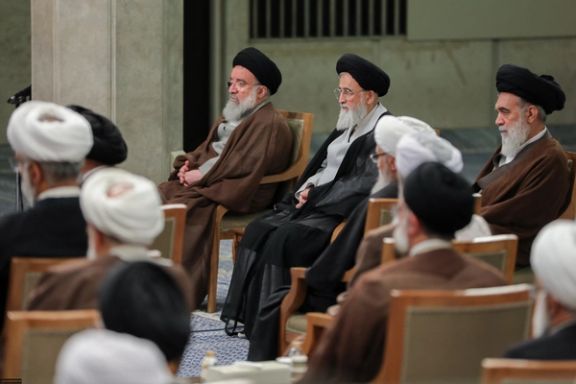
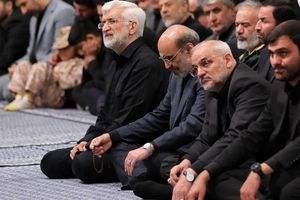
Members of Iran's Assembly of Experts meet supreme leader Ali Khamenei in this file photo from November 2024

A rare public dispute has erupted inside Iran's Assembly of Experts after a majority of its members issued a statement on the US-Iran memorandum of understanding, prompting an extraordinary public rebuke from the body's own leadership within hours.

The exchange has exposed signs of growing infighting at the highest levels of the Islamic Republic.

The normally quiet body, responsible for appointing and theoretically overseeing the supreme leader, has become the latest arena for disagreement over negotiations with Washington, the reopening of the Strait of Hormuz and the limits of compromise with the United States.

The controversy began after more than 60 of the Assembly's 84 members published a statement on Saturday that ventured far beyond the body's customary role, laying out detailed positions on the memorandum, the Strait of Hormuz, Lebanon, nuclear negotiations and retaliation against the United States and Israel.

The signatories thanked Iranian negotiators but warned them to learn from what they called the failures of previous talks, adding that observing Supreme Leader Mojtaba Khamenei's red lines was a religious obligation and that violating them was "not permissible under any circumstances."

In one of its most inflammatory passages, the statement called for those responsible for Ali Khamenei's killing, including the US president and Israeli prime minister, to be punished, saying anyone with access to them had a religious duty to kill them.

The statement also described reopening the Strait of Hormuz while Israeli operations continued in Lebanon as a "strategic error" and insisted Iran's nuclear rights should be excluded from negotiations.

The intervention was extraordinary because the Assembly almost never comments on day-to-day policy. Better known for infrequent formal sessions and ritual expressions of support for the leadership, it has also come under increased scrutiny following the opaque process that elevated Mojtaba Khamenei after his father's death during the war.

Within hours, however, the Assembly's presidium and secretariat issued a rare public clarification that appeared to rebuke the manner in which the statement had been released.

While reaffirming support for Mojtaba Khamenei and insisting officials must follow his guidance on the memorandum and negotiations, the secretariat said it was unprecedented for a group of members to issue a statement under the Assembly's name outside its established procedures.

It said official positions should be issued through the full Assembly, its chairman, the presidium or the secretariat, and argued that the signatories should have sought broader discussion to preserve the body's unity.

The response immediately drew fire from Raja News, an outlet aligned with ultrahardline factions that oppose negotiations with Washington and are often critical of Parliament Speaker Mohammad Bagher Ghalibaf, who has led the talks.

In an editorial, Raja News argued it was the secretariat—not the signatories—that had undermined the Assembly's unity. It noted that the secretariat itself acknowledged that non-signatories did not necessarily disagree with the statement's substance.

The outlet mocked the suggestion that senior clerics should have sought permission before explaining the supreme leader's red lines to the public and asked why such an overwhelming majority had felt compelled to bypass the body's leadership in the first place.

Rather than criticizing the signatories, Raja News argued, the Assembly's leadership should explain why confidence in its handling of sensitive issues had deteriorated to that point.

In its sharpest criticism, the outlet suggested similar questions had surrounded the Assembly leadership's handling of the selection of Iran's third supreme leader following Ali Khamenei's death—an unusually direct challenge to one of the Islamic Republic's most closely guarded episodes.

President Masoud Pezeshkian, meanwhile, was reported to have traveled to Qom, Iran's center of religious authority, where senior officials often seek the backing of influential clerics during periods of political tension.

The visit suggests the government is also seeking to shore up clerical support as it navigates the increasingly contentious politics surrounding the post-war settlement.

The competing statements—and the storm they triggered within the hardline camp—suggest that arguments over the memorandum with Washington, and over who has the authority to define and defend Mojtaba Khamenei's red lines, have reached institutions that traditionally operate behind closed doors.

For a body long associated with silence and unanimity, the public split offers a rare glimpse into the political strains emerging inside the Islamic Republic's highest clerical establishment.

Most Viewed

Iraq arrests officials tied to Iran-aligned parties in Baghdad raids, sources say
1
EXCLUSIVE

Iraq arrests officials tied to Iran-aligned parties in Baghdad raids, sources say

2
INSIGHT

Khamenei mourning site shut as shroud-wearing hardliners expose loyalist rift

3

Iran's top clerical body turns on itself over US deal

4
ANALYSIS

Direct-to-cell offers Iranians future hope, not a fix today

5
INSIGHT

Return of Iran-US thaw advocate ignites hardline debate

Banner
Banner
Banner

Spotlight

  • Why falling oil prices don't mean Hormuz crisis is over
    ANALYSIS

    Why falling oil prices don't mean Hormuz crisis is over

  • Return of Iran-US thaw advocate ignites hardline debate
    INSIGHT

    Return of Iran-US thaw advocate ignites hardline debate

  • How a US-Iran deal can reshape the Middle East
    ANALYSIS

    How a US-Iran deal can reshape the Middle East

  • Iranians recast Ashura mourning to remember January protest victims
    VOICES FROM IRAN

    Iranians recast Ashura mourning to remember January protest victims

  • Investigation traces January protest deaths to Gharazi Hospital in Isfahan
    SPECIAL REPORT

    Investigation traces January protest deaths to Gharazi Hospital in Isfahan

  • US-Iran MoU pauses conflict but leaves nuclear dispute unresolved

    US-Iran MoU pauses conflict but leaves nuclear dispute unresolved

•
•
•

More Stories

Return of Iran-US thaw advocate ignites hardline debate

Jun 29, 2026, 00:12 GMT+1
•
Maryam Sinaiee
Return of Iran-US thaw advocate ignites hardline debate
100%
Iranian-American academic Houshang Amirahmadi

The return of Iranian-American academic Hooshang Amirahmadi, a longtime advocate of US-Iran normalization, has stirred debate in Tehran, with establishment media divided over the merits of welcoming him back and the signal his visit sends.

Amirahmadi is a retired Rutgers University professor and founder of the American Iranian Council, whose shifting political positions over the years have made him a controversial figure.

Before his latest trip, Amirahmadi said his goal was not friendship between Tehran and Washington but the normalization of diplomatic relations.

"Friendly relations are different from normal relations," he said in an interview with Voice of America before traveling to Iran, adding that he hoped his ideas could help normalize ties between the two countries. He declined to say which groups inside Iran he had been speaking with.

While some pro-government media portray him as an opposition figure, some government opponents view him as an apologist for the Islamic Republic, citing his occasional defense of its leadership and institutions, including the Islamic Revolutionary Guard Corps (IRGC).

In 2019, he attended rallies organized by Iranian opposition groups abroad and described himself as a supporter of regime change. After the killing of Qassem Soleimani, however, he publicly defended both the late commander and the IRGC in media interviews.

In a recent interview with Iran's hardline Student News Network (SNN) following his return, Amirahmadi referred to slain Supreme Leader Ali Khamenei as a "martyr" and argued that "history will gradually prove that Iranians misunderstood him."

He also accused government opponents of failing to understand the realities of Iranian society.

Some conservative outlets portrayed his visit as evidence that critics of the Islamic Republic were recognizing political realities inside Iran.

SNN wrote that Amirahmadi's return "is not an ordinary event," arguing that remaining within the opposition abroad without clearly distancing oneself from groups hostile to the Islamic Republic risked being interpreted as indirect alignment with the country's enemies.

"In these circumstances, returning to the embrace of the Iranian nation and redefining one's relationship with the realities inside the country has become an unavoidable necessity," it wrote.

Not all conservative media welcomed his return. Hardline newspaper Kayhan questioned why authorities had allowed Amirahmadi into the country.

"What is Houshang Amirahmadi, America's broker and Western operative, seeking by traveling to Iran?" the newspaper wrote. "Officials must remain vigilant against this longtime spy of the Great Satan."

Some social media users rejected attempts to portray him as an opposition figure and argued that his return served the government's efforts to weaken the exiled opposition.

"They brought Houshang Amirahmadi back to Iran so they can claim the country has become a paradise and tell all opponents to return as well," one X user, Omid Roshan, wrote. "They want people to believe resistance against the government no longer works and that everyone should repent and come back."

Describing himself as a reformist, Amirahmadi unsuccessfully sought Iran's presidency in 2005, 2013 and 2017, but the Guardian Council disqualified him on each occasion.

Reports surrounding the 2005 election cited his US citizenship and some of his political positions among the factors believed to have contributed to the decision.

Some linked his return to growing speculation that Tehran and Washington could eventually restore full diplomatic relations and reopen their embassies.

"The interests of the Iranian and American people require normal diplomatic relations between the two countries," Siamak Shojaei, a university professor in Iran, wrote on X. "I hope Amirahmadi succeeds this time."

Khamenei mourning site shut as shroud-wearing hardliners expose loyalist rift

Jun 28, 2026, 11:24 GMT+1
•
Arash Sohrabi
Khamenei mourning site shut as shroud-wearing hardliners expose loyalist rift
100%
Mourners attend ceremonies at Ravagh Keshvardoust, a shrine-like mourning site set up near the place where Ali Khamenei was killed on Tehran’s Jomhouri Street. (June 2026)

A mourning site set up near the place where Ali Khamenei was killed has been shut down after shroud-wearing ultra-hardliners turned it into a three-day sit-in, exposing a widening rift inside Iran’s loyalist camp over how to use the slain leader’s memory.

The site, known as Ravagh Keshvardoust, had been turned into a shrine-like space in central Tehran for prayer, mourning and ritual gatherings after Khamenei’s killing. In Iranian religious architecture, a ravagh usually refers to a covered hall or portico attached to a shrine. In this case, the term was being used for a temporary devotional space around the site of Khamenei’s death.

According to Jamaran, a news outlet close to the family of the Islamic Republic’s founder Ruhollah Khomeini, organizers closed the site after a group of kafan-poushan, or shroud-wearers, arrived from Mashhad on Ashura (June 25) and occupied the space under the banner of “avenging the blood of the slain leader.”

  • US talks trigger unprecedented rift in Iran’s hardline camp

    US talks trigger unprecedented rift in Iran’s hardline camp

The term kafan-poushan refers to activists who wear white burial shrouds in political or religious demonstrations, presenting themselves as ready for death or martyrdom. The symbolism has long been used by hardline factions in the Islamic Republic, especially when they want to frame a political demand as a sacred duty.

Organizers said the group’s three-day sit-in changed the function of the site. What had been a place for prayer, mourning, daily ceremonies and congregational prayers became, in their words, a place for overnight stays, food distribution and protest equipment. They said repeated requests and mediation failed to persuade the protesters to leave.

The decision to close the site was presented as an effort to protect the sanctity of a site named after the slain leader. But politically, it showed something more sensitive: even parts of the pro-Khamenei establishment now appear to see some of the most radical mourners as disruptive, not useful.

The conflict is not between supporters and opponents of the Islamic Republic. It is between two loyalist currents.

  • Iran hardliners seek to stir unrest in parliament after US MoU, activist says

    Iran hardliners seek to stir unrest in parliament after US MoU, activist says

One side wants Khamenei’s death to be used as a managed symbol of unity, grief and continuity under the new leadership. The other wants to turn that grief into a permanent pressure campaign against officials accused of compromise, especially over talks with the United States and the interim memorandum meant to end the war.

That split has been visible for weeks.

Ultra-hardline figures linked to the Paydari Front have attacked the negotiating team led by Parliament Speaker Mohammad Bagher Ghalibaf and Foreign Minister Abbas Araghchi, accusing them of crossing the late leader’s red lines. Some protesters at hardline rallies have chanted against Ghalibaf and Araghchi, asking what happened to “the blood” of their leader. Some went further, calling for their death or execution.

  • Iran hardliners rage over US deal, but experts say regime is closing ranks

    Iran hardliners rage over US deal, but experts say regime is closing ranks

Iran International previously reported that supporters of the Paydari Front were removed from nightly state-organized rallies in Tehran after requests by President Masoud Pezeshkian and Ghalibaf, in an apparent attempt to contain pressure from the ultra-hardline street while talks with Washington continued.

The same divide has appeared in parliament and in the media. Lawmakers close to the ultra-hardline camp have accused Ghalibaf of keeping parliament closed to shield negotiations from criticism. Conservative activist Mohammad Mohajeri accused hardline lawmakers of trying to use parliament’s podium for factional purposes after the US-Iran memorandum.

Earlier, Iran International reported that the dispute had spilled into a public clash between Raja News, close to Saeed Jalili’s ultraconservative camp, and the IRGC-linked Tasnim News Agency. The argument centered on how far Iran should go in negotiations and whether maximalist demands, including sweeping sanctions relief and regional ceasefires, were realistic.

  • Iran sidelines ultra-hardliners from pro-government nightly rallies

    Iran sidelines ultra-hardliners from pro-government nightly rallies

The closure of the site brings that fight into the religious arena.

State-linked outlets had spent weeks giving the site a sacred vocabulary. Some described it as a place where mourners could approach the “killing site” of the slain leader. Others compared it to Tel Zaynabiyya, a deeply emotional reference in Shiite memory. In Karbala, Tel Zaynabiyya is associated with the place from which Zaynab, the sister of Imam Hussein, is believed to have witnessed the battlefield after Hussein’s killing in 680. Using that phrase for Khamenei’s death places the site inside the language of Ashura, martyrdom and sacred grief.

Ashura is not just a mourning ritual in the Islamic Republic’s political culture. It is also a vocabulary of legitimacy, sacrifice and confrontation. Since 1979, the state has repeatedly used the story of Imam Hussein’s stand at Karbala to frame political loyalty as moral resistance and compromise as betrayal.

But the Keshvardoust dispute shows the risk of that language for the state itself. Once Khamenei’s death is framed as a sacred wound demanding revenge, the most radical loyalists can use the same symbolism against the government, parliament speaker, foreign minister or any official seen as too “pragmatic.”

That is why the incident is politically revealing. The establishment wants mourning that strengthens the system. The ultra-hardliners want mourning that disciplines the system.

Iran’s banks keep failing, but no one explains why – Iranian daily

Jun 27, 2026, 08:38 GMT+1
Iran’s banks keep failing, but no one explains why – Iranian daily
100%

Iranian daily Shargh says Iran’s banking system is trapped in a familiar cycle: cyberattack, service collapse, public confusion, brief official statements and a gradual return to normal without any clear report on what failed or who was responsible.

The newspaper wrote that banking outages have become almost routine for many Iranians over the past two years. Cards stop working, ATMs and mobile banking services fail, customers line up outside branches, and officials ask people to be patient and follow news from official sources.

Then, after hours, days or sometimes weeks, services return without a full explanation of the cause, the damage, the vulnerable points in the system or the responsibility of the banks and regulators involved.

The latest wave of disruption hit several major banks in June, including Melli, Saderat, Tejarat and the Export Development Bank of Iran. Mobile banking, internet banking, ATMs, point-of-sale terminals and card-based services were disrupted. The Coordination Council of Banks and the Informatics Services Corporation confirmed cyberattacks but said customer data remained safe.

  • Banking disruption hits services at eight Iranian banks

    Banking disruption hits services at eight Iranian banks

Days later, another wider disruption affected card-based services across the banking network, with Melli, Saderat and Tejarat again among the banks most affected. The Informatics Services Corporation said some services had been deliberately restricted to prevent unauthorized access and protect customers’ data and assets.

But Shargh said many users were still reporting problems even after officials said services had been restored. The paper said ordinary transactions had become difficult for some people, including buying bread, paying taxi fares and transferring or receiving money.

The pattern is not new. During the 12-day Iran-Israel war last year, Bank Sepah suffered a major cyberattack that disrupted non-branch services.

The hacker group Predatory Sparrow claimed responsibility and said it had destroyed part of the bank’s infrastructure. Bank Pasargad was also hit shortly afterward. The government confirmed attacks on both banks and said public data had not been harmed, but full restoration of some services took days or weeks.

Shargh said the repeated failures have left one central question unanswered: why does Iran’s banking network collapse every few months, while no transparent report is published on the cause of the attacks, the scale of the damage or the responsibility of the institutions in charge?

  • CoinEx became key channel for Iranian crypto flows – WSJ

    CoinEx became key channel for Iranian crypto flows – WSJ

Nima Amirshakari, an electronic banking specialist, told Shargh that the root of the problem is Iran’s weak connection to the outside world. He said parts of the country’s banking infrastructure are nearly three decades old and were built around systems bought long ago from foreign companies.

According to Amirshakari, many of those systems have been expanded through hardware upgrades, with more processors, storage and equipment, but their core software has not been properly modernized. A system that is not updated, patched or redesigned, he said, becomes easier for attackers to predict.

He argued that banks connected to the global financial system are forced to keep pace with changing standards in security, credit, lending and technology. Iranian banks, by contrast, operate in a closed environment where modernization is often treated as a choice rather than a necessity.

Shargh also quoted cybersecurity expert Saeed Souzangar as saying that the problem is not just technology. Sanctions, internet restrictions, weak administrative structures and limited investment in skilled personnel have left many institutions with expensive equipment but not enough expertise to use it securely.

Souzangar said banks and regulators in Iran do not appear to face a serious obligation to inform the public during cyber incidents. In many countries, organizations hit by cyberattacks must explain the scope of the incident, the number of users affected and the corrective steps taken. In Iran, he said, such reporting is often replaced by short and general statements.

That absence of accountability may be the most damaging part of the crisis. If banks face no clear legal, financial or reputational cost for service failures or security weaknesses, there is little pressure to invest seriously in prevention, training and public reporting.

The latest attacks have also triggered a political dispute over whether access to the international internet made the banking system more vulnerable.

Some officials blamed the reopening of internet access, but Behdad Akbari, deputy communications minister and head of Iran’s Infrastructure Communications Company, rejected the claim, saying the affected core banking systems were not connected to the public internet.

Shargh’s experts said blaming internet access alone is not a serious explanation. Internet restrictions can weaken security by limiting updates and access to global tools, but the causes of repeated banking failures cannot be reduced to a single technical claim without a proper investigation.

How a US-Iran deal can reshape the Middle East

Jun 27, 2026, 03:16 GMT+1
•
Behrouz Turani
How a US-Iran deal can reshape the Middle East
100%
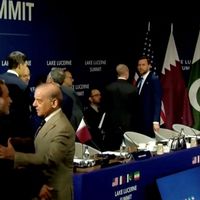
Officials from the United States, Iran, Qatar and Pakistan gather before talks at last week's Lake Lucerne Summit in Switzerland,

The preliminary memorandum of understanding between Tehran and Washington to end the 70-day conflict and reopen the Strait of Hormuz has reshaped the regional balance, with consequences extending far beyond the battlefield.

The agreement has created clear political and economic winners—and at least one conspicuous loser—as governments reassess their security, energy and diplomatic priorities.

The principal beneficiaries are the Arab states of the Persian Gulf, along with China and Pakistan, all of which have a strong interest in restoring regional stability and safeguarding trade. Israel, by contrast, emerges as the most politically isolated actor, increasingly at odds with Washington's approach and the broader diplomatic direction of the region.

For much of the world, the central issue is not the ideological rivalry between Iran and Israel but the security of maritime trade.

The Strait of Hormuz is a critical artery for global energy flows and for imports of food and consumer goods into the Persian Gulf. Its closure disrupted oil and gas exports, slowed economic activity and heightened inflation across the region.

According to the moderate outlet Fararu, a former British ambassador to Iran argued that many Persian Gulf states believe the agreement should have been reached much earlier given the scale of the economic damage caused by the crisis.

The Gulf Cooperation Council (GCC) states did not respond uniformly to the conflict. Qatar and Oman opposed the escalation from the outset, while Saudi Arabia and the UAE adopted more cautious positions.

Qatar played a particularly important mediating role, helping facilitate communication between Tehran and Washington. Oman, meanwhile, faced Iranian pressure to endorse the idea of tolling the Strait of Hormuz—a proposal rejected by regional states and the wider international community, which regard the waterway as an international passage rather than a commercial asset.

Despite those differences, the agreement has narrowed intra-GCC divisions. It has also deepened doubts about Washington's long-term reliability as a security guarantor, even as Iran's Arab neighbours remain dependent on American military infrastructure.

China appears to have emerged as one of the agreement's biggest beneficiaries. Throughout the crisis, Beijing's overriding concern was global economic stability.

The reopening of the Strait lowers energy import costs, supports Chinese economic recovery and reinforces Beijing's preferred image as a power that benefits from stability without becoming directly involved in regional conflicts.

Pakistan likewise stands to gain. Having played a central mediating role, Islamabad strengthens its diplomatic standing while reducing the risk that instability on its western border could spill over into its own security and economy.

For Russia, the picture is more mixed. The closure of the Strait pushed global oil prices higher, boosting Moscow's revenues. The agreement is reversing that trend, reducing those gains. On the other hand, a more stable Middle East makes it less likely that Arab states will deepen military cooperation with Ukraine, particularly in air defense—an outcome Moscow is likely to welcome.

Israel appears to be the agreement's principal political loser. Donald Trump had hoped to expand the Abraham Accords, but Arab governments are now focused primarily on securing a durable arrangement that contains Iran's nuclear program and prevents another regional war.

Israel's current government, which appears intent on undermining the agreement, has further reduced regional enthusiasm for normalization, leaving it increasingly isolated from the emerging diplomatic consensus.

The agreement has also revived debate inside Iran over whether any future nuclear arrangement can endure on its own.

Former ambassador Hossein Mousavian argues that no nuclear deal can survive unless it also addresses the deeper Iran-Israel confrontation.

In remarks quoted by Rouydad24, he described the current moment as a "golden opportunity" to transform Tehran-Washington relations, but warned that any agreement focused solely on the nuclear file would remain fragile unless embedded within a broader regional security framework.

His assessment reflects a broader recognition emerging from the conflict: the ceasefire and the reopening of the Strait of Hormuz may have created new diplomatic opportunities, but whether they endure will depend on addressing the deeper regional rivalries that have repeatedly undermined previous agreements.

US policy on Iran: can money achieve what sanctions couldn't?

Jun 26, 2026, 18:24 GMT+1
•
Negar Mojtahedi
US policy on Iran: can money achieve what sanctions couldn't?
100%
People gather at the base of the Washington Monument ahead of a flyover during a rally kicking off the Great American State Fair marking the 250th anniversary of U.S. independence, in Washington, D.C., U.S., June 24, 2026

The new US-Iran memorandum of understanding marks a fundamental shift in Washington's approach to Tehran, replacing years of "maximum pressure" with an effort to use economic incentives to secure nuclear concessions, experts told Iran International.

The agreement could eventually unlock tens of billions of dollars in oil revenue and frozen assets while paving the way for a proposed $300 billion reconstruction program.

Much of that money would depend on further negotiations during a 60-day window, but analysts say the direction of US policy has already changed.


"If the MOU is acted upon based on what we've seen in the text... I fear that we are at risk of moving from maximum pressure to maximum appeasement," he told Eye for Iran.

Economist Mohamad Machine-Chian sees the same policy shift, though he describes it differently.

"To my understanding, it seems like the US administration has concluded it is moving toward a different paradigm," he said.

"Before that they were relying on sanctions and maximum pressure. Now they're trying to provide incentives and basically direct and control using incentives."

Where could the money come from?

The economic package outlined in the MOU has three main components: expanded oil revenue, access to frozen Iranian assets and a proposed reconstruction and economic development plan worth at least $300 billion. Each would operate differently.

According to Meizlish, the biggest immediate change is Treasury's General License X.

The significance of the license, he says, goes far beyond allowing Iran to export oil. It authorizes much of the commercial activity surrounding those exports, including associated financial transactions.

That means Iran is not simply allowed to sell oil. It is allowed to receive and use the proceeds.

"We're talking about potentially tens of billions of dollars in a relatively short period of time," Meizlish said. "It's unconditioned, unrestricted sanctions relief that's going to provide billions of dollars to the regime."

According to Meizlish, the license appears to contain no escrow mechanism or reporting requirements, distinguishing it from previous arrangements in which unfrozen Iranian assets were held in restricted accounts and designated for humanitarian purposes.

Frozen assets

Separate from oil revenue are Iran's frozen assets.

The MOU states that those funds would be made available under procedures to be negotiated during the 60-day talks.

The Trump administration has suggested released assets could be used to purchase humanitarian goods, including American agricultural products.

But Machine-Chian says there is no practical way to guarantee those goods ultimately benefit ordinary Iranians.

"I don't think there's any way to make sure it actually reaches ordinary Iranians," he said.

Even if wheat, medicine or other humanitarian supplies are purchased, he said, Washington has little control over how they are distributed once inside Iran.

  • Will the Islamic Republic trade with the 'Great Satan'?

    Will the Islamic Republic trade with the 'Great Satan'?

The reconstruction fund

The agreement also proposes developing a reconstruction and economic development plan worth at least $300 billion with regional partners.

Exactly how the fund would operate remains unclear. President Donald Trump has repeatedly said US taxpayers would not finance reconstruction, while administration officials have suggested Persian Gulf partners and private investment could provide much of the funding if a final agreement is reached.

Unlike oil revenue, however, the reconstruction plan remains largely conceptual and would require further agreements before any large-scale investment materializes.

Have sanctions really disappeared?

Not entirely.

Machine-Chian cautioned that sanctions relief alone would not fully reconnect Iran to the global economy.

Iranian banks remain largely cut off from the international financial system, and restoring normal banking ties would likely require Tehran to comply with standards set by the Financial Action Task Force (FATF), a politically contentious step that hardline factions have long resisted.

As a result, sanctions relief alone is unlikely to normalize Iran's banking sector.

Who benefits?

The central debate surrounding the agreement is not simply how much money Iran could receive but who ultimately controls it.

Machine-Chian argues Iran's Central Bank is under severe pressure from inflation, a weakening rial and dwindling foreign exchange reserves. Fresh access to foreign currency, he says, could help stabilize the economy and prevent a deeper financial crisis.

"In that regard, these funds are going to help the Islamic Republic immensely," he said.

Whether that ultimately improves life for ordinary Iranians, however, remains uncertain.

Meizlish warns that fresh revenue could help rebuild military infrastructure damaged during the war while flowing into sectors such as oil, construction and petrochemicals, which he argues are deeply connected to the Islamic Revolutionary Guard Corps (IRGC).

"So what has Iran actually done?" Meizlish asked, arguing that reopening the Strait of Hormuz and agreeing to continue negotiations fall well short of the scale of economic relief now being offered.

Whether the strategy succeeds will depend less on the size of the promised economic package than on whether Washington can convert financial incentives into lasting nuclear concessions.

For now, the agreement represents a clear break from the sanctions-first approach that has defined US policy toward Iran for much of the past decade.

You can watch Eye for Iran on YouTube or listen on any podcast platform of your choosing.