• العربية
  • فارسی
Brand
  • Iran Insight
  • Politics
  • Economy
  • Analysis
  • Special Report
  • Opinion
  • Podcast
  • Iran Insight
  • Politics
  • Economy
  • Analysis
  • Special Report
  • Opinion
  • Podcast
  • Theme
  • Language
    • العربية
    • فارسی
  • Iran Insight
  • Politics
  • Economy
  • Analysis
  • Special Report
  • Opinion
  • Podcast
All rights reserved for Volant Media UK Limited
volant media logo

Ships face conflicting Iran, US instructions in Strait of Hormuz - FT

Jun 23, 2026, 05:27 GMT+1
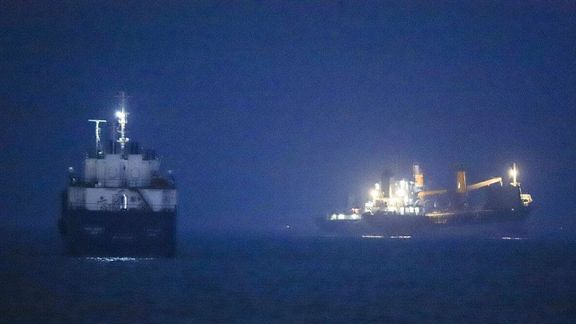
Ships are seen near the Strait of Hormuz in a handout image released by Iranian state media on June 21, 2026.

Shipowners are facing confusion over the safest route out of the Persian Gulf as Iran, the United States and western insurers issue conflicting guidance on travel through the Strait of Hormuz, the Financial Times reported on Tuesday.

Shipping traffic through the strait has increased, but Iran has warned that vessels could face penalties or be forced to turn back if they do not seek advance permission from Tehran and sail close to the Iranian coast, the report said.

At the same time, the United States and some western insurers are advising ships to use a route protected by US air cover on the Omani side of the strait, the report said, citing three shipping executives.

The conflicting guidance has left shipowners unsure whether to risk possible Iranian interference or ignore advice from insurers and US authorities, it added.

“Shipowners and operators find themselves caught in a difficult position. If they follow the guidance of underwriters and US authorities by navigating closer to Oman, they risk interference, detention or potential hostile action from Iranian authorities,” said Dr SV Anchan, chair of the US shipping company Safesea Shipping.

Most Viewed

Hardliners accuse negotiating team of ignoring Supreme Leader's objections
1

Hardliners accuse negotiating team of ignoring Supreme Leader's objections

2
INSIGHT

Will the Islamic Republic trade with the 'Great Satan'?

3

Israel reveals Iranian-designed Hezbollah ‘terror tunnel’ with large drone cache

4
OPINION

MoU's forgotten casualty is the Iranian people

5
INSIGHT

Iran's postwar rallies become flashpoint in diplomacy debate

Banner
Banner
Banner

Spotlight

  • Tehran bread prices jump up to 100% in latest increase

    Tehran bread prices jump up to 100% in latest increase

  • Rising gym fees push fitness beyond reach for many Iranians
    VOICES FROM IRAN

    Rising gym fees push fitness beyond reach for many Iranians

  • Relief or resistance? Tehran dailies offer diverging readings of talks
    INSIGHT

    Relief or resistance? Tehran dailies offer diverging readings of talks

  • Will the Islamic Republic trade with the 'Great Satan'?
    INSIGHT

    Will the Islamic Republic trade with the 'Great Satan'?

  • Iran's postwar rallies become flashpoint in diplomacy debate
    INSIGHT

    Iran's postwar rallies become flashpoint in diplomacy debate

  • MoU's forgotten casualty is the Iranian people
    OPINION

    MoU's forgotten casualty is the Iranian people

•
•
•

More Stories

Cyber campaign posing as Iran International staff continues

Jun 22, 2026, 13:31 GMT+1
Cyber campaign posing as Iran International staff continues
100%

A cyber campaign using fake accounts impersonating Iran International journalists and staff continues to target media figures and analysts, according to the broadcaster, which warned earlier this month that the operation was aimed at stealing information and compromising devices.

The broadcaster said in a statement published on Sunday that the operation involved accounts created on messaging platforms including WhatsApp and Telegram that falsely presented themselves as managers, reporters and producers working for the network.

“The main objective of these deceptive contacts is to make fraudulent interview requests or distribute malicious links designed to hack devices, steal sensitive information and conduct phishing attacks,” the statement said.

Iran International attributed the operation to hackers linked to the Islamic Revolutionary Guards Corps, describing the activity as a coordinated effort aimed at individuals who regularly interact with the network.

According to the statement, the fake accounts have contacted a range of public figures and invited them to participate in interviews or engage through links sent via messaging applications.

The broadcaster urged journalists, experts, activists and guests appearing on its programs to verify the identity of anyone claiming to represent the network before responding to messages.

It advised recipients to confirm the authenticity of contacts through official communication channels, including email addresses using the Volantmedia.net domain.

The network also warned users not to click on links sent through suspicious messages, particularly those related to unfamiliar online interview platforms, identity verification requests or file attachments.

Iran International called on anyone receiving such messages to block and report the accounts involved and to notify local security authorities of suspected phishing attempts.

The broadcaster said it condemned what it described as unlawful actions targeting the security of activists and freedom of expression.

“Security and privacy for our experts and guests remain a priority,” the statement said.

Iran International added that it would pursue technical and legal action regarding the cyber campaign through international channels.

Caspian seals face extinction threat as deaths continue

Jun 22, 2026, 10:26 GMT+1
Caspian seals face extinction threat as deaths continue
100%
A dead Caspian seal lies on a beach along the Caspian Sea coast.

The repeated deaths of Caspian seals along the shores of the Caspian Sea have become a persistent environmental concern, with experts still unable to identify a definitive cause despite years of investigations, according to a report by Iran's Shargh newspaper.

What was once an occasional discovery has turned into a recurring pattern. Seal carcasses continue to wash ashore across the Caspian coastline, prompting authorities and environmental organizations to record the losses while searching for answers.

Researchers increasingly view the deaths as the result of multiple pressures rather than a single cause. Climate change, declining water levels, industrial pollution, overfishing, accidental entanglement in fishing nets and the possible spread of disease have all been cited as contributing factors.

The Caspian seal (Pusa caspica) is the only marine mammal native to the Caspian Sea and one of the region's most distinctive species. Found nowhere else in the world, it plays a key role in maintaining ecological balance by feeding on small fish and other aquatic organisms.

Environmental experts regard the species as an indicator of the sea's overall health. A decline in seal numbers can point to broader problems, including pollution, shrinking fish stocks and disruption of the marine food chain.

The species is also part of the shared natural heritage of the five countries bordering the Caspian Sea — Iran, Russia, Azerbaijan, Kazakhstan and Turkmenistan. Its survival is closely linked to the environmental future of a region where millions depend on fishing, tourism and coastal industries.

Deaths across the Caspian

The crisis attracted international attention in 2022 when around 2,500 dead Caspian seals were found along Russia's Dagestan coast in one of the largest recorded die-offs involving the species.

Scientists examined a range of possible causes, including disease outbreaks, oxygen depletion, environmental contamination and natural gas emissions from the seabed. No definitive explanation emerged.

File photo shows a Caspian seal resting on a sandy shoreline. (Undated)
100%
File photo shows a Caspian seal resting on a sandy shoreline.

The event was not isolated. Hundreds of dead seals had previously been recorded along the Dagestan coastline, suggesting that large-scale mortality events are becoming a recurring feature of the Caspian ecosystem.

Researchers also point to climate change as a growing threat. Caspian seals rely on ice in the northern part of the sea to breed and raise their pups. Rising temperatures and shrinking winter ice cover have reduced the availability of suitable breeding habitat, placing additional pressure on an already vulnerable population.

Population in decline

Conservation estimates indicate the Caspian seal population has fallen by more than 90 percent over the past century. Once numbering above one million animals, the population is now believed to have dropped below 100,000.

The species is listed as endangered by the International Union for Conservation of Nature, reflecting concerns about its long-term survival.

Amir Sayad Shirazi, director of Iran's Caspian Seal Conservation Center, told Shargh that pollution remains one of the most significant threats facing the species.

Because the Caspian Sea is shared by five countries and functions as a closed body of water, environmental damage in one area can affect the wider ecosystem, he said.

Russia halted commercial hunting of Caspian seals in 2020, eliminating one source of mortality that had previously resulted in thousands of deaths annually. Yet unexplained die-offs continue to undermine conservation efforts.

For conservationists, the fate of the seal increasingly mirrors the condition of the sea itself, making its survival a test of whether the region can protect one of its most distinctive ecosystems.

Iran crude prices slashed as more shipments leave Hormuz – Bloomberg

Jun 22, 2026, 07:50 GMT+1
Iran crude prices slashed as more shipments leave Hormuz – Bloomberg
100%

Sellers of Iranian crude to China have cut prices after Iran began shipping millions of barrels out of Hormuz following an interim peace deal with the United States, Bloomberg reported on Monday.

Spot cargoes of Iranian Light crude for July arrival were being offered at discounts of $2.50 to $5 a barrel to Brent benchmark prices, the report said, citing people directly involved in the trade.

That compared with a discount of about $1 a barrel before the deal.

Iran has increased the amount of crude it openly sends through the Strait of Hormuz to the highest level since the war began, as regional shipping activity picked up while Tehran and Washington worked toward a lasting peace deal, Bloomberg said in a separate report.

Around six million barrels of Iranian crude were aboard three US-sanctioned supertankers - Elva, Virgo and Vigor - that entered the chokepoint early Monday, it said, citing ship-tracking data.

The vessels were signaling destinations in waters off Singapore, where Iranian crude is known to be transferred to ships that often deliver the oil to refineries in China, it added.

Israel reveals Iranian-designed Hezbollah ‘terror tunnel’ with large drone cache

Jun 21, 2026, 17:47 GMT+1
•
Benjamin Weinthal
Israel reveals Iranian-designed Hezbollah ‘terror tunnel’ with large drone cache
100%
Foreign journalists tour an underground tunnel in Majdal Zoun, southern Lebanon, during an Israeli military media embed.

The Israeli army revealed on Friday that it had discovered an Iranian-financed and -designed Hezbollah tunnel in the heart of Majdal Zoun in south Lebanon that can be used to launch drones into Israel.

The aerial projectiles can reach the densely populated cities of Tel Aviv, Jerusalem, and Haifa, according to an Israeli military official.

The disclosure marks the second time this month that Israel has reported discovering an Iranian-built tunnel for the US-designated terrorist group Hezbollah in Lebanon, and could impact the high-level talks in Switzerland on Sunday between the US and Iranian governments. A central security concern for Israel and Arab Persian Gulf states is the eradication of Iran’s ballistic missile and drone warfare systems.

A weapon inside a Hezbollah tunnel in Majdal Zoun, southern Lebanon. The Israeli military said the underground complex contained more than 50 drones, launch shafts, explosives, and other military equipment.
100%
A weapon inside a Hezbollah tunnel in Majdal Zoun, southern Lebanon. The Israeli military said the underground complex contained more than 50 drones, launch shafts, explosives, and other military equipment.

Israel’s government is deeply worried about Iran securing billions of dollars in sanctions relief from the Trump administration that could be used to finance Hezbollah and its subterranean military outposts across southern Lebanon.

The Israel Defense Forces (IDF) permitted a small number of foreign journalists, including Iran International, to embed with its soldiers in south Lebanon to inspect the tunnel, which contains over 50 attack drones and a room packed with eight tons of mines and bombs.

An IDF spokeswoman said, “This is Iranian equipment and facilities and proof that Hezbollah is another proxy of Iran.” She added that it is “one of the biggest tunnels found in southern Lebanon. Rocket launchers and UAVs were found.”

Intense clashes unfolded between Hezbollah and Israel during the journalistic embed with the IDF. Israel’s military said five soldiers were killed, including the commander of the IDF’s 52 Battalion, Lt. Col. Dor Gadalia Ben Simhon. Israel’s second war with Lebanon since October 2023 began when Hezbollah fired missiles into Israel in response to the joint US-Israel attack on Iran on February 28.

According to the IDF, the tunnel was discovered less than 10 days ago, and the capture of Majdal Zoun resulted in the elimination of eight Hezbollah fighters.

The new tunnel—located a mere 20 meters from a mosque in the center of the town—contains four launch pads to fire the sophisticated attack drones into the Jewish state. “To build a tunnel with a launch site is an Iranian method,” a military spokesman noted. He added that “Hezbollah tunnels are good but not as good [as Iranian].”

The military spokesman said that the “Iranians have a very high ability to build underground. They built tunnels in Iran and in Yemen for the Houthis.”

In early June, the Persian-language spokesman for the Israel Defense Forces (IDF) said, “The Israeli military is revealing an asset from the underground tunnel network of the Hezbollah terrorist organization that was built with the design and financing of the Iranian terrorist regime in the Beaufort Heights.”

The IDF said that the new tunnel is “over 200 meters long and more than 25 meters deep, containing four launch shafts and 12 rooms, including living quarters and rooms used to store explosive devices, anti-tank missiles, and UAVs.”

An IDF spokesman said the tunnel contains “high-level infrastructure and it is Iranian standards.”

Majdal Zoun is located roughly seven kilometers from Israel’s border. The IDF escorted reporters on Humvees for the 35-minute drive to reach the town. According to an IDF military official, the Shiite town had a population of 2,000 and “Hezbollah has great support in the village.” Since cross-border fighting began in October 2023, Majdal Zoun has become a ghost town.

Hezbollah fighters returned to the town to re-open the tunnel after it was sealed by the IDF two years ago. The tunnel and its strategic location on high territory make it a valuable stronghold of Hezbollah’s military apparatus, according to the IDF official.

The IDF official said, “It took them [Hezbollah] ten years to build it [the tunnel].”

The IDF transport of journalists to Majdal Zoun passed the Lebanese coastal town of Naqoura—the location of UNIFIL’s headquarters. An IDF official blasted the UN operation UNIFIL for failing to disarm Hezbollah, as mandated by the United Nations Security Council Resolution 1701.

An attack drone and related equipment inside a tunnel that the Israeli military says was designed and financed by Iran for Hezbollah in Majdal Zoun, southern Lebanon. Israeli officials said the underground facility was used to store and launch UAVs toward Israel.
100%
An attack drone and related equipment inside a tunnel that the Israeli military says was designed and financed by Iran for Hezbollah in Majdal Zoun, southern Lebanon. Israeli officials said the underground facility was used to store and launch UAVs toward Israel.

UNIFIL is an abbreviation for the United Nations Interim Force in Lebanon.

The military official said that “UNIFIL is not helping at all. They are trying to hide their support for Hezbollah. UNIFIL tells Hezbollah about IDF vehicle routes.”

The IDF official said the army recently discovered a Lebanese worker for UNIFIL is also a Hezbollah terrorist. The military official also alleged that a Lebanese hotel serving Hezbollah printed identification badges for both Hezbollah and the UN.

When asked about the IDF allegations, a UNIFIL spokesman told Iran International that “I have no information,” adding that “Since today is a UNIFIL holiday, I can’t do the full check. Not everyone is working—only critical ones.”

Iran’s legal drug market is being hollowed out as shortages feed illicit channels

Jun 20, 2026, 12:43 GMT+1
Iran’s legal drug market is being hollowed out as shortages feed illicit channels
100%

Iran’s official medicine market is being hollowed out as policy instability, currency disruptions and shortages push more patients toward illegal sellers, counterfeit drugs and informal supply networks, industry figures and officials have warned.

The warnings point to a new phase in Iran’s long-running drug crisis. The problem is no longer only that medicines are expensive or hard to find. The formal supply chain itself is weakening, while the black market grows around patients who cannot obtain medicine through pharmacies.

Haleh Hamedifar, head of the Association of Medical Biotechnology Product Manufacturers, told the semi-official ISNA news agency that the main challenge facing Iran’s pharmaceutical industry is not simply a shortage of foreign currency, but “instability in decision-making and lack of coordination in implementation.”

“The pharmaceutical industry cannot be managed with daily decisions, changing circulars and unpredictable processes,” she said.

Hamedifar warned that sudden policy changes disrupt the supply of raw materials, production and distribution, with effects that appear months later “in pharmacies, hospitals and ultimately at the patient’s bedside.”

  • Rising care costs hit Iranians with spinal injuries

    Rising care costs hit Iranians with spinal injuries

Iran says it produces most of the medicines consumed in the country, but domestic production still depends on imported raw materials, equipment, packaging, machinery and spare parts. That leaves even locally made drugs exposed to banking restrictions, currency decisions and import delays.

Hamedifar said recent shifts in currency rules have forced some raw materials out of preferential currency categories and into exchange-rate systems that are not reliably funded. Alternative routes, including the use of export proceeds or privately held foreign currency, were introduced before the administrative infrastructure was ready, she said.

Companies have been forced to amend files, repeat import registrations and restart procedures they had already completed, she said.

“The problem in many cases is not the decision itself, but how it is implemented,” Hamedifar said.

She said outages and errors in government platforms, including disconnects between trade, drug-regulation and banking systems, should not be treated as technical glitches because each delay can postpone the arrival of raw materials and later disrupt drug supply.

Interior Ministry spokesman Ali Zeynivand separately acknowledged that high medicine prices are real and said the government does not deny that internal failures may be part of the problem.

“Part of the problems are caused by the imposed war, another part by the sanctions that already existed, and part may be due to our shortcomings or lack of precision,” he told the Dideban Iran news website. “We do not reject any of these.”

Zeynivand said President Masoud Pezeshkian, himself a physician, is personally sensitive to the issue and that the Health Ministry, Plan and Budget Organization and Central Bank are working on measures to contain the situation. But he cautioned that Iran’s economic problems would not be solved simply by signing a memorandum.

For patients, the consequences are already visible in higher out-of-pocket costs, incomplete prescriptions, empty pharmacy shelves and growing reliance on unofficial sellers.

Mehdi Sanei, an investigator at Iran’s medical crimes prosecutor’s office, told the Iranian daily Shargh that Iran has only one legal medicine market: the official network supervised by the Health Ministry and Food and Drug Administration. Any medicine sold outside that chain is illegal, he said.

  • Shortages of addiction medicines raise fears of relapse in Iran

    Shortages of addiction medicines raise fears of relapse in Iran

“In the field of medicine, there is no such thing as a legal free market,” Sanei said.

He said shortages are the starting point for much of the illegal trade. When patients cannot find medicine in pharmacies, they turn to dealers, Telegram channels, middlemen and informal networks.

“As long as medicine shortages exist, the smuggling market will exist,” he said.

Sanei warned that the illegal drug market is unusually profitable because patients cannot postpone treatment. Families dealing with cancer or chronic illness may sell savings, jewelry, cars or even homes to obtain scarce medicine.

“I do not know of a commodity whose profit is as guaranteed as smuggled medicine,” he said.

He said some black-market medicines are official Iranian-made drugs diverted from the legal system through fake prescriptions, distribution violations or other routes. But he described an even more dangerous trend: the growing presence of counterfeit or unauthorized medicines made inside Iran.

Sanei estimated that more than 80 percent of medicines in the illegal market are now unauthorized domestic products rather than genuine imported drugs.

Those products may be made in illegal workshops with unknown or ineffective materials and fake packaging, he said. Some may contain no active ingredient, contamination or harmful substances.

“People pay heavy costs, and there is no guarantee that what they receive is really medicine,” he said.

The result is a self-reinforcing cycle: shortages weaken the legal market, patients move toward illegal sellers, the black market becomes more profitable, and the official system loses more ground.

“The smaller the legal market becomes, the larger the illegal market becomes,” Sanei said.