Why a blockade would not halt Iran’s oil overnight
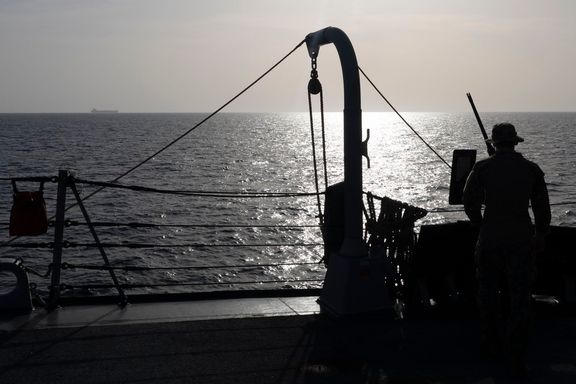
Amid Iran’s closure of the Strait of Hormuz and the ensuing US blockade, an old energy fantasy has resurfaced that cutting off a country’s oil exports works like flipping a switch. But reality is less cinematic and far more uncomfortable.
If Iran faced a serious maritime blockade, its oil system would not collapse overnight. It would absorb the shock, adapt, and only gradually tighten under pressure.
That distinction between sudden failure and slow strain is not just technical. It is the difference between a crisis markets can price instantly and one that unfolds in uneasy stages.
As Washington says its blockade is tightening around Tehran, understanding that distinction matters.
Read the full article here.





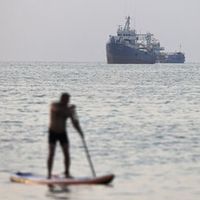
Amid Iran’s closure of the Strait of Hormuz and the ensuing US blockade, an old energy fantasy has resurfaced that cutting off a country’s oil exports works like flipping a switch. But reality is less cinematic and far more uncomfortable.
If Iran faced a serious maritime blockade, its oil system would not collapse overnight. It would absorb the shock, adapt, and only gradually tighten under pressure.
That distinction between sudden failure and slow strain is not just technical. It is the difference between a crisis markets can price instantly and one that unfolds in uneasy stages.
As Washington says its blockade is tightening around Tehran, understanding that distinction matters.
Kharg Island: The pressure point
Nearly all of Iran’s crude exports flow through Kharg Island, which handles about 90 percent of outbound shipments. On a typical day, that means roughly 1.5 to 2 million barrels moving through its loading facilities.
Kharg is more than a transit point. It is also a buffer. With storage capacity estimated at between 20 and 30 million barrels, the island allows Iran to keep producing even when export schedules fluctuate.
Under blockade conditions, that flexibility becomes a liability. If tankers cannot load or leave reliably, crude begins accumulating in storage. At current export levels, even the upper bound of capacity could be filled in a matter of weeks.
The island would not fail immediately. But it would begin operating under a visible constraint: every additional barrel has fewer places to go.
When storage becomes a bottleneck
Oil systems are built with redundancy. Storage tanks, pipelines and floating storage options all provide breathing room. That is why disruption rarely produces instant collapse.
In a blockade scenario, Iran would likely continue exporting in reduced and irregular ways at first. Some cargoes might slip through via evasive shipping practices. Others could be rerouted or delayed. Meanwhile, crude that cannot be exported would accumulate in storage tanks on Kharg and elsewhere.
But storage is finite. As tanks fill, flexibility narrows. The system shifts from optimizing flows to managing congestion.
Operators are no longer asking how to move oil efficiently, but how to avoid hitting physical limits. This is the quiet phase of disruption: no dramatic cutoff, just a steady tightening that forces increasingly constrained choices.
Adaptation under pressure
Iran’s oil sector is no stranger to operating under constraint. Years of sanctions have trained it to improvise.
Cargoes could still move through ship-to-ship transfers and opaque shipping routes designed to obscure origin and destination. Parts of the tanker fleet could be repurposed as floating storage to buy time offshore as onshore tanks fill.
Production would not stop overnight but would likely be trimmed gradually, with operators calibrating output to avoid overwhelming storage while trying to preserve reservoir integrity.
Domestic refiners could absorb some additional crude, and inland storage might be stretched, though both options are limited and cannot fully offset lost export capacity.
These responses would not neutralize the impact of a blockade. But they would slow its effects, allowing the system to continue functioning in a constrained and increasingly inefficient state.
The result is not resilience so much as endurance: the ability to delay more severe disruptions.
The limits beneath the surface
What happens underground imposes its own discipline.
Oil reservoirs are not infinitely flexible. Shutting in production, especially in mature fields, can damage reservoir pressure and reduce long-term recovery.
That means Iran cannot simply halt output the moment storage fills. Production cuts must be sequenced carefully, prioritizing fields that can be shut in safely while protecting long-term capacity.
The system slows, recalibrates and absorbs damage where it must, all while trying to avoid irreversible losses.
Pressure builds, markets adjust
For global markets and policymakers, the difference between a sudden cutoff and a gradual squeeze is critical.
A sharp disruption would trigger immediate price spikes and emergency responses. A slower, adaptive contraction produces a different dynamic. Prices may rise in stages. Other producers have time to respond.
Strategic reserves can be deployed more deliberately. Trade flows can be rerouted.
Yet this slower progression carries its own risks. It creates uncertainty rather than clarity and tempts decision-makers to underestimate the severity of the situation, even as constraints tighten.
No switch, just strain
A blockade of Iran’s oil exports would not look like a sudden shutdown. It would resemble a system under mounting pressure, adapting in real time while steadily losing room to maneuver.
For Iran, the effect is less a collapse than a managed deterioration. Revenues would erode, costs would rise, and each workaround would become harder to sustain.
For global markets, the danger lies in misreading that slow burn as stability.
By the time constraints converge into something more acute, the system may already be far closer to its limits than it appears.
Recent tracking data suggesting Iran is still moving millions of barrels of crude despite a US naval blockade has raised fresh questions about the effectiveness of Washington’s effort to choke off Tehran’s oil exports.
TankerTrackers.com on Sunday cited satellite images that it said showed Iran loaded at least 4.6 million barrels of crude at export terminals in recent days, with another four million barrels appearing to have crossed the US blockade line.
The figures suggest Tehran retains at least some ability to keep oil flowing despite a US naval blockade launched nearly two weeks ago and repeated claims from Washington that the operation is crippling Iran’s maritime trade.
Read the full article here.
The Islamic Republic that has emerged from the killing of Iran's Supreme Leader Ali Khamenei may prove more operationally aggressive than the one it replaces, analysts say.
Dominated by the Revolutionary Guards, the leadership in Tehran may be less constrained by theology and more driven by revenge.
This is an assessment by analysts tracking the post-war power shift in Tehran, as a string of attacks on Jewish and Israeli targets have taken place since the Feb. 28 US-Israeli strikes.
Across Europe, an Iran-linked group calling itself Harakat Ashab al-Yamin al-Islamia has claimed several attacks, including the targeting of Jewish volunteer ambulances in London, a synagogue in Belgium and a synagogue and Jewish school in the Netherlands.
In Azerbaijan, an alleged Iranian plot targeting the Israeli embassy in Baku and Jewish community sites was foiled by authorities.
Danny Citrinowicz, a senior researcher at the Institute for National Security Studies in Tel Aviv, says the post-Ali Khamenei Islamic Republic is likely to become more operationally aggressive, with sleeper cells and lone-wolf attacks posing a growing threat to Tehran’s adversaries.
"Lone wolves are a bigger threat," Citrinowicz told Iran International, referring to the act of an individual committing a violent act alone without a direct order.
"You just need to create the atmosphere," Citrinowicz said. "It will lead to someone saying, I'm going to do something."
Citrinowicz describes the Islamic Republic in 2026 as "Iranian Revolution 3.0" — its third iteration since 1979 — in which a military junta has taken control of the founding doctrine of clerical rule, Velayat-e Faqih, with the IRGC dominating all meaningful decisions.
It is a regime that has demonstrated, through the foreign fighters it brought in to suppress its own population during the January 2026 uprising, that it harbors sizable loyal support outside its borders.
"The regime will try to present itself as a continuation of Ali Khamenei's regime," Citrinowicz said.
Yet the IRGC-dominated leadership still faces a limitation in its power, inheriting a government whose revolutionary appeal has long outlasted its domestic popularity.
Iran International reported that around 800 members of Iraqi militia groups — including Kataib Hezbollah and Harakat al-Nujaba — entered Iran days before the January 2026 crackdown that killed tens of thousands of protesters.
Proxy Shia forces from Turkey, Afghanistan and Pakistan have also been reported inside Iran.
The Pakistani contingent — the Zainabiyoun Brigade — is an armed wing rooted in Tehran's ideological network, drawn from South Asia's Shia communities. But one militia is only part of the picture.
Simon Wolfgang Fuchs, an associate professor at the Hebrew University of Jerusalem, describes Lahore-based cleric Jawad Naqvi as running a sprawling and sophisticated Shia seminary operation in Lahore, Pakistan.
The seminary produces Qom-trained scholars, high-quality social media content, and an explicit political model.
"He's really someone who says we have to implement the Iranian model in Pakistan," Fuchs told Iran International. Naqvi's political model draws inspiration from Hezbollah, Fuchs argues — a Shia minority that embraced Velayat-e Faqih and came to dominate Lebanon's political field.
"The vision and the boldness to simply claim that you could also dominate the state is definitely there," Fuchs said, though he cautioned the comparison has limits — Pakistan's Shia community has no history of armed resistance.
"Iran's efforts to gain a following as the legitimate leader of the Shia (community) has paid off somewhat in South Asia," said Cliff Smith, a fellow at the Middle East Forum who visited Indian-administered Kashmir and documented Iranian influence on the ground.
"The idea of Iran is stronger outside its borders than it is inside."
India, home to between 20 and 40 million Shia — the second-largest such population after Iran — has received less scrutiny than its neighbour.
Smith observed during time spent in Kashmir that New Delhi had effectively tolerated Iranian influence among the Shia community, calculating it served as a useful counterweight to Sunni radicalism from Pakistan.
The wave of protests and unrest that was seen in India following Khamenei's killing has prompted a reassessment, according to Smith.
"I had one of those people tell me, when they had seen the riots and demonstrations after Khamenei’s death, that I was right. We should have paid attention to this sooner," he said, recalling a contact at an Indian think tank.
Abhinav Pandya of India's Usanas Foundation argues the blind spot runs deeper than Kashmir, as Iran's influence among Indian Muslims is not confined to Shia communities.
India is home to around 200 million Muslims — the world's third-largest — and Pandya argues the Indian security establishment has been too focused on the Sunni threat to register how deeply the Islamic Republic's influence has taken root among the country's Shia groups.
"The biggest misunderstanding is that most of the jihadist problem comes from the Sunni Muslims, and the Shias — they don't need to bother about them, Shias are completely loyal," Pandya said.
"So far Shia Muslims have not majorly participated in any terrorist activity... But partly this understanding is problematic."
For Citrinowicz, the killing of Khamenei —a figure seen as much as a religious leader as a political one — risks transforming Iran's conflict with the US and Israel into something far harder to contain.
“The killing of him is potentially opening some sort of religious war that I think that we have to make sure it won't expand between the Shias and the state of Israel," he said.
Citrinowicz also warned of an increase in Iranian terror activity abroad. "While they have this kind of capabilities and shared communities all over the world, especially in places like India, definitely we'll see an uptick."
As Washington and Tehran navigate a fragile ceasefire, one of the biggest questions looming over the conflict may not be about Iran at all—but China.
Zineb Zineb Riboua, a research fellow at the Hudson Institute who specializes in Chinese influence in the Middle East and North Africa, told Eye for Iran that the broader significance of Operation Epic Fury may lie in weakening China’s strategic position through its deep ties to the Islamic Republic.
“I am in the group of those who think it is about weakening China,” Riboua said. “I don't think the administration says it this way… but I think it's a very important one.”
Read the full article here.
Iran’s economy is heading into a period of sharp deterioration following the March war, with mounting pressure from inflation, currency depreciation and damage to key industries raising the risk of a broader crisis.
Over the next two to four months, Iran’s economic conditions are expected to continue deteriorating sharply, with high inflation, rising unemployment, falling real incomes, and significant stress across key industries, the external sector, and the financial system, amounting to severe stagflation.
The economy entered the recent war from a weak starting point, and the combined effects of war-related damage, financial strain, and policy responses are likely to intensify these pressures.