• العربية
  • فارسی
Brand
  • Iran Insight
  • Politics
  • Economy
  • Analysis
  • Special Report
  • Opinion
  • Podcast
  • Iran Insight
  • Politics
  • Economy
  • Analysis
  • Special Report
  • Opinion
  • Podcast
  • Theme
  • Language
    • العربية
    • فارسی
  • Iran Insight
  • Politics
  • Economy
  • Analysis
  • Special Report
  • Opinion
  • Podcast
All rights reserved for Volant Media UK Limited
volant media logo

Britain, France confident progress can be made on Hormuz tensions

Apr 23, 2026, 12:24 GMT+1

The British and French defense ministers said on Thursday they were confident that “real progress” could be made on security in the Strait of Hormuz.

“We are confident that real progress can be made,” the two ministers said in a joint statement.

Most Viewed

Behind Tehran’s unity show: The secret letter to the shadow king
1
INSIGHT

Behind Tehran’s unity show: The secret letter to the shadow king

2
INSIGHT

Power vacuum in Tehran emboldens hardliners

3
ANALYSIS

Rapid deterioration of Iran-UAE ties threatens a critical trade lifeline

4

Iran officials project unity after Trump leadership remarks

5
ANALYSIS

Tehran stocks head for reopening, but it risks triggering a new crisis

Banner
Banner

Spotlight

  • Iran’s economy after the March war: how bad can it get?
    ANALYSIS

    Iran’s economy after the March war: how bad can it get?

  • Behind Tehran’s unity show: The secret letter to the shadow king
    INSIGHT

    Behind Tehran’s unity show: The secret letter to the shadow king

  • Rapid deterioration of Iran-UAE ties threatens a critical trade lifeline
    ANALYSIS

    Rapid deterioration of Iran-UAE ties threatens a critical trade lifeline

  • Tehran stocks head for reopening, but it risks triggering a new crisis
    ANALYSIS

    Tehran stocks head for reopening, but it risks triggering a new crisis

  • Power vacuum in Tehran emboldens hardliners
    INSIGHT

    Power vacuum in Tehran emboldens hardliners

  • Inflation spikes, basic goods slip out of reach for Iranians, citizens say
    VOICES FROM IRAN

    Inflation spikes, basic goods slip out of reach for Iranians, citizens say

•
•
•

More Stories

Iran turns to citizenship and assets as tools of pressure beyond its borders

Apr 23, 2026, 12:14 GMT+1
•
Niloufar Goudarzi

The Islamic Republic is escalating its campaign against the diaspora, moving beyond domestic seizures to explore the confiscation of assets held by Iranians in foreign countries and possible revocation of their citizenship.

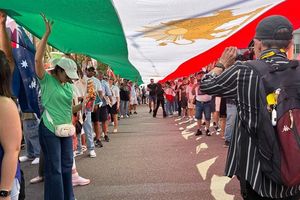
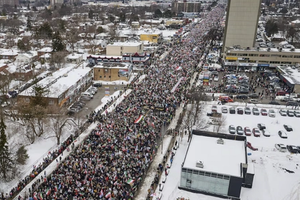
The move follows a period of intense pressure on the establishment. Hundreds of thousands of Iranians took to the streets globally to protest the government following a mass killing of protesters in January.

Tehran, currently facing a severe economic crisis and the rising costs of war, appears to be targeting the financial and legal identities of those it labels as "enemy collaborators."

Pursuing assets across borders

In a significant escalation of rhetoric, the Chief Justice of Ilam Province told the judiciary-linked Mizan news agency on Thursday that officials are examining the legal dimensions of "confiscating the property" of Iranians abroad within their countries of residence.

While the state has already begun identifying and freezing assets within Iran, this official called for international judicial mechanisms to target property held in the West. "Generally, the legal possibility for these actions exists," he said, adding that success would depend on "legal coordination with the country where the assets are located."

This follows a directive from Gholam-Hossein Mohseni-Ejei, the head of the Judiciary, to accelerate the seizure of property belonging to those linked to "overseas services and subversive networks."

By framing political dissent as "material support for hostility," a cash-strapped Tehran is attempting to create a legal pretext to pursue the private wealth of its citizens globally.

Citizenship as a political tool

In addition to financial threats, some officials are calling for the removal of the most basic legal tie between the state and the diaspora: Iranian citizenship.

Hassanali Akhlaghi Amiri, a member of parliament from Mashhad, said earlier this month that cooperation with "hostile countries" should lead to the revocation of a person's national identity.

"The punishment for cooperating with hostile countries against national security and interests begins with the confiscation of property and may even include the revocation of citizenship," Akhlaghi Amiri said.

  • Iran warns it will seize assets of overseas Iranians working against state

    Iran warns it will seize assets of overseas Iranians working against state

  • Over a million people rally worldwide in solidarity with Iran protests

    Over a million people rally worldwide in solidarity with Iran protests

  • Iran watchdog clears tougher espionage law targeting Israel, US cooperation

    Iran watchdog clears tougher espionage law targeting Israel, US cooperation

The suggestion has sparked a heated debate within Iran. The moderate outlet Rouydad24 argued that the constitution treats citizenship as an absolute right that cannot be taken away.

The outlet warned that treating a national identity as a "revocable privilege" to be traded for political loyalty is a dangerous shift that makes the law a matter of "personal taste."

'Stray' citizens: Deprivation of consular services

While the legal debate over formal revocation continues, many Iranians abroad are already experiencing a de facto loss of citizenship through the denial of consular services.

Maryam Ebrahimvand, an independent filmmaker and activist also known as Maryam Taher, recently said that the Iranian consulate in Paris has repeatedly informed her that her "citizenship has issues." Ebrahimvand said that her identity documents were previously seized and have not been returned.

"For the third time, they verbally told me my citizenship is problematic," Ebrahimvand said in a video message. "When they say my citizenship has a problem, it means I have been stripped of it... I have no passport from any country. I am in a state of statelessness."

A globalized crackdown

The escalation comes as the government faces unprecedented opposition from the diaspora. Since the January massacre, massive rallies in cities across Europe and North America have drawn millions of people, marking the largest Iranian opposition movement in decades.

Authorities in Tehran have also alluded to the stance some members of the diaspora have taken regarding the recent military conflict with the US and Israel.

While the topic is delicate, officials have increasingly used "wartime protocols" to justify harsher punishments for those they accuse of siding with foreign adversaries during a time of crisis.

By threatening to seize assets, withholding consular services, and discussing the formal cancellation of passports, the government is attempting to create a climate of fear for protesters who previously felt safe beyond Iran’s borders.

These measures signal a government that no longer sees its people as citizens with rights, but as assets to be seized or enemies to be erased.

Iran says first Hormuz transit fees deposited to central bank

Apr 23, 2026, 11:31 GMT+1

Iranian lawmakers said the country has begun collecting transit fees from ships passing through the Strait of Hormuz, with initial revenues transferred to the central bank.

Hamidreza Haji Babaei said “the first revenue from Hormuz transit tolls has been deposited into the central bank account.”

Separately, lawmaker Abbas Papizadeh said the fees were now being officially collected and transferred into state coffers.

He said charges vary depending on the type and volume of cargo, and are linked to navigation conditions in the waterway.

Papizadeh added that due to security concerns, shipping routes have narrowed, with vessels increasingly passing through Iranian territorial waters — allowing Tehran, under international rules, to levy fees.

He said the revenue would be treated as government income and added to the public budget, with decisions on spending to be made later.

33-year-old protester faces death penalty in Isfahan prison

Apr 23, 2026, 11:14 GMT+1
•
Farnoosh Faraji

Babak Kharbo, a 33-year-old protester jailed in Isfahan, is facing charges that could carry the death penalty, a source close to his family told Iran International.

Kharbo was arrested in February in the town of Dizicheh and is currently held in Dastgerd prison without access to a lawyer. The source said he was subjected to interrogation and torture after his arrest, and that his family had been warned not to pursue efforts for his release.

Link to protest killings

He is the uncle of Alireza Kharbo, a 20-year-old protester killed during demonstrations in January. According to sources close to their family, Alireza was shot by Basij forces and later died in custody, with his body returned to the family bearing multiple gunshot wounds.

At least three other protesters were also killed during the same unrest.

Sweden ready to shield economy from Iran war impact, PM says

Apr 23, 2026, 10:59 GMT+1

Sweden’s Prime Minister Ulf Kristersson said the government was prepared to support the economy as the war involving Iran is expected to have a significant impact.

“The Swedish economy will likely be significantly affected,” he said, adding: “We have both the readiness and the ability to do more.”

Kristersson said Sweden had the “room and muscle” to take further measures if needed to cushion the economic fallout.

Clearing Hormuz mines could take 6 months - WaPo

Apr 23, 2026, 10:54 GMT+1

It could take up to six months to fully clear mines from the Strait of Hormuz, according to a Pentagon assessment shared with US lawmakers, The Washington Post reported.

The estimate, delivered in a classified briefing to Congress, suggests any effort to reopen the key shipping lane would likely be delayed until fighting between the United States and Iran ends.

Officials told lawmakers that Iran may have deployed at least 20 mines in and around the strait, some using GPS-enabled systems that make them harder to detect.

The timeline could prolong disruption to global energy markets, with the report noting that oil and gasoline prices may remain elevated for months, potentially into the US midterm election period.

The Pentagon publicly disputed the report, calling the claims “inaccurate,” but did not provide an alternative timeline.