Iran warns it will seize assets of overseas Iranians working against state
Iran’s judiciary said on Monday that Iranians living abroad could face the seizure of their assets if they cooperate with countries Tehran considers hostile, in a warning that appeared aimed at deterring support for the United States and Israel during the war.
The threat was issued in a statement by the Office of the Prosecutor General, which said such cooperation, if deemed harmful to national security, could bring confiscation of all assets and other legal penalties.
The statement cited Article 1 of a law passed in October that increased penalties for espionage and cooperation with Israel and other countries deemed hostile to Iran’s national security and interests.
Under that law, operational or intelligence activities carried out on behalf of Israel, the United States or other “hostile” governments or groups can lead to the confiscation of all assets and the death penalty, the statement said.
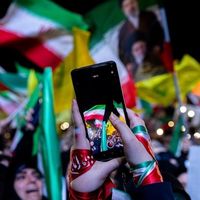
The warning came after some members of the Iranian diaspora seeking change in Tehran gathered in cities across Europe and the United States to celebrate the killing of Supreme Leader Ali Khamenei in the US-Israeli war against Iran.
At the same time, newly created Telegram channels have published details about prominent Iranians abroad who criticized Iran’s clerical establishment and backed the US-Israeli airstrikes that began on February 28.
Between 5 million and 10 million Iranians are estimated to live abroad, mostly in the United States and Western Europe, according to Iranian official data and domestic media reports.
Iran International has launched a new interactive news map on its website aimed at making it easier for audiences to access stories and better understand the geographic spread of events in Iran and around the world.
The feature allows users to explore news not only by time or topic but also by geographic location, offering a visual way to track developments across cities, provinces and countries.
Each news event appears as a marker on the map showing where it occurred. By clicking on a marker, users can open a list of related stories published about that location and read further details.
The tool enables audiences to quickly see what has happened in a particular city, province or region of the world at a glance.
The interactive map is now available from the top-right section of the Iran International website and through a dedicated link, allowing users to follow developments in Iran and globally in an interactive format.
Search news by location
On the Iran International interactive map, news events are marked with icons that correspond to a specific city, province or location worldwide.
Selecting any marker displays a list of news items connected to that geographic location.
This feature is particularly useful for tracking developments concentrated in a specific region, ranging from protests and political developments to major international events.
Filter news by time
The map also includes a time filter that allows users to display stories from a selected period.
With this tool, audiences can review how events have unfolded over time and see what developments occurred across different parts of the world during a specific timeframe.
Available time filters include today, the past seven days, the past 14 days, the past month, the past three months and the past year.
Browse news by topic
In addition to location and time, users can filter news by subject.
The interactive map allows audiences to select from a range of news categories, including liveblog, the Middles East crisis, Iran’s protests, world news, and economy and environment.
The feature helps users quickly navigate large volumes of news and find stories related to their specific interests.
The launch of the interactive map is part of Iran International’s broader effort to provide new digital tools and make access to information easier for its audience.
Iranian political and media figures criticized President Masoud Pezeshkian on Saturday after he apologized for what he called “fire at will” attacks by the country’s armed forces on neighboring countries and instructed them to stop such attacks.
In a video message published earlier in the day, Pezeshkian said authorities had ordered the armed forces to halt missile strikes on neighboring countries unless attacks originate from their territory.
“The temporary leadership council approved yesterday that neighboring countries should no longer be targeted and missiles should not be fired unless an attack on Iran originates from those countries,” Pezeshkian said.
“The armed forces have so far acted with a kind of ‘fire at will’ authority, but they have now been notified that from now on they must not attack neighboring countries or target them with missiles,” he said, adding that he “apologizes personally” over the matter.
Lawmakers push back
Mohammad Manan Raeisi, a lawmaker representing Qom, described the remarks as “humiliating” and said they showed the Assembly of Experts should quickly move to select a new leader.
“Did neighboring countries not place their land, assets and hotels at the disposal of our enemies? Should our military not have struck those bases and assets of the enemy that you are now apologizing for so humbly?” Raeisi wrote.
Ebrahim Azizi, head of the parliament’s national security and foreign policy committee, wrote on X that all US and Israeli bases in the region were “legitimate and lawful targets” in the ongoing conflict.
“The Islamic Republic has no red line in defending national interests. This battle continues,” Azizi wrote.
Media figures question message
Ezzatollah Zarghami, a former culture minister and ex-head of state broadcasting, wrote that the remarks created confusion about the conduct of the war.
“We did not understand what happened. But neither did the armed forces act on a fire at will basis, nor can the regional war mentioned by the ‘martyred imam’ be interpreted in different ways,” Zarghami wrote.
Meisam Nili, a conservative media activist, also criticized the comments.
“Why retreat from the military strategy of the ‘martyred imam’ when we are on the verge of selecting a new leader? Any ceasefire is treason,” Nili wrote.
Former lawmaker Jalal Rashidi Koochi also criticized the president’s message, saying it showed weakness.
“An apology happens when a mistake has occurred. We made no mistake. Your message showed no sign of authority,” Rashidi Koochi wrote.
Pezeshkian’s remarks came as explosions were reported on Saturday at Dubai International Airport and loud blasts were heard in Abu Dhabi, according to multiple reports.
Trump comments
US President Donald Trump said after Pezeshkian remarks that Iran had apologized to its Middle East neighbors and promised it would not fire missiles at them anymore.
In a post on Truth Social, Trump said Iran made that promise only because of what he called relentless US and Israeli attacks.
“Iran, which is being beat to HELL, has apologized and surrendered to its Middle East neighbors, and promised that it will not shoot at them anymore. This promise was only made because of the relentless U.S. and Israeli attack. They were looking to take over and rule the Middle East,” Trump wrote.
Trump also warned that Iran could face further strikes.
Iran, he added, would be “hit very hard” on Saturday and said additional areas and groups of people were under consideration for targeting, citing what he described as Iran’s “bad behavior.”
Republican Senator Ted Cruz appearing on Eye for Iran.
US Senator Ted Cruz told Iran International this week that the US-Israel military campaign aims to remove the Islamic Republic from power and diminish Tehran’s ability to “terrorize” or harm its neighbors.
“It is not simply enough to degrade part of their arsenal,” Cruz told Eye for Iran podcast, adding that strikes have weakened Iran’s military capabilities and limited its ability to project force abroad.
Asked whether victory would mean regime change, he said: “Yeah, I believe this regime needs to be removed from power,” and argued that doing so would serve US national security interests and support Iranians seeking freedom.
Cruz said the United States and Israel had acted in coordination in recent days.
"We've seen the United States working hand in hand with Israel taking out, number one, the Ayatollah, number two, the senior military leaders of the regime, number three, a great percentage of the missile reserves of the drones,” he said.
“We have seen steadily the regime's ability to project force, to terrorize the Iranian people, to murder their neighbors, to murder Americans, all of those have been reduced dramatically.”
His comments come as the Trump administration signals the campaign could intensify. US Defense Secretary Pete Hegseth said this week the United States has “only just begun to fight,” while Iran’s Revolutionary Guards warned attacks across the region would escalate.
Freedom “on the doorstep”
Cruz argued that removing Iran’s ruling regime would serve both US national security interests and the aspirations of Iranians living under the tyrinical government.
“Removing from power a government that is seeking to kill Americans is overwhelmingly in America's interest,” he said, adding that it was also “overwhelmingly in the interest of the people of Iran of 92 million people who have suffered under tyranny and oppression for 47 years… and I believe freedom is on the doorstep and it is in sight before us.”
More than 36,500 Iranians were killed by security forces during the January 8-9 crackdown on nationwide protests, making it the deadliest two-day protest massacre in history.
The Republican Senator also suggested Iran’s military response across the region is backfiring and strengthening opposition to the regime.
“Well, Iran is doing a great job of building a coalition against this regime,” Cruz said. “You look at their military strategy, their military strategy appears to be try to murder as many people as possible and in as many countries as possible.”
Iran’s missile and drone attacks have spread across the region in recent days, with projectiles reported over or targeting Israel, the United Arab Emirates, Qatar, Bahrain, Kuwait, Jordan, Iraq, Saudi Arabia, Syria and Cyprus.
Some strikes and falling debris have also hit residential areas, highlighting how the conflict is spilling beyond military targets and affecting civilians across the region.
Limited ground engagement possible
Cruz also addressed speculation about whether the United States could deploy ground troops, saying he does not foresee an Iraq-style invasion but did not rule out limited ground action.
“Look, what we're not going to see is an extended presence of American troops on the ground. We're not going see a replay of what happened in the war in Iraq. That is not on the table,” he said.
“The president has been clear he has not ruled out some limited ground engagement… I could envision it is possible the president will order some sort of limited ground engagements, but I would expect the overwhelming majority of the American engagement on this to be in the air through bombs and missiles and other means.”
Iran’s leadership question
The question of Iran’s leadership has taken on new urgency following the death of Supreme Leader Ali Khamenei.
Iran’s clerical body, the Assembly of Experts, has elected Mojtaba Khamenei — the son of the late supreme leader Ali Khamenei — as the Islamic Republic’s new Supreme Leader, according to informed sources who spoke to Iran International.
The decision would keep power firmly within the ruling system of the Islamic Republic and extend the authority of the clerical establishment that has governed Iran since 1979.
President Donald Trump signaled strong opposition to Mojtaba Khamenei assuming power.
“Khamenei's son is a lightweight. I have to be involved in the appointment, like with Delcy Rodriguez in Venezuela,” Trump said.
“We want someone that will bring harmony and peace to Iran.”
Asked during his interview about who should lead Iran next, Cruz said he would not speculate about specific figures but noted there were multiple possible contenders.
“Look, I don't know, and I think that's a decision for the people of Iran to make. And so there are various contenders,” Cruz said.
Cruz said he believes Iran’s current ruling system should ultimately be replaced by leadership chosen by the Iranian people.
“Yeah, I believe this regime needs to be removed from power,” he said.
“What I would like to see is a free and fair election, let the people of Iran choose their leaders.”
Message to the Iranian people
Cruz also spoke about his personal connection to people who have lived under authoritarian rule.
“My father was born and grew up in Cuba. My father fought in the Cuban revolution. My father was imprisoned and tortured in Cuba,” he said. “My family knows suffering the people of Iran have experienced.”
He ended with a message to Iranians protesting the government.
“My message to the Iranian people is your courage is inspiring… You have a moment to reclaim your country, to reclaim your future and to move into an era of prosperity.”
Human rights groups and families of detainees warn that wartime conditions inside Iranian prisons could trigger another tragedy like the June strike on Tehran’s Evin prison.
Activists say the situation inside prisons has become increasingly chaotic. While some non-political detainees have reportedly been released on bail and many staff have reportedly left their posts for safer locations, authorities have refused to grant furlough to political prisoners or people detained during recent protests or accept bail.
The volunteer lawyers’ website Dadban also warned that periods of intense political or military tension in Iran often lead to harsher treatment of political prisoners.
“In the Islamic Republic, during times of severe political or military tension, the risk of intensified repression and even retaliation against political prisoners increases,” the group said. In such circumstances, detainees may face greater restrictions, violence or additional pressure.
Warnings of a humanitarian crisis
Several human rights organizations — including the Committee for the Freedom of Political Prisoners and a foundation linked to imprisoned Nobel Peace Prize laureate Narges Mohammadi— have warned of an impending humanitarian crisis in Iranian prisons.
In their statements, the groups said administrative order inside Evin has effectively collapsed, guards have abandoned their posts and cell doors have been locked, leaving prisoners confined inside.
According to these reports, food distribution and medical care have largely been suspended, while the prison shop — a key source of food and drinking water for inmates — has also closed.
In some cases, activists say, political prisoners have been transferred to unknown locations without informing their families. Family members of detainees say they have been given little information about the prisoners’ fate.
Reports from rights groups and relatives who have managed to contact inmates suggest that Iran’s special police unit (NOPO) has taken control of Evin prison.
The wife of political prisoner Mostafa Mohammad-Hassan wrote on social media that authorities plan to transfer political prisoners and foreign nationals held in Evin to a prison in the city of Qom.
Fears of another Evin tragedy
Reza Khandan, a political prisoner in Evin and the husband of prominent human rights lawyer Nasrin Sotoudeh, has also raised the alarm in a letter to Iran’s judiciary chief, Gholamhossein Mohseni-Ejei.
Khandan warned that authorities had ignored repeated warnings from prisoners, as they did during the 12-day war in June when an Israeli missile attack on Evin prison destroyed parts of the complex and killed dozens of prisoners, visiting relatives and prison staff.
“This time no excuse will be acceptable,” Khandan wrote. “The direct responsibility for the lives of prisoners lies with the judiciary and the prison organization — prisoners who are still mourning their cellmates and families who mourn their loved ones.”
After the June attack, political prisoners were reportedly placed in shackles and temporarily transferred to other facilities, including Tehran Greater Prison (Fashafouyeh), Qezel Hesar prison and Qarchak women’s prison.
Conditions worsening in other prisons
Activists say the situation is deteriorating in other prisons as well.
Dadban reported worsening conditions at Qarchak women’s prison, south of Tehran — widely considered one of Iran’s harshest detention facilities.
According to the report, medical staff, administrative workers and guards have left their posts, leaving prison operations in disarray. Water shortages, already common at the facility, have worsened, and the prison shop is no longer operating.
At The Tehran Greater Prison blast waves from nearby explosions on March 2 reportedly shattered windows and damaged several walls. While no casualty figures have been confirmed, reports say prison guards beat inmates and fired tear gas inside the facility.
“My brother is in Tehran Greater Prison. For four days they have had neither water nor food,” a viewer wrote in a message to Iran International. “Officials have even welded the prison doors shut and the facility is now under the control of the Revolutionary Guards,” he added.
Similar incidents have been reported elsewhere. Kurdish news outlet Kurdpa said anti-riot guards attacked prisoners in Mahabad prison after inmates protested being held in dangerous wartime conditions following a strike on a nearby Revolutionary Guards (IRGC) base.
According to the report, guards fired tear gas, injuring at least two prisoners. Food rations were reduced to one meal a day, and phone calls were restricted, according to the report.
A woman walks past a billboard of Iran's late Supreme Leader Ali Khamenei on a street, after he was killed in Israeli and US strikes on Saturday, in Tehran, Iran, March 4, 2026.
Iranians have flooded social media with dark humor and mocking comments about the delayed burial of Supreme Leader Ali Khamenei after authorities on Wednesday canceled a planned procession and what they described as a public farewell to his body due to security concerns.
The situation triggered a wave of posts across social media platforms, particularly on X, many of them sarcastic, angry or openly celebratory.
One widely shared comment drew a comparison with the authorities’ treatment of families whose relatives were killed during protests.
More than 36,500 Iranians were killed by security forces during the January 8-9 crackdown on nationwide protests, making it the deadliest two-day protest massacre in history, according to documents reviewed by Iran International.
“In the past two months a man named Ali Khamenei did not allow families of people killed on his orders to hold funerals,” one user wrote. “Now for five days the body of that same man has been kept in a refrigerator and they cannot even issue permission for his burial. What goes around comes around.”
Iranian media have released images showing preparations at Tehran’s prayers ground for the placement of the body of Iran’s late Supreme Leader Ali Khamenei.
Another post mocked the uncertainty surrounding funeral arrangements. “The funeral procession for Khamenei will be held online through the Shad platform,” a user wrote, referring sarcastically to the government-linked education app used by Iranian schools when classes move online during crises.
Some comments echoed remarks previously made by a state television host who had mocked the deaths of protesters.
Public anger erupted last month after a presenter on Ofogh TV, a channel run by the state broadcaster IRIB and affiliated with the Revolutionary Guards, referred to reports that thousands killed during the January crackdown were transported in refrigerated trailers. The program made a multiple choice question about where to keep the bodies of protesters. The show aired a segment posing a multiple-choice question about where the bodies of protesters should be kept.
“Which refrigerator do you think they are keeping Khamenei’s body in?” one user wrote, listing options such as “Netanyahu’s refrigerator,” “an ice-cream factory freezer,” and “the freezers of Antarctica.”
Others used darker language. “The stench of Khamenei’s corpse has spread across the Middle East and they still do not dare bury it,” one user wrote.
Another post said: “Six days have passed and the rotten body of Ali Khamenei is still lying on the ground.”
Some users circulated images of a dead rat with captions claiming sarcastically that the first photo of Khamenei’s body had finally been released.
Many posts framed the mockery as a form of symbolic revenge.
“Khamenei left a deep wound in people’s hearts and denied grieving families the right to mourn,” one user wrote. “His agents buried bodies secretly. Now after days his own body is still on the ground.”
Others referenced reports that some families had been asked to pay for the bullets used to kill their relatives in order to receive their bodies.
“I heard Khamenei’s body has started to rot with worms,” one user wrote. “If you don’t have money for bunker-buster bombs, at least bury him.”
Another post revived a Persian saying about burial rites. “They used to say a corpse never stays on the ground,” the user wrote. “Even if someone has no one, eventually the municipality will bury them. But six days have passed and the body of Ali Khamenei is still lying there.”
“Israel said to return the body of Ali Khamenei, the Islamic Republic must pay for the missiles it fired, or his family must admit he was part of a Mossad spy team,” one post read, referring sarcastically to reports that families were sometimes asked to sign papers declaring their children Basij members in order to receive their bodies and permission for burial ceremonies.
Others suggested that authorities might abandon plans for a burial altogether.
“It seems they have given up burying Khamenei,” one user wrote. “Maybe they are waiting for the US Navy to throw the carcass into the sea.”
“Khamenei’s body should be bombed again,” another post said. “I’m still not satisfied.”