Despite the pressure, at least seven players managed to escape and seek safety in Australia following a series of events involving planning, outside help and a moment of chaos during the AFC Asian Cup held in Gold Coast.
Their situation became dangerous after players refused to sing the Islamic Republic’s national anthem during a match against South Korea. Soon afterward, Iran's state TV labeled the young athletes “wartime traitors”—a charge that in Iran can carry the death penalty.
Raha Pourbakhsh, an Iran International sports reporter who covered the tournament from London, said the threats quickly escalated.
While the girls faced the threat of persecution back home, defection was not an easy option either.
Iranian athletes—especially members of national teams—are required to submit substantial financial guarantees to the Ministry of Sports before being allowed to travel abroad, a measure aimed at preventing defections.
These guarantees may take the form of large cash deposits or property deeds, which can be confiscated if the athlete fails to return to Iran.
“For this trip, they dramatically increased the bond to 10 billion Tomans (almost $67,000). I received info from inside the camp that their families were being directly threatened,” Pourbakhsh said.
“Some players felt like they were hostages. They were told their families' safety depended on them returning to Iran after the matches,” she said.
The players suspected they were being monitored and avoided direct communication, believing their phones were likely tapped.
According to Pourbakhsh, security officials were embedded with the team to ensure the players remained under control.
“It was a brave move; I know at least three security officers from the IRGC were embedded with the team to control them,” she said.
However, the surveillance could not stop members of the team from leaving.
Raising the alarm
Pourbakhsh said she began alerting international media outlets after Iranian state television figures publicly called for punishment against the players.
“Western media doesn't follow state TV, so I clipped that video, translated it, and sent it to reporters at CNN, Reuters, and Tracy Holmes," who is veteran broadcaster with the Australian Broadcasting Corporation (ABC).
The reporting quickly gained attention.
“Tracy Holmes interviewed the Australian Foreign Minister that same night about the threats occurring on Australian soil,” Pourbakhsh said.
As the situation escalated, Australian authorities became involved. According to Pourbakhsh, the Australian Federal Police were positioned in the team hotel lobby after concerns were raised.
Iran officials blocked from entering Australia
Iranian authorities also attempted to regain control of the situation by sending senior football officials to Australia.
According to Pourbakhsh, Mehdi Taj, president of Iran’s Football Federation and vice president of the Asian Football Confederation, sought to travel to Australia as the crisis unfolded.
Australian authorities, however, denied him a visa due to his alleged ties to the Islamic Revolutionary Guard Corps.
Instead, another federation representative was sent to Australia to ensure the players returned to Iran following the tournament.
Chaos and escape
The turning point came after the team’s third match.
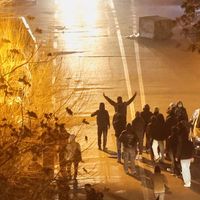
Confusion erupted among Iranian security handlers as several players attempted to slip away.
Video shared by activists on social media showed one Iranian security official frantically searching through the hotel stairwell while activists followed him, shouting that he was linked to the IRGC.
“You’re in Australia—you better run,” one activist can be heard shouting in the footage. “Get the F out of the country, IRGC terrorists.”
Meanwhile, several players were attempting to escape through the hotel car park.
At one point, a fire door that should have remained open was locked, creating further confusion among the handlers.
Amid the chaos, the players managed to reach safety and make contact with authorities.
Desperate scenes
Witnesses described emotional scenes as the team prepared to leave Australia.
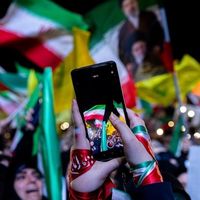
Fans gathered outside the hotel with signs reading “Save Our Girls,” fearing the players would face punishment if forced to return to Iran.
According to witnesses, one player was dragged by her collar and shirt in an attempt to force her onto a team bus.
Others flashed SOS signals as they boarded, indicating they did not want to leave.
Before the team’s plane departed for the long journey back toward Iran, several players were seen making distress gestures toward supporters and cameras.
Pourbakhsh said many players felt compelled to return despite the danger.
Their families remained in Iran.
A new life ahead
Seven players ultimately remained in Australia and sought protection.
Their story has drawn sympathy around the world.
A GoFundMe campaign has been launched to help them rebuild their lives in Australia.
The Brisbane Roar Football Club also publicly offered support.
“Like many Australians, everyone at Brisbane Roar FC has been watching the story of the Iran women's national football team players now here in Queensland with immense admiration,” the club wrote on X.
“These are elite footballers — passionate, talented women who love the game just as deeply as we do.”
The club extended a direct invitation to the players.
“To Fatemeh, Zahra, Zahra, Atefeh, Mona, and any of your teammates building a new life here in Australia: Brisbane is home to one of the country’s most passionate football communities, and the Roar family has a big heart.
“We’d be honoured to open our doors and offer you a place to train, play, and belong.
“No politics. No conditions. Just football, community, and a warm welcome.
“Queensland is your home now.”