Most Viewed




Mojtaba Khamenei, long known as the discreet and powerful son of slain Ayatollah Ali Khamenei, was announced early Monday as Iran’s new Supreme Leader at a time when the country is at war and Israel has openly vowed to target any successor to his father.
For decades Mojtaba operated largely out of public view while building deep ties across the Islamic Republic’s political and security apparatus. His rise marks the formal emergence of a figure who had already been widely regarded as one of the most influential actors behind the scenes of Iran’s ruling establishment.
Mojtaba, the second son of Ali Khamenei, has long been considered the only member of his family with clear political ambitions. His younger brother, Masoud, worked only in administrative roles within their father’s office, while his other two brothers and two sisters are not known to have held political or bureaucratic positions.


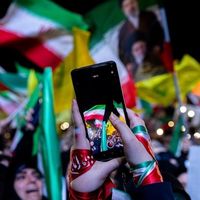
The situation triggered a wave of posts across social media platforms, particularly on X, many of them sarcastic, angry or openly celebratory.
One widely shared comment drew a comparison with the authorities’ treatment of families whose relatives were killed during protests.
More than 36,500 Iranians were killed by security forces during the January 8-9 crackdown on nationwide protests, making it the deadliest two-day protest massacre in history, according to documents reviewed by Iran International.
“In the past two months a man named Ali Khamenei did not allow families of people killed on his orders to hold funerals,” one user wrote. “Now for five days the body of that same man has been kept in a refrigerator and they cannot even issue permission for his burial. What goes around comes around.”
Another post mocked the uncertainty surrounding funeral arrangements. “The funeral procession for Khamenei will be held online through the Shad platform,” a user wrote, referring sarcastically to the government-linked education app used by Iranian schools when classes move online during crises.
Some comments echoed remarks previously made by a state television host who had mocked the deaths of protesters.
Public anger erupted last month after a presenter on Ofogh TV, a channel run by the state broadcaster IRIB and affiliated with the Revolutionary Guards, referred to reports that thousands killed during the January crackdown were transported in refrigerated trailers. The program made a multiple choice question about where to keep the bodies of protesters. The show aired a segment posing a multiple-choice question about where the bodies of protesters should be kept.
“Which refrigerator do you think they are keeping Khamenei’s body in?” one user wrote, listing options such as “Netanyahu’s refrigerator,” “an ice-cream factory freezer,” and “the freezers of Antarctica.”
Others used darker language. “The stench of Khamenei’s corpse has spread across the Middle East and they still do not dare bury it,” one user wrote.
Another post said: “Six days have passed and the rotten body of Ali Khamenei is still lying on the ground.”
Some users circulated images of a dead rat with captions claiming sarcastically that the first photo of Khamenei’s body had finally been released.
Revenge in digital form
Many posts framed the mockery as a form of symbolic revenge.
“Khamenei left a deep wound in people’s hearts and denied grieving families the right to mourn,” one user wrote. “His agents buried bodies secretly. Now after days his own body is still on the ground.”
Others referenced reports that some families had been asked to pay for the bullets used to kill their relatives in order to receive their bodies.
“I heard Khamenei’s body has started to rot with worms,” one user wrote. “If you don’t have money for bunker-buster bombs, at least bury him.”
Another post revived a Persian saying about burial rites. “They used to say a corpse never stays on the ground,” the user wrote. “Even if someone has no one, eventually the municipality will bury them. But six days have passed and the body of Ali Khamenei is still lying there.”
“Israel said to return the body of Ali Khamenei, the Islamic Republic must pay for the missiles it fired, or his family must admit he was part of a Mossad spy team,” one post read, referring sarcastically to reports that families were sometimes asked to sign papers declaring their children Basij members in order to receive their bodies and permission for burial ceremonies.
Others suggested that authorities might abandon plans for a burial altogether.
“It seems they have given up burying Khamenei,” one user wrote. “Maybe they are waiting for the US Navy to throw the carcass into the sea.”
“Khamenei’s body should be bombed again,” another post said. “I’m still not satisfied.”