US says Iranian targets ‘being decimated’ by American forces
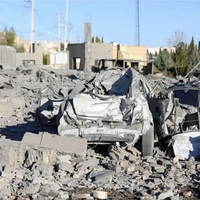
The US Central Command said Iranian targets were “being decimated” by American forces as military operations continue.
“Iranian targets are being decimated by US forces, paving the way for continued delivery of overwhelming American military firepower,” CENTCOM said in a post on X.
British counterterrorism police arrested four men suspected of assisting a foreign intelligence service linked to Iran in a case involving surveillance of Jewish community locations, authorities said on Friday.
Four men were arrested early Friday as part of a counterterrorism investigation into suspected offences under the UK’s National Security Act 2023, police said.
Detectives from Counter Terrorism Policing London detained the suspects shortly after 01:00 at addresses in Barnet and Watford during what authorities described as a pre-planned operation.
The investigation concerns suspected surveillance of locations and individuals connected to the Jewish community in the London area.
“Today’s arrests are part of a long-running investigation and part of our ongoing work to disrupt malign activity where we suspect it,” Commander Helen Flanagan, head of Counter Terrorism Policing London, said.
“We understand the public may be concerned, in particular the Jewish community, and as always, I would ask them to remain vigilant and if they see or hear anything that concerns them, then to contact us,” Flanagan added.
Arrests and searches
Police said the four suspects include one Iranian national and three men who hold dual British-Iranian citizenship.
Two of the men – aged 40 and 55 – were arrested at addresses in the Barnet area. Searches are ongoing at those locations.
A 52-year-old man was arrested in Watford. Officers are searching that property as well as another in Wembley.
A fourth suspect, a 22-year-old man, was arrested in Harrow.
Six additional men aged 20 to 49 were arrested at the same Harrow location on suspicion of assisting an offender. One of them was also arrested on suspicion of assaulting a police officer.
Republican Senator Ted Cruz appearing on Eye for Iran.
US Senator Ted Cruz told Iran International this week that the US-Israel military campaign aims to remove the Islamic Republic from power and diminish Tehran’s ability to “terrorize” or harm its neighbors.
“It is not simply enough to degrade part of their arsenal,” Cruz told Eye for Iran podcast, adding that strikes have weakened Iran’s military capabilities and limited its ability to project force abroad.
Asked whether victory would mean regime change, he said: “Yeah, I believe this regime needs to be removed from power,” and argued that doing so would serve US national security interests and support Iranians seeking freedom.
Cruz said the United States and Israel had acted in coordination in recent days.
"We've seen the United States working hand in hand with Israel taking out, number one, the Ayatollah, number two, the senior military leaders of the regime, number three, a great percentage of the missile reserves of the drones,” he said.
“We have seen steadily the regime's ability to project force, to terrorize the Iranian people, to murder their neighbors, to murder Americans, all of those have been reduced dramatically.”
His comments come as the Trump administration signals the campaign could intensify. US Defense Secretary Pete Hegseth said this week the United States has “only just begun to fight,” while Iran’s Revolutionary Guards warned attacks across the region would escalate.
Freedom “on the doorstep”
Cruz argued that removing Iran’s ruling regime would serve both US national security interests and the aspirations of Iranians living under the tyrinical government.
“Removing from power a government that is seeking to kill Americans is overwhelmingly in America's interest,” he said, adding that it was also “overwhelmingly in the interest of the people of Iran of 92 million people who have suffered under tyranny and oppression for 47 years… and I believe freedom is on the doorstep and it is in sight before us.”
More than 36,500 Iranians were killed by security forces during the January 8-9 crackdown on nationwide protests, making it the deadliest two-day protest massacre in history.
The Republican Senator also suggested Iran’s military response across the region is backfiring and strengthening opposition to the regime.
“Well, Iran is doing a great job of building a coalition against this regime,” Cruz said. “You look at their military strategy, their military strategy appears to be try to murder as many people as possible and in as many countries as possible.”
Iran’s missile and drone attacks have spread across the region in recent days, with projectiles reported over or targeting Israel, the United Arab Emirates, Qatar, Bahrain, Kuwait, Jordan, Iraq, Saudi Arabia, Syria and Cyprus.
Some strikes and falling debris have also hit residential areas, highlighting how the conflict is spilling beyond military targets and affecting civilians across the region.
Limited ground engagement possible
Cruz also addressed speculation about whether the United States could deploy ground troops, saying he does not foresee an Iraq-style invasion but did not rule out limited ground action.
“Look, what we're not going to see is an extended presence of American troops on the ground. We're not going see a replay of what happened in the war in Iraq. That is not on the table,” he said.
“The president has been clear he has not ruled out some limited ground engagement… I could envision it is possible the president will order some sort of limited ground engagements, but I would expect the overwhelming majority of the American engagement on this to be in the air through bombs and missiles and other means.”
Iran’s leadership question
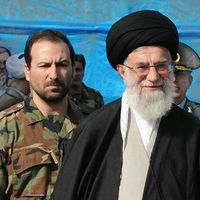
The question of Iran’s leadership has taken on new urgency following the death of Supreme Leader Ali Khamenei.
Iran’s clerical body, the Assembly of Experts, has elected Mojtaba Khamenei — the son of the late supreme leader Ali Khamenei — as the Islamic Republic’s new Supreme Leader, according to informed sources who spoke to Iran International.
The decision would keep power firmly within the ruling system of the Islamic Republic and extend the authority of the clerical establishment that has governed Iran since 1979.
President Donald Trump signaled strong opposition to Mojtaba Khamenei assuming power.
“Khamenei's son is a lightweight. I have to be involved in the appointment, like with Delcy Rodriguez in Venezuela,” Trump said.
“We want someone that will bring harmony and peace to Iran.”
Asked during his interview about who should lead Iran next, Cruz said he would not speculate about specific figures but noted there were multiple possible contenders.
“Look, I don't know, and I think that's a decision for the people of Iran to make. And so there are various contenders,” Cruz said.
Cruz said he believes Iran’s current ruling system should ultimately be replaced by leadership chosen by the Iranian people.
“Yeah, I believe this regime needs to be removed from power,” he said.
“What I would like to see is a free and fair election, let the people of Iran choose their leaders.”
Message to the Iranian people
Cruz also spoke about his personal connection to people who have lived under authoritarian rule.
“My father was born and grew up in Cuba. My father fought in the Cuban revolution. My father was imprisoned and tortured in Cuba,” he said. “My family knows suffering the people of Iran have experienced.”
He ended with a message to Iranians protesting the government.
“My message to the Iranian people is your courage is inspiring… You have a moment to reclaim your country, to reclaim your future and to move into an era of prosperity.”
Rep. Yassamin Ansari of Arizona, the first Iranian American Democrat elected to Congress, said Thursday she was “conflicted” and “deeply concerned” about the US operation in Iran, criticizing the lack of congressional authorization.
“I have always opposed the Islamic Republic regime,” Ansari told CNN. “As an American congresswoman … I am deeply concerned that Donald Trump has decided to wage an illegal war … without coming to Congress, without making a case to the American people.”
Ansari said many of her constituents oppose the war and some are trying to leave the Middle East but are struggling to get assistance.
She added that while many Iranian Americans and people inside Iran are celebrating developments, others feel anxiety and uncertainty about what comes next.
Lebanon’s government said on Thursday it would ban all activity by Iran’s Revolutionary Guards and seek to deport its members from the country, marking a significant shift in Beirut’s posture amid escalating regional tensions.
Information Minister Paul Morcos said the cabinet had decided to “prevent any activity” by IRGC members on Lebanese territory and to detain them through the judiciary for deportation.
He added that Iranian nationals would now require visas to enter Lebanon.
A car passes by a billboard of Iran's late Supreme Leader Ali Khamenei after he was killed in Israeli and US strikes, March 4, 2026.
Funeral plans for Iran’s former Supreme Leader Ali Khamenei have been revised multiple times this week, reflecting mounting security fears, uncertainty over foreign attendance and unresolved questions about succession.
The original plan, announced shortly after his death was confirmed on March 1, envisioned a three-stage procession through Tehran, Qom and Mashhad before Khamenei’s burial in his hometown.
A day later, after the death of his wife, Mansoureh Khojasteh Bagherzadeh, was announced, officials shifted to a joint burial at the Imam Reza Shrine in Mashhad.
On Wednesday morning, state television reported that Khamenei’s coffin would be placed at Tehran’s Mosalla (Prayer Grounds) for mourners. By midday, the broadcast postponed the ceremony to the evening. Hours later, another update said it would still take place at an unspecified later time.
State television later aired footage of workers preparing a podium where the coffin was to be displayed behind bulletproof glass.
Security and optics
Security concerns appear central to the delays. Iran is organizing a state funeral amid an active regional war, and Israeli officials have said they would target anyone appointed as the next Supreme Leader.
Foreign dignitaries—particularly figures linked to Hezbollah and the Houthis—have reportedly expressed concern about attending, citing the killing of Hamas leader Ismail Haniyeh in Tehran during former President Ebrahim Raisi’s funeral.
Many Iranian officials likely share similar concerns. Lower-level Chinese and Russian delegations are expected to attend.
The question of succession adds further uncertainty. Ahmad Khatami, a member of the Assembly of Experts, said on state television Wednesday that the body had not yet reached a final decision on Khamenei’s successor.
“Allowing everyone to express their views is extremely difficult during wartime,” he added.
Some clerical figures argue that naming a successor while the former leader remains unburied would be inappropriate. Others contend that announcing a new leader during the funeral itself—before a large crowd—would better project unity and legitimacy, despite widespread anti-government protests earlier this year.
The crowd problem
Officials also appear concerned about turnout. State television acknowledged that authorities were attempting to bus supporters in from other cities to produce what it described as “a funeral attended by millions.”
The leadership is keen to replicate the massive crowds that gathered for Ayatollah Ruhollah Khomeini in 1989. Official figures at the time claimed 10 million mourners, though foreign journalists estimated between two and four million. Replicating even a fraction of that turnout now—amid war and public discontent—appears uncertain.
Transporting large crowds between Tehran, Qom and Mashhad for a multi-city mourning procession adds further complications.
Khamenei’s supporters, including those backing his son as a potential successor, are seeking a large and symbolic display of loyalty when and if a new leader is announced.
Some officials and analysts say that effort to stage a carefully managed spectacle may help explain why the funeral has been repeatedly delayed over the past two days.