• العربية
  • فارسی
Brand
  • Iran Insight
  • Politics
  • Economy
  • Analysis
  • Special Report
  • Opinion
  • Podcast
  • Iran Insight
  • Politics
  • Economy
  • Analysis
  • Special Report
  • Opinion
  • Podcast
  • Theme
  • Language
    • العربية
    • فارسی
  • Iran Insight
  • Politics
  • Economy
  • Analysis
  • Special Report
  • Opinion
  • Podcast
All rights reserved for Volant Media UK Limited
volant media logo

Iran FM rebukes Germany after Merz vows more pressure over nuclear program

Feb 5, 2026, 08:13 GMT+0

Iran’s Foreign Minister Abbas Araghchi criticized Germany’s stance on Iran after Chancellor Friedrich Merz said Berlin was ready to increase pressure to end Tehran’s nuclear program.

“We are ready to further increase the pressure and to engage in talks that serve the purpose of a swift end to the Iranian nuclear program,” Merz wrote on X on Wednesday.

In response, Araghchi said Germany had abandoned a constructive role in diplomacy, pointing to Berlin’s earlier support for restoring UN sanctions on Iran. While emphasizing Iran’s long-standing relations with Germany and praising the German people, he added: “We hope that more mature and honorable political leadership will return to Germany.”

Most Viewed

Delayed burial, absent successor: Questions over post-Khamenei Iran
1

Delayed burial, absent successor: Questions over post-Khamenei Iran

2

Student protests over university entrance exam rules continue across Iran

3
ANALYSIS

From banks to blockchains: US opens new front in Iran sanctions

4
INSIGHT

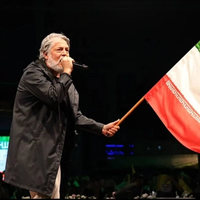
Iran turns to LA-based singer for state-backed religious event

5
INSIGHT

What Israel hit at Iran's Karoon Petrochemical and why it matters

Banner
Banner

Spotlight

  • 'Nothing is over':  Iran-Israel conflict enters a new phase
    ANALYSIS

    'Nothing is over': Iran-Israel conflict enters a new phase

  • Delayed burial, absent successor: Questions over post-Khamenei Iran

    Delayed burial, absent successor: Questions over post-Khamenei Iran

  • Iran turns to LA-based singer for state-backed religious event
    INSIGHT

    Iran turns to LA-based singer for state-backed religious event

  • From banks to blockchains: US opens new front in Iran sanctions
    ANALYSIS

    From banks to blockchains: US opens new front in Iran sanctions

  • Can Trump crack Iran's negotiating playbook?
    PODCAST

    Can Trump crack Iran's negotiating playbook?

  • Explained: Iran's frozen assets around the world

    Explained: Iran's frozen assets around the world

•
•
•

More Stories

Russia says Iran-US situation is 'explosive,' rules out mediating role

Feb 5, 2026, 07:55 GMT+0
Russia says Iran-US situation is 'explosive,' rules out mediating role
100%

Russia is not pushing to act as a mediator between Iran and the United States despite what it describes as an increasingly dangerous situation, Foreign Minister Sergey Lavrov said.

“The situation is explosive,” Lavrov said on Thursday in an interview with RT, adding that Moscow was “not imposing ourselves as mediators to Iran, Israel, or the United States,” but was closely following developments because they affect “not only Iran itself, but the entire Middle East.”

Lavrov warned that “there are too many time bombs waiting to be triggered by a clumsy foot,” while stressing that Russia remains ready to help enforce any agreements if they are reached. He said both Iran and Israel were aware that Moscow was prepared to assist in implementing deals, should negotiations succeed.

Ex-US ambassador predicts low odds of Iran-US deal ahead of talks

Feb 5, 2026, 07:36 GMT+0
Ex-US ambassador predicts low odds of Iran-US deal ahead of talks
100%

Former US Ambassador to Israel Dan Shapiro said on Thursday he saw little chance the next round of Iran-US talks would produce an agreement, as negotiators prepare to meet on Friday.

In an interview with Israel’s military radio Galei Zahal, Shapiro said the prospects were low given the negotiating format and Washington’s position, according to a transcript published by Israel National News.

“I don't see a path to a deal - Trump will not have the patience for long and complicated negotiations,” Shapiro said.

“He has no choice - there will be military action, he won’t be able to overthrow the regime without it,” he added.

The talks are expected to be held in Muscat, Oman, after a venue dispute in recent days, and are set to focus on Iran’s nuclear program

US lawmaker introduces bipartisan bill targeting Iran’s internet restrictions

Feb 5, 2026, 07:07 GMT+0

US Representative Claudia Tenney said on Wednesday that she had introduced a bipartisan bill aimed at expanding access to open internet for people in Iran, as authorities continue to restrict communications during protests.

“The Iranian people have shown extraordinary courage in demanding basic freedoms from a regime that fears open communication,” the Republican lawmaker wrote on X.

She said the proposed legislation, titled the IRAN Act, would require the US government to develop a clear strategy to support open and secure internet access inside Iran.

The bill would focus on protecting essential communication tools, countering bans on virtual private networks, and responding more directly to nationwide internet blackouts, according to her statement.

Tenney said the measure was intended to confront those restrictions “head-on” and ensure US policy more effectively supports free communication for Iranians.

US–Iran talks stagger back on after a day of threats and denials

Feb 5, 2026, 00:35 GMT+0
US–Iran talks stagger back on after a day of threats and denials
100%

A day of confusion, warnings and behind-the-scenes maneuvering ended with a fresh announcement that US–Iran talks were back on track, underscoring how fragile and contested the diplomatic process remains on the eve of a possible meeting.

Throughout the day, senior officials on both sides issued sharply conflicting messages about whether talks would happen at all, where they might be held and what they would cover.

Reports citing Iranian and Western officials alternated between suggesting the process had collapsed and hinting that negotiations were imminent, reflecting what one diplomat described as “negotiations about negotiations.”

In Washington, Marco Rubio sought to project readiness while acknowledging deep skepticism.

“I think in order for talks to actually lead to something meaningful, they will have to include certain things,” Rubio said, casting doubt on whether diplomacy would succeed at all.

“I’m not sure you can reach a deal with these guys,” he added. “But we’re going to try to find out.”

Rubio’s Iranian counterpart, Abbas Araghchi, said Tehran was “fully ready” for talks, but only within a narrow framework focused on Iran’s nuclear program.

As officials sparred in public, reports surfaced of intense behind-the-scenes haggling over venue and format.

Turkey was first cited as a possible location, then ruled out, before Oman re-emerged — with Araghchi posting on X that talks would be held in Muscat on Friday at 10 a.m. local time.

Hovering over the diplomatic back-and-forth were stark warnings from President Donald Trump, who adopted an increasingly explicit tone in remarks to NBC News.

Asked whether Iran’s Supreme Leader, Ali Khamenei, should be concerned, Trump replied: “I would say he should be very worried, yeah. He should be.”

Trump also claimed that the United States had uncovered plans for a new Iranian nuclear facility and had issued a direct threat in response.

Iran was “thinking about starting a new site in a different part of the country,” he said. “We found out about it. I said, you do that, we’re gonna do really bad things to you.”


Rights groups call for probe into alleged chemical use in Iran protests

Feb 4, 2026, 21:38 GMT+0
Rights groups call for probe into alleged chemical use in Iran protests
100%
Iranian demonstrators gather in a street in Tehran, Iran, January 8, 2026.

A coalition of human rights organizations and civil society groups has called on member states of the Organization for the Prohibition of Chemical Weapons (OPCW) to take collective action over Iran’s alleged use of prohibited chemical substances against civilians.

In a statement dated February 4, the groups said eyewitness testimony, medical evaluations and independent reporting indicate that Iranian security forces deployed non-standard chemical agents during protest crackdowns.

“Victims report symptoms far exceeding ordinary tear gas exposure, including respiratory distress, neurological impairment, cardiovascular instability, persistent headaches, dizziness, and long-term systemic dysfunction,” the statement said.

The coalition said Iranian medical professionals who treated the affected individuals observed consistent clinical patterns that they described as indicative of exposure to unlawful chemical substances.

The statement did not identify the specific agents involved.

The appeal comes after an unprecedentedly violent crackdown on protests across Iran on January 8 and 9, in which thousands were killed and many more wounded.

The signatories—including Nobel Peace Prize laureate Shirin Ebadi—urged OPCW member states to invoke mechanisms under Article IX of the Chemical Weapons Convention, beginning with a formal request for clarification from Tehran.

They called for authorizing a challenge inspection and the deployment of an independent expert mission to conduct on-site inspections if Iran’s response were deemed inadequate.

The groups also urged the publication of a public factual report detailing findings and levels of cooperation, and coordinated diplomatic, legal and financial consequences including referral to United Nations bodies should Tehran deny or obstruct the process.

“Continued delay enables further harm, the destruction of evidence, and impunity,” the signatories warned, adding that any use of chemical agents against civilians would constitute “a grave violation of international law.”

Iranian authorities have previously denied using prohibited chemical substances against civilians.

The OPCW has not publicly commented on the latest claims.