Security forces blocked treatment of wounded protesters in northern Iran
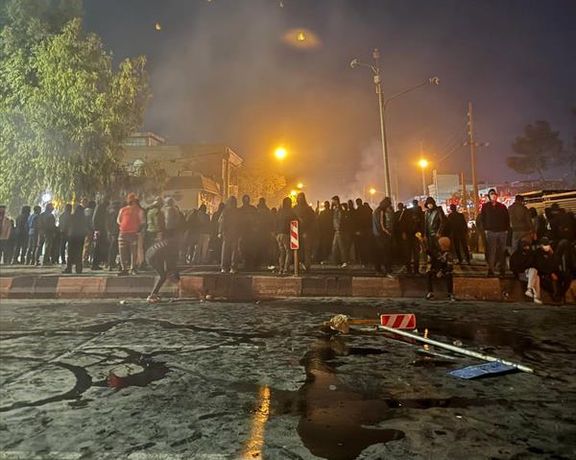

Witnesses told Iran International that security forces prevented injured protesters from receiving medical care at a private clinic in Gilan province in northern Iran during demonstrations earlier this month.
According to the accounts, a doctor in the province had earlier said on social media that he was ready to offer free services such as first aid, stitches and wound care to those hurt in protests.
The witnesses said that on the day of the demonstrations, intelligence agents arrived at the clinic and ordered the doctor to stop seeing patients.
After a brief argument, the agents stayed outside the clinic and told people bringing injured protesters that it was closed, the witnesses said.
The account said the doctor was not allowed to leave the clinic until late at night, effectively keeping him inside.
As a result, many wounded protesters in the area were unable to receive treatment.

Some victims were still breathing among the bodies of dead protesters seen at Tehran’s Kahrizak Forensic Medical Center after a crackdown on protests in the capital, witnesses said in messages sent to Iran International on Wednesday.
According to the accounts, witnesses saw “two piles of bodies” at Kahrizak, some of whom were still breathing, with security forces stacking bodies on top of one another.
Three eye witnesses said security forces used live ammunition and metal pellets during demonstrations in eastern Tehran on Jan. 9, leaving streets “filled with blood.”
They said the shooting took place in the area from Golbarg Street toward Haft-Hoz, adding that it was impossible to film because “bullets and pellets were coming from all directions.”
The witnesses described seeing the body of a naked man lying in a roadside drainage channel.
The eyewitnesses said they were injured but did not seek medical treatment out of fear of arrest or being shot at close range. They added that one of their friends was killed the same night.
They said clinics were overwhelmed with wounded people and that residents searching for missing relatives were forced to step over bodies.
A shopkeeper who sheltered protesters was shot dead by security forces in the southern Iranian city of Shiraz during nationwide demonstrations, people familiar with the matter told Iran International in messages received on Wednesday.
Local sources said Gholamreza Zareh, the owner of the Linda flower shop on Qadamgah Street in Shiraz, was killed on the evening of Jan. 8 after giving refuge to several protesters.
They said that when Zareh later opened his door to check whether the security crackdown had ended security forces immediately shot him in the neck, killing him instantly. The fate of the fleeing protestors remained unclear.

A 19-year-old Iranian protester, Shahab Fallahpour, was killed by security forces during demonstrations in the southwestern city of Andimeshk, people familiar with the matter told Iran International.
The sources said Fallahpour, a wrestler and a resident of the Shohada neighbourhood in Andimeshk, was shot during protests on Parto Street on Friday, January 9. They said he was targeted by sniper fire from a rooftop and that the shooting was carried out without warning.
According to the sources, Fallahpour’s body was buried three days later, in the early hours of January 12, at around 4 a.m., in the presence of his parents, without a funeral ceremony and under the supervision of government forces.
The sources said the family has been pressured and threatened not to speak to the media.

Security forces opened fire during burials for slain protesters in at least two Iranian cities amid nationwide demonstrations, local sources told Iran International, in messages received on Wednesday.
In Abdanan, in Ilam province in western Iran, local sources said security forces attacked people after burial ceremonies and fired metal hunting pellets at mourners, leaving at least 100 people injured and around 50 blinded.
In Jahrom, in Fars province in southern Iran, local sources said security forces fired live ammunition and metal pellets during burial-related gatherings on January 8 and 9, killing at least 14 people and blinding 18 others.
Medical facilities in several Iranian cities are facing shortages of body bags as the number of people killed in nationwide protests rises, witnesses told Iran International, describing a heavy security presence at hospitals and morgues.
In messages received from inside Iran on Wednesday, sources said the shortage has led to the accumulation of protesters’ bodies in hospital halls and morgues, while security forces have intervened in the process of handing over the remains.
They said hospital entrances are being tightly controlled, medical staff and families are under pressure, and the registration of information related to the dead has been restricted, in an apparent effort to prevent the true number of those killed from becoming public.
In Khorramabad, the capital of Lorestan province in western Iran, local sources said around 200 to 250 bodies remained at Ashayer Hospital, with no capacity for proper handling or orderly release.
In Arak, in central Iran’s Markazi province, and in Gorgan, the capital of Golestan province in northeastern Iran, they said the number of those killed exceeded morgue capacity, resulting in delays and restrictions on transferring bodies.
Local sources said similar conditions were being seen in other cities, adding that the measures appeared aimed at concealing the scale of the killings and limiting the flow of information about protest casualties.