A damaged chandelier hangs amid the wreckage of a Tehran apartment hit in Israeli strikes, June 2025
Combative comments by senior officials in Tehran about Iran’s nuclear program have drawn sharp criticism at home and abroad, with analysts warning that the rhetoric makes another round of war on Iran more likely.
During a visit to a nuclear facility on November 2, President Masoud Pezeshkian declared that “Iran will resume its nuclear activity with renewed force,” while reiterating that the country does not seek to build a nuclear bomb.
On the same day, Mohammad Javad Larijani, a former senior adviser to the Supreme Leader and brother of Tehran’s security chief, made an even more provocative claim: “Iran can make a nuclear bomb in a matter of two weeks.”
Though both later walked back their remarks, saying Iran has no intention of producing a bomb, critics argue the damage was done.
The statements, they say, reinforce suspicions among world powers about Tehran’s intentions and could provoke preemptive action from Israel or the United States.
‘Iran and North Korea only’
One of the strongest cautions came from prominent economist Kamal Athari, who questioned the rationale behind such statements in an interview with the moderate daily Arman Melli on Monday.
“In the entire world, only two governments seem to want war for war’s sake: North Korea and a certain faction in Iran. The rest of the world approaches war as an unwanted extension of politics, grounded in national interest,” Athari said.
While criticizing Pezeshkian’s comments, Athari pointed to deeper forces that few dare mention publicly inside Iran.
“(Pezeshkian) inherited only the saddle of the previous government’s dead horse,” he said. “Both the nation and the broader establishment chose him over others merely sitting in the shadow of that saddle, each hoping he would rescue them from the mess they helped create.”
‘No exit strategy’
Some observers believe Pezeshkian’s comments are intended to delay direct or indirect negotiations with the United States—perhaps in the hope that Israeli Prime Minister Benjamin Netanyahu will be unseated in the next election, or that President Trump will lose interest in confronting Iran.
Others see the remarks as symptoms of deeper indecision within the government. In the absence of a coherent strategy, officials appear to shift positions daily—evident in the government’s changing stance on talks with Washington between November 1 and 3.
Political commentator Namvar Haghighi told Iran International, “Iran currently has neither a roadmap forward nor an exit strategy from its crises. The president should be mindful of this before making sweeping declarations about nuclear activity.”
Since Israel’s 12-day war with Iran in June, Tehran has faced mounting setbacks: loss of control over parts of its airspace, restricted access to foreign-held financial assets including cryptocurrencies, and a unified European front aligning more closely with the United States on Iran’s nuclear and missile programs.
Pezeshkian appears either unaware—or unwilling to recognize—that the geopolitical landscape has shifted dramatically since the war.
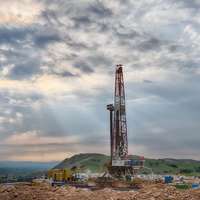
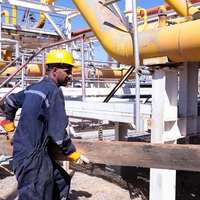
A fire at the Parsian Oil Refinery in Eyvanaki, in Iran’s Semnan province east of Tehran, killed one worker and injured three others on Tuesday, provincial officials said.
The blaze started in a bitumen storage tank at the refinery in the Jannatabad industrial zone and was briefly contained before reigniting, said Hossein Derakhshan, head of the Semnan Red Crescent.
He said firefighting and rescue teams from Eyvanaki, Garmsar, and nearby towns were deployed to the site, and the fire was expected to be fully extinguished within hours.
Iran’s armed forces said on Tuesday that any public remarks about the country’s military or defense cooperation with other nations are invalid unless confirmed by its headquarters, state media reported.
In a statement carried by state television, the General Staff of the Armed Forces said comments by “uninformed or unauthorized individuals” had appeared in recent days and stressed that only official statements from its communications center represent Iran’s position. It urged media outlets to avoid reporting on such issues without coordination.
The warning came after parliament member Amirhossein Sabeti said there had been no disagreement between Iran and its key partners, Russia and China, over weapons deliveries. Sabeti said all weapons or systems that Iran requested and paid for had been delivered.
“There is no weapon we asked for from China or Russia that they did not give us,” he said earlier this week. “On the fourth day of the war, we received several air defense systems from China.”
He added that any delays in receiving equipment were due to domestic factors, not foreign unwillingness. “If there was any delay in delivery, it was from our side, not theirs,” Sabeti said, adding that Russia and China “had no ill intent” and that Iran should make better use of what he described as shared strategic interests.
The statement came amid escalating divisions in Tehran over the country’s reliance on Moscow and Beijing.
Former president Hassan Rouhani and ex-foreign minister Mohammad Javad Zarif have questioned what they call Iran’s overreliance on Moscow, prompting sharp criticism from hardliners.
Parliament Speaker Mohammad Bagher Ghalibaf accused the two of “damaging national interests” after a video surfaced showing Rouhani noting that both Russia and China had supported UN sanctions on Iran in 2010.
Zarif separately clashed with Russian Foreign Minister Sergei Lavrov, accusing Moscow of trying to block the 2015 nuclear deal and of keeping Iran “in a state of controlled isolation.”
Several lawmakers echoed Ghalibaf’s remarks, accusing the former officials of undermining Iran’s strategic partnerships.
Iran’s presidential office said a government-affiliated body is reviewing requests from expatriates described as members of the country’s “benign opposition” who have expressed interest in returning to Iran.
Alireza Khamsian, communications and media adviser to First Vice President Mohammad Reza Aref, told the official news agency ISNA on Monday that the move aligns with President Masoud Pezeshkian’s policy of “national accord,” aimed at bridging divides inside and outside the country.
“Some Iranians abroad, who in recent years have expressed attachment to their homeland and even supported the nation during the recent 12-day war with Israel, have asked to return,” Khamsian said. “Their requests are being reviewed by a competent authority.” He did not name the institution involved.
Khamsian referred to these Iranians as the “so-called benign opposition,” distinguishing them from more hardline anti-government activists.
He said the administration seeks to create conditions for their reintegration, adding that “a beautiful sense of unity” had emerged between citizens inside and outside Iran during the recent conflict.
The comments mark one of the first public indications that the Pezeshkian administration is exploring ways to re-engage with parts of the diaspora historically viewed with suspicion by authorities. Large numbers of Iranians left the country in waves after the 1979 revolution and in the following decades.
Khamsian added that the government is also working to facilitate the return of artists, athletes, and professionals who wish to invest or resume work in Iran.
“Many of these people have a deep affection for their homeland,” he said, citing coordination between the Vice President’s Office, the Ministry of Culture and Islamic Guidance, and other state bodies.
He emphasized that the government’s broader goal was to transform the concept of “national accord” into a social and political discourse, saying the administration “acts in coordination with other branches of power to reduce tension” and “avoid placing unnecessary costs on the system.”
The Pezeshkian government has presented itself as a reform-minded administration seeking pragmatic engagement both at home and abroad. But any potential return of exiled Iranians, especially those with past political activity, would depend on decisions by other state institutions.
Iran’s Supreme Leader said on Monday the 1979 seizure of the US embassy in Tehran was a defining moment of national pride that marked the beginning of a long-standing confrontation between Iran and the United States based on conflicting interests rather than temporary disputes.
Addressing students and officials at a ceremony commemorating the anniversary, Khamenei said the event should be understood “from both a historical and an identity-based perspective.”
“From a historical viewpoint, without doubt, this day will be remembered as a day of pride and triumph for our nation,” he said. “It was a day when our young people stood up without fear to a power that intimidated politicians around the world, and they attacked its embassy with reasoning and purpose. It is a day of honor, a day of victory.”
Khamenei described the embassy takeover as revealing the “true identity of the United States” and said it showed that “the essence of America’s arrogance was to see itself as entitled to dictate to others.”
“The occupation of the embassy clarified the real nature of the United States and also defined the genuine identity of the Islamic movement,” he said. “Our nation already knew the arrogant nature of America, but this incident made it even clearer.”
He linked anti-US sentiment to Iran’s modern history, citing the CIA-backed 1953 coup that overthrew Prime Minister Mohammad Mossadegh. “The American plot on the 28th of Mordad was a major blow to Iran,” he said.
“It toppled the first national government that stood against colonial powers. The Iranian nation has known ever since what a dangerous enemy America can be.”
Rejecting the view that the embassy seizure triggered hostilities between the two countries, he said the conflict “did not begin on the 13th of Aban; it began on the 28th of Mordad.”
He added: “The students uncovered a serious conspiracy against the revolution. The embassy was not an ordinary diplomatic post -- it was a center of plotting and coordination.”
Khamenei said Iran’s differences with the United States were not circumstantial. “The dispute between the Islamic Republic and America is not tactical or temporary. It is a fundamental and structural contradiction,” he said.
“Whenever America can, it acts. It supports those who attack us, it imposes sanctions, it even shoots down a passenger plane. The nature of arrogance and the nature of independence cannot coexist.”
On prospects for future relations, Khamenei said that Iran’s strength was the key to security. “We cannot predict the distant future,” he said. “But today the solution to many problems is to become strong, scientifically, militarily, economically. If the country is strong, the enemy will not dare to attack.”
He added that any improvement in ties would require a fundamental shift in US policy. “America sometimes says it wants cooperation with Iran,” he said.
“Cooperation with Iran is incompatible with supporting the Zionist regime. If one day America abandons that regime, removes its military bases from the region and stops interference, then issues could be reviewed -- but that time is not now.”
Women gather next to an anti-US mural, showing the Statue of Liberty with a severed arm, during the rallies in Tehran, November 4, 2025.
Growing debate over a legacy
While Khamenei defended the embassy seizure as a historic victory, his comments contrasted with those of several political figures who in recent years have described the event as a strategic mistake that complicated Iran’s international position.
Former parliament deputy speaker Ali Motahari said earlier this week that the takeover was “a hasty act influenced by leftist groups” that damaged Iran’s global image and “in the end worked in America’s favor.” He argued that while a short occupation could have been justifiable, prolonging it for 444 days was “unnecessary and damaging.”
Former speaker of parliament Ali Akbar Nategh-Nouri made similar remarks in past years, saying that “in the early years of the revolution there was inexperience and immaturity,” and that the embassy seizure was “a major mistake” that created long-term challenges for Iran’s foreign relations.
“Many of the difficulties we later faced began at that point,” he said, adding that reciprocal measures by Washington, including the freezing of Iranian assets, stemmed from the initial occupation.
At the same time, hardline media and conservative figures have defended the 1979 action, arguing that the embassy was then “a den of espionage” and that concerns about a repeat of the 1953 US-backed coup justified the students’ move.
Accounts from some of the former student organizers have also shed light on internal disagreements at the time.
Former president Mahmoud Ahmadinejad, who represented the University of Science and Technology in student councils in 1979, was among those said to have opposed the embassy seizure -- not on diplomatic grounds, but because he believed occupying the Soviet embassy would have been more significant.
Former hostage-taker Abbas Abdi has confirmed that Ahmadinejad and a small group of others objected to the plan on those grounds.
During an interview in 2024, Ahmadinejad said, "For how much longer do we desire to remain in conflict with the US? Following the revolution, there was potential to resolve matters with the US, but certain individuals occupied the embassy, complicating matters."
In later years, figures such as Abdi and other former participants in the embassy takeover said the event should be viewed in its historical context, arguing that while it was driven by revolutionary fervor and fear of renewed foreign interference, its long-term political consequences were complex.
Analysts say such comments reflect a broader debate within Iran’s political class over the legacy of the embassy seizure and its impact on foreign policy. But Khamenei’s remarks reaffirmed his long-held view that resistance to US influence is central to Iran’s revolutionary identity.
“The United States cannot tolerate an independent Iran,” Khamenei said. “But this nation will never surrender. The path of dignity, independence and faith will continue.”
Iran on Tuesday marked the anniversary of the 1979 seizure of the US embassy in Tehran with state-organized rallies across the country, the first such commemorations since the United States and Israel carried out air strikes on Iranian targets earlier this year.
Crowds gathered across the country waving national flags and portraits of Iran’s leaders to observe what officials call the National Day of Fighting Global Arrogance.
The annual event, organized by state institutions, commemorates the November 4, 1979 takeover of the US embassy by militant students who held 52 Americans hostage for 444 days, leading to the rupture of diplomatic ties between Tehran and Washington.
Marchers, including students, public employees and members of the military, chanted slogans against the United States and Israel in Tehran and major cities.
Effigies of US President Donald Trump and Israeli Prime Minister Benjamin Netanyahu being hanged are displayed during the 46th anniversary of the US expulsion from Iran, in Tehran, November 4, 2025. A scene from a rally in Tehran to mark the anniversary of the 1979 US embassy takeover (November 4, 2025)
State television showed large gatherings in Tehran, Mashhad, Isfahan and Shiraz, describing the turnout as a show of national unity and defiance following the recent confrontation.
In Tehran, organizers also showcased models of Iran’s ballistic missiles and nuclear centrifuges, which state media said symbolized the country’s technological progress and deterrent capability.
In the capital, demonstrators moved from Palestine Square to the site of the former US embassy, where the ceremony concluded with speeches, patriotic songs and the reading of a closing resolution denouncing Western sanctions and reaffirming support for Palestinians.
Models of Iranian ballistic missiles and nuclear centrifuges are displayed near the site of the former US embassy in Tehran during rallies marking the anniversary of the 1979 embassy takeover. (November 4, 2025)
Officials stress independence and unity
Parliament Speaker Mohammad-Bagher Ghalibaf, who joined the rally and delivered the main speech, said the anniversary symbolized Iran’s resolve to remain independent and resist what he called domination by foreign powers.
He said the country’s independence could not be “traded for any concession” and that “Death to America” was a rejection of hegemony, not hostility toward a nation.
Symbolic coffins draped in Israeli flags are carried during a rally in Tehran marking the anniversary of the 1979 US embassy takeover (November 4, 2025)
Ghalibaf cited the 1953 coup against Prime Minister Mohammad Mossadegh and the 1964 exile of Ayatollah Ruhollah Khomeini as examples of past interference, arguing that Iran’s self-reliance in defense, science and technology was its safeguard against renewed pressure.
Former Revolutionary Guards commander Mohsen Rezaei told reporters that Iran’s message to adversaries was one of “resistance and readiness,” saying the nation would respond firmly to any renewed threat.
At the close of the Tehran rally, a statement read aloud by organizers reaffirmed Iran’s commitment to what it called “rational resistance” against Western powers and support for Palestinians in Gaza.
The text rejected any compromise with the United States or Israel, urging national cohesion and stronger economic management at home.
The declaration also stressed that Iran’s defense and nuclear program were integral to national sovereignty and called on government institutions to curb inflation and address public grievances.
A model of a centrifuge is displayed during the rallies in Tehran, November 4, 2025.