• العربية
  • فارسی
BrandBrand
  • Iran Insight
  • Politics
  • Economy
  • Analysis
  • Special Report
  • Opinion
  • Podcast
  • Live TV
  • Iran Insight
  • Politics
  • Economy
  • Analysis
  • Special Report
  • Opinion
  • Podcast
  • Live TV
  • Theme
  • Language
    • العربية
    • فارسی
  • Iran Insight
  • Politics
  • Economy
  • Analysis
  • Special Report
  • Opinion
  • Podcast
  • Live TV
All rights reserved for Volant Media UK Limited
volant media logo

Araghchi tells MPs IAEA deal follows law, critics demand text be public

Sep 15, 2025, 10:16 GMT+1Updated: 00:41 GMT+0
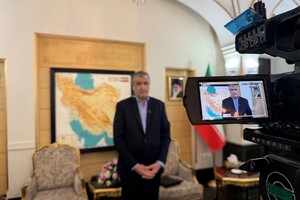
File photo of Iran’s Foreign Minister Abbas Araghchi at the parliament

Iran’s Foreign Minister Abbas Araghchi told lawmakers in a three-hour closed-door session that the new cooperation deal with the UN nuclear watchdog cannot be published due to diplomatic norms, the Farhikhtegan daily reported Monday, after some MPs demanded its release.


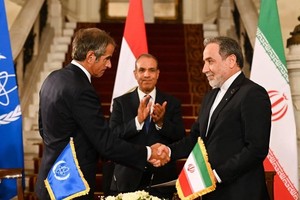
Members of parliament’s National Security and Foreign Policy Committee questioned whether the agreement with International Atomic Energy Agency (IAEA) chief Rafael Grossi, signed last week in Cairo, fully complies with a law passed by parliament that restricts nuclear cooperation.

“Some lawmakers asked whether the government had the authority to sign the agreement and whether parliament’s legislation was observed,” one participant in the meeting, who declined to be named, told the state-run Farhikhtegan daily.

“Mr. Araghchi responded that the negotiations and the agreement had been approved within the framework of the Supreme National Security Council.”

Scope of cooperation

According to accounts published by Iranian media, Araghchi explained that the agreement distinguishes between nuclear facilities that have been bombed and those that remain intact.

Sites such as the Bushehr power plant and Tehran’s research reactor would be subject to requests for inspection on a case-by-case basis, reviewed by the Supreme National Security Council (SNSC).

“For facilities like Fordow, Natanz, and Isfahan that were targeted, Iran must first conduct safety and environmental checks,” the participant said. “Reports will only be sent to the IAEA once approved by the SNSC. Any subsequent verification steps will also need council authorization.”

Araghchi told lawmakers that the agreement cites UN resolutions and affirms that attacks on nuclear facilities are illegal under the IAEA statute and international law.

He said the text also explicitly refers twice to Iran’s parliamentary law governing nuclear cooperation, underscoring that inspections cannot proceed without national approval.

Dispute over confidentiality

Some MPs urged the government to publish the text. Araghchi replied that releasing the agreement would contravene diplomatic norms.

“The minister said he had brought the text to the session for review by the committee’s leadership and that it had been circulated to parliament earlier in the day,” Farhikhtegan reported.

While some lawmakers expressed unease, others said the session clarified ambiguities.

Behnam Saeedi, a committee member, told reporters: “Representatives raised concerns that the IAEA has been influenced by Israel and the United States in its reporting. The minister explained the text in detail, and while not all were fully satisfied, many concerns were addressed. The important point is that Iran’s red lines and parliamentary law were observed.”

The Cairo deal was reached after June airstrikes by Israel and the United States damaged several Iranian nuclear facilities, forcing inspectors to withdraw. Grossi has said the agreement covers all declared sites, including those attacked, but that practical arrangements will require further negotiations.

Hardline MP Hamid Rasaee separately criticized the deal on Sunday, saying it lacked explicit safeguards against the UN “snapback” mechanism for restoring sanctions. He argued that Araghchi’s public statements had overstated the protections.

Shortly after, the SNSC confirmed that its nuclear committee had approved the agreement and that Tehran would provide reports to the IAEA only after council review.

Most Viewed

Iran's oil output plunges below pre-war domestic needs
1
ANALYSIS

Iran's oil output plunges below pre-war domestic needs

2

Cash-strapped Iranians put multiple organs up for sale

3

Iran state TV says modified missile could reach US base in Britain

4

Iran threatens Armenia as US-run Trump Route clears Yerevan’s parliament

5
INSIGHT

Iranian hardliners urge Iraq to push back against US pressure

Banner

Spotlight

  • Canadian MP to flag paintball gun findings after Iran protest blindings
    PODCAST

    Canadian MP to flag paintball gun findings after Iran protest blindings

  • Locks for cash: inside Iran's booming hair trade

    Locks for cash: inside Iran's booming hair trade

  • Seven years after ‘Bloody November,’ Iran rations gasoline it dares not reprice

    Seven years after ‘Bloody November,’ Iran rations gasoline it dares not reprice

  • Iranians and Israelis can defeat the IRGC together, says Arab-Israeli activist
    ONE-ON-ONE

    Iranians and Israelis can defeat the IRGC together, says Arab-Israeli activist

  • Iran's oil output plunges below pre-war domestic needs
    ANALYSIS

    Iran's oil output plunges below pre-war domestic needs

  • Iranian hardliners urge Iraq to push back against US pressure
    INSIGHT

    Iranian hardliners urge Iraq to push back against US pressure

Banner
Banner
Banner
Banner
Banner
Banner
  • Khamenei's office rejects calls to halt uranium enrichment, missile program

    Khamenei's office rejects calls to halt uranium enrichment, missile program

  • Iran to table resolution against attacks on nuclear sites at IAEA conference

    Iran to table resolution against attacks on nuclear sites at IAEA conference

  • Hardline MP shares details of Iran-IAEA deal, says it won't block snapback

    Hardline MP shares details of Iran-IAEA deal, says it won't block snapback