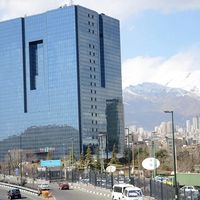
Tehran on Wednesday denied a Reuters report citing two Iranian sources saying the country had agreed to pause uranium enrichment for a year in exchange for the US unfreezing of funds.
"The continuation of enrichment in Iran is a non-negotiable principle," foreign ministry spokesman Esmaeil Baghaei.
"Reuters' new claim is the same kind of fabrication that has been repeatedly denied in the past—and proven to be false," he said.

Widespread power outages are crippling daily life across Iran, according to voice messages sent to Iran International by residents in cities including Tehran, Shiraz, Ahvaz and others.
Some of the accounts describe isolation in sweltering apartments, lack of essential services and increasing anger over government inaction.
In Ahvaz, where daytime temperatures top 45°C, one man said midday cuts had left families without air conditioning.
A resident of Pardis near Tehran reported being stranded in a high-rise: “On the 14th floor, we’re cut off from the world for two hours a day—no power, no water, no communication.”
In Shahreza in Isfahan province, a woman filmed a gas station rendered defunct by power cuts.
Iran faces a shortfall of nearly 20,000 megawatts, a crisis fueled by extreme heat, dwindling hydropower, and years of underinvestment.
Messages show burned-out appliances, food spoilage, and even fire damage. “This fire started because of power flickers,” said one man, gesturing to a scorched storefront. “This is one of the blessings of the Islamic Republic.”
Some residents complained about bathing children with bottled water and elderly citizens stuck in buildings without functioning elevators or water pumps.
“No bread, no water, no electricity, no internet, no clean air,” one voice said. “This already is hell.”
The outages have hit mobile networks and small businesses alike, with dead batteries at relay stations shutting down service and shopkeepers counting losses. “The fuse blew. Everything spoiled. I paid a heavy price,” said a Gelato shop owner.
Despite vast oil and gas reserves, Iran’s government has failed to upgrade infrastructure or build renewables.
Authorities continue to cite illegal cryptocurrency mining as a strain. Energy Minister Abbas Aliabadi said such operations now consume over 1,000 megawatts—about 5% of the shortfall.
But the broader collapse in services continues. In high-rise buildings, electricity cuts disable water pumps, leaving residents without running water. “We haven’t showered in two days,” said a woman in one video. “We use bottled water for the toilet. At least open the public baths.”
US president Donald Trump says he told Israeli prime minister Benjamin Netanyahu that attacking Iran would be "inappropriate" at this point as a deal is very close.
"That could change at any moment," Trump told reporters on Wednesday, stressing that he did not trust Tehran.
"We're having some very good talks with Iran. We'll find out whether that means anything, but we're having good talks," he said.
The sixth round of talks between the foes is yet to be scheduled, but the President sounded confident that an agreement may be reached within weeks.
He warned, however, that the capability to disrupt Iran's nuclear program is there and can be deployed in no time.
Iran may agree to pause enrichment for a year if the United States releases frozen funds and recognizes Tehran's right to enrich uranium, Reuters says citing Iranian officials.
The sources hinted at a "political understanding" between Tehran and Washington that could see the former halt refining uranium for a year, ship part of its highly enriched stock abroad or convert it into fuel plates for civilian nuclear purposes.
Reuters quoted one source as saying that this "has not been discussed yet" during the talks with the US negotiating team.
Israel on Thursday rejected a report in the New York Times that Prime Minister Benjamin Netanyahu has been threatening to disrupt talks on a nuclear deal between the United States and Iran by striking Iran's main nuclear enrichment facilities.
Netanyahu's office issued a statement in response to the article which said simply: "Fake news."
The New York Times has responded by saying it stood by the report, according to Reuters.
"The New York Times reporting on this matter is thorough and based on discussions with people directly familiar with the matter. We remain confident in what we published," Reuters reported citing a written statement from the paper

Iran’s Supreme Leader Ali Khamenei denied any systematic corruption in Iran in a speech on Wednesday amid days of union protests and after a harsh critique of Tehran by US President Donald Trump this month.
“Some have tried to prove that corruption in the Islamic Republic is systemic. That is a lie,” Khamenei said. “Corruption is like a seven-headed dragon that won’t vanish easily, but the system itself is healthy.”
Addressing provincial governors in Tehran, he called on people in power to avoid conflicts of interest and personal business ventures, saying corrupt officials face double divine punishment.
His remarks follow a withering speech by US President Donald Trump in Riyadh this month in which he accused Iran’s leadership of theft and mismanagement.
"Iran's leaders have focused on stealing their people's wealth to fund terror and bloodshed abroad. Most tragic of all, they have dragged down an entire region with them," Trump said.
The latest Corruption Perceptions Index from watchdog Transparency International ranks Iran 151 out of 180 countries in terms of public sector corruption.
Iranian President Masoud Pezeshkian responded to Trump last week in a speech to parliament, accusing the US of hypocrisy and exploitation.
“The master thieves of the planet who rob every country now accuse others,” he said. “They came here to plunder.”
The Supreme Leader's remarks come as nearly daily protests linger across Iran.
Union members from the trucking, baking and other sectors are coordinating in ongoing nationwide strikes while pensioners have held scattered demonstrations over unpaid benefits in recent days.
Almost a third of Iranians struggle to afford basic necessities and millions live below the poverty line amid sharply rising inflation and stagnant wages.