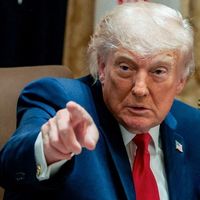
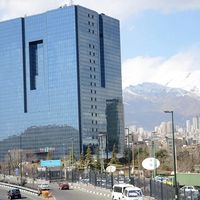
Iran’s rial rises to highest value since Trump’s return to White House


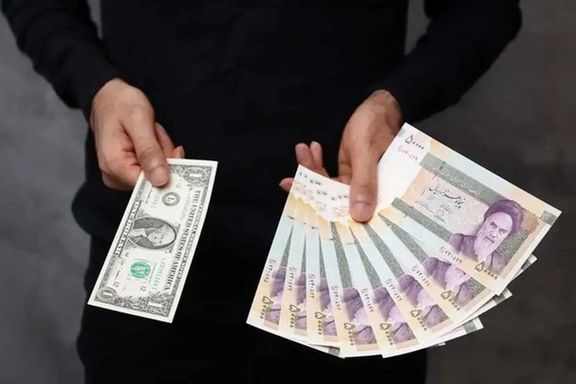
Following the second round of Tehran's talks with the United States, Iran's currency rial rallied to 824,000 per dollar on Saturday, marking its lowest rate since Donald Trump returned to office in January.
The currency had previously peaked at 1,058,000 on April 8, amid heightened tensions and uncertainty.

Former US secretary of state Mike Pompeo has warned against reaching what he called a “fake deal” with Iran, arguing that any agreement must go beyond nuclear enrichment limits and lead to the complete dismantling of Tehran’s nuclear and regional capabilities.
In an article published by The Free Press, Pompeo set out three conditions for an agreement with Iran.
First, he said Iran must “fully and verifiably dismantle all uranium enrichment sites and destroy all equipment and components connected to enrichment activities,” including allowing the International Atomic Energy Agency unannounced, permanent access to any site.
Second, Iran would need to end all support for its regional allied groups and “turn over to the United States the senior leadership of al-Qaeda, which lives comfortably in Iran.”
Third, Pompeo said Iran should dismantle external operations of the Revolutionary Guards (IRGC) and stop threatening Israel.
He also wrote that if no agreement is possible, military action remains a viable alternative. “President Trump has made clear that there is another option in the event there is no deal to be made: a military attack on Iran,” Pompeo wrote.
"Such an attack could set back the Iranian nuclear program for a significant period," he added.
Pompeo rejected the framing that the US faces only two choices — war or a deal. “This is propaganda,” he wrote.
"It is a false choice propagated by those who would prefer to coddle the regime in Tehran and cut a deal that will ensure that Iran obtains a full-on nuclear weapons program over time," he added.
Israel supports the complete dismantling of Iran’s nuclear program based on the Libyan model, but other options remain open if diplomacy fails, Prime Minister Benjamin Netanyahu’s spokesman was quoted as saying in an interview with Channel 12’s Meet the Press on Saturday.
“If that’s accepted, it would be welcome,” Omer Dostri said. “War is not the goal; it’s a means.”
Dostri said that Netanyahu remains committed to stopping Iran from acquiring a nuclear weapon. “If this can be achieved through time-bound tough diplomatic efforts and sanctions that lead to that outcome, then that is what will happen,” he said. “If not, there are other ways.”
“For over a decade, the prime minister has led efforts that have, in practice, prevented a nuclear Iran. They still have not acquired a nuclear weapon, and Israel will not allow them to achieve it,” he added.

Israel's foreign minister says his country would accept an agreement between Tehran and Washington that would block Iran's pursuit of a nuclear weapon even though he believes the Islamic Republic would not comply with its obligations.
"Israel is committed to the objective of preventing Iran from having nuclear weapons. If that objective can be achieved by a diplomatic path, it is accepted," The Telegraph reported citing Gideon Saar.
Saar at the same time warned that Tehran cannot be trusted. “Iran always mocked its international obligations."
He said he does not exclude the option that "they will try to get some partial agreements, to avoid getting to the necessary solution," apparently referring to Donald Trump's threats to attack Iran if nuclear talks fail.
"We are speaking directly with the Americans. We’re also speaking with European friends. I think we all have the same objective. Iran is in a position of relative weakness, and this should be used to achieve the objective, and not to let Iran escape for the sake of convenience, to waste time until the circumstances change," Saar was quoted as saying.

Iranian Foreign Minister Abbas Araghchi is scheduled to deliver a virtual keynote address at the Carnegie International Nuclear Policy Conference on Monday, in what observers say signal Tehran's intent to engage directly with the US policy community amid ongoing nuclear negotiations with the United States.
Longtime US foreign policy journalist Laura Rozen highlighted the significance of Araghchi's upcoming address, saying on X, "It would seem a sign of Iran interest in trying to speak to US elite policy audience at time when tentative engagement underway with the Trump admin."
White House special envoy Steve Witkoff met Rafael Grossi, the UN nuclear watchdog's director general in Rome on Saturday morning before the second round of nuclear talks with Iran, the Wall Street Journal and Axios reported citing sources.
Asked about the presence of Grossi in Rome, Iran's Foreign Minister told reporters, "Talks do not require IAEA Director General's presence now, but exchanging expert views including with Grossi can be helpful."
"His awareness of the process is positive; IAEA will have an important role later," the Iranian top diplomat added.