Iran blames US pressure for nuclear standoff

Iran has accused the United States of obstructing progress on the nuclear issue through pressure exerted on the International Atomic Energy Agency (IAEA).

Iran has accused the United States of obstructing progress on the nuclear issue through pressure exerted on the International Atomic Energy Agency (IAEA).
Mohammad Eslami, the head of the Atomic Energy Organization of Iran (AEOI), said on Monday that US pressure on the IAEA is creating obstacles in resolving the nuclear file.
“Grossi says that if Iran wants to resolve its nuclear issue, it must negotiate with the Trump administration, meaning it is the pressure from the US government on the agency that is creating disturbances,” Eslami said at an export technology meeting.
Eslami argued that even the 2015 nuclear deal, known as the JCPOA, which resulted from years of negotiations with various world powers, was ultimately undermined by the US.
He cited Israeli Prime Minister Benjamin Netanyahu's memoirs as evidence, claiming that he explicitly said in his book that the JCPOA was a loss and that he worked to convince President Donald Trump to withdraw from the agreement.
His remarks come as the IAEA continues to express concerns about its ability to monitor Iran's nuclear activities effectively.
IAEA chief Rafael Grossi, speaking at the World Economic Forum in Davos last week, said, "We are not inspecting at the levels or at the places that we believe we should be inspecting.”
Grossi also highlighted that Iran has accumulated approximately 200 kg of uranium enriched to up to 60% purity, a level dangerously close to the 90% needed for weapons-grade material.
While the IAEA has no concrete evidence of an active Iranian nuclear weapons program, something which Tehran also denies, Grossi said this month that Tehran is not fully cooperating with the agency.
“We have not been having the full cooperation of Iran in clarifying a few important things about the past and perhaps the present activities," he said, as around one third of the inspectors remain banned by Tehran.
UN Secretary-General Antonio Guterres has also called on Iran to definitively renounce nuclear weapons.





Iran’s Deputy Foreign Minister for Political Affairs Majid Takht-Ravanchi said on Monday that Tehran is "engaging and consulting" regarding President Donald Trump's policies toward Iran and has ideas and plans in place to address them.
Speaking to the semi-official ISNA news outlet, Takht-Ravanchi emphasized that Iran will not negotiate on matters beyond its nuclear program, possibly alluding to US demands that Tehran cease interference in regional affairs.
The deputy foreign minister also revealed divisions among the original signatories of the 2015 nuclear deal, known as the JCPOA, regarding Russia’s involvement in future negotiations. France, the United Kingdom, and Germany—the E3—appear to oppose Moscow playing a significant role in talks to either revive the JCPOA or draft a new agreement.
This stance aligns with the European Union’s broader efforts to diplomatically and economically isolate Russia.
Iran has so far held two rounds of what it describes as “consultations,” rather than negotiations, with the E3 in December and January.
While President Trump has yet to articulate his approach toward Iran, it is widely believed he will strengthen sanctions to pressure Tehran into talks favorable to Washington.
Iran engaged in 18 months of indirect negotiations with the Biden administration between 2021 and 2022 to restore the United States’ participation in the JCPOA after Donald Trump unilaterally exited the agreement in 2018, imposing harsh sanctions on Iran. However, the Vienna talks ended without a deal, particularly after Russia’s 2022 invasion of Ukraine, which fueled speculation about whether Tehran was genuinely interested in an agreement or merely seeking to ease sanctions.
Takht-Ravanchi reiterated Iran’s official stance that Trump’s “maximum pressure” campaign had failed. “They even harbored the illusion that a few months after the US withdrawal from the JCPOA and the imposition of multiple pressures, Iran would eventually relent and agree to a deal based on their demands. As noted, this did not happen, proving that the policy of maximum pressure on Iran has failed,” he said.
However, many media outlets and social media users in Iran highlight the severe economic crisis gripping the country since 2019, following the enforcement of full US oil sanctions.
Iran’s currency has lost 95% of its value since 2018, while inflation has averaged around 40% annually over the past five years. An estimated 20-30 million Iranians have fallen below the official poverty line, defined as a $450 monthly income for a family of three. Despite this economic hardship, Iran has managed to sell over $100 billion worth of oil to China since 2021, partly due to a more relaxed enforcement of Trump-era sanctions under the Biden administration.
Takht-Ravanchi dismissed claims that the Islamic Republic’s influence has weakened over the past six months due to regional developments, including setbacks for Hezbollah and the fall of its ally Bashar al-Assad in Syria. These events have fueled speculation that Tehran is now in a weaker position ahead of any potential future talks with the United States.
“The Middle East is constantly changing, and today’s circumstances may not define tomorrow’s reality,” Takht-Ravanchi argued. “Those who take a deeper look at developments in West Asia agree that conclusions should not be drawn based on the fluctuations in events in the region.”
The senior diplomat, who previously served as Iran’s ambassador to the United Nations in New York, acknowledged uncertainty about Trump’s next moves. "At the moment, it is not entirely clear what Trump's policy toward Iran is, and we must wait for this policy to become defined," he remarked.
The Iranian government stressed that any decisions on potential nuclear talks would be made within the framework of the Supreme National Security Council, in a nod to the conservative establishment.
The remarks from the spokeswoman of the relatively moderate government appeared aimed at reassuring hardliners that any talks will be subject to strict oversight and not diverge from the priorities of Supreme Leader Ali Khamenei.
President Masoud Pezeshkian’s said earlier this month he was ready to engage in talks with the US administration of Donald Trump.
However, the move prompted questions within Iran about whether he had higher-level approval for such an initiative.
Government spokeswoman Fatemeh Mohajerani addressed domestic concerns, particularly from hardliners wary of negotiations with the West, emphasizing the established and controlled nature of the decision-making process.
"In important matters such as the nuclear issue, the matter is raised and reviewed in the Supreme National Security Council (SNSC), and the approvals of the council also specify what path must be followed for implementation," Mohajerani said in an interview with ILNA news agency on Sunday.
Mohajerani further urged against internal political disputes affecting foreign policy: "We should all be aware that foreign policy issues and national issues in general should not become an arena for factional and transnational disputes. We must proceed with consensus and agreement on foreign policy issues."
The SNSC is tasked by the Constitution to define national security and defense policies within the framework set by Khamenei.
The Supreme Leader appoints the SNSC secretary and holds final approval power over all SNSC decisions, placing him and the council at the center of Iran's foreign policy apparatus.
The SNSC formulates Iran's nuclear policy, subject to the Supreme Leader's ratification. The SNSC secretary also led nuclear negotiations until 2013, when the responsibility was assigned to the foreign ministry.
In recent weeks, several politicians and commentators in Iran have indicated that President Masoud Pezeshkian has received approval from the Supreme Leader and the Supreme National Security Council to initiate negotiations with the United States despite the two nations breaking ties in 1980.
However, none of the authorities have officially confirmed that they have authorized any such negotiations with the United States regarding Iran's nuclear program or other contentious issues.
Pezeshkian has tacitly conveyed Tehran's willingness to engage in talks with the US, but Khamenei’s hardline allies have strongly criticized both his remarks and those of other officials who advocate for talks.
Such discussions in Iran come as the International Atomic Energy Agency (IAEA) continues to express concerns about the level of access its inspectors have to Iranian nuclear facilities.
IAEA chief Rafael Grossi, speaking at the World Economic Forum in Davos last week, said, "We are not inspecting at the levels or at the places that we believe we should be inspecting.”
He also highlighted that Iran has accumulated approximately 200 kg of uranium enriched to up to 60% purity, a level dangerously close to weapons-grade.
While Grossi acknowledged the IAEA has no concrete evidence of a current Iranian nuclear weapons program, he reiterated that Tehran is not fully cooperating with the agency.
UN Secretary-General Antonio Guterres also addressed the issue at Davos, calling on Iran to definitively renounce nuclear weapons and improve relations with its regional adversaries and the United States.
"The most relevant question is Iran and relations between Iran, Israel and the United States," Guterres said. "Here my hope is that the Iranians understand that it is important to once and for all make it clear that they will renounce to have nuclear weapons, at the same time that they engage constructively with the other countries of the region."
A member of Iran's Assembly of Experts has condemned the idea of potential talks with the US, stressing that resistance against Washington is a core principle of the Islamic Republic.
"Like Gaza, we too must resist the US," Ahmad Khatami, who also serves as Tehran's interim Friday prayer leader, said on Saturday while speaking at a mosque in Kashan, central Iran.
"I am confident that as long as the people stand firm, they will take the dream of negotiating with the US to their graves," the ultra conservative cleric added.
The US and Iran have not had diplomatic ties since 1980 and in recent days, leaders at Friday prayers across Iran have delivered strong rebukes of US policies.
Earlier, Khatami said that the Islamic Republic's founder Ruhollah Khomeini had labeled the US as the "Great Satan," a sentiment which he said was consistently reaffirmed by Supreme Leader Ali Khamenei.
Khatami argued that the primary aim of the US in seeking talks was "a means to confront the Revolution.”
Ahmad Alamolhoda, Mashhad's hardline Friday prayer leader, has also criticized those advocating for dialogue with the West.
While Iranian hardliners reject overtures from Washington, moderate voices within the country have pointed to potential openings under Trump’s renewed tenure.
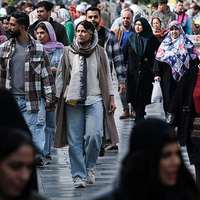
As Iran's fiscal year draws to an end in March, the government and parliament grapple with the challenge of raising wages in line with an inflation rate of 40% that has pushed millions of workers to poverty.
Raising wages would be fraught with challenges. The heavily dominant government sector lacks the funds to pay higher wages, while quasi-governmental and private enterprises could face bankruptcy if they attempt to double workers’ pay.
But why is doubling wages even being considered? Ordinary workers currently earn less than $150 a month, while official estimates indicate that a family of three needs at least $450 a month to cover basic necessities.
This disparity stems from persistent inflation, averaging 40% annually over the past five years. Since early 2018, Iran's current has plummeted twentyfold, while wages have increased less than eightfold.
Economists warn, however, that doubling wages is not a viable solution. The government cannot afford the increases, and if it resorts to printing money to meet the demand, inflation will only worsen.
Morteza Afqah, an economics professor, told the conservative Nameh News website in Tehran that Iran’s economic crisis cannot be solved through purely economic measures because the root cause lies in its foreign policy. He argued that the only path forward is to reach agreements with the United States and Europe on nuclear and other contentious issues. According to Afqah, sanctions relief is essential before Iran can even consider sustainable economic solutions.
Top decision-makers have acknowledged the severity of the economic crisis in public, emboldening some media outlets and commentators to be increasingly vocal about the urgent need to strike deals with the West.
Ahmad Zeidabadi, a prominent writer and commentator in Tehran, expressed the frustration of many in a tweet on Thursday. Referring to insiders who suggest they are willing to “negotiate with the devil” to save the Islamic Republic but remain opposed to talks aimed at rescuing the economy, Zeidabadi warned that this mindset could further anger a public already bearing the brunt of inflation and hardship.
Similarly, Sadeq Zibakalam, another well-known commentator, reminded his followers in a post on X that over a decade ago, the head of Iran’s nuclear program had promised to build five nuclear reactors for energy production. “
Where are the reactors?” he asked, noting that nothing materialized while Iran has lost hundreds of billions of dollars to sanctions imposed for its nuclear activities. “It’s time to negotiate,” he urged the government.
Despite these calls for action, Iran’s Supreme Leader has yet to signal any willingness to allow direct talks with the United States or to compromise on key issues. Meanwhile, US President Donald Trump has not officially outlined his policy toward Tehran, though his aides have indicated a tough stance on enforcing sanctions.
With the economy in crisis and public discontent rising, Iran’s leadership faces mounting pressure to make difficult decisions that could reshape the country’s trajectory. Whether they choose to engage with the West or continue their current path remains to be seen, but the stakes could not be higher for the Iranian people.
President Donald Trump said on Thursday that he hoped a deal over Iran's nuclear program would make it so that the United States did not have to support an Israeli attack on Iran.
Asked by a reporter in the Oval Office whether he would support Israel striking Iran's nuclear facilities, Trump said: "Obviously, I'm not going to answer that question."
"It would really be nice if that could be worked out without having to go that further step ... Iran hopefully will make a deal, and if they don't make a deal, I guess that's okay too."
Without elaborating, Trump said he would be meeting various "very high-level people" in the coming days to discuss the Iran dossier.
Trump has long opposed foreign wars but has adopted a hard line on Iran, beefing up sanctions on its oil exports in his first term and pulling out of an international deal on Tehran's disputed nuclear program.
Iran has denied seeking a nuclear weapon but Israel has long contended that a bomb in the hands of its arch-enemy poses an existential threat.
Trump has previously said that Iran cannot be allowed to have a nuclear weapon but has also maintained Washington should not pursue regime change.
A correspondent from Israel's Channel 12 quoted a Trump administration official as saying Trump is opposed to the idea of an Israeli strike and believes in a deal.
The President is alarmed at the idea of an attack on Iran, Yaron Avraham cited the official as saying. "He will want to reach a very restrictive deal that would stop Iran from obtaining a nuclear weapon, and he believes he can reach an understanding with Iran."
"Moreover, he believes the Iranians will run to the negotiating table under his leadership.”