Flash Floods In Iran’s Sistan-Baluchestan Leave Region In Despair
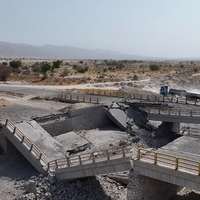
Flood-stricken regions in the southeastern province of Sistan-Baluchestan
Recent floods have devastated the southeastern province of Sistan-Baluchestan, causing massive infrastructural damage leaving hundreds of thousands of residents without critical supplies.
According to Moeineddin Saeedi, the lawmaker representing Chabahar in the Iranian parliament, the floods have "broken the back of the people," with the death toll rising and critical damage to the region's infrastructure, including roads, electricity, and water systems.
He said "transit and rural roads in some districts have been destroyed up to 70 percent, and water has entered many homes." On the ground, activists have reported a higher toll than the government is currently reporting, with at least 18 deaths due to the flash floods, the government announcing around 10.
The situation is worsening as Hossein Zafari, spokesperson for the Crisis Management Organization, disclosed that approximately 300 villages in the south are now cut off, with significant disruptions to their water supply and risk of displacement on the rise. Just last month, over half a million were displaced from the region due to devastating floods. Farmland has been flooded and livestock submerged by the rains battering the area, further jeopardizing the already impoverished population.
Reports from locals and various social media posts have highlighted a delay in government-led rescue operations, with essential aid reaching the affected areas slowly, if at all. This lack of support has led to shortages of water and food, exacerbating the difficulties for those already suffering from the impacts of the second major flood in recent months.
Adding to the dire situation, escaped short-snouted crocodiles from local ponds now pose new threats to the safety of the flood-affected communities.
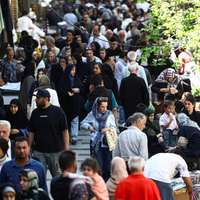
Critics are blaming the recurring devastation on chronic neglect of infrastructure maintenance, including insufficient river dredging and failing urban water systems in the region which is Iran's poorest and home to nearly million people.
Home to a largely Sunni minority, the Shia government has long neglected the province which has borders with Afghanistan and Pakistan.
Iran is grappling with soaring food prices amidst economic turmoil and the devaluation of the rial compounded by Iran-Israel tensions.
According to reports from Iran's state-run Khorasan newspaper, the cost of essential food items has skyrocketed since the beginning of the Iranian New Year in March 2024, coinciding with the month of Ramadan. Beans have seen a staggering 30% increase in price, while red meat prices have surged by 25%. Additionally, summer foods have seen a remarkable 50% hike, with rice and several other items following suit with increases ranging from 10% to 15%.
Earlier in April, in an interview with so-called reformist news site Entekhab, Reza Kangari, the head of the Tehran Provincial Union of Food Banks, also highlighted the recent significant rise in food prices. Kangari stated that “some food items have seen a 30% rise" and attributed the rise to the depreciation of the rial, supply shortages, and subsequent price gouging.
The root cause of this alarming price surge lies in Iran's faltering economy, exacerbated by the continuous devaluation of the Iranian rial. The rial has continuously fallen since the inception of the Islamic Republic in 1979, but it turned into a steep fall in 2018 when the United States withdrew from the JCPOA nuclear deal, demanding its revision. Oil export sanctions and international banking restrictions imposed by the Trump administration badly hurt Iran’s oil-dependent economy.
The Iranian rial has witnessed a sharp decline, losing over 30% of its value against major currencies since the onset of January this year. Additionally, following Iran's military and drone attack on Israel on April 13, the rial experienced an unprecedented downfall, with the dollar surpassing the 700,000-rial threshold.
Furthermore, Iran's economy has been besieged by a prolonged period of high inflation, with rates surpassing 40% for the past five years. Additionally, Iran's substantial state debt and liquidity challenges contributed to the devaluation of the rial. This devaluation has had a cascading effect on the prices of essential food items. Since President Ebrahim Raisi assumed office in August 2021, Iran's liquidity has almost doubled, fueling rampant inflation that surged to 47% in the last fiscal year.
Despite the government's recent announcement of being committed to addressing the issue of food security, the relentless upward trajectory of food prices has only served to compound the economic woes faced by ordinary Iranians, pushing many further into financial precarity.
In the lead-up to Norouz, Iranian New Year on 20 March, according to messages received by Iran International Iranians lamented a sharp decline in their purchasing power, with essentials like rice, red meat, and dairy vanishing from household budgets.
While external factors such as US sanctions undoubtedly play a significant role in Iran's economic challenges, domestic policies and priorities also come under scrutiny.
For instance, sanctions resulted in a significant decrease in Iran-India trade, plummeting by as much as a third. Rice, which constitutes the primary export from India to Iran, saw a sharp decline of 34%, falling from $2 billion in 2022 to $723 million in 2023.
The consistent reluctance of Iran's leadership, Supreme Leader Ayatollah Ali Khamenei, to address fundamental problems such as the nuclear issue has exacerbated the country's economic isolation and hindered efforts to alleviate the plight of its citizens.
As economic woes deepen with soaring food prices, Iranian citizens face dwindling options and rising prices, painting a bleak picture ahead.
A group of students at Tehran’s from Amirkabir University (April 2024)
Many students at Amir Amirkabir University of Technology in Tehran embarked on a strike on Sunday, after morality police banned over 200 students from entering the campus.
The protest was announced through the university students' independent newsletter on Telegram. It serves as a stand against suppression and in solidarity with peers denied entry to the university for non-compliance with mandatory hijab regulations.
A few months after nationwide protests in 2022-2023, the Iranian government led by religious hardliners resumed harsh enforcement of mandatory hijab. The protests were triggered by the death of a young woman, Mahsa Amini, in morality police custody after she was arrested for "improper hijab."
Issued by student groups, the strike call underscores the imperative of safeguarding students' fundamental rights. It underscores the university's failure to acknowledge these rights, particularly regarding hijab policies, with students contending that the institution's identity hinges on the presence and liberty of its student body.
Reports from Iran International on Saturday documented incidents where security personnel at Amir Kabir University obstructed both male and female students from entering based on their attire. Female students were reportedly compelled to wear chadors (long black veils), while male students faced restrictions on donning T-shirts, short-sleeved garments, or sports attire.
Images circulating on social media depicted students gathered outside Rasht Gate, the university's northern entrance. The students' newsletter referenced the images, reporting that at least 20 students were barred from entry due to insufficient hijab compliance at Rasht Gate, with similar incidents reported at other entrances.
In their announcement, students held the University's executive board and Hafez Shahbazi, head of Amir Kabir University's security, directly accountable for the crackdown referring to him as a "mercenary”. Students from diverse faculties, including computer engineering, energy engineering, and industrial engineering, rallied behind the call to boycott classes, with reports indicating low attendanceon Sunday.
This protest forms part of a broader movement against mandatory hijab enforcement in Iran. Since the introduction of Project Noor to enforce mandatory hijab laws on Saturday, 13 April, there has been a conspicuous escalation in the presence of police forces, Basij, and plainclothes officers tasked with enforcing hijab regulations.
Furthermore, in a bid to enforce hijab regulations, certain universities such as Alzahra University in Tehran have equipped gates with facial recognition technology, with entry denied if their appearance fails to adhere to intensified hijab laws.
Additionally, similar crackdowns on students have been reported in recent days at the University of Kurdistan, the largest university in Kurdistan province in Iran, located in Sanandaj. According to the human rights organization Hengaw, security officers at this university have warned of disciplinary action against students with student cards being confiscations as a result of having an “improper” hijab.
Despite authorities' efforts to quell civil disobedience, and security pressure on students many women persist in challenging the mandate, often enduring violence and intimidation. The students' strike at Amir Kabir University represents a growing discontent with the restrictive policies imposed by the Iranian government.
On Sunday, the death sentences of 9 prisoners convicted of drug-related charges were carried out in Iran in three different prisons, bringing the total to nearly 900 hangings in the past 12 months.
In the southeastern region of Iran, at Kerman Central Prison notorious for its numerous human rights violations, 5 Baluch prisoners and one Kurdish prisoner were executed.
Iran has escalated executions in recent months amid a worsening economic crisis, and following nationwide anti-government protests in 2022-2023.
This comes in the wake of Amnesty International's recent report, which disclosed that Iran conducted at least 853 executions in the past year, marking the highest figure in eight years. More than half of these executions were linked to drug-related offenses.
Among them were Ahmadreza Miri, 34, from Zabol, Shamsuldin Kashani, 53, and Shokat Shahbakhsh, both hailing from Zahedan, the capital of Sistan-Baluchestan province. Miri and Kashani were apprehended for drug-related offenses at the entrance of Kerman city in 2021 and subsequently sentenced to death by the Revolutionary Court of Kerman, Haalvshreported. According to sources close to Miri as reported by Haalvsh, he vehemently denied the drug transportation charges in court, maintaining that he was solely the bus driver where the drugs were discovered.
Additionally, an unidentified Baluch prisoner was simultaneously executed alongside these individuals on Sunday. Furthermore, Jamal Mardani, 54, from Miandoab, West Azarbaijan province, was also executed in the same prison, according to reports from Haalvsh and Hengaw. The 6 prisoners had their final family visitation on Saturday and were transferred to solitary confinement in anticipation of their executions.
Meanwhile, in Chabahar prison, located in Sistan and Baluchestan province, two inmates, Saeed Jadgal and Mohammad Anjomrooz, both in their thirties and married with children, were executed. They were arrested approximately six years ago on drug-related charges and sentenced to death by the Revolutionary Court of Kerman, according to sources cited by Haalvsh.
In the northwest of Tehran, in Karaj at Ghezel Hesar Prison, the largest state prison in Iran, two inmates, Alireza Shahbaz, 38, from Tehran, and Abdolbari Pashto from Afghanistan, were executed. According to Human Rights Activists News Agency (HRNA) both inmates were executed for drug-related offenses and both individuals were married with children. They were transferred to solitary confinement on Saturday prior to their executions in the early hours of Sunday.
Notably, the Iranian authorities have not officially announced the execution of these nine prisoners, and state-affiliated media have remained silent on the matter.
In April, over 80 human rights organizations called for joint action to end drug-related executions in Iran and urged the United Nations Office on Drugs and Crime (UNODC) to demand a cessation of drug-related executions from the Iranian authorities as a condition of UNODC’s cooperation with the Iranian government. In their statement, the coalition highlighted that prisoners charged with drug offenses are sentenced to death by the Revolutionary Courts in Iran based on “torture-tainted confessions, without due process and fair trial rights and often without access to a lawyer.”.
At least five rockets were launched from Iraq's town of Zummar towards a US military base in northeastern Syria on Sunday, two Iraqi security sources told Reuters.
The attack against US forces is the first since early February when Iranian-backed groups in Iraq stopped their attacks against US troops.
The attack comes one day after Iraqi Prime Minister Mohammed Shia al-Sudani returned from a visit to the United States and met with President Joe Biden at the White House.
Two security sources and a senior army officer said a rocket launcher fixed on the back of a small truck had been parked in Zummar border town with Syria.
The military official said the truck caught fire with an explosion from unfired rockets at the same time as warplanes were in the sky.
"We can't confirm that the truck was bombed by US warplanes unless we investigate it," said a military official on condition of anonymity because of the sensitivity of the incident.
Iraqi security forces were deployed in the area and launched a hunt for the perpetrators who fled the area using another vehicle, said a security official who is based in the town of Zummar.
The Iraqi Security Medica Cell, an official body responsible for disseminating security information, said in a statement that Iraqi forces had launched "a wide-ranging search and inspection operation" targeting the perpetrators near the Syrian border, pledging to bring them to justice.
An army officer said the truck was seized for further investigation and initial investigation shows that it was destroyed by an air strike.
"We are communicating with the coalition forces in Iraq to share information on this attack," the officer added.
A day earlier an apparent air strike hit a base of the pro-Iran Hashd al-Shaabi armed militia group causing major explosion.
Iran's Supreme Leader Ali Khamenei says the low success rate of missiles launched at Israel in the April 13 attacks is a "secondary issue," downplayingthe failure of the attack.
In a meeting with high-ranking military commanders on Sunday, he discussed the recent military clashes between Iran and Israel, making his first public remarks since the escalation of hostilities.
During his speech, Khamenei referred to the large-scale attack by the Revolutionary Guards, in which the Guards fired 185 drones, 36 cruise missiles, and 110 ground-to-ground basilic missiles at a military base in southern Israel. Despite the extensive assault, Israeli officials have reported only limited damage, claiming that 99 percent of the projectiles were intercepted.
"The issue of the number of missiles fired or that hit the target, which the other side is focused on, is a secondary matter. The main issue is the demonstration of the will of the Iranian nation and the armed forces on the international stage," Khamenei stated. His remarks can be seen as an implicit admission of the limited effectiveness of the strikes.
According to the Iranian regime, the April 13 assault was in retaliation for an attack on Iran's consulate in Damascus, an act for which Israel has not claimed responsibility. After Iran’s attack, Israel targeted the radar system and the S-300 air defense system at the Eighth Shekari Air Base in Isfahan on Friday, as confirmed by satellite images.
In his address, Khamenei also highlighted the need for innovation in military tactics and weaponry, urging the generals to understand enemy strategies. His comments come as the US and the UK have imposed new sanctions against Iran's drone program and military figures, reflecting ongoing international concerns.
Moreover, during a recent summit in Capri, Italy, the G7 foreign ministers expressed their readiness to further sanction Tehran to mitigate its destabilizing activities in the region.