• العربية
  • فارسی
BrandBrand
  • Iran Insight
  • Politics
  • Economy
  • Analysis
  • Special Report
  • Opinion
  • Podcast
  • Live TV
  • Iran Insight
  • Politics
  • Economy
  • Analysis
  • Special Report
  • Opinion
  • Podcast
  • Live TV
  • Theme
  • Language
    • العربية
    • فارسی
  • Iran Insight
  • Politics
  • Economy
  • Analysis
  • Special Report
  • Opinion
  • Podcast
  • Live TV
All rights reserved for Volant Media UK Limited
volant media logo

Families Of Iran's 1988 Massacre Victims Barred From Cemetery

Feb 25, 2024, 10:54 GMT+0
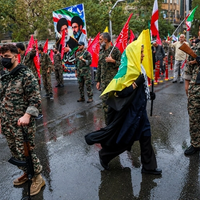
Supporters of the National Council of Resistance of Iran (NCRI) gather to protest against the government in Teheran and the use of the death penalty in Iran, in front of the Brandenburg Gate in Berlin, Germany, July 10, 2021.

Families of the victims of Iran's 1988 massacre were barred by security forces from entering Tehran's Khavaran Cemetery, leaving them stranded outside locked gates for hours amid ongoing suppression of political dissent.

Mansoureh Behkish, a prominent human rights activist and member of the Mothers of Khavaran group, took to social media to lament the situation, describing how families were left stranded and then returning home with "bleeding hearts and fresh wounds.".

Authorities reportedly demanded families show their national identification cards for entry, a requirement opposed by the families.

The executions were part of a mass crackdown on political prisoners following a fatwa issued by Iran's then-supreme leader, Ruhollah Khomeini, targeting the Mujahedin-e Khalq (MEK), which had engaged in a series of bombings in Iran and aligned itself with Saddam Hussein during the 1980-88 war.

While the exact number of executed prisoners remains unknown, Amnesty International estimates that around 5,000 prisoners were "forcibly disappeared" and "extrajudicially executed" between July and September 1988.

The majority of individuals affected were affiliated with the MEK, though there were also connections to leftist and secular factions such as the Fadaiyan Khalq Organization (FKO) and Tudeh Party. Additionally, members of Kurdish groups, including Komala and the Kurdish Democratic Party of Iran, were among the victims.

This latest incident adds to a series of concerns regarding the treatment of those executed in 1988, with previous reports highlighting efforts by the Islamic Republic to destroy gravesites of the prisoners during that period.


Most Viewed

Third US carrier joins Iran blockade, Bessent warns of economic collapse
1

Third US carrier joins Iran blockade, Bessent warns of economic collapse

2

Iran facing one of fastest economic collapses ever, Bessent says

3

Iran’s dams may have been built to support missile bases - NYT

4

Blair's sister-in-law attended Iran conference linked to IRGC spy recruitment - Telegraph

5

UK PM warns Iran against attacks on journalists and military bases

Banner
Banner
Banner
Banner
Banner
Banner
Banner

Spotlight

  • Iraq’s move on militia stronghold may do little to curb Iran’s influence
    ANALYSIS

    Iraq’s move on militia stronghold may do little to curb Iran’s influence

  • 'Our turn to play': Iran hardliners call for breaking US blockade

    'Our turn to play': Iran hardliners call for breaking US blockade

  • Head full of pellets: protester recalls ordeal on Iran holiday island
    EXCLUSIVE

    Head full of pellets: protester recalls ordeal on Iran holiday island

  • Israeli opposition to Islamic Republic transcends party lines
    ONE-ON-ONE

    Israeli opposition to Islamic Republic transcends party lines

  • 2019 crackdown failed to break cycle of Iran street protests
    ANALYSIS

    2019 crackdown failed to break cycle of Iran street protests

  • Toxic air chokes Iranian cities, residents report health problems
    VOICES FROM IRAN

    Toxic air chokes Iranian cities, residents report health problems

  • Can higher fuel prices curb Iran’s smuggling problem?
    ANALYSIS

    Can higher fuel prices curb Iran’s smuggling problem?

  • Iran’s Janfada campaign gives Basij recruitment a patriotic banner
    ANALYSIS

    Iran’s Janfada campaign gives Basij recruitment a patriotic banner