Netherlands Summons Iran Ambassador Over Killed Child In Erbil Attack

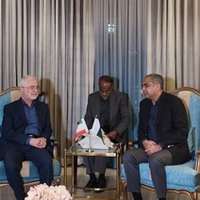
The Dutch government on Friday summoned the Iranian ambassador to the Netherlands following the death of a Dutch baby in an attack by Iran on Erbil, Iraq.

The Dutch government on Friday summoned the Iranian ambassador to the Netherlands following the death of a Dutch baby in an attack by Iran on Erbil, Iraq.
A Dutch child of less than one year old had died in attacks by Iran on Erbil, Dutch Foreign Minister Hanke Bruins Slot said in a statement.
She added she had asked her Iranian counterpart Hossein Amir-Abdollahian for clarification and had summoned the Iranian ambassador.
Amirabdollahian, in comments quoted by Iran's state media, told Bruins Slot: "We don't have documentary proof about the killing of a child at the Mossad terrorist compound in northern Iraq."
"We are drawing the Dutch government's attention to the genocide and massacre of thousands of Palestinian women and children in Gaza," he added in the phone call.
Iran's IRGC launched missile and drone strikes on three neighboring countries in about one day. In the attack on Iraqi Kurdistan's capital Erbil, Iran destroyed the house of a well-know Iraqi Kurd, killing him and his family, including a toddler.
Provincial officials in Pakistan said two children were also killed in the IRGC's attack in Pakistan.
Having hit several locations in Syria and Iraqi Kurdistan Monday, IRGC missiles and drones targeted Pakistan Tuesday, in an operation that Iran said was against two bases of the Sunni militant group Jaish al-Adl.
Iran’s missile strike in Iraq, however, is likely to deepen worries about worsening instability across the Middle East since the war between Israel and Hamas started on October 7, with Iran's militant proxy forces also entering the fray from Lebanon, Syria, Iraq and Yemen.

The United States Department of Justice has sentenced a man to prison for shipping heavy equipment to Iran in violation of US sanctions.
Jalal Hajavi, a 60-year-old resident of Sterling, Virginia, was sentenced to 24 months in prison followed by three years of supervised release for his involvement in a scheme to export industrial goods from the United States to Iran. The shipments were routed through the United Arab Emirates (UAE) and he had a co-conspirator located in Iran, according to the statement released Thursday.
Hajavi was convicted by a jury in September 2023 for violating the International Emergency Economic Powers Act (IEEPA) and the Iranian Transactions and Sanctions Regulations (ITSR), smuggling, and unlawfully exporting and reexporting goods to Iran without a license.
Assistant Attorney General Matthew G. Olsen of the Justice Department’s National Security Division said, “Mr. Hajavi illegally shipped industrial equipment to the Iranian regime, smuggled restricted goods through the UAE to Iran, and caused a shipping company to submit false information to the US government.”
According to Assistant Secretary for Export Enforcement Matthew S. Axelrod, “Shipping items to Iran is against the law, regardless of whether done directly or by way of a third country.”
“Hajavi’s conduct was particularly egregious because he was previously informed on at least two occasions that his conduct was prohibited,” saidUS Attorney Ryan K. Buchanan for the Northern District of Georgia.

Several ISIS-affiliated “terrorists” have been arrested in Iran, according to the Intelligence Ministry, in connections with a recent twin bombing that killed nearly 100 people.
Iranian state media published the statement on Friday, that claimed several men belonging to different cells were identified and detained. The Afghanistan branch of the Islamic State group claimed responsibility for the January 3 bombings in Kerman during a memorial ceremony at the tomb of IRGC’s Qasem Soleimani. He was killed by a US drone strike in Baghdad in January 2020.
The deadly attack in Kerman prompted harsh criticism of Iran’s security and intelligence organizations for failing to anticipate and prevent the incident, while they were busy enforcing hijab on women. Since then, officials have made several claims of arrests. However, the Friday statement contained slightly more detail than previous claims.
Stating that ISIS is Israel’s creation, a claim often made by Tehran officials, the intelligence ministry said they arrested two people who entered the country after the January 3 bombing, intending to stage new attacks. It also said that people directly linked to the Kerman bombing were arrested and caches of explosives and weapons seized.
It is often very difficult to verify such statements by Iranian security forces, as access and information is strictly controlled. So far, none of the detainees have been reliably identified. Authorities have provided some names, which might be just pseudonyms.
Following the Kerman incident, Iran launched ballistic missiles earlier this week on targets in Iraqi Kurdistan, Syria and Pakistan, saying it was avenging a series of attacks in Iran. Pakistan retaliated by striking a rural area in southeastern Iran, leading to high tensions in the region.

Iran’s tax authorities have banned the CEO and members of the board of a bank from leaving the country after they failed to provide information about certain transactions.
State media quoted Vahid Azizi, an official in the tax inspectorate as saying, “One of the country’s banks has refrained from supplying information on suspicious transactions of businesses despite repeated warnings,” leading to the decision to ban the CEO and members of the board of directors from leaving the country. He did not name the bank in question.
Azizi emphasized that other banks have also been warned to provide all information necessary for the tax authorities before February 20th.
Both Iran’s government and its state-controlled and quasi-private banks face serious financial problems due to years of economic crisis, rising inflation and problems stemming from the inefficiencies of a state-controlled economy.
The Iranian government has been relentlessly printing money in the past five years after the United States withdrew from the JCPOA nuclear accord and imposed economic sanctions in 2018. This has fueled inflation, while the government has failed to effectively respond to the economic challenges.
There have been several major corruption scandals related to government officials and individuals considered regime insiders. This has also affected the banking system and the government pension schemes. Most banks are run by political appointees who maintain government control over lending and investments, while also finding opportunities to engage in suspicious financial activities.
The government faced with a large budget deficit, has resorted to increasing taxes, which is hard to enforce in a system mired by political influences and insider networking.

Iran now has sufficient quantities of highly enriched uranium to build several atomic warheads, the head of the UN nuclear watchdog has once again warned.
Speaking to Bloomberg on the sidelines of the World Economic Forum in Davos, Rafael Grossi reiterated his concerns that no technical obstacle remains between Iran and a nuclear bomb, implying that the regime can make them now if it wanted to.
This comes amid Iran’s unprecedented belligerence in launching airstrikes against three of its neighbors in a matter of 24 hours: Syria, Iraq, and nuclear power Pakistan –which was the only one of the three countries to retaliate almost immediately.
Both countries were quick to stress that they respect the other’s sovereignty and that their attacks have been meant to hit “terrorist hideouts” only. But the mutual reassurances do little to allay concerns of others in the region who fear that even a slight miscalculation could put the two Islamic Republics on a collision course.
Pakistan is the only nuclear power in West Asia, but Iran, according to IAEA director general Grossi, is very close to becoming one, and in terms of capability, is “already there.”
This may very well explain the regime’s increasingly aggressive rhetoric and behavior. For many years, a group of ultra-hardliners in Iran have been pushing for a ‘North Korean model’, believing that a nuclear power (or one perceived to be one) would be impervious to foreign pressure.
And some analysts believe those ultra-hardliners have been proven right by the Biden administration’s cautious, almost deferential, approach to Iran.
“Iran sprinting for nuclear weapons this year would be the capstone of the Biden-Sullivan foreign policy doctrine,” Andrea Stricker of the Foundation for Defending Democracies posted on X, “letting our adversaries run the globe and pushing back only when it’s too late or the situation becomes untenable.”
President Biden admitted Thursday that the recent wave of airstrikes against Iran-backed Houthis in Yemen has not been effective in stopping the attacks on vessels in the Red Sea.
“Are they stopping the Houthis, no. Are they going to continue, yes,” Biden told reporters, raising questions about his administration’s current strategy, but also what may come next.
“The Biden Admin is so wedded to their appeasement and de-escalation strategy that they’re actually inviting escalation from the Houthis and Iran,” Congressman Mike Waltz said in an interview with Fox News Thursday. “Deterrence has completely fallen apart… and we see every one of our adversaries on the march because of it and my fear between now and November is that they’re only going to accelerate because they see it as a moment of opportunity.”
The 2024 US Presidential elections will be held in November and the crisis in the Middle East, especially the role of Iran, which is behind most attacks on American interests in the region, is almost certain to feature heavily in the campaign.
Iran has an election of its own on March 1st, simultaneously choosing representatives for the parliament and the Assembly of Experts –on paper, responsible for selecting the next Supreme Leader.
There are many signs that this March’s election in Iran would set a record for the lowest turnout in the history of the Islamic Republic, with anger and political apathy now pervading the society.
The regime is once more doing all it can to lighten the people’s mood and lure them to the polling station –amid general rejection of the political system and clerical rule. The belligerence towards the outside world can be seen in the same light: as an attempt to raise a specter of war that would rally people around the flag. It is a risky bet, though, especially when so many of those people have come to hate the very flag.

Iran and Pakistan both conducted airstrikes on each other's territories but both claim that they respect their neighbor’s territorial integrity.
Pakistan launched airstrikes against several locations in southeastern Iran early Thursday, one day after Iran’s Revolutionary Guards hit targets inside the Pakistani territory.
The statements issued by both sides emphasized that the attacks were meant to target “terrorist hideouts” and not the civilians. Several children and women were killed in both attacks. Iran’s IRGC claimed their missiles and suicide drones targeted two bases of the Sunni militant group Jaish al-Adl while Pakistan claimed the operation was against “Sarmachar,” a term that means insurgents or rebels in general. Iranian officials have rejected Islamabad’s allegations about the presence of Pakistani terrorists in the city where the attack took place.
The cross-border attacks have escalated tensions between Iran and Pakistan although both countries insist that Baloch separatist factions were the main target of the strikes.
Pakistani President Arif Alvi on Thursday said his country fully respects the sovereignty and territorial integrity of all states and expects the same from other nations not to violate international law. Alvi said that Pakistan and Iran are "brotherly countries and they needed to resolve issues through dialogue and mutual consultation."

"The sole objective of today's act was in pursuit of Pakistan's own security and national interest, which is paramount and cannot be compromised,” Pakistan's foreign ministry said. A senior Pakistani security official told Reuters the military was on "extremely" high alert and would meet any "misadventure" from the Iranian side forcefully.
"The information received indicates that four children, three women and two men, who were foreign nationals, have been killed in the explosion that occurred in a village," Iran's Interior Minister Ahmad Vahidi told state TV.
Iran's foreign ministry said in a Thursday statement that Tehran was committed to good neighborly relations with Pakistan, but called on the neighboring state to prevent the establishment of "terrorist bases" on its soil.
The US State Department condemned the Iranian airstrike in Pakistan as well as its attacks in Iraq and Syria occurred earlier in the week, urging a peaceful resolution to the escalating tensions in the region. Similarly, Russia's foreign ministry on Thursday called on Iran and Pakistan to show maximum restraint and solve their differences through diplomacy or risk playing into the hands of those who would like to see the region descend into chaos.
Russian Foreign Ministry spokeswoman Maria Zakharova in a statement noted that the two countries are part of the Shanghai Cooperation Organization (SCO), a grouping that Russia helped found. "It is regrettable that this is happening between friendly SCO countries, with which we are developing partnership relations. Further aggravation of the situation plays into the hands of those who are not interested in peace, stability and security in the region," said Zakharova.
In response to the attacks, the European Union expressed its deep worries about the “spiral of violence in the Middle East and beyond.” EU spokesman Peter Stano said, “These attacks, including in Pakistan in Iraq and Iran now are of utmost concern for the European Union because they violate the sovereignty and territorial integrity of countries, and they have also a destabilizing effect on the region.”
In addition to calls for restraint on both sides, there is a hot debate on social media about rumors that Tehran and Islamabad coordinated the attacks with each other. Public figures close to Iran’s Revolutionary Guard, such as former lawmaker Hamid Rasaei and interrogator-journalist Ameneh Sadat Zabihpour, try to project the idea that the two neighboring Muslim countries coordinated the attacks. However, the idea has also backfired online, with people and journalists saying that if the two were aware of the attacks, why hadn’t they removed the civilian population from the target points.
Iran and Pakistan have a history of strained relations due to security concerns along their 900-kilometer border. Although Tehran and Islamabad’s attacks are ostensibly aimed at “terrorist” militants, the unprecedented cross border fires can serve as a message that the two brotherly countries can easily escalate to a serious conflict.
According to Mustafa Nawaz Khokhar, a former Pakistani senator, the Islamic Republic’s attack is only a drama to hide the regime’s “cowardice in front of Iranian people.” “It is a pity that the Iranian rulers chose this path.”