Iran Cracks Down On Banks For Tax Enforcement Amid Budget Shortfall

Iran’s tax authorities have banned the CEO and members of the board of a bank from leaving the country after they failed to provide information about certain transactions.
Iran’s tax authorities have banned the CEO and members of the board of a bank from leaving the country after they failed to provide information about certain transactions.
State media quoted Vahid Azizi, an official in the tax inspectorate as saying, “One of the country’s banks has refrained from supplying information on suspicious transactions of businesses despite repeated warnings,” leading to the decision to ban the CEO and members of the board of directors from leaving the country. He did not name the bank in question.
Azizi emphasized that other banks have also been warned to provide all information necessary for the tax authorities before February 20th.
Both Iran’s government and its state-controlled and quasi-private banks face serious financial problems due to years of economic crisis, rising inflation and problems stemming from the inefficiencies of a state-controlled economy.
The Iranian government has been relentlessly printing money in the past five years after the United States withdrew from the JCPOA nuclear accord and imposed economic sanctions in 2018. This has fueled inflation, while the government has failed to effectively respond to the economic challenges.
There have been several major corruption scandals related to government officials and individuals considered regime insiders. This has also affected the banking system and the government pension schemes. Most banks are run by political appointees who maintain government control over lending and investments, while also finding opportunities to engage in suspicious financial activities.
The government faced with a large budget deficit, has resorted to increasing taxes, which is hard to enforce in a system mired by political influences and insider networking.



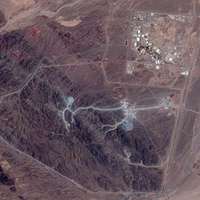


Iran now has sufficient quantities of highly enriched uranium to build several atomic warheads, the head of the UN nuclear watchdog has once again warned.
Speaking to Bloomberg on the sidelines of the World Economic Forum in Davos, Rafael Grossi reiterated his concerns that no technical obstacle remains between Iran and a nuclear bomb, implying that the regime can make them now if it wanted to.
This comes amid Iran’s unprecedented belligerence in launching airstrikes against three of its neighbors in a matter of 24 hours: Syria, Iraq, and nuclear power Pakistan –which was the only one of the three countries to retaliate almost immediately.
Both countries were quick to stress that they respect the other’s sovereignty and that their attacks have been meant to hit “terrorist hideouts” only. But the mutual reassurances do little to allay concerns of others in the region who fear that even a slight miscalculation could put the two Islamic Republics on a collision course.
Pakistan is the only nuclear power in West Asia, but Iran, according to IAEA director general Grossi, is very close to becoming one, and in terms of capability, is “already there.”
This may very well explain the regime’s increasingly aggressive rhetoric and behavior. For many years, a group of ultra-hardliners in Iran have been pushing for a ‘North Korean model’, believing that a nuclear power (or one perceived to be one) would be impervious to foreign pressure.
And some analysts believe those ultra-hardliners have been proven right by the Biden administration’s cautious, almost deferential, approach to Iran.
“Iran sprinting for nuclear weapons this year would be the capstone of the Biden-Sullivan foreign policy doctrine,” Andrea Stricker of the Foundation for Defending Democracies posted on X, “letting our adversaries run the globe and pushing back only when it’s too late or the situation becomes untenable.”
President Biden admitted Thursday that the recent wave of airstrikes against Iran-backed Houthis in Yemen has not been effective in stopping the attacks on vessels in the Red Sea.
“Are they stopping the Houthis, no. Are they going to continue, yes,” Biden told reporters, raising questions about his administration’s current strategy, but also what may come next.
“The Biden Admin is so wedded to their appeasement and de-escalation strategy that they’re actually inviting escalation from the Houthis and Iran,” Congressman Mike Waltz said in an interview with Fox News Thursday. “Deterrence has completely fallen apart… and we see every one of our adversaries on the march because of it and my fear between now and November is that they’re only going to accelerate because they see it as a moment of opportunity.”
The 2024 US Presidential elections will be held in November and the crisis in the Middle East, especially the role of Iran, which is behind most attacks on American interests in the region, is almost certain to feature heavily in the campaign.
Iran has an election of its own on March 1st, simultaneously choosing representatives for the parliament and the Assembly of Experts –on paper, responsible for selecting the next Supreme Leader.
There are many signs that this March’s election in Iran would set a record for the lowest turnout in the history of the Islamic Republic, with anger and political apathy now pervading the society.
The regime is once more doing all it can to lighten the people’s mood and lure them to the polling station –amid general rejection of the political system and clerical rule. The belligerence towards the outside world can be seen in the same light: as an attempt to raise a specter of war that would rally people around the flag. It is a risky bet, though, especially when so many of those people have come to hate the very flag.
Iran and Pakistan both conducted airstrikes on each other's territories but both claim that they respect their neighbor’s territorial integrity.
Pakistan launched airstrikes against several locations in southeastern Iran early Thursday, one day after Iran’s Revolutionary Guards hit targets inside the Pakistani territory.
The statements issued by both sides emphasized that the attacks were meant to target “terrorist hideouts” and not the civilians. Several children and women were killed in both attacks. Iran’s IRGC claimed their missiles and suicide drones targeted two bases of the Sunni militant group Jaish al-Adl while Pakistan claimed the operation was against “Sarmachar,” a term that means insurgents or rebels in general. Iranian officials have rejected Islamabad’s allegations about the presence of Pakistani terrorists in the city where the attack took place.
The cross-border attacks have escalated tensions between Iran and Pakistan although both countries insist that Baloch separatist factions were the main target of the strikes.
Pakistani President Arif Alvi on Thursday said his country fully respects the sovereignty and territorial integrity of all states and expects the same from other nations not to violate international law. Alvi said that Pakistan and Iran are "brotherly countries and they needed to resolve issues through dialogue and mutual consultation."
"The sole objective of today's act was in pursuit of Pakistan's own security and national interest, which is paramount and cannot be compromised,” Pakistan's foreign ministry said. A senior Pakistani security official told Reuters the military was on "extremely" high alert and would meet any "misadventure" from the Iranian side forcefully.
"The information received indicates that four children, three women and two men, who were foreign nationals, have been killed in the explosion that occurred in a village," Iran's Interior Minister Ahmad Vahidi told state TV.
Iran's foreign ministry said in a Thursday statement that Tehran was committed to good neighborly relations with Pakistan, but called on the neighboring state to prevent the establishment of "terrorist bases" on its soil.
The US State Department condemned the Iranian airstrike in Pakistan as well as its attacks in Iraq and Syria occurred earlier in the week, urging a peaceful resolution to the escalating tensions in the region. Similarly, Russia's foreign ministry on Thursday called on Iran and Pakistan to show maximum restraint and solve their differences through diplomacy or risk playing into the hands of those who would like to see the region descend into chaos.
Russian Foreign Ministry spokeswoman Maria Zakharova in a statement noted that the two countries are part of the Shanghai Cooperation Organization (SCO), a grouping that Russia helped found. "It is regrettable that this is happening between friendly SCO countries, with which we are developing partnership relations. Further aggravation of the situation plays into the hands of those who are not interested in peace, stability and security in the region," said Zakharova.
In response to the attacks, the European Union expressed its deep worries about the “spiral of violence in the Middle East and beyond.” EU spokesman Peter Stano said, “These attacks, including in Pakistan in Iraq and Iran now are of utmost concern for the European Union because they violate the sovereignty and territorial integrity of countries, and they have also a destabilizing effect on the region.”
In addition to calls for restraint on both sides, there is a hot debate on social media about rumors that Tehran and Islamabad coordinated the attacks with each other. Public figures close to Iran’s Revolutionary Guard, such as former lawmaker Hamid Rasaei and interrogator-journalist Ameneh Sadat Zabihpour, try to project the idea that the two neighboring Muslim countries coordinated the attacks. However, the idea has also backfired online, with people and journalists saying that if the two were aware of the attacks, why hadn’t they removed the civilian population from the target points.
Iran and Pakistan have a history of strained relations due to security concerns along their 900-kilometer border. Although Tehran and Islamabad’s attacks are ostensibly aimed at “terrorist” militants, the unprecedented cross border fires can serve as a message that the two brotherly countries can easily escalate to a serious conflict.
According to Mustafa Nawaz Khokhar, a former Pakistani senator, the Islamic Republic’s attack is only a drama to hide the regime’s “cowardice in front of Iranian people.” “It is a pity that the Iranian rulers chose this path.”
Sweden's foreign ministry has summoned Iran's charge d'affaires, urging the immediate release of Swedish citizens held in Iran under “arbitrary detention”.
"Sweden's demands for the immediate release of the Swedish citizens arbitrarily detained in Iran, consular access to detained citizens and respect for international commitments on consular matters were stressed at the meeting," Sweden's Ministry for Foreign Affairs said in a statement.
"The government has heard reports of further arrests of Swedish citizens," it added.
"In late 2023, a man with Swedish and Iranian citizenship was detained for no apparent reason," it continued, without adding further details.
The ongoing diplomatic strain between Sweden and Iran intensified following a recent court decision in Sweden to sentence Hamid Nouri, a former Iranian prison official, to life imprisonment. Noury was found guilty of "grave breaches of international humanitarian law and murder" related to mass executions in 1988, resulting in the deaths of more than 5,000 prisoners.
Tensions escalated with the Swedish appeals court's confirmation of Nouri's life sentence on December 19. In response, Iran summoned Sweden's charge d'affaires to protest the verdict.
In December, the trial began of Sweden's EU diplomat, Johan Floderus, on charges of conspiring with Israel, Iran's arch-enemy. Floderus had been arrested in April 2022 at Tehran airport upon his return from a trip with friends.
EU chief Josep Borrell said at the time: "As [the] EU, we have been very clear from the beginning: Mr. Floderus is innocent. There are absolutely no grounds for keeping Johan Floderus in detention."
Last year, Iranian-Swedish dissident Habib Chaab was executed on charges of "corruption on earth." Iranian-Swedish academic Ahmadreza Djalali was sentenced to death in 2016 on espionage charges.
Israeli president Isaac Herzog called on the international community on Thursday to create “a very strong coalition” against “an empire of evil emanating from Iran”.
Speaking at the World Economic Forum in Davos, Switzerland, Herzog’s call for a coalition to face Iran and its proxies comes against a backdrop of rising tensions in the Middle East following the Israel-Hamas conflict, sparked by Iran-backed Hamas's October 7 invasion of Israel. Some 1,200 mostly civilians were murdered and over 250 more taken hostage.
There is an empire of evil emanating from Tehran, spending billions of dollars in arms and money and people's well-being to derail the entire stability of the world and the region. They've attacked the United States forces two nights ago, openly. They have proxies all over the region quietly lurking to undermine any peace process and any stability of the world. And that is exactly what we are seeing – and they have to be faced by a very strong coalition, Herzog said.
Though the Iranian regime has avoided any direct involvement in the Gaza war, Tehran has used its proxy groups in the region such as Houthis and Hezbollah to attack Israeli and American targets since the war began. From north to south, around 250,000 Israelis have been displaced since October.
"Every Israeli wants to know that he will not be attacked in the same way from north or south or east," explained the President. "You have Hezbollah in the north, armed up to its neck by Iran, financed by Iran, and simply firing, ongoing, and killing civilians, and killing soldiers, and going to war with Israel."
Speaking of Iran's influence on Gaza, he added: "It was taken over by Hamas in a coup d’etat in 2007 after we pulled out of Gaza unilaterally to the last iota. And from then on, it became a platform for Iran and all its proxies. And from then on, we had thousands of missiles on our heads."
Yemen's Houthis, in particular, have disrupted regional stability and international trade by targeting shipping lanes in the Red Sea, the Gulf of Aden, and the Bab el-Mandeb Strait. The blockade, instigated by Iran's Supreme Leader, has seen the US lead a multinational naval coalition in the Red Sea to protect trade vessels.
At least 20 countries, including Britain, Norway, Seychelles, France, the Netherlands, Australia and Italy, have joined the coalition and the US and UK have carried out direct attacks on Houthi assets in Yemen in recent days.
Dozens of attacks on the global shipping route have forced many companies to reroute to longer and more expensive journeys around Africa.
As recently as Thursday morning, Iranian Defense Minister Mohammad-Reza Ashtiani expressed support for the attacks carried out by Yemeni Houthi rebels on commercial ships in the region. “The Yemenis are moving in the direction of the world’s wishes, undoubtedly achieving victory, and we commend their efforts,” he stated.
How to end the decades-long Israel-Palestine conflict has been a ubiquitous topic in most of the discussions held in the World Economic Forum’s main stage. Referring to the issue, the Israeli president stressed that neither the political establishment nor the public opinion in Israel considers the possibility of a peace agreement at the moment given the ongoing war with Hamas.
“If you ask an average Israeli now about his or her mental state, nobody in his right mind is willing now to think about what will be the solution of the peace agreements,” Herzog noted, adding that the annihilation of Iran-backed Hamas would benefit Israelis, Palestinians, and the entire free world.
He added that in order for any peace process to come into existence and be viable, Israel first needs guarantees to make sure that it will not witness another deadly rampage like the one carried out by Hamas militants on October 7.
Nonetheless, Herzog did not reject the prospect of peace in the region: “We all understand that there has to be a vision, and I think part of it should be also going back to the normalization process of Israel and its neighbors.”
Herzog’s remarks came a day after US Secretary of State Antony Blinken urged the integration of Israel in the region and the creation of a Palestinian state, saying these actions would isolate the Islamic Republic and its proxy groups.
Israel will not experience “genuine integration” and “genuine security” without a Palestinian state, Blinken stressed.
Citing three anonymous US officials, NBC News reported on Wednesday that the Israeli government has turned down Blinken’s peace plan. According to the proposal, Saudi Arabia would normalize its relations with Israel in case the latter approved of a pathway towards Palestinian statehood.
American news website Axios announced on Sunday that Washington is “frustrated” with Israeli Prime Minister Benjamin Netanyahu over “his rejection of most of the [US] administration’s recent requests related to the war in Gaza.”
Russian Foreign Minister Sergey Lavrov has said Iran, Turkey, Saudi Arabia, the United Arab Emirates, and Qatar are integral members of Russia's close circle.
"As for our inner circle, then, of course, I should mention countries in the Middle East - Iran, Turkey, Saudi Arabia, the United Arab Emirates and Qatar," Lavrov told a news conference devoted to the achievements of Russian diplomacy in 2023.
Lavrov emphasized Russia's keenness to advance relationships not solely through bilateral means but also through regional organizations established by several of Russia's partners.
"I mean the Cooperation Council for the Arab States of the Gulf, I mean the League of Arab States, ASEAN, the African Union, the Community of Latin American and Caribbean States and others," he explained.
Russia has delayed the renewal of a two-decade-old strategic agreement with Iran; however, amid the ongoing conflict in Ukraine, Moscow is increasingly reliant on Iranian weaponry, including kamikaze drones.
Much like North Korea, whose leader Kim Jong Un met with Putin in Russia's far east in September, Iran is a declared adversary of the United States, presenting Moscow with the opportunity to supply military hardware for the Ukrainian war, where Russian forces extensively deploy Iranian drones.
In November, the Kremlin acknowledged the ongoing development of relations between Russia and Iran, particularly in the field of military-technical cooperation. However, there was no comment on the White House's suggestion that Iran might be contemplating providing Russia with ballistic missiles.
Iranian authorities have stated that military cooperation with Russia is expanding, with Iran finalizing arrangements last year for Russia to supply Su-35 fighter jets, Mi-28 attack helicopters, and Yak-130 pilot training aircraft.
Amid global sanctions, the UAE has seen around one million Russians descend on its shores since war broke out, the tax haven offering a sanction free destination for oligarchs and non-oligarchs alike. Turkey equally has seen a spike in Russian arrivals, especially from Russia's oligarch elite.