Iran Restricts Cellphone Imports, Worrying Consumers

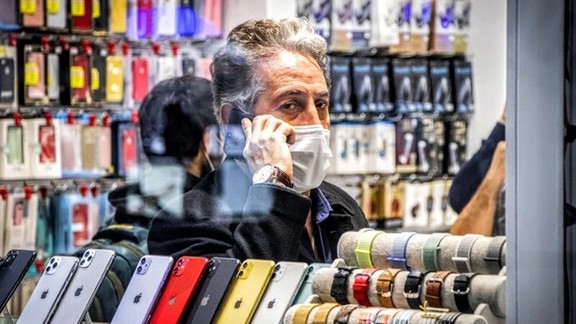
Iran’s government has required all cell phone importers to obtain a formal letter of representation from foreign manufacturers, risking a market shortage.
Iran’s government has required all cell phone importers to obtain a formal letter of representation from foreign manufacturers, risking a market shortage.
The latest move will force people to buy and use Chinese and Iranian cell phones, likely also to cause a monopoly for certain importers with strong lobbying power amidst Iran's global sanctions, and in turn, raising prices.
Peyvast, an Iranian monthly periodical covering the latest developments in information and communication technologies, reported that six years ago, the Iranian government aimed to make a similar decision by conditioning the importation of cell phones on obtaining an official permission from their foreign producers. However, at that time, Tehran decided that such a policy would not be feasible due to international sanctions.
It is not clear what has encouraged the Islamic Republic officials to revive their former plan as both sanctions and the unwillingness of the main cell phone manufacturers to trade with Iran are still in place. The tech website “Sakhtafzar Mag” took to task the ministry’s decision, saying it can have “heavy consequences for the cell phone market” in Iran.
By removing “different layers” of the market, this law runs the risk of undermining competition and after-sales services, Sakhtafzar Mag warned.
Zoomit, an online tech and gadget magazine, noted that as a result of the government’s new importation policy, the cell phone market in Iran may become similar to the country’s car market where overpriced Chinese productions abound with unsatisfactory after-sales services.
The publication warned that Iran has turned into a monopolized market for Chinese brands after the Islamic Republic forbade the registration of iPhone 14 & iPhone 15 in an alleged attempt to retaliate US bans and to prevent foreign currency from leaving Iran.
According to the magazine, after the ban on iPhone and the inability of a large part of the Iranian population to buy Samsung products over their high prices, Chinese brands such as Huawei, Xiaomi, Realme, Oppo, OnePlus and ZTE are taking control of the market.
The government’s bans on the registration of iPhone and its propaganda to show iPhone users as luxurious and “west-stricken” run counter to the fact that many of high-ranking Iranian officials and their children use the American brand. Last year, the photo of slain Quds Force Commander Qasem Soleimani’s daughter holding the latest iPhone 13 led to a storm of criticism that overshadowed the second anniversary of her father’s death.
Hundreds of social media posts scorned Soleimani for brandishing a phone that costs more than ten times the monthly salary of an ordinary worker in Iran while the Islamic Republic bases its propaganda on Qasem Soleimani’s modest lifestyle.
The government has already spent millions of dollars on the production of Iranian cell phones, causing concerns over safety and security in a regime where internet restrictions and surveillance have become commonplace.
According to reports, the Islamic Republic follows China’s lead in systematic oppression techniques as China’s large-scale efforts to control the internet has become a viable conceptual and technical model for authoritarian regimes.