Mounting Worker Demands Lead To Strike In Iran Steel Industry

As the Iranian regime grapples with growing unrest fueled by unmet demands from retirees and workers, protests and strikes continue in different sectors.

As the Iranian regime grapples with growing unrest fueled by unmet demands from retirees and workers, protests and strikes continue in different sectors.
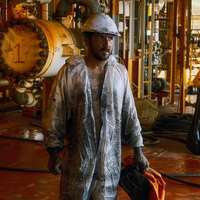
Videos on social media revealed that workers at the Esfahan Steel Company halted operations on Saturday, conveying their discontent through organized gatherings and chanting slogans.
Workers at the Esfahan Steel Company had previously gone on strike multiple times last year, citing the "failure to fulfill promises by officials." Their primary demand revolves around an increase in wages, which lag behind those of counterparts in other steel plants.
Last year, workers at the complex presented a ten-thousand-signature letter, urging President Ebrahim Raisi to address the rights of company workers. However, with no substantial improvements, the discontent continues to fuel demonstrations.
The Esfahan Steel Company, serving as a specialized parent company, holds the distinction of being the first and largest producer of construction and rail steel in Iran. With a production capacity of 3.6 million tons of final products, the complex manufactures a diverse range of structural and industrial steel sections.
There were a number of protests in November, including from Iran's Social Security Organization retirees, employees of the Iranian Offshore Oil Company (IOOC), and retirees and employees of the National Iranian South Oil Fields Company.
Amidst the labor unrest, the regime-run Statistics Center of Iran (SCI) reports a household inflation rate of 45.5%. Alarmingly, approximately one-third of the country is experiencing inflation rates exceeding 50%, as indicated by the same report. It is worth noting that the regime's reporting may not fully capture the gravity of the crisis, as it continues to shield the true extent of the economic challenges faced by the Iranian people.
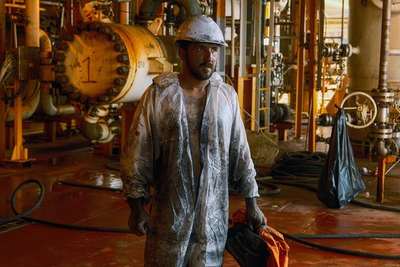
Amid reports about low-quality gasoline and a surge in air pollution across key industrial hubs in Iran, an official insisted that the low-quality fuel has no impact.
In an interview with the semi-official ISNA news agency, Jafar Salari-Nasab, the CEO of the National Company for the Distribution of Petroleum Products emphasized that “the distributed gasoline meets Euro specifications in terms of quality and octane level.” He highlighted that Euro-grade gasoline, known for its superior quality, is distributed in major cities such as Tehran.
The National Crisis Management Center recently issued a warning about escalating air pollution levels in industrial centers like Tehran, Karaj, Arak, Esfahan, and Tabriz, coupled with a decline in air quality.
Salari-Nasab's comments come in the wake of the Taliban government's standards office rejecting fuel tankers carrying Iranian gasoline, citing substandard quality. According to a recent announcement by the Taliban on November 29, 24 tankers carrying low-quality Iranian gasoline were returned through the Farah border crossing in the last two days. In total, 74 tankers have been sent back from Afghanistan in the past week.
Iran has been grappling with a significant gasoline shortage since last summer, prompting refineries to add substances to base gasoline. The harmful additives have led to the production of non-standard gasoline, contributing significantly to air pollution in the country.
A recent report by Etemad revealed that Tehran experienced only two clear days in the last year, with a simultaneous surge in emergency room visits by residents due to polluted air. Iran currently ranks as the sixth-highest greenhouse gas contributor globally, following China, the United States, India, Japan, and Russia.

The re-arrest and violent detention of Iranian rapper Toomaj Salehi have ignited widespread condemnation and concern.
Social media users described his arrest earlier this week as a "kidnapping" and a manifestation of the regime's fear of Salehi's outspokenness as a protesting rapper.
Salehi, 33, was detained by plainclothes on a street in Babol, located in the north of Iran, on Thursday. He was subsequently transferred to an undisclosed location. Salehi's X page reported that the arrest took place without any judicial order and involved "severe physical abuse," with officers allegedly beating him using the butts of their AK-47 rifles and pistols.
The incident comes after Salehi spent over a year in prison, with 252 days in solitary confinement. He had been released on bail on November 18th. In response to his re-arrest, social media users initiated a trending campaign on Friday, with more than 75,000 mentions of Toomaj Salehi on the X social network. Many posts questioned his whereabouts.
Ye-One Rhie, a representative in the German parliament and Salehi's political sponsor, urgently called for his release in a video message. Rhie emphasized the importance of shedding light on the actions of the Iranian regime, stating, "Everyone needs to know what the Iranian regime is doing, that it is not abiding by its own constitution and kidnapping people for no reason."
Salehi gained prominence as an artist known for his protest songs addressing social issues and government injustices in Iran. The 33-year-old rapper was initially arrested on October 30th 2022, as part of a broader crackdown on regime's political opponents.

In a bizarre turn of events, the Taliban government's standards office has returned fuel tankers carrying Iranian gasoline, deeming the product below standard.
In a message on Thursday, November 29, posted on X, the Taliban stated that 24 tankers carrying low-quality Iranian gasoline were returned to Iran through the Farah' border crossing in the previous two days. In the last week, a total of 74 tankers carrying Iranian-produced gasoline have been sent back from Afghanistan.
The Afghan Islamic Emirate Standards Office has warned gasoline importers to avoid purchasing non-standard fuel, or they will face legal consequences. “Our utmost effort is for the people of Afghanistan to consume standard gasoline,” the statement said. Taliban had previously prevented the entry of shipments of non-standard gasoline produced by Iranian refineries into the country. One recent example was the return of 48 tankers carrying Iranian gasoline in September.
According to a confidential document from Iran’s Ministry of Petroleum received by Iran International, about 80% of the country's gasoline production does not meet Euro 4 and Euro 5 standards. Additionally, nearly 10 million liters of chemicals, aromatics, and the carcinogenic substance 'MTBE’ (Methyl-tertiary-butyl ether a gasoline additive--causes testicular and lymphohematopoietic cancers in rats) are mixed into produced gasoline daily. Iran’s gasoline output is around 100-110 million liters per day.

Iran has grappled with a significant gasoline shortage since last summer, prompting the addition of substances to base gasoline in refineries. This adjustment, coupled with increased gasoline combustion, has led to the production of non-standard gasoline. This, along with the consumption of fuel oil and prevalent diesel use in industries and power plants, stands as a primary contributor to severe air pollution in Iran.
Due to the Iranian government’s ban on importing quality vehicles, especially electric cars, compressed natural gas (CNG) vehicles, and the annual addition of 900,000 low efficiency domestically produced cars to the market, Iran faces a gasoline shortage crisis. Consumption has nearly doubled in the past decade, reaching 115 million liters per day.
Since the beginning of this year, the Islamic Republic has initiated limited imports of standard gasoline from Russia and other countries, primarily supplied to major cities.
Iran's refineries are outdated and worn out, converting one-third of the received oil into fuel oil and bitumen. For instance, 47% of the crude oil received by the Abadan refinery, Iran's largest crude oil refinery, almost a century old, is converted into bitumen and fuel oil. The "Global Carbon Project" study claims that throughout the previous 20 years, Iran's greenhouse gas emissions have doubled. According to BP's estimates, Iran produced almost 900 million tons of greenhouse gas emissions in 2022.
Globally, Iran is ranked sixth in term of greenhouse gas emissions level. Only three days of clear air were reported in Tehran last year; similar circumstances prevailed in several other Iranian large cities.
Dr Umud Shokri, Energy Strategist and Senior Visiting Fellow at George Mason University

Iranian delegates walked out of UN climate talks in the United Arab Emirates Friday in protest over the presence of Israeli representatives.
Energy Minister Ali Akbar Mehrabian, who heads the Iranian delegation, said Iran considers Israel’s presence at COP28 “as contrary to the goals and guidelines of the conference and, in protest, it left the conference venue.”
On Thursday, Iran's President Ebrahim Raisi also announced that he would not attend the UN Climate Change Conference (COP28) in Dubai, citing the presence of his Israeli counterpart.
It is not clear that why Tehran had sent the delegation in the first place as it knew about Israel’s participation in advance enough to cancel Raisi’s trip.
The UAE and Israel normalized relations during the presidency of Donald Trump in the United States when in 2020 the Abraham Accords opened diplomatic ties along with other Arab nations such as Bahrain.
During Herzog's inaugural visit to the UAE last year, the Iran-backed Houthis in Yemen sent a ballistic missile to the Persian Gulf state amidst a period of attacks which killed three. The missile was intercepted by the UAE. The Houthis' military spokesman said they fired Zulfiqar missiles at Abu Dhabi and launched drones at Dubai.

The government decision to increase the price of liquid gas (LPG) cylinders from $1.2 a cylinder to $8 this week has hit Iran's poor as winter takes hold.
The decision has hit hardest the poor southern provinces which do not have access to LPG at home. Ordinary workers barely make $150 a month and can't afford to pay the higher price for fuel they need for cooking and in some cases for heating their homes.
A local official with the Iranian oil ministry said that the inhabitants of Hormozgan are required to register in an electronic system in order to be given subsidized LPG but with many of the poor living in shanty towns, they remain locked out of the system.
If registered, each household will receive a quota of four subsidized LPG cylinders per month but a restaurant owner in the province told Aftab News that the allocated amount is still not enough and he has to find the extra fuel for his job in the black market at exorbitant prices.

Despite the criticisms, Iranian officials defended their decision, saying the distribution of LPG has been “adjusted” in an attempt to fight smuggling. The Iranian government has sold fuel and electricity at extremely low prices for decades, partly because of inertia and partly due to fears of popular protests. In 2019, a gasoline price hike led to days of nationwide protests. Security forces killed at least 1,500 people, which badly eroded the government's legitimacy. But as people's incomes have dwindled by high inflation since 2018, now the government faces even a tougher choice to raise prices.
The sharp increase in prices has also raised serious concerns among environmental activists.
Sirous Zareh, an environmental activist in Fars province warned that the drastic increase of the LPG price will practically leave no choice for the local communities living on the edges of habitats to use wood and tree trunks instead of the expensive gas.
Logging and deforestation will multiply as a result of the government’s new policy, Zareh predicted.
He stressed that while Iran’s large gas resources could serve as “a protective shield against indiscriminate deforestation,” the economically vulnerable sections of the society will have no other way but to stop gas consumption and start using forest fuel at their houses.
It comes while some of Iran's southern provinces such as Hormozgan and Khuzestan abound with gas resources, Iran the second richest gas nation in the world.
Iran has a serious shortage of natural gas which is in decline because of decades of inadequate investments and lack of Western technology to increase extraction in Iran's main underwater gas fields in the Persian Gulf. Years of various sanctions and mismanagement have prevented the necessary upgrades of gas platforms.
The government is juggling between ever-increasing domestic consumer and commercial demand and its need for power generation, exports and using needed gas for oil production.
Despite the celebratory and optimistic rhetoric of the Iranian regime officials about Tehran’s increasing ties with non-Western partners, even the Chinese and the Russians have not been willing to render any significant assistance to boost Iran’s gas and oil productions.