• العربية
  • فارسی
BrandBrand
  • Iran Insight
  • Politics
  • Economy
  • Analysis
  • Special Report
  • Opinion
  • Podcast
  • Live TV
  • Iran Insight
  • Politics
  • Economy
  • Analysis
  • Special Report
  • Opinion
  • Podcast
  • Live TV
  • Theme
  • Language
    • العربية
    • فارسی
  • Iran Insight
  • Politics
  • Economy
  • Analysis
  • Special Report
  • Opinion
  • Podcast
  • Live TV
All rights reserved for Volant Media UK Limited
volant media logo

Iran’s Military Warns About Border Changes In The Region

Mardo Soghom
Mardo Soghom

Iran International

Sep 24, 2023, 22:06 GMT+1Updated: 11:52 GMT+0
A view shows a border-crossing point on the frontier between Armenia and Azerbaijan and a base of Russian peacekeepers deployed in Nagorno-Karabakh as seen from a road near the village of Kornidzor, Armenia, September 23, 2023.

Iran’s defense ministry warned Sunday that it will not tolerate any changes to international borders in the region, amid serious tensions between Armenia and Azerbaijan.
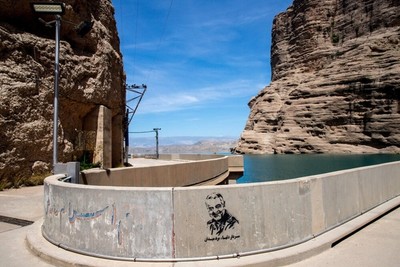

Although remarks by the defense ministry’s spokesman did not mention the two neighboring countries, currently perceived threats from Azerbaijani to invade southern Armenia bordering Iran is the only critical issue in the region.

“We have announced that we will not permit any border changes in the region. In some of our border points, they wanted to make alterations, but they did not dare and will not dare,” ministry’s spokesman Gen. Reza Talainik (Tala-ee-nik) was quoted as saying by Fars news website affiliated with the Revolutionary Guard (IRGC). He added that when Iran shouts borders should not change, it means it relies on certain bases of support, such as its military power.

After losing a war fought on Azerbaijani territory in 2020, Armenia has become vulnerable to a possible invasion in the south by its more powerful neighbor. In such a scenario, Iran will lose a safe land corridor to the north, through Georgia to Russia. Tehran has repeatedly warned it will not tolerate such a move by Azerbaijan and has sent additional forces to the border to make its point.

100%
Gen. Kyumars Haydari, commander of the Iranian army’s ground forces

Earlier on Sunday, Gen. Kyumars Haydari, commander of the Iranian army’s ground forces told the local media that they have stationed ten brigades in critical border regions, including the area near Armenia and Azerbaijan.

Gen. Haydari did not clarify if these forces all belonged to Iran’s traditional army or also include unites from the Revolutionary Guard’s ground forces. He also did not provide a numerical estimate of the forces, but a brigade is usually around 3,000-4,000 troops. He said that these brigades are stationed in the northwest, west, southwest, and northeast to confront “enemies”. Iran has been projecting military power along its borders with Iraq to deter what it calls separatist Kurds using Iraqi territory as a base, and also against the Taliban in the east, in addition to Azerbaijan.

The defense ministry spokesman Talainik also spoke about Iran’s Qassem ballistic missile, calling it an “Israel-busting” weapon. The missile was first unveiled in July 2020 with a range of 1,400-1,800 kilometers. It is believed to be a newer version of the Fateh-100 missile. It is named after Qassem Soleimani, the Iranian regime’s operative in the Middle East who was killed in a targeted US air strike in Baghdad in January 2020.

100%
Refugees from Nagorno-Karabakh region are seen in a bus upon their arrival at a checkpoint in the village of Kornidzor, Armenia, September 24, 2023.

Incidentally, Israel has been supplying weapons to Azerbaijan and the Islamic Republic has often voiced its dissatisfaction with Baku, accusing its neighbor of allowing Israelis to use its territory against Iran.

Talainik also claimed that “no equation in the Middle East is manageable without Iran's role, because of the country's defensive power.” However in the past three years two Persian Gulf Arab countries, the United Arab Emirates and Bahrain have made peace with Israel and Saudi Arabia is also moving toward that direction, despite Iran’s opposition.

The United States in July dispatched additional warplanes and naval forces to the region, warning Iran not to interfere with maritime traffic, after it stopped or harassed more than 15 commercial vessels in the past two years.


Most Viewed

Iran’s dams may have been built to support missile bases - NYT
1

Iran’s dams may have been built to support missile bases - NYT

2

US Army seeks 17 bunkers in Israel, Saudi, Lebanon amid Iran threats - report

3

UK PM warns Iran against attacks on journalists and military bases

4

Senior Guards commander admits deep Israeli intelligence infiltration

5

Iran’s daily hardships find a voice in IRGC-linked media

Banner
Banner
Banner
Banner
Banner
Banner
Banner

Spotlight

  • How Thai clerics in Iran were recruited to attack Israeli embassy in Bangkok
    EXCLUSIVE

    How Thai clerics in Iran were recruited to attack Israeli embassy in Bangkok

  • Mapping aircraft losses from US-Israeli strikes on Tehran airport
    SPECIAL REPORT

    Mapping aircraft losses from US-Israeli strikes on Tehran airport

  • Iraq’s move on militia stronghold may do little to curb Iran’s influence
    ANALYSIS

    Iraq’s move on militia stronghold may do little to curb Iran’s influence

  • 'Our turn to play': Iran hardliners call for breaking US blockade

    'Our turn to play': Iran hardliners call for breaking US blockade

  • Head full of pellets: protester recalls ordeal on Iran holiday island
    EXCLUSIVE

    Head full of pellets: protester recalls ordeal on Iran holiday island

  • Israeli opposition to Islamic Republic transcends party lines
    ONE-ON-ONE

    Israeli opposition to Islamic Republic transcends party lines

  • 2019 crackdown failed to break cycle of Iran street protests
    ANALYSIS

    2019 crackdown failed to break cycle of Iran street protests