• العربية
  • فارسی
BrandBrand
  • Iran Insight
  • Politics
  • Economy
  • Analysis
  • Special Report
  • Opinion
  • Podcast
  • Live TV
  • Iran Insight
  • Politics
  • Economy
  • Analysis
  • Special Report
  • Opinion
  • Podcast
  • Live TV
  • Theme
  • Language
    • العربية
    • فارسی
  • Iran Insight
  • Politics
  • Economy
  • Analysis
  • Special Report
  • Opinion
  • Podcast
  • Live TV
All rights reserved for Volant Media UK Limited
volant media logo

Iran's Government Relocates Inmates To Sell Infamous Prison

Maryam Sinaiee
Maryam Sinaiee

Iran International

Aug 5, 2023, 20:05 GMT+1Updated: 17:37 GMT+1
One section of Iran's Rajaei Shahr prison

Iran's judiciary has confirmed that it is relocating inmates from the Rajaei Shahr Prison in Karaj, as many believe its large land will be sold to developers soon.

“Prisoners of this prison, which is located in one of the best areas of Karaj, are being relocated to another prison,” the judiciary’s media center said in a statement on Thursday.

Rajaei Shahr (formerly Gohardasht) Prison, considered as one of the harshest prison environments in the country, is in Karaj, a city less than 30 kilometers west of the capital Tehran. Originally built before the Islamic Revolution of 1979 in the outskirts of Karaj, the prison is now in the middle of one of the city’s most expensive areas.

One reason why the prison lives in infamy is the massacre of hundreds of political prisoners there in 1988. Iran's first supreme leader, Ruhollah Khomeini, ordered the killing of prisoners who were members of MEK (The People's Mojahedin Organization of Iran), an armed opposition group, and also Marxists serving their sentences.

Since 2009, when thousands were arrested after a disputed election, many well-known political prisoners and activists were held at Rajaei Shahr alongside other prisoners most of whom were serving sentences for drug-related offenses.

On several occasions in the past two years, protesters have staged sit-ins outside Rajaei Shahr to prevent the execution of political and other prisoners.

“The plan to relocate prisoners ensues from the government’s fear of repetition of such [civil] resistance [to execution],” Seda-ye Shahrivar Twitter account which is dedicated to news of protests and dissent wrote, adding that security forces are planning to relocate prisoners of at least twenty major jail in provincial capitals across the country to remote prisons.

“In fact, the closure of Rajaei Shahr is meant to facilitate suppression, harassment and execution of prisoners, making people’s access to their imprisoned loved ones difficult, and increasing the distance between prisons from places where life is happening,” Seda-ye Sharivar wrote.

The judiciary’s statement did not mention videos posted on social media that show prisoners already being taken from Rajaei Shahr to the notorious Ghezel Hesar Prison. Social media reports indicate that some of last year’s protesters including Mohammad Beroghani who has been sentenced to death are among those transferred to Ghezel Hesar.

According to Seda-ye Sharivar, relocation of prisoners started on the evening of July 31 without prior announcement and since then at least 300 inmates, including many political prisoners, have been sent to Ghezel Hesar.

Ghezel Hesar, Iran's largest prison which houses around 20,000, is located in the Alborz Province, 20 km (12 miles) to the northwest of the capital Tehran, and is also near Karaj. Ghezel Hesar has mainly housed around 20,000 ordinary prisoners, four times more than it had been built for.

“This prison is among the evidence of the crime [mass execution of political prisoners in 1988] and its layout was repeatedly mentioned in the trial of Hamid Nouri [in Sweden],” senior journalist of Radio Zamaneh, Farzad Seifikaran, wrote about Rajaei Shahr, adding that any building development could obliterate some of the most important proof of the atrocities committed against political prisoners who were executed in thousands over a few months.

The government of President Ebrahim Raisi on June 22, 2022, allowed the judiciary to sell both Rajaei Shahr, an estate of nearly 600,000 sqm (150 acres), and pay the proceeds to the government.

Most Viewed

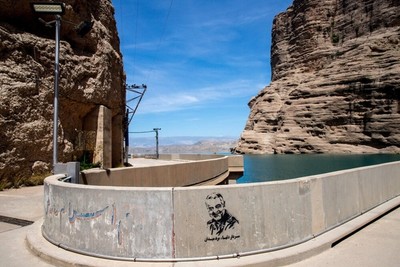
Iran’s dams may have been built to support missile bases - NYT
1

Iran’s dams may have been built to support missile bases - NYT

2

US Army seeks 17 bunkers in Israel, Saudi, Lebanon amid Iran threats - report

3

UK PM warns Iran against attacks on journalists and military bases

4

Senior Guards commander admits deep Israeli intelligence infiltration

5

Iran’s daily hardships find a voice in IRGC-linked media

Banner
Banner
Banner
Banner
Banner
Banner
Banner

Spotlight

  • Iran's wartime rallies turn against officials, fuel political feuds

    Iran's wartime rallies turn against officials, fuel political feuds

  • How Thai clerics in Iran were recruited to attack Israeli embassy in Bangkok
    EXCLUSIVE

    How Thai clerics in Iran were recruited to attack Israeli embassy in Bangkok

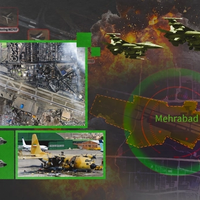
  • Mapping aircraft losses from US-Israeli strikes on Tehran airport
    SPECIAL REPORT

    Mapping aircraft losses from US-Israeli strikes on Tehran airport

  • Iraq’s move on militia stronghold may do little to curb Iran’s influence
    ANALYSIS

    Iraq’s move on militia stronghold may do little to curb Iran’s influence

  • 'Our turn to play': Iran hardliners call for breaking US blockade

    'Our turn to play': Iran hardliners call for breaking US blockade

  • Head full of pellets: protester recalls ordeal on Iran holiday island
    EXCLUSIVE

    Head full of pellets: protester recalls ordeal on Iran holiday island

  • Israeli opposition to Islamic Republic transcends party lines
    ONE-ON-ONE

    Israeli opposition to Islamic Republic transcends party lines