US S. Korea Working To Release Iran’s Frozen Funds - Seoul Officials

South Korean media say Seoul and Washington are mulling over ways to release Iran’s $7 billion funds frozen due to US sanctions on Tehran.
South Korean media say Seoul and Washington are mulling over ways to release Iran’s $7 billion funds frozen due to US sanctions on Tehran.
In an article on Tuesday, the Korea Economic Daily said the move will help Seoul resume its business ties with Tehran as well as President Joe Biden in the 2024 US presidential election.
Citing diplomatic and government sources in Seoul, the conservative business daily said Korean and US government officials are involved in working-level discussions under Washington’s leadership to unfreeze the Iranian funds.
South Korea has blocked $7 billion which it owes for importing Iranian oil prior to full imposition of US sanctions in May 2019. Bilateral ties between Iran and South Korea are frayed because of Seoul's refusal to release the Iranian money held at two commercial banks – Woori Bank and the Industrial Bank of Korea.
South Korea was previously one of Iran's biggest crude oil buyers in Asia. Before the reimposition of US sanctions, South Korean oil companies paid for their oil imports in their own national currency the won through the Iranian central bank account in Seoul and paid government companies involved in selling the oil in rials.
The report quoted unnamed sources familiar with the matter as saying that the release, if implemented, will come “under stringent conditions that Iran use the funds only for public purposes such as UN dues and purchasing COVID-19 vaccines.”
Previously, there have been reports that the US would agree to the release of the funds solely for humanitarian needs, but Washington has never confirmed the existence of such a plan.
“If all goes to plan, we expect our strained relationship with Iran to improve significantly,” a Seoul government official told the newspaper.
According to the source, if talks turn out to be successful, the frozen money will be allowed to be transferred to Iranian bank branches in neighboring Middle Eastern countries, not directly to Iran, to monitor the flow and use of the funds.
The report came three days after Iran International reported that “the Islamic Republic is expected to free hostages with dual nationality in exchange for its assets in South Korea and show more flexibility on issues related to its nuclear program in exchange for the release of its funds in Iraq.”
Currently there are three dual nationals with American citizenship and two individuals with US permanent residency held by Iran on trumped-up charges of espionage. The three citizens are Siamak Namazi, Emad Sharghi and Morad Tahbaz, while Jamshid Sharmahd and Shahab Dalili are US permanent residents.
Confirming the report by Iran International and those of “some local media in the Middle East,” the South Korean outlet also said a transfer of Iranian funds in Seoul would come with conditions that Tehran release “a US hostage held in Iran on spying charges” and limit uranium enrichment levels during nuclear development at 60%.
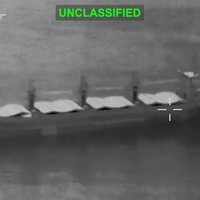
As South Korea-Iran relations turned sour, Tehran once incited a boycott of Korean products in Iran, targeting Samsung Electronics Co. and Revolutionary Guards briefly seized a Korean oil tanker in 2021.In 2022, a newspaper funded by Supreme Leader said Iran must close the Strait of Hormuz to South Korean vessels until Seoul releases $7 billion frozen funds.
Seoul’s relations with Tehran apparently worsened earlier this year when President Yoon Suk Yeol described the Islamic Republic as the “enemy” of the United Arab Emirates during his trip to the UAE, comparing the threat the UAE faces from Iran to the threat South Korea faces from North Korea. Yoon said, “The enemy of the UAE, its most-threatening nation, is Iran.”
The report quoted Sung Il-kwang, a Korea University professor, as saying that “There is nothing South Korea can gain from becoming an enemy of Iran... Korea will benefit from gaining access to Iran’s huge market.”