Iran Must Provide Necessary Access To IAEA: Malley

The US Special Envoy for Iran repeated calls that Iran give unhindered access to International Atomic Energy Agency (IAEA) inspectors.
The US Special Envoy for Iran repeated calls that Iran give unhindered access to International Atomic Energy Agency (IAEA) inspectors.
Robert Malley made the comments after meeting with the Director General of the IAEA, Rafael Grossi, which Malley called “productive”, during which they discussed Grossi’s recent trip to Tehran.
In a Tweet, Malley said, “I welcomed his efforts to engage Iran on nuclear issues of concern to the IAEA. We stressed that Iran should follow through on its commitments made to the IAEA and should facilitate any access deemed necessary by the agency.”
Grossi reportedly reached an agreement with the authorities of the Islamic Republic on the visit earlier this month, regarding further inspections by the IAEA. However, the outcome of those talks is yet to be seen.
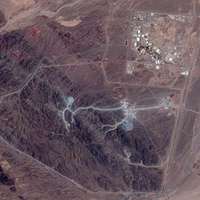
Many commentators inside and outside Iran have been skeptical of the visit, which came after the UN watchdog’s inspectors announced that enriched uranium particles with 84% purity had been found at Fordow site near Tehran.
Although Iran has denied enriching uranium with a concentration of more than 60%, Western diplomats say what prevented the adoption of a resolution by the IAEA Board of Governors against Tehran was Grossi’s recent agreement with the Islamic Republic.
During his visit, Grossi had said it was an "issue of necessity to have a very deep, serious, systematic dialogue with Iran”.




An Iranian politician has suggested to reinstate former chief nuclear negotiator Abbas Araqchi to discuss the revival of the 2015 nuclear deal with the United States.
Mansoor Haqiqatpoor also suggested that "radical elements" should no longer be on the negotiating team. "I hope the radicals' power in Iran will be reduced. I guess [President Ebrahim] Raisi has realized how radicals can do harm to Iran's foreign policy. They have prevented the talks from being fruitful."
Speaking to conservative Nameh News website, Haqiqatpoor said, "I hope the officials have realized that radicals should not be put in charge of decision-making as they will push Iran into international isolation."
He added that the negotiations can lead to positive results if Iran’s team changes its approach. I suggest that even if Araqchi is not put in charge of the negotiating team, he should at least be an adviser to the team."
Araqchi was Former Foreign Minister Javad Zarif's deputy, and he led Iran's nuclear negotiators under the Rouhani administration until mid-2021.
While some say that talks in the first half of 2021 under Araqchi were yielding results, the hardliner team under Raisi, who assumed office in August of that year, dragged out talks with the West until the diplomatic effort reached an impasse last September.
Meanwhile, in an interview with centrist Agahi-ye No magazine, former moderate vice President Es'haq Jahangiri said that former US President Donald Trump withdrawal from the 2015 nuclear deal known as the JCPOA and reimposition of sanctions dealt a hard blow to Iran's economy.
He said when Trump decision pushed “all our friends in various countries” to distance themselves from Iran. China which was cooperating with Iran on the Tehran-Mashhad rail line, was the first country to stop its projects and pull out of Iran. Then, the French energy company Total said they cannot continue working with Iran. China was Total's trade partner, and the Chinese should have continued working, but they too said they cannot go on with projects to expand the Persian Gulf gas fields.
"From 2018, under the circumstances we changed tracks from the country's development to helping with the people's livelihood. All we wanted to do was protect the people and help them to survive. I was one of the biggest defenders of domestic production, but I knew that without international trade we could not succeed," Jahangiri said.
At the same time, while many politicians in Iran have pinned their hopes on a possible breakthrough after IAEA chief Rafael Grossi's visit to Iran in early March, Behrouz Kamalvandi, the spokesperson for the Iranian Atomic Energy Organization told the press on Tuesday that he is neither optimistic nor pessimistic about the future.
He said the IAEA was supposed to investigate nuclear traces in Marivan area where Uranium-236 has been traced. Kamalvandi said the trace dates to old activities by Russians in the area. But instead of looking for answers for their original questions, the IAEA inspectors raised new questions.
He charged that world powers do not want Iran to gain nuclear power and benefit from its economic, industrial and technological aspects. However, he did not say that Europe and the United States, as well as Iran's neighbors in the region are scared by the possibility of Iran developing nuclear weapons.
He also ignored the fact that Iran’s uranium enrichment closer to weapons grade has led to more international concerns. He also acknowledged that resources spent on the nuclear program have adversely affected Iran's economy.
Abolqasem Delfi, a former Iranian ambassador to France, says the deal to restore ties with Saudi Arabia marks the return of Iran's foreign policy to rationality.
However, Delfi pointed out in an interview with Rouydad24 news website in Tehran on Monday, that the agreement with Riyadh to restore diplomatic ties cannot substitute Iran's nuclear agreement with world powers (JCPOA). But he added that the agreement may signal other upcoming breakthroughs in Iran's foreign relations.
Meanwhile, Iranian diplomat Kourosh Ahmadi said in an interview with Etemad Online that Europe and the United States probably welcome the breakthrough because it makes it less likely for Iran to disrupt the flow of oil from the Persian Gulf in case of an Israeli attack on its nuclear installations.
He added that the agreement between Tehran and Riyadh will lead to a reduction in urgency for the US to supply arms to Persian Gulf Arab states as they would be now less concerned about possible threats from Iran.
In another development, Iranian official news agency IRNA quoted former US official and a current senior director at Rafik Hariri Center and Middle East Programs at the Atlantic Council William Wechsler as saying that it will be no surprise if the next news about Iran turns out to be the revival of the nuclear agreement (JCPOA) based on a deal brokered with China.
In yet another development Monday, the IRGC's Javan newspaper in Tehran wrote: "The agreement with Saudi Arabia might pave the way for resolving the deadlock over the revival of the Joint Comprehensive Plan of Action (JCPOA)."
Javan argued that the agreement with Riyadh to some extent meets the US demand about considering the interests of Washington's Arab allies in a deal with Tehran. Javan claimed the Saudi agreement came at a time when efforts have been redoubled to return the United States to the negotiating table with Iran.
Despite Javan's optimism, the Biden administration continues to insist that restoring the JCPOA is no longer a priority. It should be noted that Iranian media increasingly reflect a sense of frustration on the part of hardliners who now seem eager to resume talks with Washington.
The daily further opined that the deal with Saudi Arabi will reassure the United States that Iran will not destabilize the Persian Gulf region. The article in Javan went as far as saying that Riyadh may also encourage the West to make an agreement with Iran.
Centrist daily Ham Mihan was so upbeat about the agreement with Riyadh that suggested now that Iran has come to terms with Saudi Arabia, perhaps it is also time for Tehran to take constructive decisions about the JCPOA, joining the FATF and changing its positions about Russia's war in Ukraine.
Ham Mihan wrote that this will also help solve Iran's domestic problems as without tackling international problems, it would be difficult to address the economic crisis and social problems in Iran.
US State Department refused Monday to comment on the possible release of Iran’s frozen funds in exchange for three Americans held by Iran.
The State Department’s outgoing spokesperson Ned Price however, signaled that efforts are underway for their release. He also sounded positive about a deal last week between Iran and Saudi Arabia to restore relations, brokered by China.
There have long been signs that a US agreement to free $7 billion frozen by South Korean banks would be the price to pay for the release of three dual-nationals considered in effect hostages held by Iran. But after Iran’s deadly crackdown on popular protests and its supply of weapons to Russia, the proposition has become politically costly for the Biden administration.
At the same time, Price once again reiterated that restoring the 2015 nuclear deal (JCPOA) with Iran “is not on the agenda.” He said the Biden administration thought it was “on the precipice of it, only for the Iranians to once again prove that their word was unreliable and to pull back what they had agreed to.”
Talks that began in April 2021 reached a deadlock in early September 2022 when Washington blamed Tehran for presenting “extraneous demands.”
“So that’s not on the agenda. What is always going to be on our agenda as a first resort is diplomacy. We continue to believe that diplomacy is the only permanent, durable, verifiable means by which to address Iran’s nuclear program. We’re not giving up our ambitions and our hope on that, even as we’re preparing for all potential contingencies,” Price said.
It is not clear if JCPOA talks are not on the agenda then what is US diplomacy pursuing? In the past months, both Washington and the European powers involved in talks with Tehran have raised the issue of Iranian weapons supplies to Russia and its gross violations of human rights.
It seems that the West is pursuing either a more comprehensive deal beyond the nuclear issue or perhaps piecemeal agreements on specific issues.
An Iranian analyst in Tehran told ILNA news website Tuesday that the US might be pursuing a limited and temporary agreement to address some dangerous aspects of Iran’s nuclear program. Khosrow Shahin said that Washington might also be aiming for partial agreements on various issues, such as the release of prisoners to reduce the final cost of a full nuclear deal.
Some reprieve from oil sanctions could be one of the incentives for a cap on Iran’s uranium enrichment, similar to the 1990s Iraqi ‘oil for food’ UN program, although Iran needs hard currencies to deal with its worsening economic situation. In February NBC News reported that if Iran’s frozen funds are released in exchange for prisoners, limitations on how to spend the money might apply.
Regarding the Chinese brokered agreement between Riyadh and Tehran, Price said the United States supports “dialogue, we support direct diplomacy, we support anything that would serve to de-escalate tensions in the region and potentially help to prevent conflict.”
Price also tried to dismiss suggestions that China can supplant the US role in the region, emphasizing that the Biden administration has accomplished a lot in enhancing cooperation between regional countries.
“So, I think in any way you look at it, America is deeply engaged with the Middle East. We have, I think, demonstrated results in those efforts to leave a region that is more stable, is more integrated, is more prosperous. We have a long way to go…,” Price, who will soon be leaving as spokesman said.
As Iran inches closer to military grade uranium enrichment, the question is what the Biden administration can actually do to reverse that?
“They are so far along now, I am not sure at this point they are stoppable,” said Senator John Thune (R-SD) on the sidelines of the Senate weekly bipartisan luncheon on Tuesday.
Being the Whip for the Republican Party in the Senate, he is known to be articulate and measured in his response but when asked about Biden administration policy on Iran, Senator Thune did not mince words.
“A lot of things should have been done earlier [by the Biden administration]. I think like a lot of other national security issues, this administration has been too late to the game and in many cases, they turned a blind eye or a deaf ear to the challenges they face out there,” he said.
Democrats in the Senate have been dismissive about the news of the near weapons grade enrichment by the clerical regime. Asked if Iran’s ability to enrich uranium at 84% purity concerns him, Senator Bernie Sander said it is does but did not elaborate.
Other democratic senators in US Capitol hallways this week were not so eager to talk about it. ”I think we made a big mistake during the previous administration by pulling out of the nuclear deal with Iran,” said Senator Tom Carper (D-DE). “If we remained in that deal, we would not be in this situation.”
Former President Donald Trump pulled out of the Joint Comprehensive Plan of Action (JCPOA) almost five years ago and the some Democrats have been sticking to some version of Senator Carper’s sentiments ever since. It sounds like an excuse and it might be a good one for the domestic audience, but it’s not a strategy, nor is it a policy.
The fact is that Iran’s gradual progress in enriching ever higher than what was agreed in the JCPOA has seriously worried the West and regional countries such as Israel and oil-producing Arab countries in Iran’s neighborhood..
South Korean President Yoon Suk-yeol surprised Americans in January when he said that if the US does not deploy back its tactical nukes to the peninsula, South Korea can “acquire its own nukes”.
Coincidentally, Saudi’s energy minister Prince Abuldaziz bin Salman on the same date told a group of attendees at a mining and industry conference in Riyadh that Saudi Arabia is planning to enrich its domestic stockpile of uranium to ensure that it will be able to “complete the entire fuel cycle.”
Enriching uranium to weapons grade is one thing, putting it in a warhead attached to a ballistic missile that is capable of delivering it to medium and long range targets in a matter of minutes, is another thing.
When asked if the US can realistically slow the Iranian ICBM delivery for nukes, Senator Bill Cassidy told Iran International: “I don’t know if they can stop the formation of a bomb, maybe the need is to stop them from being able to deliver it.”
Stopping Iran from its march towards weapons grade enrichment “exceeds what I know as to our capabilities,” he added.
That means the Republicans believe Iran’s nuclear program is anything but contained. If Iran moves to 90% enrichment capacity, then the million dollar question remains: who can stop the likes of Saudis and South Koreans from going down the same path?
In a tough statement to IAEA Board of Governors, the E3, made up of France, Germany and the UK, demanded immediate response to Iran’s 84-percent uranium enrichment.
With a list of demands to moving forward, the group said Iran must rebuild trust in the face of its deception to the IAEA, putting pressure on the regulator to go further than the US’s ‘wait and see’ approach.
“We call on Iran to fully cooperate with the Agency to provide technically credible explanations for the origin of these particles,” the group said.
While the US responded to the IAEA’s visit to Tehran with a cautious approach, waiting to see what the outcomes would be, the E3 said the enrichment at up to 83.7% U-235 is an “extremely grave escalation” which comes against the highly concerning backdrop of continued accumulation of high enriched uranium up to 60% and Iran continuing to expand its enrichment capabilities.
“There is no credible civilian justification for enrichment to this level in Iran,” said the E3 statement. "This step, along with Iran’s wider nuclear program, brings Iran dangerously close to actual weapons-related activities. This further undermines Iran’s arguments that its nuclear program is only for peaceful purposes.”
Refusing to take a back seat while the IAEA continues its investigations, the E3 asserted its plans to keep pressure on the international community and demand answers after Iran’s breaking of trust.
“We will continue consultations, alongside international partners, on how best to address Iran’s unabated and dangerous nuclear escalation,” the group said. “We ask the Director General [Rafael Grossi] to keep the Board of Governors informed ahead of the June Board, and provide earlier updates as necessary, and would ask for this report to be made public.”
The US is causing frustration in the International community in its refusal to declare the JCPOA dead while it pursues the diplomatic approach after talks broke down last year. Critics say clarity is needed as Iran races to weaponization under the IAEA’s nose.
“We deeply regret that Iran did not accept the fair and balanced deal that the JCPOA Coordinator tabled in March and August last year, and instead chose to accelerate its program,” said the E3 statement, claiming Iran bears full responsibility for the deadlock.
Pushing for clear actions, the E3, represented by the UK Foreign and Commonwealth Development Office's Corinne Kitsell OBE, and Ambassador Götz Schmidt-Bremme, German Permanent Representative to the IAEA, demanded that Iran immediately stop and reverse its nuclear escalation and allow for complete transparency with the IAEA by re-applying the Additional Protocol, as an important confidence-building step.
“We also recall that, under its Comprehensive Safeguards Agreement, Iran is legally obliged to implement Modified Code 3.1. and cannot change its application or withdraw from it unilaterally.”