US Approves Potential Anti-Drone System Sale To Qatar For $1 Billion

The US State Department has approved the potential sale of an anti-drone system to Qatar in a deal valued at $1 billion, the Pentagon said on Tuesday.

The US State Department has approved the potential sale of an anti-drone system to Qatar in a deal valued at $1 billion, the Pentagon said on Tuesday.
"Qatar is a good friend and reliable and capable partner. And I'm notifying Congress that I will designate Qatar as a major non-NATO ally to reflect the importance of our relationship. I think it's long overdue," Biden said in January when he met Qatar's emir, Sheikh Tamim bin Hamad al-Thani.
Separately, Qatar has also played a role in the Iran nuclear talks and in relations with Afghanistan, where Washington's interests were represented by the small Gulf country.
The proposed sale will improve Qatar's capability to meet threats by providing electronic and kinetic defeat capabilities against drones, the Pentagon said.
The principal contractors will be Raytheon Technologies Corp RTX.N, SRC and Northrop Grumman Corp NOC.N, the Pentagon said in a statement. It added that the Pentagon's Defense Security Cooperation Agency notified Congress of the possible sale on Tuesday.
It will require the assignment of five additional US government and 15 US contractor representatives to Qatar for five years to support fielding, training and sustainment activities, the statement added.
Despite approval by the State Department, the notification does not indicate that a contract has been signed or that negotiations have concluded.
While Iran’s IRGC has launched missile attacks on Iraq’s Kurdistan region, Iraqi Prime Minister says his government will not allow its territory to be used to “harm any side.”
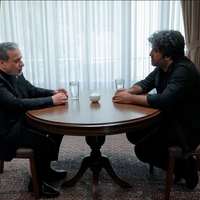
Mohammed Shia' Al Sudani made the comments Tuesday in a meeting with Iranian President Ebrahim Raisi as part of his visit to the Iranian capital.
The Iraqi official said, “It is the policy of the Iraqi government that this country should not be the starting point for actions harming the countries of the region.”
In the meeting, Ebrahim Raisi claimed the Islamic Republic supports a united and strong government in Iraq.
Raisi said relations between Tehran and Baghdad must be expanded to establish more peace and stability in the region and the world.
Since the eruption of nationwide protests in Iran, regime officials have accused Kurdish opposition groups in northern Iraq of fueling the unrest, with the IRGC repeatedly launching deadly attacks on the neighboring country’s northern territories.
The latest round of shelling of Iraqi Kurdistan region drew condemnation by Western countries as well as the Iraqi government.
Iraqi Foreign Minister Fuad Hussein decried the attacks as a violation of Iraq's sovereignty and Kurdistan Region Prime Minister Masrour Barzani also condemned the “violations” of Iraq and its Kurdish region’s sovereignty.
The US also strongly condemned Iran’s “violations of Iraqi sovereignty”, calling on the Islamic Republic to stop attacking its neighbor.

The Israeli Air Force will hold large joint drills with the United States to simulate strikes against Iran’s nuclear program.
Releasing a statement on Tuesday, the Israel Defense Forces announced that the joint aerial wargames with the US military is to practice strikes against the Islamic Republic and its proxies in the region.
The two-day drills will be launched on Tuesday over parts of Israel and theMediterranean Sea, and include long-range flights needed by Israeli pilots to undertake to reach Iran.
The maneuvers come after IDF chief Aviv Kohavi visited the USlast week urging the defense officials that the two countries must speed up joint plans for offensive actions against Iran.
“In order to improve our capabilities in the face of challenges in the region, joint activity with the US Central Command will be significantly expanded in the near future,” Kohavi said after returning to Israel.
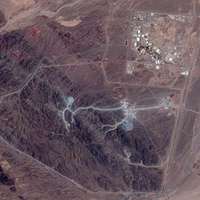
The Islamic Republic began enriching uranium to 60% purity at its Fordow nuclear plant last week, saying the move was in response to the resolution criticizing its lack of cooperation with the IAEA.
That purity is below the 90% needed for weapons-grade material but well above the 20% Iran produced before its 2015 agreement with major powers that capped enrichment at 3.67%.

A top security official in Iran’s Esfahan province says a member of the Revolutionary Guard has been killed on Monday.
Deputy Governor of Esfahan, Mohammad Reza Jan-Nesari told ISNA that in the early hours of Monday one of the IRGC members, identified as Reza Dastani, was shot several times with a firearm on the way to work.
He also added that efforts are underway to identify and arrest the attackers, saying additional information about the intelligence measures taken will be announced later.
So far, authorities have not provided any information about Dastani’s rank or post in the IRGC or its Basij paramilitary unit. However, most personnel affiliated with the Revolutionary Guards have been involved in suppressing popular protests in the past 75 days.
The killing comes one week after Colonel Davoud Jafari, a senior aerospace commander lost his life in what Iran said was a roadside bomb blast on the outskirts of the Syrian capital, Damascus. He could have also been killed in one the frequent Israeli air strikes on Iranian bases in Syria.
The IRGC-affiliated Tasnim News Agency said Jafari served as one of the Iranian officials responsible for the seizure of two US Navy command boats carrying 10 US personnel in the Persian Gulf in January 2016.
Jafari was involved in the deployment of Iranian air defense systems in Syria and Lebanon.

An Iranian news website has cited “resistance front” media, introducing the most important and sensitive locations in Israel which can be targeted in any future war.
Tasnim news agency, which is affiliated with Iran’s Revolutionary Guards, quoted a report by Al-Mayadeen network publishing Israel’s sensitive locations, including many civilian targets.
Al Mayadeen TV is a media outlet close to Iran-backed Lebanese militant organization Hezbollah.
Palestinian militant groups and other Iranian allies and proxies are often referred to collectively as the “Resistance” in Iranian official jargon.
The Knesset, prime minister’s office, ministries of foreign affairs, defense, finance, and communications are among the main locations listed as potential targets.
Nuclear sites and facilities including Tirosh Special Weapons Facilities, Israel Institute of Technology, the Rafael Arms Development Authority, and Weizmann Institute of Science are also mentioned in this report as the strategic centers.
The report also says that Israel heavily relies on a series of civilian airports that provide them with safe access to various countries in the world, saying these airports are a proper target for resistance front attacks. The airports are Ben Gurion in Lod, Haifa, and Ramon in southern Israel.
Some military bases like Ramat David in Haifa, Hatzerim and Nevatim Airbases in Be'er Sheva, as well as Urim intelligence-gathering installation are among non-civilian sites introduced as targets to “cripple Israelis’ lives.”

Iran has once again threatened the United States, Israel and their allies saying that “they will be defeated in the World War they have waged against Iran.”
Revolutionary Guard Commander Hossein Salami said Sunday that “We are determined to stand against them. We will turn this new battle scene, this huge sedition scene, and this world war into a burial ground for America, Israel and their allies,” singling out Saudi Arabia, the United Kingdom, France and Germany.
During his visit to Zahedan in the southeast after weeks of antigovernment protests in the mostly Sunni region, Salami once again upped the ante against Israel saying the “Zionist” regime would collapse.
“We will bury plots to target Iran, just as we've buried Israeli and American plots in the past,” he added.
Salami’s visit to Sistan and Baluchestan province comes at a time the regime has been in hot water there within the past weeks after killing least 100 people,including a nine-year-old girl during anti-government protests.
The hardliner commander labeled protesters as “non-believers”, saying, “Today on one side is the Front of Kufr [disbelief] with all its might and on the other is the Front of Islam, one cannot stand in the middle, the lines are clear, one side is led by America and Israel and the other side is led by the Supreme Leader of the revolution [Ali Khamenei] and believers and revolutionaries.”
His remarks come a day after Khamenei warned demonstrators to bring the movement to an end and showed a green light for more crackdown.
However, some believe Salami’s comments on “unity” in a region with Sunni majority is the last attempt by the government to pacify the situation there while it is already under pressure with the situation in the northwest Kordestan province.
In early November the leader of Iran’s largely Sunni Baluch population in the southeastern province of Sistan and Baluchestan strongly criticized the authorities for their brutality in the province, holding Supreme Leader Khamenei responsible for the violence against Sunnis and other protesters.
“A government with which people are dissatisfied is no good and has to be toppled,” Molavi Abdolhamid stated, demanding the release of all those arrested in the protests across the country.

He also blasted more than 200 members of Iran’s parliament who demanded the death sentence for some protesters. “In Khamenei’s rule there is no freedom. Which political party or group is free? We have neither freedom of speech, nor freedom of media,” he added in unprecedented criticism against the 83-year-old ruler.
The influential Friday Prayer Imam of Zahedan also called for an internationally monitored referendum, saying by killing and crackdown the government cannot push back a nation.
Worried by the developments in the province, Khamenei sent his representatives to hold talks with local Sunni leaders.
State media said Mohammad-Javad Haj-Ali Akbari was carrying “Supreme Leader’s greetings to the people of Sistan and Baluchestan” and to let them know that the recent events in the province have “saddened and upset him”.
However, what some media in Tehran reported about Haj-Ali Akbari’s statements, showed that his remarks had double meaning. While he spoke about resolving misunderstandings, he also said he delivered “serious messages to some” to be careful about their behavior.
With Abdolhamid clearly expressing the demands of the Baluch people and condemning the brutal killing of citizens in the visit with Khamenei’s representative, it seems Khamenei this time has sent his hardliner IRGC Commander to show an iron fist to the people, signaling if they continue protests, more clampdowns are on the way.