Iran Supplies Could Fall Short Of Oil Market Hopes

Mardo Soghom
Iran International

Oil market watchers await a nuclear deal with Iran that can lift United States' sanctions and boost crude exports offsetting a decline in global supplies.
Iran International
Oil market watchers await a nuclear deal with Iran that can lift United States' sanctions and boost crude exports offsetting a decline in global supplies.
Oil prices hover around their eight-year highs and reaching the psychologically unsettling $100 a barrel mark reminiscent of a the early 2010s.
In analysis Wednesday, John Kemp wrote for Reuters that “time is ripe for a renewed agreement between the United States and its allies and Iran that swaps sanctions easing for limits on enrichment and other nuclear activities.”
OPEC and its oil-producing allies known as OPEC+ have reduced daily oil supplies by around 650,000 barrels after larger cuts in 2020 in the wake of COVID-19 and declining demand. Now, they have agreements in place not to increase production to pre-pandemic levels, although demand is approaching that volume.
Some also argue, that irrespective of agreements among OPEC+ countries it is simply hard to revive production at oil fields that were partially or fully shut down for two years.
Therefore, hopes focus on a nuclear deal with Iran, which analysts hope can add another 500,000 barrels a day to global supplies and prevent prices from braking through the $100pb threshold.
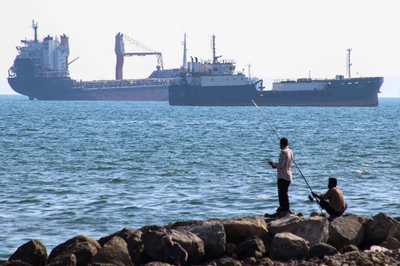
But it is not certain that Iran can deliver that extra volume in the coming months. By all indications Tehran is already exporting around 1.2 million barrels per day, mostly to China and its capacity to export much more is questionable.
Iran’s domestic consumption is well over two million barrels pd and in order to export 1.7 or 1.8 million per day, its total production should come very close to four million bpd, which would be almost impossible, at least this year.
Iran’s parliament Speaker Mohammad Bagher Ghalibaf, urging caution in drafting the budget this week, warned lawmakers that pinning more hopes on oil revenues is unrealistic. He explicitly said that Iran cannot produce four million bpd and its maximum export capacity is 1.4 million barrels. This is just 200,000 more than its current estimated daily exports.
Before the US withdrew from the 2015 nuclear deal known as JCPOA and imposed sanctions in 2018, Iran was exporting around 2 million bpd, but that capacity seems to have slipped away for now.
Before the 1979 revolution Iran was producing well over 5 million pd, but that capacity has declined over the last four decades because of lack of investments and technology.
Iran’s oil minister Javad Owji said last November that the country needs $160 billion in investments in its oil and gas industry to prevent further declines in production.
That is not a task to be accomplished in one or two years, even if Iran’s relations with West improve far beyond an impending nuclear dealseen by many as a partial or temporary agreement.
Lifting of US sanctions can nevertheless add some Iranian oil to global supplies, but whether it would enough to lower prices is related to other factors such as the Ukraine crisis and the how much production will increase in the United States at current high prices.
Reuters notes that the Biden administration, under the political pressure of high inflation, is interested in a deal with Iran to boost oil supplies. Washington is facing a three-pronged crisis with Russia, China and Iran. “Prioritization implies US policymakers need to concentrate on the immediate policy problem (Russia) and their long-term top priority (China) while de-escalating a conflict with is neither pressing nor of the first order (Iran),” the article argues.