• العربية
  • فارسی
BrandBrand
  • Iran Insight
  • Politics
  • Economy
  • Analysis
  • Special Report
  • Opinion
  • Podcast
  • Live TV
  • Iran Insight
  • Politics
  • Economy
  • Analysis
  • Special Report
  • Opinion
  • Podcast
  • Live TV
  • Theme
  • Language
    • العربية
    • فارسی
  • Iran Insight
  • Politics
  • Economy
  • Analysis
  • Special Report
  • Opinion
  • Podcast
  • Live TV
All rights reserved for Volant Media UK Limited
volant media logo

Poverty Soars As Iran’s Islamic Revolution Fails On Promises

Maryam Sinaiee
Maryam Sinaiee

Iran International

Feb 1, 2022, 16:48 GMT+0Updated: 17:23 GMT+1
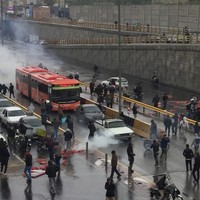
Teachers living with less than $200 a month protesting in Iran. Dec. 23, 2022

The Islamic Republic has begun marking the 43rd anniversary of a revolution described by its founder, Ruhollah Khomeini, as the revolution of the "bare-footed".

For decades the Islamic Republic has celebrated what is known as Ten Days of Dawn (dah-ye fajr) which marks the ten-day period from Ayatollah Ruhollah Khomeini's arrival in Iran on the first of February 1979, to the day of the Islamic Revolution's victory, but this year's celebrations are marred not just by the pandemic but also the fact that it is much harder than ever to speak of the promises of freedom and prosperity given to masses in 1979.

Amid soaring poverty, a debate is raging among Iranians as to whether the revolution has failed in delivering on its promises. Many on social media and among activists in Iran point to government data that shows poverty has increased since 1979.

Khomeini always insisted that the revolution belonged to the mostaz'af, a Qur'anic word which means disempowered, oppressed, underprivileged, suppressed, or poor. He often used the word together with the "barefooted", "slum dwellers", and the "deprived". In his speeches he often said the Islamic Revolution was the and could not survive without their support. Four decades later, however, poverty has not only persisted, but has been growing at a faster pace in recent years.

mostaz'af
revolution of "slum dwellers" against "palace dwellers"
100%
More than a million Iranians welcoming Khomeini in February 1979.

According to official figures released by the interior ministry, in total, around 60% of the 84 million Iranians live under the relative poverty line of whom between 20 to 30 million live in "absolute poverty". In 2010, for instance, the number of those living under the absolute poverty line was around 10 million according to government statistics.

Economic failures of the regime are becoming more and more difficult to justify, even given US sanctions. "The main reason for the [economic] problems [in the past ten years] is not just the sanctions. A major part of these were caused by wrong decisions and inefficiency," Supreme leader Ali Khamenei admitted in a speech Sunday.

Khamenei who charts the country's macro-policies, including the economy, takes no personal responsibility for the failures. Instead, in a speech last week he cast the blame for the troubles on President Ebrahim Raisi's predecessors, Hasan Rouhani and Mahmoud Ahmadinejad, and their governments.

Since 2017, Iran has seen several major protests fueled by economic demands rather than any specific political issue. The driving force of the unrest, including the nationwide November 2019 protests following an increase in fuel prices that left hundreds of protesters dead, and the 2021 water shortage protests in Khuzestan and Esfahan, were mainly the impoverished groups of the Iranian society rather than political groups and parties.

Even some of the most ardent supporters of the revolution and Khomeini's legacy are now questioning the outcome of the revolution. "One must ask, wouldn't much of the services [offered to the people] and the progress made happen anyway even if there was no Islamic Republic?", the Society of Combatant Clergy (Majma-e Rohaniyoun-e Mobarez), a reformist clerical group which is one of the oldest political groups in the country asked in a statement Sunday issued on the anniversary of the Revolution. "It is difficult to speak of the Islamic Revolution…and acclaiming it is even harder," said the statement.

The Combatant Clergy also warned that the Iranian society is now facing major economic, political, cultural and international crises including impoverishment and shrinking of the middle class. "People are saying forget about free water, electricity and cheap housing promised to us [by Khomeini and the revolutionaries], at least provide our most basic needs," the statement said.

The Combatant clerics who alleged that the Revolution has "deviated" from its original goals of providing freedom and prosperity to people also pointed out in their statement that anti-government protests are now more driven by economic demands than political reasons.

The allegation of deviation from revolutionary ideals of freedom and prosperity has angered the hardliners in power who find it very difficult to justify the various crises, including the crisis of poverty even by blaming the US sanctions.

Javan newspaper, affiliated with the Revolutionary Guards argued that when Khomeini said the 1979 Revolution was for the mostaz'af, he did not mean the economically poor but those who were "politically oppressed". "One can never say the roots of [the revolution] lay in the [demands of the economically impoverished] classes," Javan wrote.

Most Viewed

Iran’s dams may have been built to support missile bases - NYT
1

Iran’s dams may have been built to support missile bases - NYT

2

US Army seeks 17 bunkers in Israel, Saudi, Lebanon amid Iran threats - report

3

UK PM warns Iran against attacks on journalists and military bases

4

Senior Guards commander admits deep Israeli intelligence infiltration

5

Iran’s daily hardships find a voice in IRGC-linked media

Banner
Banner
Banner
Banner
Banner
Banner
Banner

Spotlight

  • How Thai clerics in Iran were recruited to attack Israeli embassy in Bangkok
    EXCLUSIVE

    How Thai clerics in Iran were recruited to attack Israeli embassy in Bangkok

  • Mapping aircraft losses from US-Israeli strikes on Tehran airport
    SPECIAL REPORT

    Mapping aircraft losses from US-Israeli strikes on Tehran airport

  • Iraq’s move on militia stronghold may do little to curb Iran’s influence
    ANALYSIS

    Iraq’s move on militia stronghold may do little to curb Iran’s influence

  • 'Our turn to play': Iran hardliners call for breaking US blockade

    'Our turn to play': Iran hardliners call for breaking US blockade

  • Head full of pellets: protester recalls ordeal on Iran holiday island
    EXCLUSIVE

    Head full of pellets: protester recalls ordeal on Iran holiday island

  • Israeli opposition to Islamic Republic transcends party lines
    ONE-ON-ONE

    Israeli opposition to Islamic Republic transcends party lines

  • 2019 crackdown failed to break cycle of Iran street protests
    ANALYSIS

    2019 crackdown failed to break cycle of Iran street protests