EU Says Negotiators Seeking Date For Resumption Of Iran Talks

Iran and world powers are trying to agree on a date for the resumption of nuclear talks in Vienna as soon as possible, an EU spokesperson said on Friday.
Iran and world powers are trying to agree on a date for the resumption of nuclear talks in Vienna as soon as possible, an EU spokesperson said on Friday.
Iran's top negotiator said after talks in Brussels this week that negotiations in Vienna will resume by the end of November.
EU spokesperson Peter Stano said the October 27 meeting in Brussels was "useful" and "helped to define a way forward to resume negotiations in Vienna".
"We are working together with other partners, including Iran and other signatories (of the Iran nuclear deal - JCPOA), to fix a concrete date as early as possible to reconvene in Vienna," Stano told a regular briefing.
In April, Tehran and six powers started to discuss ways to salvage the 2015 nuclear pact, which three years ago then-US President Donald Trump abandoned. Trump then reimposed sanctions on Iran that have devastated its economy by squeezing its oil exports.
But the talks have been on hold since the election of Iran's hardline President Ebrahim Raisi in June, who is expected to take a tough approach if the talks resume in Vienna.
Reporting by Reuters







Iran’s chief nuclear negotiator visiting Moscow suggested late Thursday that his country is not negotiating with the United States, but with other world powers.
Ali Bagheri Kani who traveled to Moscow on Thursday after a trip to Brussels the day before, spoke with Islamic Republic News Agency, IRNA and in response to a question about the US welcoming Iran’s decision to return to the nuclear talks, said, “Our discussions are with 4+1”.
The four powers Bagheri referred to are four of the five permanent members of the United Nations Security Council, minus the United States. Germany is the fifth country, which was a signatory of the Joint Comprehensive Plan of Action (JCPOA) but not a permanent member of the Council. While the 4+1 have remained in JCPOA, the United States withdrew from the agreement in 2018.
Negotiations that began in Vienna in April after President Joe Biden assumed office and expressed his intention to restore the 2015 Iran nuclear deal, involved the four Security Council members directly meeting with Iran, plus the United States negotiating on the sidelines of the group, with the mediation of its three European allies.
After leaving the Vienna format in June and delaying its return until now, Iran seems to be trying to avoid the quicker, on-the-spot Vienna talks, leaving the US out of a more direct involvement in the negotiations.
Bagheri also told IRNA that Tehran will continue discussions on a bilateral mode with JCPOA participants, meaning 4+1.
So far it appears that Tehran is trying to negotiate with Enrique Mora, the chief European Union coordinator of the Vienna talks and with Russia, and has not met with the UK, France and Germany.
At the same time, Iran’s Foreign Minister Hossein Amir-Abdollahian demanded on Wednesday that the US must show “goodwill” and release $10 billion of Iran’s frozen funds to help advance the talks, while Bagheri in Brussels said the Vienna talks will resume by the end of November.
Asked in Moscow if there is a more concrete date, Bagheri said, “What is more important in the new round of negotiations is the readiness of the other side to make serious decisions about lifting sanctions.”
From the foreign minister’s demand for the release of $10 billion and Bagheri’s claim that currently there is a new format of talks hinging on US lifting sanctions, it seems Iran has departed from the logic of the Vienna talks and is putting forth new conditions.
In Vienna, the talks were about charting a course for the “mutual return” of Iran and the US to the JCPOA. This meant negotiating a sequence of steps and actions that would lead to an eventual restoration of all JCPOA obligations. Lifting US sanctions was an important part of that sequence, which Iran seems to want to change now, asking for money before the process of returning to the agreement is negotiated.
US National Security Advisor Jake Sullivan outlined US priorities Thursday in advance of the G20 summit this weekend, including the issue of Iran nuclear talks.
President Joe Biden is expected to discuss with the leaders of three European allies, Chancellor Angela Merkel of Germany, President Emmanuel Macron of France and the British Prime Minister Boris Johnson the coordination of the Western position in the talks to revive the Joint Comprehensive Plan of Action, JCPOA.
“It's an opportunity to closely coordinate with our key European partners at the leader level on a joint negotiating position as we work towards a resumption of negotiations,” Sullivan told a briefing in Washington.
After four months of staying away from multi-lateral talks in Vienna, Iran announced on Wednesday that it will return to negotiation until the end of November, but Tehran delaying tactic has led to uncertainty about its real intentions.
Iran’s Foreign Minister Hossein Amir-Abdollahian said on Wednesday that Tehran expects Biden to show “goodwill” and release $10 billion of Iran’s frozen funds before talks take place.
"It's not entirely clear to me yet whether the Iranians are prepared to return to talks. We have heard positive signals that they are, but I think we have to wait and see when and whether they actually show up at the negotiating table, and we're prepared to negotiate in good faith for a return to mutual compliance with the JCPOA. We hope they are as well,” Sullivan said about how Washington perceives Iran’s moves.
Sullivan argued that the Biden Administration has much closer cooperation with its European allies than the Trump administration, which abandoned the JCPOA and imposed ‘maximum pressure’ sanctions on Tehran. The national security advisor said this is “one of the most profound divergence between the previous administration and the European.”
He went on to say, “Here you'll see Chancellor Merkel, President Macron, Prime Minister Johnson, President Biden all singing from the same song sheet on this issue."
The United States and the European powers are seriously concerned about Iran’s enrichment of uranium to a high level of purity, which has no civilian use and other knowledge Tehran’s nuclear program might gain, as negotiations are delayed.
“It's also an opportunity to level set on our understanding of Iran's progress on the nuclear program since they left the JCPOA. And obviously, we all have deep concerns about the forward progress of that program since the lid was lifted and they began to operate outside of the constraints of the JCPOA," Sullivan maintained in another indirect criticism of the Trump administration’s decision to withdraw from the agreement.
But critics of the Biden administration say that the JCPOA was a weak agreement, with restrictions that would expire in the coming years and would allow Iran to pursue a nuclear weapons program. The US is pursuing to restore a deal that has already lost its usefulness, they say.
Although the administration has condemned former president Donald Trump’s withdrawal from the JCPOA, but it has kept the sanctions in place to force Iran to negotiate.
Russia’s ambassador to the IAEA has once again criticized Iran on an issue related to the nuclear talks in Vienna that Tehran has refused to attend since June.
Ambassador Mikhail Ulyanov rejected a remark by Iran’s Foreign Minister Hossein Amir-Abdollahian on Wednesday that Tehran does not want to return to the negotiations amid an impasse.
“We respect his views but to my mind there was no deadlock at all. We need to learn more about possible new elements in the Iranian position. At this juncture it is too early to judge,” Ulyanov replied to a tweet on Thursday.
Iran announced on Wednesday that it will return to the Vienna talks until the end of November but at the same time Amir-Abdollahian demanded that the United States should unfreeze $10 billion of Iran’s money as a sigh of “goodwill”.
Ulyanov earlier had taken his first jab at the Iranian foreign minister for repeating that Tehran will return to the talks “soon”.
"Does anybody know what it can mean in practical terms?" Ulyanov said in a tweet in a rare biting language on October 23.
On Thursday, however, Russia’s Sputnik website reported that Iran’s chief nuclear negotiator Ali Bagheri Kani will visit Moscow to discuss the nuclear talks.
German Chancellor Angela Merkel and her likely successor Olaf Scholz will discuss the Iran nuclear issue with US President Joe Biden when they meet during the G20 summit.
Merkel has invited current finance minister Scholz to join bilateral discussions with other world leaders on the sidelines of the G20 summit this weekend, a German government official said on Thursday.
Merkel's bilateral meetings, which should cover topics such as nuclear talks with Iran, will include one with US President Joe Biden, the official added.
Germany, along with the United Kingdom and France, is a participant in the Vienna nuclear talks. Iran has suspended its participation in the negotiations to revive the 2015 nuclear deal (JCPOA) but announced on Wednesday that it will rejoin until the end of November.
The three German parties working to form a new coalition government aim to wrap up their talks by the end of November and hope to elect Social Democrat Scholz as the new chancellor in the week of Dec. 6, party officials said last week.
The fact that Merkel and Scholz will take part in the summit together is a sign of continuity in Germany's approach to the G20, the government official said.
Iran has accused the International Atomic Energy Agency (IAEA) of repeatedly exposing details of its nuclear activities, including through its periodic reports.
"Considering the repeated impact of the publication of Iranian documents, it seems that this is an ongoing trend under the influence of certain countries with certain objectives, part of which is waging psychological warfare," Behrouz Kamalvandi, the Atomic Energy Organization of Iran (AEOI) spokesman said Wednesday in an interview with state broadcaster (IRIB).
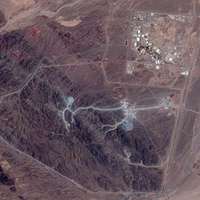
Iran in September limited IAEA access to a manufacturing plant at Karaj that was hit in June by sabotage in which IAEA cameras were among damaged equipment. Attacks over many years on Iranian atomic facilities – including one in June on the Natanz enrichment plant – have been widely attributed to Israel, which recently announced a $1.5 billion budget for bombing Iran’s nuclear sites. Israel has also been blamed for killing Iranian nuclear scientists.
Kamalvandi said that details contained in IAEA reports, which are available to IAEA member states and widely leaked to the media, amounted to "a major development or misappropriation." He said Iran’s cooperation with the IAEA would need to be limited unless the agency restricted access to sensitive information.
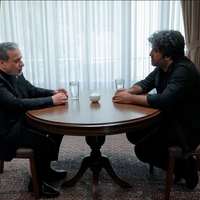
Iran has been discussing with the European Union prospects for restarting talks in Vienna aimed at reviving Tehran’s 2015 nuclear deal with world powers. This week Deputy Foreign Minister Ali Bagheri-Kant met with Enrique Mora, the EU's deputy secretary-general for political affairs in Brussels.
Bagheri-Kani said Wednesday Iran had agreed to resume negotiations with the remaining parties to the 2015 agreement, the Joint Comprehensive Plan of Action (JCPOA), by the end of November.
The Vienna talks were suspended in June after six rounds pending the Iranian presidential election and subsequent transition. Since President Ebrahim Raisi assumed office in August Iran has repeatedly promised to resume the talks "soon" without setting a concrete date.
Iran's state media said Wednesday Iran had issued an invitation for direct talks with the European JCPOA signatories – France, Germany and the United Kingdom – in Tehran or in Europe. Reuters quoted a diplomatic source as saying that the Europeans have not received an invitation.
Tehran is reportedly seeking assurances that the United States would not leave a revived JCPOA in the way former president Donald Trump left the deal in 2018 and imposed stringent ‘maximum pressure’ sanctions.
In expanding its nuclear program since 2019 beyond JCPOA limits in response to US sanctions, Iran has gained experience and technical knowledge. It has also replaced older centrifuges, the devices used to enrichment, with more advanced ones barred by the JCPOA, in some cases because of attacks on nuclear sites.
The US State Department spokesman Ned Price said in a statement Wednesday that “this window” for talks would “not remain open forever as Iran continues to take provocative nuclear steps.”