Saudi Foreign Minister Discusses Iran With EU Coordinator

Saudi foreign minister discussed the Iran nuclear negotiations with the European Union envoy coordinating talks on reviving the Iran nuclear deal on Thursday.

Saudi foreign minister discussed the Iran nuclear negotiations with the European Union envoy coordinating talks on reviving the Iran nuclear deal on Thursday.
Prince Faisal bin Farhan al-Saud discussed the Iran nuclear talks with the European Union envoy, Enrique Mora, the Saudi Foreign ministry said on Thursday.
"They discussed developments regarding the Iranian nuclear program talks, and international efforts to ensure that Iran does not violate international agreements and treaties in this regard," it added in a statement.
Iran has been enriching uranium far beyond limits set by the 2015 nuclear agreement, JCPOA. The West and many regional countries are concerned at the possibility of Iran becoming a nuclear threshold state.
Prince Faisal met with US Special envoy Rob Malley on Thursday also to discuss the Iran nuclear talks. Saudi Arabia, which opposed the JCPOA and backed former president Donald Trump in leaving the deal in 2018, wants the US to introduce new issues, including Iran’s missile program and links with regional allies.
Saudi Arabia has tempered its approach since US president Joe Biden took office in January committed to restoring the JCPOA and has held a series of exploratory talks with Iran in Baghdad designed to explore easing tensions.

Russia has signaled its continued commitment to collective nuclear diplomacy with Iran in Vienna and emphasized the need for an early Iranian return to talks.
In a no-nonsense interview Wednesday with Iran International TV, Mikhail Ulyanov, Russia’s ambassador to the International Atomic Energy Agency, confronted what he called “misunderstanding” and “misinterpretation.”
Ulyanov was probably in part referring to reports that Iran had requested a meeting with the European Union in Brussels to slow down the resumption of talks in Vienna over reviving the 2015 deal as tactic to gain an advantage. “Further delay may be counterproductive,” he said.
The envoy clearly downplayed reports that Iran is seeking to persuade the EU to influence the United States over the talks, which have been suspended since June in their efforts to revive the 2015 deal, the JCPOA (Joint Comprehensive Plan of Action).
“My good colleague Enrique Mora from the European Union visited Tehran October 14, the Iranian side in its turn expressed willingness to pay a visit to Brussels before the end of the month,” said Ulyanov. “So what?”
The ambassador pointed out that Mora − the EU foreign policy chief who coordinates the JCPOA Joint Commission, the formal body for the Vienna talks − could not negotiate for other state signatories.
“Real negotiations can take place only in Vienna in a multilateral format with proper proxy participation of the United States,” said Ulyanov. Washington, which left the JCPOA in 2018, takes part indirectly in Vienna alongside the remaining JCPOA signatories – China, France, Germany, Iran, Russia and the United Kingdom.
While the US state department said Monday it saw no need for the possible Brussels meeting, Ulyanov compared the proposal in terms of “normal diplomatic practice” to Iranian foreign minister Hossein Amir-Abdollahian’s October 6 visit to Moscow and Amir-Abdollahian’s October 15 phone-call with Sergei Lavrov, the Russian foreign minister. As an attendee of the Moscow meeting, Ulyanov said he had found it productive.
The remaining 10%
Nonetheless, “close contacts with Iranian counterparts…should not be interpreted as a separate track of negotiations between Russia and Tehran on nuclear issues,” Ulyanov said.
The envoy expressed Moscow’s understanding that the new Iranian administration of President Ebrahim Raisi (Raeesi) “some time to be prepared, to establish a new negotiating team,” just as it had taken the US administration of President Joe Biden two months in office to enter the Vienna talks.
But Ulyanov also said Russia had “expected the talks to resume in a couple of weeks” and that it was now “high time” to resume. He pointed out it was four calendar months since the sixth round in Vienna ended June 20.
Ulyanov judged that 90 percent of the challenges involved in reviving the JCPOA had been settled in Vienna. The remaining 10 percent were “rather controversial” issues, but despite this and the “time-consuming” process, he said the “chances for success are rather high.”
The “10 percent” reportedly involved reaching agreement over which US sanctions, including those imposed as it left the JCPOA in 2018, needed to be lifted for Washington to return to the nuclear deal, and how Iran should reverse the steps it has taken since 2019 in expanding and improving its nuclear program.

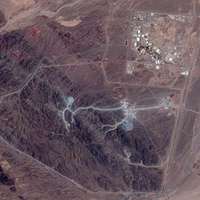
Israel’s Finance Minister has fired off another warning on Thursday, saying conflict over Iran's nuclear program was inevitable and only a matter of time.
As multilateral nuclear talks with Iran remain suspended and its uranium enrichment continues to generate fissile material, Liberman told Walla news site that “a confrontation with Iran is only a matter of time, and not a lot of time.”
While the United States and its European allies still insist that agreement can be reached if Iran does not delay the talks, Liberman said that “no diplomatic process or agreement will stop Iran’s nuclear program.
Israeli officials have been warning in recent months that Iran is getting close to the point of no-return and Israel cannot afford to wait for intricate diplomatic processes. Liberman reiterated the point that for Israel Iran’s nuclear program is perceived as an existential threat.
Liberman said that Iran is a bigger threat for Israel that it is for other countries. “They have stated that their policy is the destruction of Israel, and they mean it.”
The government has asked parliament for $1.5 billion more military budget citing the danger from Iran and the need to prepare for it.

The US special envoy for Iran will meet European diplomats in Paris on Friday to discuss stalled Iran nuclear talks, three diplomatic sources said on Wednesday.
While saying for weeks it would return to talks "soon," Iran has yet to announce a date to resume discussions in Vienna about reviving the pact under which it curbed its nuclear program in return for relief from U.S., EU and UN economic sanctions.
Then-US President Donald Trump abandoned the pact in 2018 and reimposed harsh U.S. sanctions. About a year later, Iran started violating some of the deal's limits on uranium enrichment. Enriching uranium can provide a path to obtain the fissile material for an atomic bomb, an ambition Iran denies.
The diplomatic sources, who spoke on condition of anonymity, said US Special Envoy for Iran Rob Malley would meet with the political directors of the British, French and German foreign ministries, a group know as the E3, in Paris on Friday.
One of the sources said he hoped the meeting would provide some clarity on how world powers might act in the coming weeks if Iran continued to "buy time" and delay returning to Vienna. US officials have said time is running out to revive the deal.
Report by Reuters

US special envoy for Iran Rob Malley met the Saudi foreign minister to assess the talks between Iran and world powers aimed at reviving the 2015 nuclear deal.
Rob Malley had earlier been to Qatar in a tour conferring with Arab Gulf states. The Saudi news agency SPA reported the envoy met with Prince Faisal bin Farhan al-Saud, Saudi foreign minister, in Riyadh on Wednesday to discuss both the nuclear talks and "joint action to stop Iranian support for terrorist militias."
In an interview October 13 Malley reiterated that the US wanted to revive the 2015 deal − the JCPOA, the Joint Comprehensive Plan of Action − in its original form rather than attach new conditions over regional defense and security.

Saudi Arabia, which opposed the JCPOA and backed former president Donald Trump in leaving the deal in 2018, wants the US to introduce new issues, including Iran’s missile program and links with regional allies. Saudi Arabia and Iran have backed opposing sides in Syria and Yemen, and Riyadh has never reconciled itself to Iran’s increased influence in Iraq since the US-led 2003 invasion topped Saddam Hussein.
Saudi Arabia has tempered its approach since US president Joe Biden took office in January committed to restoring the JCPOA and has held a series of exploratory talks with Iran in Baghdad designed to explore easing tensions.
But with JCPOA talks in Vienna suspended since June, first for Iran’s presidential election and then the transition, and with the difficulties the talks had faced in reaching agreement, Saudi Arabia and the US may be mulling alternatives should the talks fail.
Malley has said Washington is ready to consider "all options," while Prince Faisal last week warned of a "dangerous" acceleration in Iran's nuclear program.
The Vienna talks struggled to agree which US sanctions − including the ‘maximum pressure’ sanctions levied by Trump in 2018 − violate the JCPOA and exactly how Iran should bring back within JCPOA limits its nuclear program, which it has expanded quantitatively and qualitatively since 2019.
Analysts’ chatter around the talks has suggested that the US might look to include Iran’s regional role in talks, or at least seek Tehran’s commitment to ‘follow-on’ talks. There have also been reports that Tehran wants concrete guarantees that the US would not again walk away from an agreement it first signed and then voted for in the United Nations Security Council.

A meeting on Tuesday between the head of the UN nuclear watchdog Rafael Grossi and members of the US Senate Foreign Relations Committee focused on Iran.
A day after meeting Secretary of State Antony Blinken, Grossi was invited to the Senate by Chairman of the Committee Sen. Bob Menedez, where around a dozen Senators had an opportunity to discuss Iran’s lack of full cooperation with the International Atomic Energy Agency (IAEA), with director general Grossi.
Senator Jim Risch (R-Idaho) issued a statement after the meeting saying, “Iran continues to steadily advance its nuclear program, while violating its international obligations and preventing the IAEA from fulfilling its monitoring responsibilities. Its failure to provide credible answers to the IAEA’s questions regarding its undeclared nuclear sites is unacceptable. Today, I thanked Director General Grossi for his strong leadership in pursuing the IAEA’s investigation into these sites, and urged him to continue to press Iran until it provides all required information.”

Republicans who have been sceptical of the Biden Administration’s diplomatic approach to Iran and have repeatedly urged not to make concessions to Tehran see the lack of cooperation with IAEA as proof that the Islamic Republic cannot be trusted.
In the September IAEA Board of Governors meeting, Grossi had already issued a report accusing Iran of lack of cooperation both in accounting for its past nuclear activities and also in current monitoring efforts by UN’s nuclear watchdog. However, the United States and its European allied known as E3 decided not to pursue a resolution to condemn Iran.
Senator Risch in his statement demanded a tougher approach in the next board meeting. “I also stressed the importance of taking strong action in advance of the November Board of Governors meeting, and to prepare to censure and refer Iran. President Biden should finally recognize that Iran is not interested in any agreement that would protect the interests of the United States and our allies. The…legitimacy of the IAEA depends on strong U.S. leadership in seeking accountability for Iran’s nuclear activities, and in pressuring Iran to fulfil its obligations to the international community.”
In a tweet the Senator also thanked Grossi for his “leadership in IAEA’s investigation” and the need “to hold Iran accountable”.
On Monday, Grossi in an interview with the Financial Times stressed that he needs to visit Iran again and have an urgent meeting “at the political level”, meaning with Foreign Minister Hossein Amir-Abdollahian. In his previous trip in September Grossi met with Iran’s nuclear chief Mohammad Eslami, who is also vice president to Ebrahim Raisi.
Grossi told the Financial Times that a temporary arrangement for the International Atomic Energy Agency (IAEA) to monitor Iran’s nuclear sites was no longer “intact.” Iran restricted IAEA’s monitoring in February after its parliament passed a law demanding the lifting of US sanctions or reduced Iranian cooperation.
IAEA access in Iran is currently under a temporary arrangement reached September 12, but Grossi has expressed concern at Iran’s decision September 16 not to allow the changing of memory cards of monitoring cameras at the Tesa Karaj site, where Iran makes centrifuges used for enriching uranium.