US National Security Advisor Discusses Yemen, Iran With Saudis

US National Security Advisor Jake Sullivan had a low-profile meeting with top Saudi officials to discuss Yemen and reducing tensions with Iran.
US National Security Advisor Jake Sullivan had a low-profile meeting with top Saudi officials to discuss Yemen and reducing tensions with Iran.
US National Security Advisor Jake Sullivan met Saudi Arabia’s Crown Prince Mohammed bin Salman and other officials on Tuesday to discuss the war in Yemen and reducing tensions in the Middle East.
The White House has kept the visit, which was Sullivan’s first Middle East trip as a low-profile diplomatic event and no photos were published. This was also the highest-level trip by a US official to Saudi Arabia since President Joe Biden took office.
Deputy Minister of Defense Khalid bin Salman, Interior Minister Abdulaziz bin Saud bin Nayef, National Guard Minister Abdullah bin Bandar, and Minister of State and national security adviser Musaed al-Aiban also attended the meeting.
Sullivan who was accompanied by special envoy for Yemen Tim Lenderking discussed ways to end the war in Yemen. The two sides also discussed measures to reduce tensions in the region, including with Iran, and Sullivan expressed satisfaction at measures such as a recent summit in Baghdad that brought regional countries together.
Saudi Arabia backed former president Donald Trump’s tough stance against Iran and its relations with the Biden Administration have not been so strong. Riyadh and its allies in the region are apprehensive at Biden’s attempts to restore the 2015 nuclear deal with Tehran and lift sanctions.




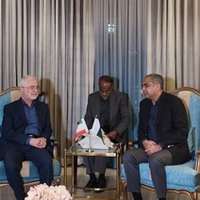

The US has made diplomatic appeals to China to reduce its oil imports from Iran in order to put pressure on Tehran to come to an agreement on its nuclear program.
By Arshad Mohammed and John Irish
WASHINGTON/PARIS, Sept 28 (Reuters) - The United States has reached out to China diplomatically about reducing its purchases of Iranian crude oil, U.S. and European officials said on Tuesday, as Washington seeks to persuade Tehran to resume talks about reviving the 2015 nuclear deal.
Purchases of Iranian oil by Chinese companies are believed to have helped keep Iran's economy afloat despite U.S. sanctions that are designed to choke off such sales to put pressure on Iran to curb its nuclear program.
"We are aware of the purchases that Chinese companies are making of Iranian oil," said a senior U.S. official who spoke on condition of anonymity because of the sensitivity of the matter.
"We have used our sanctions authorities to respond to Iranian sanctions evasion, including those doing business with China, and will continue to do so if necessary," he added.
"However, we have been approaching this diplomatically with the Chinese as part of our dialogue on Iran policy and think that, in general, this is a more effective path forward to address our concerns," the official said.
Separately, a European official said this was one of the issues raised by U.S. Deputy Secretary of State Wendy Sherman when she visited China in late July.
The European official, who also spoke on condition of anonymity because of the sensitivity of the nuclear diplomacy, said China has been protecting Iran and suggested one of the main issues for the West is how much oil China is buying from Iran.
The U.S. State Department did not immediately respond to a request for comment on the statements by the U.S. and European officials.
Commodity analytics firm Kpler estimates that year-to-date Chinese oil imports from Iran have averaged 553,000 barrels per day through August.
Indirect U.S.-Iranian talks about reviving the 2015 deal that began in April adjourned in June two days after hardliner Ebrahim Raisi was elected president of Iran, replacing Hassan Rouhani whose administration had negotiated the agreement.
Under the deal, Iran agreed to place limits on its uranium enrichment program, which is one possible pathway to develop the fissile material for a nuclear weapon, in exchange for the easing of U.S., U.N. and European Union economic sanctions. Iran has denied seeking a nuclear bomb.
In 2018, then-U.S. President Donald Trump abandoned the agreement and reimposed harsh economic sanctions that have crippled Iran's economy, though Tehran has continued to make illicit oil sales to customers, including Chinese companies.
After waiting for about a year, Iran responded to Trump's abrogation of the deal by starting to carry out some of the nuclear activities that it had agreed to curb under the pact, formally called the Joint Comprehensive Plan of Action (JCPOA).
Trump's successor President Joe Biden has said he was putting "diplomacy first" with Iran but if negotiations fail he would be prepared to turn to other unspecified options.
A French presidency official told reporters on Tuesday that Iran must return to the Vienna talks on the United States and Iran resuming compliance with the deal in order to avoid a diplomatic escalation that could jeopardize the negotiations.
"We need, in this phase, to stay in close contact and closely united with all of the members of the JCPOA, including the Russians and the Chinese," the French official said.
"In particular, we expect the Chinese to express themselves and act in a more determined way. We need to exert pressure, which is indispensable, on Iran," the French official added.
Iran's foreign minister said as recently as Friday that it will return to talks on resuming compliance with the nuclear deal "very soon," but he gave no specific date.
It is unclear how receptive China may be to any U.S. diplomatic overture on Iran.
U.S.-Sino relations have sunk to their worst state in decades this year, with scant progress on issues ranging from human rights to transparency over the origins of COVID-19.
In a Sept. 24 briefing, a Chinese foreign ministry spokesperson put the onus on the United States rather than on Iran.
"As the one that started the new round of tensions in the Iranian nuclear situation, the US should redress its wrong policy of maximum pressure on Iran, lift all illegal sanctions on Iran and measures of long-arm jurisdiction on third parties, and work to resume negotiations and achieve outcomes at an early date," the spokesperson said according to a ministry transcript.
A French official from the presidency has said that Iran must return to nuclear talks with world powers to prevent a diplomatic escalation.
PARIS, Sept 28 (Reuters) - Iran must return to talks with world powers over its 2015 nuclear deal to avoid a diplomatic escalation that could jeopardize the negotiations, a French presidency official said on Tuesday
The official also said Iran could not set new conditions before returning to the talks in Vienna as the terms on the table were clear.
Indirect talks between Iran and the United States on reviving the accord aimed at keeping Iran from being able to develop a nuclear weapon stopped in June before Ebrahim Raisi took office as Iranian president last month.
Western powers have urged Iran to return to negotiations and said time is running out as its nuclear programme is advancing well beyond the limits set by the deal, which Washington abandoned in 2018.
"Nobody wants an escalation, but to avoid an escalation Iran must return to the negotiating table," the French presidency official told reporters.
Tehran has signalled in recent weeks that negotiations would resume in a few weeks without giving a specific date, increasing frustration among the Western parties - Britain, France, Germany and the United States - to the 2015 accord.
"The more that time passes, the harder it becomes to return to the negotiating table...and the key question of restoring a manageable and acceptable breakout time for us becomes complicated to resolve," the official said, referring to the time it takes to amass enough fissile material for a single nuclear weapon.
The official said that world powers, including Russia and China, needed to remain united and that Beijing especially needed to "express itself and act in a more determined way".
With tension between Iran and Azerbaijan over military drills and Iranian truck-drivers’ access to Armenia, flagship Tehran newspaper sees US, Israeli and Turkish mischief.
Iran's flagship principlist newspaper Kayhan in a commentary Tuesday detected a plot against Iran and Russia hatched by the United States and Israel with the cooperation of President of Azerbaijan, Ilham Aliyev, and Turkish President Recep Tayyip Erdogan. The newspaper’s broadside came a day after Aliyev criticized Iran for holding military drills along its borders with Azerbaijan.
"Iran and Russia do not consider this a game to ignore it,” wrote Sadollah Zarei, a regular contributor to the newspaper, which is funded by the office of Supreme Leader Ali Khamenei. “They should know that 'brotherly lenience' is not a blank check given to Erdogan and Aliyev.”
Zarei warned of a "concealed alliance between the US, Turkey, Azerbaijan, Armenia and Israel" aimed at “geopolitical change with strategic consequences against Iran and Russia." Armenia and its premier, Nicol Pashinyan, he alleged, had been sucked into the conspiracy due to US and Turkish promises to allow Yerevan control of northern Karabakh in return for ceding Syunik province to Azerbaijan.
"Through expansion of secret relations with Azerbaijan and Armenia, and temporary resolution of their hostilities,” wrote Zarei, “the US is seeking to weaken the position of its two enemies, Iran and Russia, in the southern Caucasus and west of the Caspian Sea."
Fortunately, the columnist argued, Azerbaijan was merely "a cup" in comparison with "an elephant," Iran.
In an interview with Anadolou, a Turkish state news agency, published Monday, the first anniversary of the second Karabakh war with Armeniathat resulted in the return of Nagorno-Karabakh to Azerbaijan, Aliyev said he was "very surprised" by Iran holding military exercises in a border region.
“Why now, and why on our border?” Aliyev asked. “Why is this being done after we liberated these lands after 30 years of [Armenian] occupation?"
Aliyev said there was justification in Azerbaijan objecting to Iranian trucks travelling to the Karabakh region "illegally" and charging taxes for transit along the land corridor to Armenia now under Azeri control.
Tensions have high between Iran and Azerbaijan in recent weeks following Azerbaijan's arrest of Iranian truck drivers and its joint military drills with Turkey and Pakistan, which began September 12 in Baku, about 500km from the Iranian border.
In the past two weeks Iran has deployed Revolutionary Guard (IRGC) ground troops with armored vehicles, artillery, and tactical missile launchers in the northwestern border area. The authorities have not released details on the exercises but locals have posted social-media video footage of soldiers, equipment, helicopters and drones.
The Iranian ambassador to Baku, Abbas Mousavi, said Saturday that the drill had been long planned and was not a threat against Azerbaijan. Hasan Ameli, Khamenei's representative in Ardabil province, said Friday the maneuvers were a message to Israel over its relationship with Azerbaijan.
While Iran and Azerbaijan have generally had good relations in the past three decades, Azerbaijan has in recent years moved closer to Israel, a major buyer of its oil, and has reportedly granted Israel access to its airbases.
Iran's currency hit a one-year low on Tuesday as traders in Iran became pessimistic about chances for a nuclear deal with the United States and an early lifting of sanctions.
Iran’s currency the rial dropped to its lowest point since October 2020, by crossing the 280,000-rial mark against the US dollar on Tuesday, as hopes for a breakthrough in nuclear talks with world powers faded.
Currency exchange websites said that the reason for the 1.4 percent decline in one day was a negative comment by UN’s International Atomic Energy Agency yesterday, which said Iran has not fully honored a deal made on September 12.
Iran’s battered currency that has declined ninefold since 2017 is sensitive to news about the dispute Iran has over its nuclear program with the United States and its European allies.
The rial began to nosedive at the end of 2017 when former US president Donald Trump signaled his intention to withdraw from the 2015 nuclear deal, the JCPOA. After formal withdrawal in May 2018, the United States imposed heavy economic sanctions, gradually banning Iranian crude oil exports.
With Joe Biden assuming the presidency, a round of talks began in Vienna to restore the JCPOA, but Tehran has suspended the negotiations with no clear date of when it would return.
Iran’s currency has steadily fallen since the Islamic Republic was established in 1979, dropping from 70 rials during the last years of the monarchy to the current 280,000 rials to the dollar.
A court of arbitration has ruled against Iran over failure to supply Sharjah-based Dana Gas in a 2001 energy deal marred by a price dispute and graft allegations.
United Arab Emirates energy firm Dana Gas in a stock-market filing Tuesday to the Abu Dhabi Securities Exchange, where it is listed, said an international arbitration tribunal had awarded it $607.5 million in a gas supply dispute with the state-owned National Iranian Oil Company (NIOC).
Iranian officials have not commented on the fine over the controversial deal, which has been mired in arguments over pricing and allegations of corruption.
The damages awarded to Dana are for the first eight and a half years of the 25-year agreement signed in 2001 and due to start in 2005. Dana Gas said in its statement that a final hearing on a "much larger claim" for the outstanding 16 and a half years, 2014-2030, had been set for October 2022 in Paris with a decision due in 2023.
"The current award of US$607.5 million (AED 2.23 billion) will significantly bolster the balance sheet of Dana Gas," the statement claimed.
NIOC’s contract with Crescent Petroleum, an affiliate of Sharjah-based Dana Gas, stipulated a supply by pipeline to Sharjah over 25 years of 525 million cubic feet (15 million m3) daily of natural gas from Salman oil and gas field in the Persian Gulf, 144km south of Lavan Island. None has ever arrived.
The contract was agreed during the second term reformist president Mohammad Khatami. But the gas did not flow as agreed once the new administration of President Mahmoud Ahmadinejad, elected 2005, queried a price of $18 per 1,000 m3, or $98.5 million annually.
Critics of the deal in Tehran said Iran would lose out financially due to a low price and described the deal as corrupt.
Crescent Petroleum filed a case against NIOC in 2009 with an international court of arbitration, and in 2010 the NIOC cancelled the contract. Iran then ignored a 2013 arbitration court ruling in The Hague in 2013 that found Iran liable.
Dana Gas chief executive Patrick Allman-Ward in 2017 said the company was ready to receive the gas, and Iranian oil minister Bijan Zanganeh said Iran was ready to deliver. Iran had been under multilateral international energy sanctions from 2007 until 2015, but was then in 2018 put under US ‘maximum pressure sanctions’ that threaten punitive action against third parties dealing with the Iranian financial sector.
Behzad Ahmadinia, Cyprus-based energy reporter, told Iran International Tuesday that Iran could have gained under the 2001 deal revenue of $700 million in the first eight and a half years of the contract.