• العربية
  • فارسی
BrandBrand
  • Iran Insight
  • Politics
  • Economy
  • Analysis
  • Special Report
  • Opinion
  • Podcast
  • Live TV
  • Iran Insight
  • Politics
  • Economy
  • Analysis
  • Special Report
  • Opinion
  • Podcast
  • Live TV
  • Theme
  • Language
    • العربية
    • فارسی
  • Iran Insight
  • Politics
  • Economy
  • Analysis
  • Special Report
  • Opinion
  • Podcast
  • Live TV
All rights reserved for Volant Media UK Limited
volant media logo

Freight costs from Turkey to Iran surge fivefold in two months

Oct 11, 2026, 03:00 GMT+1
File photo by Iran's semi-official ISNA shows Iran-Turkey Bazargan (Gurbulak) border crossing.

The cost of transporting goods from Turkish ports to Iran has surged over fivefold in less than two months to about $8,000, Iranian media reported, as Washington pressures Turkey to help cut off Iran's overland trade routes to further isolate Tehran economically.

The US naval blockade of Iranian ports has forced Tehran to rely more heavily on land borders to secure essential imports and maintain trade flows, placing increasing strain on transportation networks already struggling with congestion and limited capacity.

Fars News Agency reported Saturday that freight charges from Turkish ports to Iran had climbed from approximately $1,500 to $8,000 in less than two months, adding to the cost of importing goods into the country.

Ehsan Malekzadeh, chairman of Iran's Association of International Transport Companies, told Mehr News Agency that freight rates had reached $7,900 to $8,000, partly because prolonged border delays had created a shortage of trucks available to transport goods into Iran.

Approximately 8,000 trucks are currently stranded at the Bazargan border crossing with Turkey, while Iranian drivers at the Rimdan crossing with Pakistan face delays of 20 to 25 days, according to Fars.

The closure of the nearby Mirjaveh crossing and inadequate infrastructure at Rimdan have compounded the congestion. Each stranded truck incurs an estimated $175 in daily costs, potentially adding thousands of dollars to transportation expenses.

Malekzadeh warned that the disruption was driving up import costs while undermining Iranian exporters' competitiveness, with some export markets already lost.

He said transportation, insurance and related logistics expenses previously accounted for no more than approximately 10 percent of a shipment's value, but now substantially exceeded that benchmark.

Iranian trade officials have previously warned that overland routes cannot fully replace maritime imports.

In August, Davoud Rangi, vice chairman of the Iran Chamber of Commerce's Import Management Committee, estimated that replacing the cargo of a single ship carrying essential goods would require approximately 2,500 trucks.

He warned that land routes through Turkey and Pakistan lacked the capacity to accommodate the volume of goods previously arriving through Iran's southern ports, while transportation costs would rise sharply.

US Treasury Secretary Scott Bessent told Newsmax on Thursday that Washington was working with Turkey and Pakistan to "cut off all the land routes" into Iran, while describing the United Arab Emirates and Oman as partners in the broader economic pressure campaign.

"We did have a maximum pressure campaign. Now we have an absolute isolation campaign and it's working," Bessent said, referring to Washington's expanding efforts under Operation Economic Outcast.

Most Viewed

‘We cannot bring America to its knees,’ former Tehran mayor says
1

‘We cannot bring America to its knees,’ former Tehran mayor says

2

Iran’s strikes on Persian Gulf water and power were deliberate - Reuters

3

Tehran hospital locks its main building and treats patients in the courtyard

4

Iran speaker says government overstepped on anti-terror finance rules

5

Iran shipped jet fuel to Myanmar despite US blockade - Reuters

Banner
Banner
Banner
Banner
Banner

Spotlight

  • Iran cultivated Houthis for years before opening new war front, Yemeni insider says
    PODCAST

    Iran cultivated Houthis for years before opening new war front, Yemeni insider says

  • After the killings, Iran turned on the families of the dead

    After the killings, Iran turned on the families of the dead

  • Iran’s rulers face a reckoning with their own people, former US envoy says
    ONE-ON-ONE

    Iran’s rulers face a reckoning with their own people, former US envoy says

  • Iran speaker says government overstepped on anti-terror finance rules

    Iran speaker says government overstepped on anti-terror finance rules

  • Ignore prices and economy is fine, Iran ex-minister says

    Ignore prices and economy is fine, Iran ex-minister says

  • Iran police killed brothers celebrating Khamenei’s death, source says

    Iran police killed brothers celebrating Khamenei’s death, source says

  • Nowhere else to go? The puzzle behind Iran’s stock rally
    INSIGHT

    Nowhere else to go? The puzzle behind Iran’s stock rally

•
•
•

More Stories

Iran’s oil lifeline could run dry by mid-December, Kpler says

Oct 10, 2026, 15:33 GMT+1
•
Negar Mojtahedi
100%
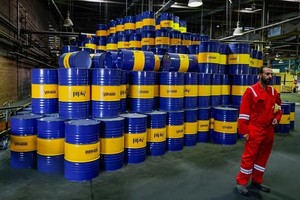
An oil worker at an Iranian oil facility.

For the first time in Iran’s history, revenue from crude oil and condensate exports could dry up entirely by mid-December if the US blockade remains in place, according to the head of crude oil analysis at Kpler.

“Revenues from crude and condensate will drop to zero for the first time ever,” Homayoun Falakshahi told Iran International's Eye for Iran, warning that Tehran could lose between $3 billion and $6 billion in monthly oil income.

That makes December the critical month as the last Iranian oil shipments already outside the blockade zone make their way to Chinese buyers.

According to Kpler, just eight million barrels of Iranian crude remain on the water outside the blockade, down from nearly 90 million barrels in mid-July. Falakshahi expects those remaining shipments to be discharged by around October 18.

With Chinese refiners typically taking another one to two months to settle payments, Tehran could receive its final proceeds from those shipments by mid-December.

The looming revenue shortfall follows a halt in Iranian oil shipments. Kpler data shows that Iran loaded no crude oil or condensate onto tankers throughout September, the first full month without loadings since the 1979 Islamic Revolution.

The last recorded loading took place around August 26 or 27.

Even during the 1979 revolution, the Iran-Iraq war and successive rounds of Western sanctions, Iranian crude continued reaching international buyers. During the COVID-19 pandemic, shipments fell as low as 300,000 barrels per day in some months, compared with typical volumes of around 1.7 million to 1.8 million, but never stopped entirely.

“This is a first in history,” Falakshahi said.

A financial lifeline under threat

Oil exports remain Iran’s largest source of foreign currency despite years of efforts to reduce the government’s dependence on petroleum income.

Falakshahi said much of Iran’s oil trade with China continues to be settled in dollars despite US sanctions, making the disappearance of those payments particularly consequential for an economy already struggling with currency depreciation.

He said expectations of dwindling oil income may have contributed to the rial’s recent decline. A prolonged loss of foreign exchange could put further pressure on the currency and government finances.

The squeeze could also affect Tehran’s ability to finance regional allies, although Falakshahi said the extent would depend on government priorities. Tehran could choose to preserve such support while cutting spending at home.

Sustained economic pressure could also affect Tehran’s negotiating calculus with Washington, he said, though he doubted the leadership was ready to make significant compromises over its nuclear program.

Why sanctions-evasion methods may not work

Iran has spent decades developing networks to circumvent Western sanctions and maintain oil exports, but Falakshahi said a physical blockade makes those methods far more difficult to replicate.

Unlike financial restrictions, which Tehran has historically navigated through intermediaries, disguised shipments and alternative trading arrangements, the current blockade prevents tankers from physically leaving Iranian waters.

One potential workaround has attracted attention as independent Chinese refiners increasingly turn to Iraqi crude to replace Iranian supplies: transporting Iranian oil through Iraq and disguising its origin before exporting it to China.

But moving even 50,000 to 70,000 barrels per day across the Iraqi border would require thousands of truck movements, Falakshahi said.

“You’d probably see videos of it on the internet,” he said.

He estimated that moving enough crude by truck to fill a single large tanker could take around 20 days, compared with roughly one large tanker Iran previously loaded each day.

Iraq continues to import Iranian natural gas, but payments owed to Tehran are held in a restricted account at Iraq’s central bank because of US sanctions. Falakshahi said Baghdad would be unlikely to facilitate large-scale Iranian oil shipments at the risk of further US sanctions.

Overland routes offer little relief

Rail offers limited alternatives. Falakshahi said the connection to China reaches Tehran, far from Iran’s main oil-producing regions, while the pipeline supplying the capital has capacity of only around 200,000 barrels per day.

Turkmenistan is also reportedly restricting rail transit through its territory over concerns about US sanctions.

Even if Tehran managed to move small quantities through neighboring countries, road and rail would be unlikely to replace the volumes previously exported by sea.

“Iran has a history of evading sanctions successfully to an extent,” Falakshahi said. “But this seems a lot more challenging.”

Pressure extends beyond oil

The blockade is also restricting Iran’s ability to import commodities as oil revenue approaches a potential halt.

Falakshahi said shipments of agricultural products, including corn and wheat, have declined sharply, while alternative supply routes through the Caspian Sea offer only a fraction of the capacity available through Persian Gulf ports.

For Tehran, the immediate question is whether the blockade will remain in place long enough to exhaust the final payments from oil already sold.

If it does, December could mark the first time in Iran’s modern oil-producing history that crude and condensate export revenue falls to zero, cutting off the Islamic Republic’s principal source of foreign exchange with no clear route to restoring exports while the blockade remains in place.

Iran turns to Turkey, Turkmenistan for power as war strains industry

Oct 10, 2026, 08:29 GMT+1
100%
Electricity grid near capital Tehran

Iran is seeking more electricity from Turkey and Turkmenistan as war damage and other outages leave thousands of megawatts of industrial and petrochemical power capacity offline, even as Washington presses neighboring countries to help restrict Tehran’s remaining economic routes.

Mohammad Allahdad, head of Iran’s electricity company Tavanir, told ILNA that about 4,700 megawatts of generation capacity belonging to industries and petrochemical companies had gone offline for various reasons.

He said the infrastructure was now in place for petrochemical plants to receive imported electricity from Turkey through Iran’s national grid. The companies have not yet signed contracts for the supply.

“If this does not happen, supplying electricity to these industries will face challenges,” Allahdad said.

War damage drives import push

Allahdad said serious damage during the war to utilities serving petrochemical complexes had sharply increased their dependence on the national grid. Iran supplied the sector with six times as much electricity this summer as in previous years, he said.

He added that Iran currently had no plans to export electricity and was instead focused on increasing imports, particularly during the winter.

Iran is also negotiating with Turkmenistan to extend an existing electricity import agreement and increase the volume of power exchanged between the two countries, according to a government statement.

Officials have also discussed additional cross-border power lines and the possible transit of electricity through Turkmenistan to third countries, though those proposals remain subject to technical and economic studies.

US seeks to close remaining economic routes

The push for additional electricity imports comes as the United States broadens its economic campaign against Iran beyond oil exports and financial sanctions.

US Treasury Secretary Scott Bessent said this week Washington was working with Turkey and Pakistan to restrict Iran’s overland commercial routes, while describing the United Arab Emirates and Oman as partners in the broader pressure campaign.

“We did have a maximum pressure campaign. Now we have an absolute isolation campaign and it’s working,” Bessent told Newsmax.

Bessent has also said Washington is targeting Iran-linked cryptocurrency and its remaining shipping network. Treasury on Thursday sanctioned 17 vessels and their owners, saying they were part of what remained of Iran’s shadow fleet, while Bessent said the US could seize about $1 billion in Iran-linked digital assets.

The overlap puts Turkey in an unusual position, with Tehran seeking greater electricity supplies from its western neighbor while Washington says Ankara is also cooperating in efforts to constrict Iran’s remaining overland economic links.

'Absolute isolation': US outlines plan to cut off Iran’s economic lifelines

Oct 10, 2026, 03:11 GMT+1
100%
US Treasury Secretary Scott Bessent speaks to the media after meeting China's Vice Premier He Lifeng, ahead of a summit between US President Donald Trump and Chinese President Xi Jinping, at JPMorgan Chase's global corporate headquarters in New York City, US, September 20, 2026. REUTERS/Vincent Alban

US Treasury Secretary Scott Bessent this week outlined an expanding campaign of what he called “absolute isolation” against Iran, targeting its oil revenue, overseas financial access and transport routes as Washington seeks to strangle Tehran’s economy.

Speaking to Newsmax on Thursday, Bessent called the United Arab Emirates and Oman good partners in the economic campaign against Iran, adding that Washington was working with Pakistan and Turkey “to cut off all the land routes,” extending its efforts to isolate Tehran beyond oil exports and financial restrictions.

“We did have a maximum pressure campaign. Now we have an absolute isolation campaign and it’s working,” Bessent said.

Bessent said the United States would “probably” seize about $1 billion in Iran-linked cryptocurrency this week, asserting that officials knew where the funds were held.

He also described restrictions on the overseas privileges of Iranian officials, mocking the Revolutionary Guards' access to luxury services and offshore wealth.

“They can’t go see their plastic surgeon in London, their girlfriend in Paris, and their money in Geneva,” he told Newsmax, saying that travel bans and financial restrictions were tightening.

On Thursday, the US Treasury separately sanctioned 17 vessels and their owners in what it described as Iran's remaining shadow fleet. Treasury said the vessels had transported millions of barrels of Iranian crude oil, petroleum products and petrochemicals to markets in South and East Asia, and claimed the action had effectively neutralized the vast majority of Iran's remaining shadow fleet network.

The department said the move targeted the vessels and their international support networks. Earlier measures had expanded sanctions against Iranian airlines, railways, automakers and financial intermediaries.

Earlier in the week, Bessent pointed to what he described as signs of the campaign's success. On Monday, he said Operation Economic Outcast was delivering results, citing the rial's record lows and asserting that Iran had loaded no crude oil onto tankers in September.

On Tuesday, he questioned the appointment of Hamid Bovard as Iran's acting oil minister, asking what he would oversee when, according to Bessent, Tehran had not loaded a single barrel of crude since August 25.

Still, Iran’s oil trade has not come to a complete halt. According to energy intelligence firm Kpler, the country continues to export about 250,000 barrels of oil a day overland and sell crude shipped before the blockade.

However, Kpler’s head of crude oil analysis warned that Iran’s revenue from crude oil and condensate exports could dry up entirely by mid-December, for the first time in its history, if the US blockade remains in place.

“Revenues from crude and condensate will drop to zero for the first time ever,” Homayoun Falakshahi told Iran International's Eye for Iran, warning that Tehran could lose between $3 billion and $6 billion in monthly oil income.

The rial traded near 2.7 million per dollar this week despite the central bank injecting up to $2 billion in cash into the Iranian economy. With oil revenue and foreign-currency access shrinking, further enforcement could deepen pressure on imports and the currency.

Operation Economic Outcast, launched on August 24, expanded US sanctions authority over foreign businesses operating in Iran's digital asset, technology, gold, aviation and shipping sectors. Washington also warned that foreign financial institutions facilitating sanctions evasion could lose access to the US financial system. The administration said countries would be given deadlines to terminate identified Iran-related activities.

Bessent described the ultimate objective as forcing Tehran to choose between reintegration into the global economy and what he called “complete global isolation and a subsistence economy.” The campaign is intended to deprive the Islamic Republic and the Revolutionary Guards of the financial resources sustaining their military operations, weapons programs and regional networks.

Taliban-run Afghanistan could get ‘land of its own’ on Iran’s coast, MP says

Oct 9, 2026, 04:48 GMT+1
100%
Chabahar port in southeastern Iran.

Iran has reached a preliminary understanding to allocate land at Chabahar to Taliban-run Afghanistan to build infrastructure for moving its goods to the sea, an Iranian lawmaker said.

Mohsen Zangeneh told Sahar TV during a visit to Afghanistan that the arrangement envisaged about 10 hectares along the waterfront inside Chabahar port and more than 100 hectares in the special zone in an initial phase. The Afghan government would invest in developing the facilities, he said.

“He proposed that we set aside an area in Chabahar for Afghanistan—in other words, that Afghanistan could have land of its own in the free zone at Chabahar port,” Zangeneh said, referring to Afghanistan’s industry minister.

Zangeneh did not specify whether the land would be leased or transferred into Afghan ownership. He said the Afghan side had requested more space within the port itself, but limited coastal land made that difficult.

“We reached this preliminary understanding during this visit and, God willing, we will follow up on it,” he said.

The discussions also covered wider industrial cooperation, a joint industrial park and a goal of increasing bilateral trade to $10 billion, according to Iranian media reports. Zangeneh described the land proposal as a way for Afghanistan to develop the infrastructure needed to transport its goods through Chabahar.

Baloch activists questioned how local residents would benefit, pointing to longstanding problems with housing, employment, infrastructure and access to basic services. They said arrangements for Afghan economic activity in Chabahar dated back to 2012, but questions about the share of development going to Baloch communities remained unanswered.

The Balochistan Human Rights Documentation Network said more than half of Chabahar’s population had at one point lived in informal settlements, with their expansion becoming a major problem for the area.

Against that backdrop, the group said, allocating land for foreign economic activity without disclosing its precise location, ownership arrangements, contract terms or duration of use had heightened concerns. It also questioned the lack of detail about local participation and employment.

Activists called on authorities to identify who would receive the land, disclose investment commitments and explain what obligations would apply to hiring local workers. They also sought clarity on how local communities would share in the revenue and business opportunities generated by the project.

US pressure hits Iranians harder than rulers, 68% in poll say

Oct 9, 2026, 01:10 GMT+1
•
Saba Heidarkhani
100%
A woman walks past sacks of nuts, dried fruits and other goods at a market in Iran.

More than two-thirds of respondents to an Iran International Instagram poll said the Trump administration’s pressure on the Islamic Republic is hurting ordinary Iranians more than the authorities.

More than 56,000 people took part in the October 8 poll, with 68% saying ordinary people bear the greatest burden of US pressure. Another 23% said both the public and the government suffer, while 9% said the authorities are affected most.

Men accounted for approximately 76% of respondents and women for 24%.

The largest age group was 25 to 34, representing about 38% of participants, followed by those aged 35 to 44 at 29%. Respondents aged 18 to 24 and 45 to 54 each accounted for 12%.

Thousands of comments accompanying the poll reflected differing views on the economic consequences of US pressure, the Islamic Republic's responsibility for worsening living conditions and whether external pressure could bring political change.

Rising prices dominate concerns

The most common concern among respondents who believed ordinary Iranians were suffering most was the deterioration in daily living conditions.

Many cited rising prices, declining purchasing power, shrinking incomes and the growing financial burden on low-income households.

Others pointed to difficulties accessing medicine and medical treatment, arguing that people with fewer financial resources were particularly vulnerable to economic restrictions.

  • Officials trade blame as Iran’s economy sinks deeper

    Officials trade blame as Iran’s economy sinks deeper

"Only ordinary people are being crushed under the pressure," one respondent wrote.

Several participants argued that even when US measures target the Islamic Republic, their economic consequences ultimately reach households through higher prices and reduced access to essential goods.

Officials seen as insulated from hardship

Another recurring theme was the perceived gap between the living standards of ordinary Iranians and those of government officials.

Some respondents argued that access to wealth, foreign currency, privileged positions and state resources allowed officials and their associates to avoid some of the hardships experienced by the wider population.

"The main burden falls on the people. The government would even be happy to see people becoming poorer every day," one respondent wrote.

  • Iran drug shortages hit 800 medicines as costs could triple

    Iran drug shortages hit 800 medicines as costs could triple

Other participants said the Islamic Republic also suffers from economic restrictions through reduced revenues and limited access to financial resources, but can pass some of those costs on to the public.

For these respondents, the issue was not simply whether sanctions hurt the government or the public, but how the economic burden was distributed.

Economic hardship versus hopes for political change

The sharpest disagreement concerned whether the immediate economic costs of US pressure could be justified by the prospect of political change.

Some respondents acknowledged that ordinary Iranians were suffering but considered the hardship acceptable if it weakened the Islamic Republic or helped bring about a different political system.

"People will endure it because this suffering is worth it for a free Iran tomorrow," one wrote.

Others questioned whether worsening economic conditions would produce meaningful political change.

They argued that household finances could deteriorate far more quickly than external pressure could affect the country's political leadership.

100%
A woman shops at a market selling nuts, dried fruits and spices in Iran.

Several respondents held both US policies and the Islamic Republic's economic management responsible for the hardships facing Iranians.

Some likened sanctions to a painful medical treatment, reflecting a willingness among certain supporters of external pressure to accept short-term suffering in pursuit of longer-term political goals.

Others rejected that calculation, arguing that the prospect of political change remained uncertain while the immediate costs to families were already evident.

A divided view of US pressure

Although 68% of respondents believed ordinary Iranians were bearing the greatest burden, their answers did not necessarily show opposition to all forms of US pressure.

  • Iran says economy holding up as pressure mounts on oil, rial

    Iran says economy holding up as pressure mounts on oil, rial

Some viewed the economic consequences as unacceptable, while others regarded them as a painful but potentially necessary means of weakening the Islamic Republic.

Likewise, respondents who believed the government was suffering most did not necessarily dismiss the economic difficulties facing households.