• العربية
  • فارسی
Brand
  • Iran Insight
  • Politics
  • Economy
  • Analysis
  • Special Report
  • Opinion
  • Podcast
  • Iran Insight
  • Politics
  • Economy
  • Analysis
  • Special Report
  • Opinion
  • Podcast
  • Theme
  • Language
    • العربية
    • فارسی
  • Iran Insight
  • Politics
  • Economy
  • Analysis
  • Special Report
  • Opinion
  • Podcast
All rights reserved for Volant Media UK Limited
volant media logo
INSIGHT

Deny first, negotiate later, Tehran's familiar diplomacy

Behrouz Turani
Behrouz Turani

Iran International

Aug 4, 2026, 03:31 GMT+1
 People pass by an anti-US billboard in central Tehran, Iran, August 3, 2026
People pass by an anti-US billboard in central Tehran, Iran, August 3, 2026

Formal backchannel negotiations between Iranian and Western envoys resumed in Muscat on Monday after President Donald Trump suspended strikes on Iran's energy infrastructure over the weekend, even as Tehran publicly denied direct contacts with Washington.

Major state news agencies reported that talks had resumed, while Foreign Minister Abbas Araghchi insisted he was traveling to Iraq on a private religious visit and Foreign Ministry spokesman Esmail Baghaei maintained that discussions in Muscat were limited to consultations between Iran and Oman.

Baghaei reiterated that Tehran was not engaged in negotiations with the United States.

Washington has repeatedly acknowledged indirect negotiations that Iranian officials initially denied, only for Tehran to later acknowledge that talks had indeed been taking place through intermediaries. The same pattern now appears to be repeating.

That impression was reinforced over the weekend as Pakistani and Qatari mediators discussed reviving the June memorandum of understanding.

President Massoud Pezeshkian called for the memorandum, which he signed alongside Trump, to once again serve as the foundation of a renewed agreement between Tehran and Washington.

Hormuz returns to the table

The central issue remains the reopening of the Strait of Hormuz.

After Iran rejected an earlier Omani proposal governing maritime traffic through the waterway, ISNA reported on Monday that Iranian negotiators had submitted a revised technical framework proposing joint Iranian-Omani inspection procedures for commercial vessels.

According to the proposal, military escorts and unflagged vessels would remain barred from designated transit routes under Iranian sovereignty.

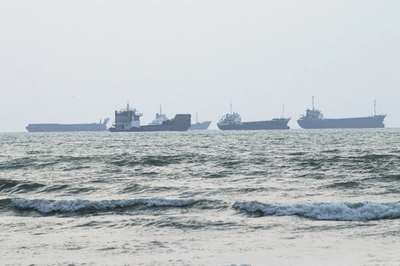
Semi-official Iranian media also reported that Tehran is seeking explicit guarantees over banking channels for energy exports before agreeing to clear the growing backlog of commercial tankers anchored off the Gulf of Oman.

If accurate, the reports suggest the negotiations have already moved beyond general political contacts into detailed discussions over implementation.

Divisions inside Tehran

The resumption of diplomacy has again exposed divisions within Iran's political establishment.

IRNA and Mehr portrayed Araghchi as leading an intensive regional diplomatic effort to consolidate support for Tehran's position on Hormuz, even as his public schedule raised questions about his direct role in the Muscat talks.

Critics argue that Araghchi's previous diplomatic initiatives have repeatedly coincided with renewed IRGC attacks on commercial shipping, raising questions over how much authority civilian diplomats exercise over military decisions.

The Revolutionary Guards have no formal diplomatic channel of their own. While they can derail negotiations through military action, they have no direct means of conveying their demands to mediators or Washington.

Whether that institutional divide explains Araghchi's apparent distance from the Muscat talks is a question few officials in Tehran are prepared to address publicly.

Hardline daily Kayhan urged officials not to "confirm or validate Washington's narrative" that negotiations were progressing.

Editor Hossein Shariatmadari described Trump's shift from military threats to diplomacy as a psychological operation designed to manipulate oil markets and extract unilateral concessions from Iran.

He also criticized Pezeshkian's description of the memorandum as the cornerstone of future diplomacy, warning that Iranian negotiators must not compromise what he called the country's maritime sovereignty under the guise of technical inspection arrangements.

Writing in the moderate daily Shargh, commentator Ahmad Zeidabadi offered the opposite conclusion.

He argued that sections of Iran's political establishment were living in a "parallel universe" that ignored both economic deterioration and growing public frustration.

Reviving the Muscat process and reaching a practical navigation framework, he argued, offered Iran its best chance of stabilizing the economy and preventing further social deterioration.

Most Viewed

Iran hangs two more political prisoners as execution wave widens
1

Iran hangs two more political prisoners as execution wave widens

2

More Iranian teenagers at risk of execution, rights groups warn

3

Diplomatic window reopens as shadow of Iran war lingers

4

Economic crisis drives Iranians to sell hair, rent laptops

5

Khamenei warns Pezeshkian next resignation will be accepted, in-law says

Banner
Banner
Banner

Spotlight

  • Trump's U-turn reopens Tehran's political faultline
    INSIGHT

    Trump's U-turn reopens Tehran's political faultline

  • Deny first, negotiate later, Tehran's familiar diplomacy
    INSIGHT

    Deny first, negotiate later, Tehran's familiar diplomacy

  • Iran managing the inflation statistic, not the inflation
    ANALYSIS

    Iran managing the inflation statistic, not the inflation

  • China helps Iran chip away at US air superiority despite Xi’s no-arms pledge
    ANALYSIS

    China helps Iran chip away at US air superiority despite Xi’s no-arms pledge

  • Security forces seized Iran hospital, sent wounded protesters to morgue
    EXCLUSIVE

    Security forces seized Iran hospital, sent wounded protesters to morgue

•
•
•

More Stories

Khamenei warns Pezeshkian next resignation will be accepted, in-law says

Aug 3, 2026, 22:16 GMT+1
100%
Iranian President Masoud Pezeshkian arrives to address a ceremony marking Iran's National Industry and Mine Day in Tehran, July 21, 2026

Iran’s Supreme Leader Mojtaba Khamenei has warned President Masoud Pezeshkian that his next resignation would be accepted, a relative of Khamenei by marriage said in a video released Monday, prompting sharp denials and political backlash.

Mohammad-Bagher Kharrazi, a senior cleric whose sister is married to Khamenei’s brother, claimed Pezeshkian had threatened to resign “28 times” but stopped after being warned that his next resignation would be accepted.

“If he resigns one more time, I will approve it. I will write ‘approved’ underneath it, and that will be the end of it,” Kharrazi quoted Khamenei as saying.

“Pezeshkian no longer dares,” he said. “They all backed down.”

Iran International reported on May 31, 2026, that Pezeshkian had submitted an official resignation letter to Khamenei’s office, saying his government had been excluded from major decisions and hardline Revolutionary Guards factions had taken control of state affairs.

A source familiar with the letter said at the time Pezeshkian argued that he could no longer fulfill his constitutional responsibilities and requested to leave office immediately.

However, Mehdi Tabatabaei, deputy for communications and information at Pezeshkian’s office, dismissed Kharrazi’s resignation allegation as “baseless and an outright lie.”

“A sinister alliance of deceitful agitators and proponents of extremism and incompetence has targeted sacred unity and national cohesion,” Tabatabaei wrote on X.

“Two years after their defeat at the ballot box, they are still seeking revenge against the will of the people,” he added. “They have become puppets of Iran’s enemies. It is deplorable.”

Ali-Asghar Shafieian, an adviser to the Pezeshkian administration, also rejected Kharrazi’s account, saying the cleric had neither met Khamenei nor maintained any contact with him.

“Mr. Kh has neither seen the Leader nor has any connection with him, and he is known for strange stories,” Shafieian wrote. “Do not manufacture rumors or indulge in fantasies.”

Shafieian suggested the remarks reflected anger in the faction associated with the sole dissenting vote in the Supreme National Security Council over the Iran-US memorandum of understanding.

He said the faction was unhappy about the agreement’s signing, Khamenei’s trust in Pezeshkian, the decision now being implemented and praise of the president by both the late Ali Khamenei and the current Supreme Leader.

Reformist political activist Ahmad Zeidabadi separately described Kharrazi’s remarks as a “tension-provoking claim,” saying they served no purpose other than inflaming tensions during an already difficult period.

Zeidabadi cited Kharrazi’s previous threats against political critics during the reform era and urged state institutions to clarify the matter before the widespread circulation of his remarks created a new political controversy.

Khamenei to replace security chief

Kharrazi also claimed Khamenei planned to remove Mohammad-Bagher Zolghadr as secretary of the Supreme National Security Council and replace him with Mohsen Rezaei, the Supreme Leader’s military adviser.

“They are going to replace Mr. Zolghadr, and Mr. Mohsen Rezaei will take his place,” he said.

Kharrazi further claimed Foreign Minister Abbas Araghchi had been told that he had “no right to interfere in the negotiations under any circumstances,” accusing him of repeatedly threatening to withdraw from the diplomatic process.

Zolghadr, a former deputy commander of the Revolutionary Guards, was appointed secretary of the security council on March 24, 2026, replacing Ali Larijani after his death during the war. The appointment was approved by Khamenei and formally issued by Pezeshkian.

Iran International reported on March 25 that senior IRGC commanders had pressured Pezeshkian to appoint Zolghadr despite opposition from the president and other officials.

Rezaei, a former IRGC commander-in-chief and repeated presidential candidate, was appointed Khamenei’s military adviser on March 16.

The claims come amid a continuing struggle between Pezeshkian’s allies and hardliners over responsibility for the Iran-US memorandum of understanding, which was signed by the Iranian and American presidents on June 17.

Pezeshkian said an overwhelming majority of security council members had approved the text, while hardliners argued that the agreement crossed Khamenei’s red lines.

Shortly after the MoU was signed, lawmaker Mohammad-Manan Raisi said Khamenei had taken the unusual step of requiring the support of at least 75% of council members before approving the agreement. He said all but one member voted in favor.

The dispute intensified after Vice President Mohammad-Jafar Ghaempanah said Khamenei had instructed officials to approve the MoU if it secured the three-quarters majority. Ghaempanah said Khamenei subsequently authorized the agreement while warning officials not to retreat in the face of excessive US demands.

His remarks prompted hardliners to accuse the Pezeshkian administration of portraying the Supreme Leader’s position as subordinate to a council vote.

Diplomatic window reopens as shadow of Iran war lingers

Aug 2, 2026, 21:37 GMT+1
100%
Vessels in the Strait of Hormuz near the beach of Bandar Abbas, Iran, June 21, 2026.

Diplomatic efforts to reopen the Strait of Hormuz accelerated on Sunday after US President Donald Trump called off a planned attack on Iran, with Tehran saying negotiations with Oman were nearing completion and mediators outlining a proposal to revive US-Iran talks.

“We must strive to compel the enemy to honor what it signed,” Iranian President Masoud Pezeshkian said on X Sunday, referring to the Iran-US memorandum of understanding signed in June. “This memorandum enhances the security of our country, the region and our allies.”

Trump said on Saturday that he had canceled the attack after Iran and other Middle Eastern countries requested a pause, saying the sides had agreed on the broad “perimeters” of a deal that would include reopening the Strait of Hormuz and ending Iran’s nuclear threat.

The Associated Press, citing a regional official involved in mediation efforts, reported that a proposal announced by Trump over the weekend calls for the US and Iran to resume negotiations and work through the remaining obstacles to a deal.

The proposal would reopen Hormuz and halt attacks across the region, including attacks by Iranian-backed militias in Iraq on Persian Gulf countries and Jordan, the official said. In exchange, Washington would end its naval blockade and allow Tehran to export oil under the tentative ceasefire arrangement.

Iranian Foreign Minister Abbas Araghchi said negotiations with Oman over the strait were nearing completion.

Foreign Ministry spokesperson Esmaeil Baghaei said the talks were bilateral and aimed at agreeing a mechanism for the strait, adding that they did not concern any other party.

“The understanding with Oman over a new transit route has nothing to do with whether the Strait of Hormuz remains open or closed,” Baghaei said. “The strait was closed because the US reneged on its commitments and imposed a blockade.”

Push for de-escalation

Regional governments continued diplomatic outreach on Sunday. Saudi Crown Prince Mohammed bin Salman urged dialogue and de-escalation in his call with Trump, while the kings of Jordan and Bahrain discussed efforts to restore security and stability in the region.

Qatar’s prime minister and foreign minister also urged implementation of the US-Iran memorandum of understanding, including guarantees for freedom of navigation through Hormuz, during separate calls with the Saudi and Jordanian foreign ministers.

Military preparations nevertheless continued. Israel’s Channel 12 reported, citing senior US officials, that CENTCOM had prepared strikes against Iranian energy and infrastructure targets, with Israel expected to participate.

Qatar asked Trump for another 24 hours for negotiations, while Saudi Crown Prince Mohammed bin Salman warned that military action could trigger wider regional escalation and damage oil facilities in Persian Gulf states, the report said.

Channel 12 said negotiators were close to a proposed Hormuz arrangement that included renewing the ceasefire, opening the strait toll-free for 60 days, establishing new shipping routes and resuming US-Iran negotiations based on the memorandum of understanding.

War clouds linger

But not all Persian Gulf states backed the diplomatic push. The United Arab Emirates had pressed Trump to take more decisive action against Iran, the Wall Street Journal reported, citing senior officials from Persian Gulf states familiar with the discussions.

The officials suggested the Islamic Revolutionary Guard Corps would not compromise until the US escalated, took control of Hormuz and perhaps considered ground operations.

An Iranian diplomat told the newspaper that the IRGC was considering preemptive strikes even if the US did not attack, should diplomacy fail.

The Israeli military remained on high alert despite Trump's decision, assessing that Tehran could still spring surprises, Channel 12 reported.

Israeli Energy Minister Eli Cohen, who sits on Prime Minister Benjamin Netanyahu's security cabinet, said there was close security and intelligence coordination between Israel and the United States on developments across the region.

"With or without an agreement, and regardless of any external commitments, if Iran attempts to renew its nuclear program or advance its ballistic missile industries, we will be there. We will take action, and we will strike," Cohen added.

Iran’s acting defense minister said Tehran treated every threat from its adversaries as credible and used it to strengthen military readiness and deterrence.

Iran ramps up threats to Mideast energy sites as fears of major US strike grow

Aug 1, 2026, 22:00 GMT+1
•
Maryam Sinaiee
100%
A composite satellite image shows trail of smoke rising from an oil facility, in Jizan, Jazan province, Saudi Arabia, July 26, 2026 after a Houthi attack.

Iranian officials on Saturday responded to reports of a possible large-scale US attack with threats to strike Israel and regional energy infrastructure, as public anxiety grows and motorists form long queues at gas stations.

Authorities and state-affiliated media reacted forcefully to reports in US media that President Donald Trump is considering a broad military campaign against Iran as early as this weekend amid escalating tensions over the Strait of Hormuz.

The Wall Street Journal and CNN reported that the White House has reviewed plans for large-scale strikes against Iran’s energy infrastructure, although Trump has not given final authorization and diplomacy remains an option.

US embassies across the Middle East, including in the UAE, Jordan, Iraq and Israel, urged Americans on Saturday to consider leaving the region or be prepared to depart if tensions escalate, warning of possible Iranian attacks, flight disruptions and airspace closures.

Israel also raised its defense alert level as an Israeli official told Channel 12 that Trump was closer than ever to approving a significant strike on Iran.

Tehran warns of devastating retaliation

Statements by Iranian officials and reports from outlets affiliated with the Revolutionary Guards indicate that Tehran is preparing for the possibility of a broad US military campaign.

Iran’s Foreign Ministry warned regional countries Saturday against allowing the United States and Israel to use their territory or facilities for attacks on Iran, saying Tehran would target the locations from which any such attacks were launched.

“The defensive strikes of our courageous armed forces continue at full force,” the ministry said, citing the naval blockade of Iranian ports and commercial shipping, attacks across the country, intensified economic pressure and unlawful threats.

Major General Ali Abdollahi, commander of Iran’s Khatam al-Anbiya Central Headquarters, also warned regional governments against supporting Washington.

“Any country that makes itself a defensive shield for criminal, aggressor America will burn in the fire of war,” he said.

Tasnim News Agency, citing what it described as a senior security official, said Iran had prepared “an extensive response” targeting “the Israeli regime’s vital infrastructure and America’s energy infrastructure in the region.”

Nour News, an outlet close to Iran’s Supreme National Security Council, described threats against Iranian infrastructure as “blackmail against global energy security” and warned that Saudi Arabia, Qatar, the United Arab Emirates and Israel could become targets if Iran’s energy facilities are attacked.

“The first missile will mark the beginning of a crisis that no one will be able to contain,” the outlet wrote.

Outreach to mediators

Iranian Foreign Minister Abbas Araghchi spoke Saturday with Pakistan’s army chief, Field Marshal Asim Munir, and the foreign ministers of Turkey and Saudi Arabia about regional developments and the risk of further escalation.

Araghchi warned that any new US or Israeli attack, or support from regional countries, would face a “decisive and proportionate response,” saying Iran was prepared to defend its sovereignty, territorial integrity and security. He added that those responsible would bear the consequences.

The warnings came as figures close to Iran’s political establishment portrayed the crisis as rooted in disputes that go well beyond the immediate military standoff. Ali Gholhaki, an activist close to Parliament Speaker Mohammad-Bagher Ghalibaf, said the conflict extends beyond maritime access or Iran’s frozen assets.

The United States is demanding a long-term—or even permanent—suspension of uranium enrichment and the transfer abroad of roughly 400 kilograms of enriched uranium, conditions Tehran refuses to accept, he wrote.

Gholhaki argued that even a large-scale conventional bombing campaign against Iran’s remaining nuclear facilities or attacks on the country’s energy infrastructure would be unlikely to alter Tehran’s strategic calculations.

“Conflict is inevitable. Escalation can only be avoided if one side makes a clear retreat,” he wrote.

Long fuel queues reflect public concern

The prospect of military escalation has also affected public sentiment.

Witnesses in Tehran reported unusually long queues at petrol stations amid rumors of a major US attack, while videos shared on social media showed motorists rushing to fill their tanks in anticipation of possible disruptions.

Social media users attributed the congestion largely to growing anxiety over the prospect of war.

Online debate exposes divisions

Iranian social media reflected both calls for retaliation and concern about the consequences of a regional war.

Ebrahim Rezaei, a hardline member of parliament’s National Security and Foreign Policy Committee, rejected suggestions that Iran could be subdued through a surprise attack.

“If Iran is struck, we will return the entire region and its facilities to the Stone Age,” he wrote, adding: “It is in your interest not to commit such stupidity.”

His remarks drew criticism from reformist journalist Mohammad Aghazadeh, who responded: “Even if that happens, what about the Iranian people? What about their own return to the Stone Age and their suffering?”

Another user questioned the logic of threatening neighboring Arab states, asking how mutual destruction would ultimately harm the United States or Israel.

Reformists urge diplomacy ‘before it is too late’

Several reformist commentators urged both sides to pursue negotiations before the conflict reaches an irreversible stage.

Journalist Mohammad Sohofi cautioned against both complacency and panic, writing that people should fear “the surrender of rational judgment to illusions” more than reports of US military plans.

Veteran journalist Ahmad Zeidabadi argued that the current moment may represent the last opportunity for diplomacy.

“If the dispute is to be resolved through negotiation and agreement, now is the time,” he wrote.

He warned that if Iran’s energy infrastructure is attacked and Tehran retaliates against regional energy facilities, “nothing will ever be the same again,” adding that people would experience “the kind of life previously depicted only in horror films.”

Ghalibaf reveals Tehran feared street unrest after Iran International broke Khamenei news

Aug 1, 2026, 09:50 GMT+1
100%
Late Iranian Supreme Leader Ali Khamenei (L) with parliament speaker Mohammad Bagher Ghalibaf.

Iranian parliament speaker Mohammad Bagher Ghalibaf said authorities rushed to announce Ali Khamenei’s death and call supporters onto the streets after “overseas media” broke the news, fearing the situation on the streets could otherwise “take a completely different turn.”

By “overseas media,” Ghalibaf was referring to Persian-language outlets based outside Iran, a term Iranian officials sometimes use to refer to such broadcasters. Iran International was the first outlet to announce Khamenei’s death.

Ghalibaf said officials had initially decided to wait until 8 a.m. the following morning, when they planned to announce his death alongside the formation of a new Leadership Council.

“At 12:30 at night, the television channels abroad announced the martyrdom,” Ghalibaf said, adding that he and Ali Larijani re-established contact around 1 a.m. and decided the original plan could no longer stand.

Officials feared losing control of the streets

Ghalibaf said officials instead decided to announce Khamenei’s death around dawn, while people were eating their pre-dawn Ramadan meal, and immediately call supporters onto the streets.

“We decided that we absolutely had to announce it at dawn, when people were at the suhoor table, and at the same time say: whether you’ve eaten or not, everyone come out into the streets,” he said.

“Otherwise, believe me, the situation in the streets could have taken a completely different turn,” Ghalibaf added.

He described the street as one of four fronts that authorities needed to manage alongside the military, diplomacy and government services. “The military front is one front, diplomacy is one front, services are another, and the street is also a front,” he said.

Street pressure later turned on Ghalibaf

The comments shed new light on the government’s efforts to mobilize supporters immediately after Khamenei’s death. But some of the hardline demonstrators who took to the streets later turned their anger on Ghalibaf and other officials over negotiations with Washington.

The street criticism echoed a revolt among a small but vocal group of ultraconservative lawmakers, who accused Ghalibaf, Iran’s chief negotiator in talks with the United States, of crossing leadership red lines and shielding the negotiations from parliamentary scrutiny.

Iran's hangings are 'murders,' says former UN prosecutor

Aug 1, 2026, 03:37 GMT+1
•
Negar Mojtahedi
100%

Iran's latest wave of public hangings of protesters amounts to "killings" and "murders" that form part of a continuing crime against humanity, former United Nations prosecutor Professor Payam Akhavan told Iran International's Eye for Iran.

His comments came days after Iran publicly hanged two protesters in the central city of Isfahan, prompting renewed international condemnation and a rare display of public defiance.

He argued that the executions cannot be separated from the mass killing of protesters during January's nationwide uprising.

"There is no doubt that we have a crime against humanity," Akhavan told Eye for Iran.

“What we actually have in Iran are arbitrary executions. These are killings. They are murders,” Akhavan said. "Specifically, the case can be made that this is a crime of extermination, given the large scale of the killings."

Akhavan, who testified before the UN Human Rights Council during its January special session on Iran, said the scale and method of the killings could support the more specific charge of extermination.

The crime against humanity of extermination involves mass or large-scale killing. Unlike genocide, it does not require proof that the perpetrators intended to destroy a protected national, ethnic, racial or religious group.

Public hangings provoke defiance in Isfahan

Iran publicly hanged Amirhossein Safari and Abolfazl Sepahi on July 28 in Isfahan's Alikhani Square after accusing them of involvement in the killing of four police officers during the January 8 unrest.

The two men were among a group sentenced to death in connection with the case. Golmohammad Mohammadi and Erfan Esfandiari were executed in prison on July 19, while eight others reportedly remain under sentence of death.

The judiciary says Safari and Sepahi took part in the killings. Rights groups, however, have raised serious concerns about the proceedings, including restrictions on access to lawyers and case files, the rejection of potentially exculpatory evidence and the use of televised confessions that may have been obtained under coercion.

UN human rights experts called on Iran to halt the executions one day before the hangings, warning that coerced confessions must not be admitted as evidence and that broadcasting them before trial violates the presumption of innocence.

Rather than intimidating the public into silence, the hangings triggered a rare display of defiance.

Hundreds of people gathered near the execution site before dawn. Videos showed crowds booing police and chanting “shame on you” as the call to prayer rang out. Security forces later dispersed them through surrounding streets, with witnesses reporting the use of tear gas, Tasers and warning shots.

An online campaign opposing the death penalty was shared hundreds of thousands of times within a day. At Ghezel Hesar prison near Tehran, an estimated 1,500 death-row prisoners also staged a hunger strike as part of the “No to Executions” campaign.

“A death sentence which is carried out without any due process and on legal grounds that are entirely unacceptable is not really a lawful execution,” he said. “It becomes a form of murder or extrajudicial execution.”

International human rights law permits capital punishment only for the most serious crimes in countries that have not abolished it and only following strict respect for due process.

Akhavan said many of Iran’s death sentences instead rely on vague national-security charges, including moharebeh, or “waging war against God,” as well as forced confessions and trials in courts that cannot be considered independent or impartial.

“What we’re witnessing today in this surge in executions is not an isolated phenomenon,” Akhavan said. “It is inextricably connected with the events of January and it is really a continuation of the same criminal transaction.”

Article 7 of the Rome Statute defines crimes against humanity as certain acts committed as part of a widespread or systematic attack directed against a civilian population.

From January’s massacre to extermination

The UN Independent International Fact-Finding Mission on Iran previously concluded that serious violations committed during the 2022 Woman, Life, Freedom uprising amounted to crimes against humanity.

Its investigation into the January 2026 crackdown is ongoing. Akhavan acknowledged that the mission must complete its own investigation before issuing formal conclusions, but said his legal assessment is clear.

He cited the internet blackout, restrictions on reporting, allegations that hospitals were pressured to record gunshot deaths as natural causes and accounts of bodies being transported in refrigerated trucks and potentially buried in unmarked graves.

He also pointed to statements by senior Iranian officials depicting protesters as combatants, foreign agents or people “waging war against God,” language he said effectively created a licence to kill.

There is also evidence of snipers, heavy machine guns and armour-piercing ammunition being used against unarmed protesters.

“The case can be made that this is a crime of extermination, given the large scale of the killings.”

Executions as a display of control

Iran carried out at least 2,159 executions in 2025, Amnesty International has said, most in drug-related cases.

Since the January uprising, rights groups have documented a sharp increase in politically motivated executions. Amnesty says at least 52 people have been arbitrarily executed this year for alleged offences connected to the protests following torture-tainted and grossly unfair Revolutionary Court proceedings. At least 60 others remain at risk, including three who were children at the time of their alleged offences.

Public political executions remain comparatively rare. The last widely reported case was the 2022 hanging of Majidreza Rahnavard during the Woman, Life, Freedom uprising.

Akhavan said the return of cranes as public gallows was therefore particularly shocking and appeared designed to project strength and frighten a population that continues to challenge the state.

“Under cover of war, they are escalating executions in order to create fear,” he said.

“The biggest threat to the Islamic Republic is not the US and Israeli military operations, as damaging and unlawful as they may be. It is the Iranian people first and foremost.”

The authorities have now expanded their pressure beyond those facing execution. Tehran’s prosecutor has opened cases against an unspecified number of people accused of opposing executions or supporting defendants linked to the January uprising and the recent war.