• العربية
  • فارسی
Brand
  • Iran Insight
  • Politics
  • Economy
  • Analysis
  • Special Report
  • Opinion
  • Podcast
  • Iran Insight
  • Politics
  • Economy
  • Analysis
  • Special Report
  • Opinion
  • Podcast
  • Theme
  • Language
    • العربية
    • فارسی
  • Iran Insight
  • Politics
  • Economy
  • Analysis
  • Special Report
  • Opinion
  • Podcast
All rights reserved for Volant Media UK Limited
volant media logo

Iranians barely visible in US-Iran deal, UN rapporteur says

Jul 1, 2026, 06:11 GMT+1Updated: 08:41 GMT+1
UN Special Rapporteur on the situation of human rights in Iran Mai Sato attends a session of the Human Rights Council at the United Nations in Geneva, Switzerland, March 16, 2026.

The US-Iran memorandum of understanding failed to address human rights and risked leaving Iranians without accountability, UN Special Rapporteur on the situation of human rights in Iran Mai Sato said, according to a report by Geneva Solutions on Wednesday.

The US-Iran memorandum of understanding failed to address human rights and risked leaving Iranians without accountability, the UN Special Rapporteur on Iran Mai Sato said, according to a report by Geneva Solutions on Wednesday.

“The Iranian people are barely visible in the framework,” Sato said in the interview conducted last Friday. “It serves geopolitical interests while leaving the Iranian people behind.”

She also said the crackdown on Iran’s nationwide protests should not be forgotten as attention turns to the war and US-Iran diplomacy.

“The war started soon after the crackdown on the nationwide protests that began at the end of December 2025, when the Iranian people spoke up and asked for fundamental change – and I think that should not be forgotten,” Sato said.

She warned that an agreement that excludes human rights could return Iran to its pre-war conditions or make repression worse.

“An MoU, and the final agreement, that doesn't address the human rights situation risks simply reverting to how things were before or worse enabling further repression through a continued lack of accountability,” she said.

Sato said the MoU focused almost entirely on military withdrawal, reopening the Strait of Hormuz and nuclear commitments, with only a reconstruction fund pointing indirectly to the public’s needs.

“It’s worth noting, though, that not all of the economic hardship stems from the war or sanctions; domestic policy decisions have also played a part,” she said.

Sato said she wanted any final deal to include a halt to executions, the release of people arbitrarily detained, a guarantee of open internet access and protection of civic space.

She also said she had contacted US authorities about alleged rights violations during the war but had not received a response.

“I have indeed reached out, but haven't received a response,” she said.

Most Viewed

Past funeral disasters cast a shadow over Khamenei's burial
1
INSIGHT

Past funeral disasters cast a shadow over Khamenei's burial

2
ANALYSIS

Is Tehran preparing to reinvent the IRGC?

3

Iran bows out of World Cup amid flags, Pride and protest

4

Deadly attacks shake northwest Iran as IRGC reports new clashes

5
EXCLUSIVE

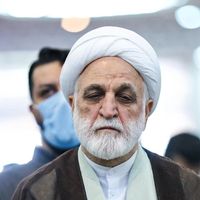
Khamenei to end Eje'i’s judiciary tenure after one term

Banner
Banner
Banner

Spotlight

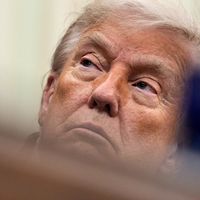
  • How Trump decided to strike Iran, new book reveals final hours

    How Trump decided to strike Iran, new book reveals final hours

  • Khamenei to end Eje'i’s judiciary tenure after one term
    EXCLUSIVE

    Khamenei to end Eje'i’s judiciary tenure after one term

  • Iran among top foreign espionage threats to Germany, security report says

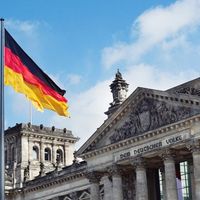
    Iran among top foreign espionage threats to Germany, security report says

  • Two-week banking disruption leaves Iranians struggling to access money
    VOICES FROM IRAN

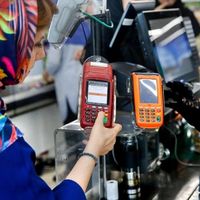
    Two-week banking disruption leaves Iranians struggling to access money

  • Every flare-up narrows space for diplomacy in Tehran
    INSIGHT

    Every flare-up narrows space for diplomacy in Tehran

  • Past funeral disasters cast a shadow over Khamenei's burial
    INSIGHT

    Past funeral disasters cast a shadow over Khamenei's burial

•
•
•

More Stories

IRGC moves to seize historic Protestant church in Tehran

Jul 1, 2026, 03:47 GMT+1
IRGC moves to seize historic Protestant church in Tehran
100%
The Saint Peter Evangelical Church - Tehran

Iranian authorities have stepped up pressure on one of the country’s few surviving Protestant churches, threatening to confiscate its valuable central Tehran compound and evict residents, in what church leaders describe as the latest assault on Christian worship sites.

The Saint Peter Evangelical Church, widely referred to locally as the Qavam church after its location on Si-e-Tir Street (formerly Qavam-ol-Saltaneh Street), has served Tehran’s small Protestant community for nearly 150 years.

“Six security forces went into the church and sat through a session, saying they wanted to ‘identify’ people,” said Sasan Tavassoli, a US-based minister with the Presbyterian Church in Iran. “They said they’ll return later to evacuate those living on the premises and take over.”

Established in 1876 by American missionaries on land granted by the Qajar monarch Naser al-Din Shah, the church has long been a focal point for Armenians and Assyrians in Iran - whose numbers have dramatically declined under the Islamic Republic.

Tavassoli noted the property’s significant value: “It’s worth tens of millions of dollars,” describing it as spanning “several hectares” of prime real estate in central Tehran.

The Evangelical Church of Iran has issued an urgent appeal to the international community to intervene.

In a letter signed by the Executive Secretary of the Synod of the Evangelical Church of Iran in Diaspora (SECID), church leaders expressed “severe distress” and accused the regime of becoming increasingly emboldened since negotiations towards a potential US-Iran deal began. “The regime is no longer afraid of the international community,” the letter states.

The authorities have already seized a 10,000 sq m garden belonging to the church, now reportedly occupied by four IRGC officials. A new deed has been issued in the IRGC’s name, with church employees and members now deemed trespassers on what was historically their own property.

Tehran claims the church had improperly rented parts of the premises to members.

Church leaders say the move fits a broader pattern of pressure on Iran’s tiny Protestant community. The latest threats follow the destruction of the Evangelical Church of Mashhad on 4 June.

The synod’s letter warns: “It is clear that without a swift response to this crisis, we may be deprived of our last remaining church centres in the country.” It calls for international action to halt “the ongoing process of expelling Christians from their places of worship and the occupation and destruction of these properties.”

Iran’s Christian communities, particularly Protestants who conduct services in Persian, have faced increasing restrictions since the 1979 Islamic Revolution.

While recognised religious minorities such as Armenian and Assyrian Christians have some protected status, evangelical and Protestant groups have repeatedly reported surveillance, forced closures and property seizures. St Peter’s itself was earlier ordered to stop Persian-language services.

As one of the last functioning Protestant sites in the capital, the fate of the Qavam church has become a symbol of the shrinking space for minority religious practice in the Islamic Republic.

Khamenei to end Eje'i’s judiciary tenure after one term

Jun 30, 2026, 20:48 GMT+1
•
Shahed Alavi
Khamenei to end Eje'i’s judiciary tenure after one term
100%

Iran's Supreme Leader Mojtaba Khamenei plans to remove judiciary chief Gholam-Hossein Mohseni Eje'i at the end of his first five-year term and appoint a new figure to lead the judiciary, sources familiar with the matter told Iran International.

Sources inside Iran told Iran International that Khamenei does not intend to extend Eje'i’s term for another five years, breaking with a practice followed for nearly four decades in which judiciary chiefs have usually served two consecutive five-year terms.

The sources, who spoke on condition of anonymity, said the decision is not aimed at judicial reform but is part of a broader reshaping of power after the recent war.

They said the new supreme leader is seeking to replace key officials in major state institutions with figures more closely aligned with him.

Eje'i’s expected removal could mark one of the first major signs of Khamenei’s effort to rebuild control over the Islamic Republic’s judicial, security and political apparatus after the transfer of power.

Hardliners step up pressure on Eje'i

The decision comes amid growing criticism of Eje'i from hardline figures after the names of Supreme National Security Council members who voted in favor of a memorandum of understanding with the United States were disclosed.

Critics say Eje'i’s vote was at odds with Khamenei’s stated position, after the leader said in a letter that he had, in principle, held a different view on the memorandum of understanding.

Signs of dissatisfaction with Eje'i’s five-year record have also appeared in recent official and semi-official commentary close to the power structure.

In a message marking Judiciary Week, Khamenei did not clearly endorse Eje'i’s continuation in office. Instead, he addressed the judiciary as an institution and called for the “actualization” of demands previously made by former Supreme Leader Ali Khamenei.

The message repeated calls for the implementation of the judicial transformation document, fighting corruption inside the judiciary, reviving public rights, blocking the use of recommendations and lobbying, and improving communication with the public.

Eje'i seeks to defend his record

A day later, Eje'i published a letter to Khamenei in deferential language, defending the judiciary’s performance and pledging to continue the path of “judicial transformation.”

“I and all components of the judiciary consider ourselves obliged to carry out Your Excellency’s binding commands precisely, swiftly and without any reduction,” Eje'i wrote.

Media outlets and figures close to the establishment criticized Eje'i for not publishing such a letter before Khamenei’s message. Some also described the new leader’s renewed emphasis on his father’s demands as a negative assessment of Eje'i’s record, arguing that their repetition showed the judiciary had failed to deliver practical results under him.

Rival factions inside the establishment have also stepped up attacks on Eje'i, accusing him of distancing himself from the leadership’s demands.

Media close to Parliament Speaker Mohammad Bagher Ghalibaf and President Masoud Pezeshkian have described the attacks as part of an effort by the faction aligned with Saeed Jalili, a member of Iran’s Supreme National Security Council, and the Paydari Front to create divisions among senior officials and weaken the postwar political path.

Media close to the judiciary and Eje'i’s supporters have sought to portray his five-year record as successful, citing reduced imprisonment, electronic court proceedings, shorter trials, anti-corruption efforts and public outreach.

Rights groups point to record of repression

Human rights groups and activists say Eje'i is not a reformist figure but a long-standing part of the Islamic Republic’s repressive judicial and security apparatus.

They point to his record in the Special Clerical Court, the Ministry of Intelligence, and later as first deputy and head of the judiciary, saying his tenure has been marked by continued heavy sentences against protesters, political activists, journalists, prisoners of conscience and minorities.

Rights advocates say the judiciary under Eje'i has continued to act as the legal and executive arm of security institutions in political and security cases.

They also argue that replacing Eje'i alone would not bring meaningful change without structural reform, an end to security interference in judicial cases, guaranteed access to lawyers, a halt to forced confessions, the annulment of political verdicts and respect for fair trial standards.

Iran among top foreign espionage threats to Germany, security report says

Jun 30, 2026, 18:46 GMT+1
•
Ahmad Samadi
Iran among top foreign espionage threats to Germany, security report says
100%

Iran was among the main foreign powers carrying out intelligence activities against Germany in 2025, targeting opposition groups, pro-Israeli and pro-Jewish targets and the Iranian diaspora, Germany’s domestic intelligence agency said in a security report published Tuesday.

The 2025 Report on the Protection of the Constitution, released by Germany’s Interior Ministry and setting out findings by the Federal Office for the Protection of the Constitution (BfV), said Russia, China and Iran were the main foreign powers carrying out intelligence activities in Germany.

On Iran, the report said one priority of Tehran’s intelligence activities was spying on and taking action against opposition groups and individuals inside and outside the country.

It said intelligence-related spying against pro-Israeli and pro-Jewish targets in Germany was again observed in 2025, adding that the United States and Israel have long been viewed as enemies by Tehran.

The report said Iranian intelligence services also try to achieve their aims through state-sponsored terrorism. It said this had increasingly been the case since the beginning of the Iran war in late February this year and the resulting heightened threat to pro-Jewish, pro-Israeli and US targets.

Iranian cyber espionage activities were mainly directed against the Iranian diaspora in Germany, the report said. It said targets of attack campaigns by the APT group Charming Kitten included Iranians in exile, opposition members, regime critics, journalists, human rights activists and women’s rights activists.

The BfV said Iranian procurement activity in Germany linked to Tehran’s delivery-technology and missile programs remains “persistently high.”

The report said large parts of Iran’s nuclear and military infrastructure were “severely damaged or destroyed” during the 12-day war last June, leaving the Islamic Republic “dependent on cutting-edge technology from Europe and Germany” to repair and rebuild facilities and obtain replacement systems, including for its delivery systems.

Germany remained one of the most important targets for foreign intelligence services because of its economic strength and role in organisations such as the EU and NATO, the report said.

The report said foreign powers use illegal or illegitimate methods to obtain information, steal know-how, spread disinformation and conduct sabotage and espionage operations, with the aim of influencing political decision-making, eroding trust in democracy and undermining defence capabilities.

The report said the BfV is pursuing a three-part strategy of “detection, disruption and prevention” to counter foreign intelligence threats. It said the strategy includes early identification of threats, disrupting hostile intelligence operations and strengthening preventive measures.

The agency said it provides security warnings, specialist advice and practical support to companies, universities, research institutions, political bodies and government agencies to help protect them against espionage, cyberattacks and illicit procurement.

Iran media urged to avoid spotlighting political disputes during Khamenei funeral

Jun 30, 2026, 15:36 GMT+1
Iran media urged to avoid spotlighting political disputes during Khamenei funeral
100%

A confidential directive by Iran’s top security body urged media outlets to avoid spotlighting political disputes during slain Supreme Leader Ali Khamenei’s funeral and limit coverage of US talks and regional developments, according to a copy obtained by Iran International.

The directive by the Supreme National Security Council said that, with programs linked to what it called the “historic funeral procession of the martyred Leader of the Revolution” beginning Friday, media outlets should help preserve national cohesion and maintain a focused media narrative.

It recommended that issues related to follow-up on the Islamabad memorandum of understanding — including the “balanced implementation of commitments,” especially over Hormuz, developments inside Lebanon, what it called the destructive role of the Lebanese government, the need to end Israeli attacks and opposition to externally imposed solutions — be gradually removed from media priority over the next 48 hours.

Instead, the directive said media capacity should mainly be used to explain the “personal, intellectual, cultural, political, historical and national dimensions of Iran’s martyr,” reflect “the presence and solidarity of the people,” and provide the “most magnificent possible coverage” of the ceremonies.

It said that if any “transgression or aggression” by enemies occurred during the period, “the issue of continuing defense alongside the holding of extensive ceremonies related to the funeral procession will naturally receive attention.”

The directive also urged outlets to avoid amplifying “internal political disputes, factional disagreements, media controversies” and issues that could polarize public opinion or divert attention from what it called a “national and historic occasion.”

News and analysis related to “negotiations, the agreement and other political and regional developments” should be covered “only to the extent necessary,” it said, warning media outlets not to turn those issues into the main focus of coverage or reproduce and amplify “rival media narratives about Iran’s defeat or retreat.”

Deadly attacks shake northwest Iran as IRGC reports new clashes

Jun 30, 2026, 13:48 GMT+1
Deadly attacks shake northwest Iran as IRGC reports new clashes
100%
image shows IRGC members Khaled Khaledinia (left) and Borhan Krisani, who were killed in a shooting outside a home in Paveh county, Kermanshah province, on June 29, 2026.

The Islamic Revolutionary Guard Corps (IRGC) said six armed men were killed in a clash near Iran's northwestern border on Tuesday. The announcement came hours after the Guards said two of its members were killed in a separate shooting in the region.

The IRGC Ground Forces said the six-member team was engaged in the mountains between Mahabad and Piranshahr after entering Iran's northwestern border region.

“The team entered the country's northwestern border region with the aim of carrying out sabotage and terrorist operations,” the IRGC's Hamzeh Seyed al-Shohada base said.

The Guards said four bodies, along with weapons and military equipment, were recovered after the clash, which it said involved fire support.

Two IRGC members killed in Paveh

Earlier on Tuesday, the IRGC's Kermanshah provincial public relations office said two local Guards members were killed and two others wounded after gunmen opened fire outside a home in Paveh county on Monday evening.

The dead were identified as Khaled Khaledinia and Borhan Krisani. Authorities said they were investigating the shooting and working to identify those responsible.

The Kurdish human rights group Hengaw identified the two wounded men as Kamel Shabrang, also known as Kamel Hajiji, and Kamal Abdi, adding that Hajiji was in a coma because of his injuries.

Hengaw also said a newly formed group calling itself Khori Hiva, meaning "Sun of Hope" in Kurdish, had claimed responsibility for the attack, saying Khaledinia participated in the crackdown on protesters in Javanrud during the 2022 Woman, Life, Freedom protests.

Conflicting accounts emerged over whether civilians were also killed. Hardline outlet Raja News reported that Khaledinia's sister and niece died in the attack, but Paveh governor Farzad Almasi rejected that account, telling ISNA that all four people targeted were men serving with the local IRGC unit, with two killed and two wounded.

Almasi said two gunmen riding a motorcycle opened fire before fleeing the scene and that efforts to identify and arrest the attackers were continuing.

The separate attacks underscored continuing security challenges in Iran's Kurdish-populated western and northwestern regions, where clashes between Iranian security forces and armed Kurdish groups have continued intermittently.