• العربية
  • فارسی
BrandBrand
  • Iran Insight
  • Politics
  • Economy
  • Analysis
  • Special Report
  • Opinion
  • Podcast
  • Live TV
  • Iran Insight
  • Politics
  • Economy
  • Analysis
  • Special Report
  • Opinion
  • Podcast
  • Live TV
  • Theme
  • Language
    • العربية
    • فارسی
  • Iran Insight
  • Politics
  • Economy
  • Analysis
  • Special Report
  • Opinion
  • Podcast
  • Live TV
All rights reserved for Volant Media UK Limited
volant media logo

Trump says US getting along well with Iran as Doha technical talks end

Jul 1, 2026, 20:26 GMT+1
US President Donald Trump speaks at the Oval Office at the White House in Washington, DC, US, June 29, 2026.

Iran said its Doha meetings with mediators had concluded Wednesday as US President Donald Trump said recent meetings in Qatar had been positive and Tehran’s denuclearization was progressing well.

Iran’s Deputy Foreign Minister Kazem Gharibabadi said the Iranian delegation’s talks in Doha had concluded, state news agency IRNA reported. He said the meetings were held with Qatari and Pakistani delegations and without the presence of a US delegation.

Qatar’s Emir Sheikh Tamim bin Hamad Al Thani held talks in Doha on Wednesday with US envoy Steve Witkoff and Jared Kushner on US-Iran negotiations and developments in Lebanon, the Amiri Diwan said.

A source with direct knowledge of the talks earlier told Reuters that indirect technical talks between Washington and Tehran had begun in Doha on Wednesday, mediated by Qatar and Pakistan. A senior Iranian official told Reuters the talks focused on Iran’s frozen assets and the Strait of Hormuz.

Doha talks and de-escalation

Axios reported, citing a US official, that Washington and Tehran had reached an understanding to “keep things quiet” for the coming week to allow progress on the memorandum of understanding “without missiles flying.”

“We have reached an understanding that we will keep things quiet for the coming week, so progress on all aspects of the MOU can be worked on in a productive environment, without missiles flying,” Axios quoted the official as saying.

The official added that Trump had been clear that “every time they shoot, we will shoot more — and at targets that further degrade their position in the Strait.”

Gharibabadi said a communication channel would be established to report and discuss breaches of the memorandum of understanding. He also said part of Iran’s $6 billion in frozen funds would be used to buy goods based on Tehran’s needs.

But Axios cited US officials as denying that any understanding had been reached in Doha on releasing the first tranche of frozen Iranian funds held in Qatar. Israeli outlet i24NEWS also reported, citing a US official, that no Iranian assets would be released unless the conditions of the memorandum of understanding were met.

US Vice President JD Vance said Washington still had “options” if Iran rebuilt its nuclear program, threatened its neighbors or funded terrorism. White House deputy press secretary Anna Kelly said negotiations were continuing toward a final deal to eliminate Iran’s nuclear capabilities, but warned that the United States would fire back if Tehran attacked.

Hormuz remains flashpoint

The Strait of Hormuz remained central to the talks and to the fragile truce. Two senior Iranian sources told Reuters that Tehran was seeking international recognition of its control over the waterway, including the right to charge ships passing through it, and was prepared to use force if needed.

The sources said Iran would not move to other issues in peace talks with the United States until the matter was resolved and planned to begin charging ships for passage in mid-August if the interim agreement expired without an extension.

Shipping employers and unions said they would continue to treat Hormuz as a war zone until at least July 9, keeping double pay and refusal rights for covered seafarers after attacks killed at least 14 seafarers and hit more than 40 ships.

Iranian state TV said a foreign ship had run aground in the Strait of Hormuz after sailing outside a route designated by Iran. Tanker Trackers said the vessel was the Comoros-flagged tanker ARISTA, part of a US-sanctioned network linked to Mohammad Hossein Shamkhani, son of Iran’s slain security chief Ali Shamkhani.

The European Union Aviation Safety Agency warned airlines to continue avoiding airspace over Iran, Iraq and Lebanon and to exercise caution across the wider Middle East, citing uncertainty over the durability of the US-Iran ceasefire.

Israel warns of further Iran strikes

Article 1 of the memorandum of understanding concerns the ceasefire in Lebanon, where Washington has told Tehran it intends to restrain Israel and ensure it abides by the truce.

During the Doha talks, US negotiators told Iran they intended to continue restraining Israel and ensure it abides by the ceasefire in Lebanon, according to a regional source cited by Axios. The source said Washington viewed Israel’s withdrawal from two pilot zones in southern Lebanon as a first step that could lead to further withdrawals if properly implemented.

But on Wednesday Prime Minister Benjamin Netanyahu said Israel would remain in a “protective strip” in southern Lebanon for as long as necessary, while adding that Israel would “do everything” to eventually reach a peace agreement with Lebanon.

Israeli Defense Minister Israel Katz also said Israel had twice carried out “proactive preemptive attacks” against Iran and would strike a third time if necessary.

“We crushed the nuclear program it was advancing and removed an existential threat from over the citizens of Israel,” Katz said.

Netanyahu also said a third confrontation with Iran was possible “if necessary.”

Most Viewed

Iran's oil output plunges below pre-war domestic needs
1
ANALYSIS

Iran's oil output plunges below pre-war domestic needs

2

Iran's top clerical governing body calls for nuclear doctrine review

3

Iran threatens Armenia as US-run Trump Route clears Yerevan’s parliament

4
INSIGHT

Iranian hardliners urge Iraq to push back against US pressure

5

Cash-strapped Iranians put multiple organs up for sale

Banner
Banner
Banner
Banner
Banner
Banner
Banner

Spotlight

  • Iran's oil output plunges below pre-war domestic needs
    ANALYSIS

    Iran's oil output plunges below pre-war domestic needs

  • Iranian hardliners urge Iraq to push back against US pressure
    INSIGHT

    Iranian hardliners urge Iraq to push back against US pressure

  • Cash-strapped Iranians put multiple organs up for sale

    Cash-strapped Iranians put multiple organs up for sale

  • Iran's intelligence merger debate signals possible security shake-up
    INSIGHT

    Iran's intelligence merger debate signals possible security shake-up

  • Americans ‘a bit naive’ about influence campaigns by Iran, Russia, China
    ONE-ON-ONE

    Americans ‘a bit naive’ about influence campaigns by Iran, Russia, China

  • Trump's Iran dilemma after America's 'everything' election
    OPINION

    Trump's Iran dilemma after America's 'everything' election

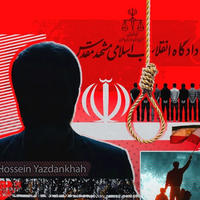
  • The faceless judge who sentenced 11 Iranian protesters to death in 2026
    SPECIAL REPORT

    The faceless judge who sentenced 11 Iranian protesters to death in 2026

•
•
•

More Stories

Khamenei to end Eje'i’s judiciary tenure after one term

Jun 30, 2026, 20:48 GMT+1
100%

Iran's Supreme Leader Mojtaba Khamenei plans to remove judiciary chief Gholam-Hossein Mohseni Eje'i at the end of his first five-year term and appoint a new figure to lead the judiciary, sources familiar with the matter told Iran International.

Sources inside Iran told Iran International that Khamenei does not intend to extend Eje'i’s term for another five years, breaking with a practice followed for nearly four decades in which judiciary chiefs have usually served two consecutive five-year terms.

The sources, who spoke on condition of anonymity, said the decision is not aimed at judicial reform but is part of a broader reshaping of power after the recent war.

They said the new supreme leader is seeking to replace key officials in major state institutions with figures more closely aligned with him.

Eje'i’s expected removal could mark one of the first major signs of Khamenei’s effort to rebuild control over the Islamic Republic’s judicial, security and political apparatus after the transfer of power.

Hardliners step up pressure on Eje'i

The decision comes amid growing criticism of Eje'i from hardline figures after the names of Supreme National Security Council members who voted in favor of a memorandum of understanding with the United States were disclosed.

Critics say Eje'i’s vote was at odds with Khamenei’s stated position, after the leader said in a letter that he had, in principle, held a different view on the memorandum of understanding.

Signs of dissatisfaction with Eje'i’s five-year record have also appeared in recent official and semi-official commentary close to the power structure.

In a message marking Judiciary Week, Khamenei did not clearly endorse Eje'i’s continuation in office. Instead, he addressed the judiciary as an institution and called for the “actualization” of demands previously made by former Supreme Leader Ali Khamenei.

The message repeated calls for the implementation of the judicial transformation document, fighting corruption inside the judiciary, reviving public rights, blocking the use of recommendations and lobbying, and improving communication with the public.

Eje'i seeks to defend his record

A day later, Eje'i published a letter to Khamenei in deferential language, defending the judiciary’s performance and pledging to continue the path of “judicial transformation.”

“I and all components of the judiciary consider ourselves obliged to carry out Your Excellency’s binding commands precisely, swiftly and without any reduction,” Eje'i wrote.

Media outlets and figures close to the establishment criticized Eje'i for not publishing such a letter before Khamenei’s message. Some also described the new leader’s renewed emphasis on his father’s demands as a negative assessment of Eje'i’s record, arguing that their repetition showed the judiciary had failed to deliver practical results under him.

Rival factions inside the establishment have also stepped up attacks on Eje'i, accusing him of distancing himself from the leadership’s demands.

Media close to Parliament Speaker Mohammad Bagher Ghalibaf and President Masoud Pezeshkian have described the attacks as part of an effort by the faction aligned with Saeed Jalili, a member of Iran’s Supreme National Security Council, and the Paydari Front to create divisions among senior officials and weaken the postwar political path.

Media close to the judiciary and Eje'i’s supporters have sought to portray his five-year record as successful, citing reduced imprisonment, electronic court proceedings, shorter trials, anti-corruption efforts and public outreach.

Rights groups point to record of repression

Human rights groups and activists say Eje'i is not a reformist figure but a long-standing part of the Islamic Republic’s repressive judicial and security apparatus.

They point to his record in the Special Clerical Court, the Ministry of Intelligence, and later as first deputy and head of the judiciary, saying his tenure has been marked by continued heavy sentences against protesters, political activists, journalists, prisoners of conscience and minorities.

Rights advocates say the judiciary under Eje'i has continued to act as the legal and executive arm of security institutions in political and security cases.

They also argue that replacing Eje'i alone would not bring meaningful change without structural reform, an end to security interference in judicial cases, guaranteed access to lawyers, a halt to forced confessions, the annulment of political verdicts and respect for fair trial standards.